



Bamboo Project Empowers Kolam Tribe in Adilabad 2025

A new green initiative titled Bamboo Project Kolam Tribe Adilabad 2025 has been launched in Mullagutta 2 village, located in Adilabad district, Telangana, to empower the Kolam tribal community and restore their connection with nature. This pilot project, a part of the Green India Challenge (GIC), focuses on afforestation, livelihood revival, and environmental conservation. The effort specifically addresses the bamboo shortage that has deeply affected the Kolam tribe one of India’s Particularly Vulnerable Tribal Groups (PVTG).
Thank you for reading this post, don't forget to subscribe!By combining ecological restoration with sustainable livelihood opportunities, this project aims to ensure long-term social and economic stability for the Kolam people while combating environmental degradation in the region.
A Vision for Sustainable Growth
The Bamboo Project Kolam Tribe Adilabad 2025 represents a significant step toward integrating tribal welfare with environmental conservation. Launched under the broader Green India Challenge, the project seeks to cultivate bamboo plantations over five acres of land donated by local philanthropist Tekam Rao Ji Patel.
Bamboo plays an essential role in the lives of many tribal groups across India it serves as a material for housing, handicrafts, and tools, as well as a source of income. However, over the years, deforestation, forest encroachment, and erratic monsoons have led to the depletion of bamboo resources in Adilabad.
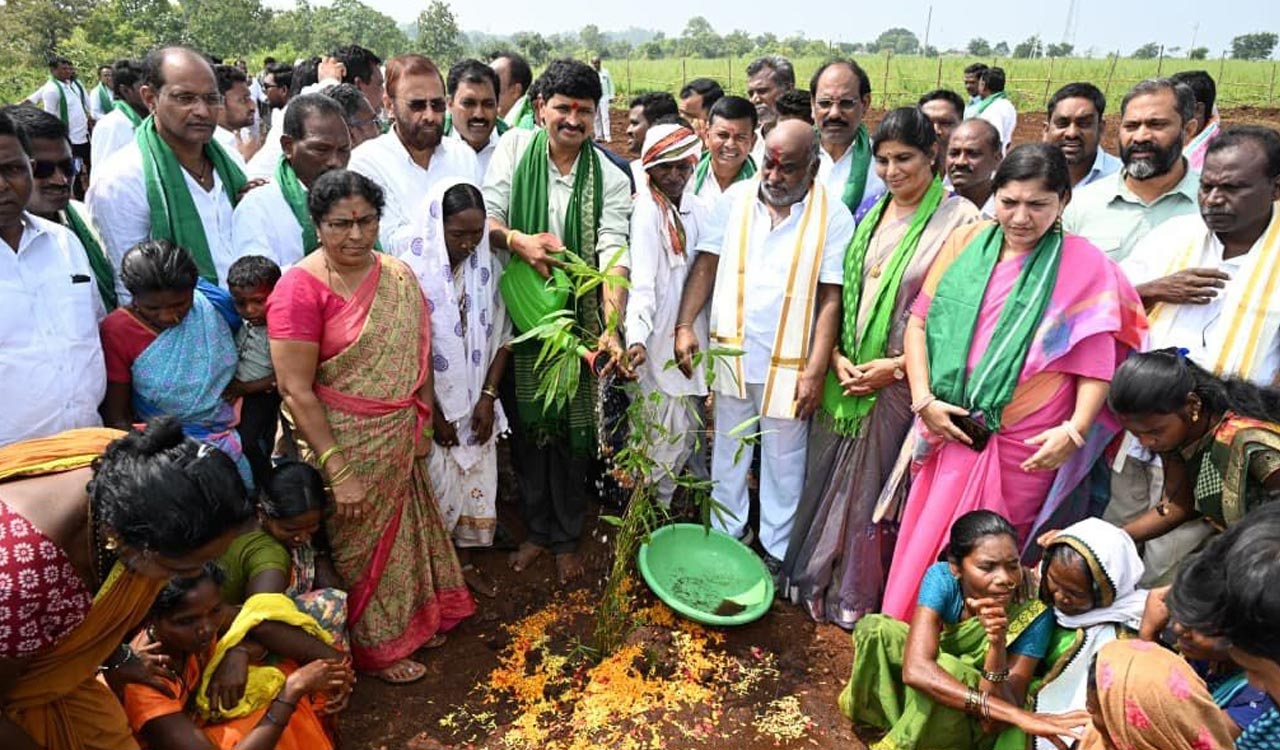
This project will not only restore bamboo availability but also empower Kolam artisans to revive their traditional bamboo-based crafts, ensuring both ecological recovery and economic resilience.
Green India Challenge and Its Role in Bamboo Project Kolam Tribe Adilabad 2025
The Green India Challenge (GIC), initiated as a nationwide environmental campaign, has been instrumental in promoting tree planting, carbon sequestration, and biodiversity enhancement across India. By involving citizens, NGOs, corporates, and local communities, the GIC emphasizes the collective responsibility of safeguarding the environment.
In Adilabad, the bamboo plantation under GIC’s guidance marks an innovative step in community-led environmental reform. The program not only focuses on plantation but also on sustainable maintenance and utilization, ensuring that the benefits of afforestation reach local communities in a lasting way.
By introducing the Bamboo Project Kolam Tribe Adilabad 2025, the GIC highlights a model where tribal empowerment and climate action work hand in hand. The bamboo plantation is expected to act as a carbon sink, improve soil fertility, and help mitigate the effects of deforestation in the region.
Kolam Tribe: The Beneficiaries of the Bamboo Project Kolam Tribe Adilabad 2025
The Kolam tribe is an ancient and indigenous community primarily found in Telangana, Maharashtra, Chhattisgarh, and Madhya Pradesh. Recognized as a Particularly Vulnerable Tribal Group (PVTG), the Kolams have traditionally depended on forests for their livelihood. They speak Kolami, a Dravidian language without a written script, and many members also communicate in Telugu or Marathi.
Key Aspects of Kolam Culture and Society:
- Language: Kolami, a Dravidian tongue, often mixed with Telugu or Marathi in spoken form.
- Social Structure: The community follows a patrilineal system and is organized into several clans such as Chal Deve, Pach Deve, Saha Deve, and Sat Deve.
- Occupation: Agriculture, animal farming, fishing, and forest labor are their primary occupations.
- Cultural Identity: The Kolams share rituals and traditions similar to the Gond tribe and claim descent from Bhima and Hidimbi from the Mahabharata.
- Marriage Traditions: They follow the custom of levirate, where a widow may marry her deceased husband’s brother.
- Government Support: The community has received assistance through various government programs focused on education, healthcare, and housing.
Despite these supports, the decline of bamboo availability has weakened the Kolam tribe’s ability to sustain their traditional crafts, which were once vital sources of income. The new project directly addresses this issue.
Implementation and Goals of Bamboo Project Kolam Tribe Adilabad 2025
The bamboo plantation spans five acres of community land, creating both an ecological and economic resource for the Kolam people. The project’s long-term goals include:
- Reviving traditional bamboo craftsmanship by ensuring steady bamboo supply.
- Creating green employment opportunities within the community.
- Encouraging women’s participation in bamboo processing and craft production.
- Improving soil quality and water retention through bamboo root systems.
- Reducing carbon footprint by increasing green cover in Adilabad district.
The plantation will include high-yield and fast-growing bamboo species, selected for both ecological adaptability and commercial potential. Agricultural experts and forest officers will monitor the plantation to ensure healthy growth and protection from grazing or fires.
Impact of Bamboo Project Kolam Tribe Adilabad 2025 on Environment and Livelihoods
Once fully implemented, the Bamboo Project Kolam Tribe Adilabad 2025 is expected to yield multiple benefits:
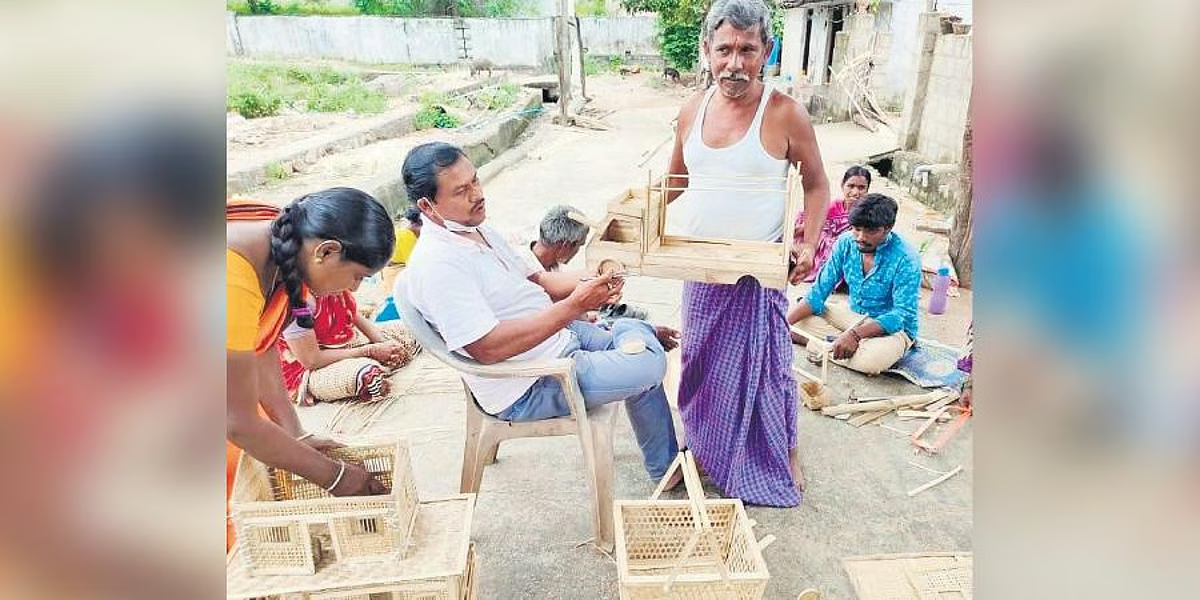
- Economic Empowerment: By promoting bamboo-based products such as baskets, furniture, and mats, the project can generate sustainable income for dozens of Kolam families.
- Environmental Regeneration: Bamboo acts as a natural barrier against soil erosion, enhances soil fertility, and captures significant amounts of carbon dioxide.
- Cultural Revival: The project encourages the preservation of traditional bamboo craftsmanship, helping future generations reconnect with their heritage.
- Community Ownership: The involvement of local leaders and philanthropists ensures that the Kolam tribe maintains long-term control over the project’s outcomes.
- Sustainable Growth Model: By combining government schemes, CSR initiatives, and community participation, the model could be replicated in other tribal regions.
Through these combined benefits, the initiative reinforces how environmental protection can directly translate into social progress.
The Broader Significance of Bamboo Project Kolam Tribe Adilabad 2025
The Bamboo Project Kolam Tribe Adilabad 2025 is more than an afforestation effort it symbolizes the revival of a community’s cultural and economic foundation. It sets an example for inclusive environmental development, where marginalized tribal groups are not just beneficiaries but active stakeholders.
As bamboo takes root in Mullagutta 2 village, it brings with it renewed hope for the Kolam people a vision of self-sufficiency, green prosperity, and cultural pride. This initiative aligns perfectly with India’s national goals of promoting eco-friendly livelihoods, climate resilience, and tribal welfare.
With consistent support from the Green India Challenge and dedicated community participation, the project is poised to become a model of sustainable tribal development that balances nature, livelihood, and heritage.