



Carrington Event: Trivandrum Records Reveal New Clues

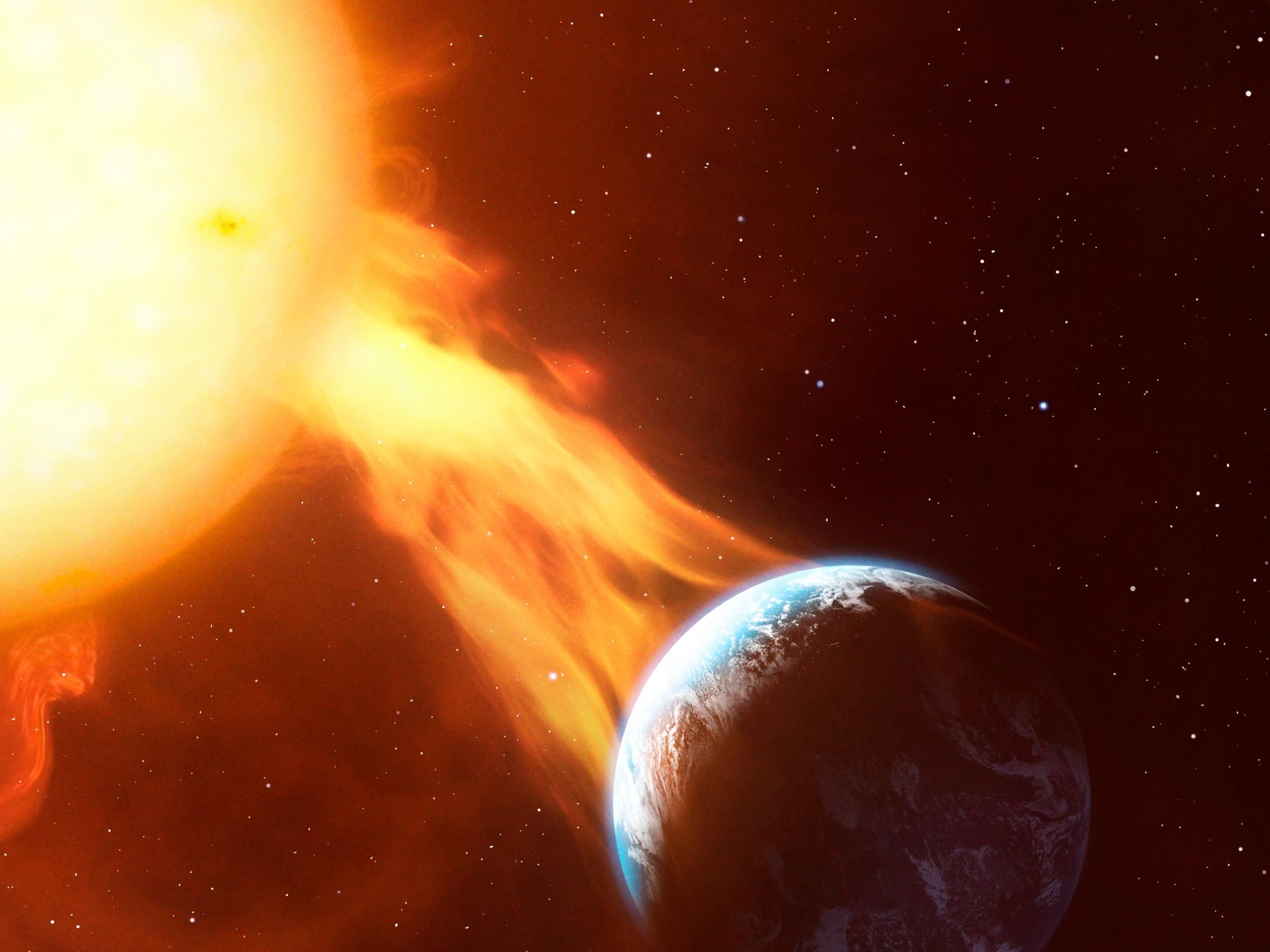
Carrington Event research has received fresh attention after scientists used historical magnetic records from the Trivandrum Astronomical Observatory in Kerala to reconstruct the sequence of geomagnetic disturbances that occurred in 1859. The study shows that the famous September 1859 storm was part of a wider period of repeated solar activity rather than an isolated disturbance. The research was led by R. Jayakrishnan and examined historical observations recorded at the observatory during the 19th century.
Thank you for reading this post, don't forget to subscribe!Historical Records Help Reconstruct the Carrington Event
The Carrington Event refers to the powerful geomagnetic storm that struck Earth in September 1859. It is named after British astronomer Richard Carrington, who observed a bright white-light solar flare on September 1, 1859.
The new research examined old magnetic observations from the Trivandrum Observatory. The records provide an important view of Earth’s magnetic response because the observatory was located close to the magnetic equator during that period.
Researchers found evidence of several magnetic disturbances during August and September 1859. A major disturbance was recorded on August 29, followed by the main Carrington storm on September 2. Further disturbances were observed later in September.
Two Major Storms Were Recorded Close Together
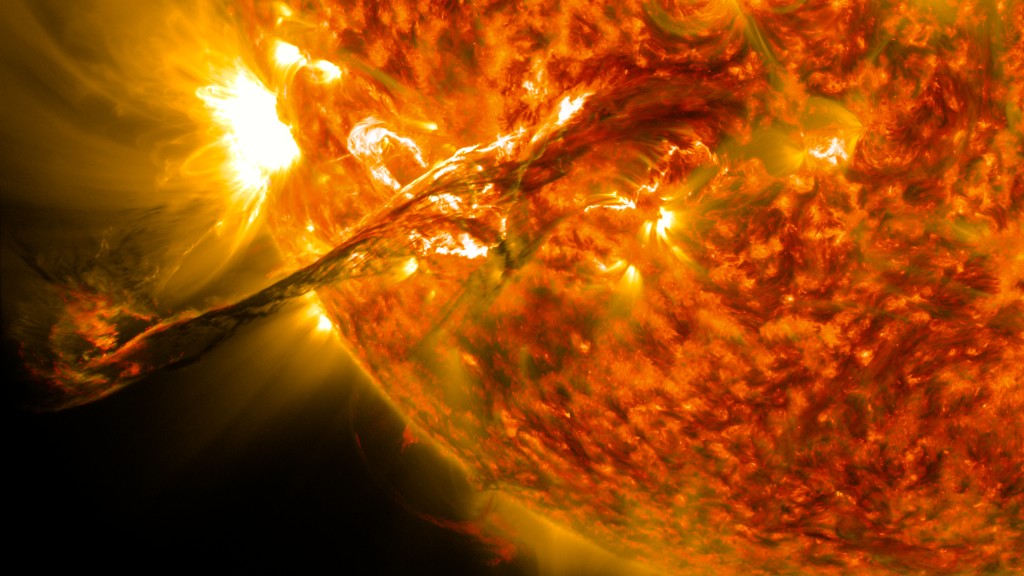
One of the important findings is the similarity between the August 29 disturbance and the September 2 Carrington storm.
According to the study, the horizontal component of Earth’s magnetic field showed a fall of about 1,851 nanotesla during the August 29 event. The September 2 event produced a fall of about 1,926 nanotesla in the Trivandrum records.
This indicates that the August disturbance was also extremely strong. The researchers describe the events as part of a multi-phase period of intense geomagnetic activity.
The observations help scientists study how repeated solar eruptions can affect Earth’s magnetic environment over a longer period.
Trivandrum Observatory Records Survived for More Than a Century
The historical records used in the research have an unusual history. The magnetic registers were taken to Scotland in the 1870s by John Allan Broun, who had served as a director of the Trivandrum Observatory.
The records later passed through British scientific institutions before being entrusted to the National Library of Scotland in 2010. Their preservation made it possible for researchers to examine measurements that were recorded more than 160 years ago.
The historical documents include observations made using a bifilar magnetometer, an instrument used to measure changes in Earth’s magnetic field.
Why the Location of Trivandrum Matters
The Trivandrum Observatory had a special scientific advantage during the 1859 events because of its location near the magnetic equator.
Magnetic conditions near the equatorial region are different from those at higher latitudes. Having observations from a location close to the magnetic equator gives scientists another point of reference when reconstructing the global effects of a major geomagnetic storm.
Researchers can compare the Trivandrum records with observations from other historical observatories, including measurements from locations such as Kew, Greenwich and Colaba.
This helps scientists understand whether the magnetic disturbances were local observations or part of a much larger global event.
Solar Activity May Have Built Up Over Several Weeks
The study suggests that the Carrington storm should be viewed in the context of repeated solar activity during August and September 1859.
The Trivandrum records show significant disturbances on August 16 and August 29 before the main September 2 event, followed by weaker disturbances later in September. These observations support a picture of several solar eruptions affecting Earth’s space environment over a period of weeks.
Coronal mass ejections, or CMEs, are large releases of magnetised plasma from the Sun. When a CME reaches Earth, it can interact with the planet’s magnetosphere and produce a geomagnetic storm.
The researchers’ reconstruction provides additional historical evidence for studying how successive solar eruptions may influence the conditions surrounding a later storm.
Carrington Event and Modern Space Weather
The Carrington Event remains important to modern space-weather research because today’s technology is highly dependent on systems that can be affected by strong geomagnetic activity.
Space weather can influence satellites, radio communication, navigation systems and electric-power infrastructure. Strong geomagnetic storms can also increase radiation exposure for some space-based systems and create problems for satellite operations.
Modern researchers use spacecraft observations, ground-based magnetometers and computer models to monitor solar activity. Historical records such as those from Trivandrum provide another way to study extreme events that occurred before modern space-weather monitoring systems existed.
New Research Builds on Earlier Trivandrum Findings
The 2026 study follows earlier research by scientists associated with the Trivandrum Observatory. A separate paper published in Advances in Space Research in 2025 analysed historical magnetic-declination observations from August 28 to September 3, 1859.
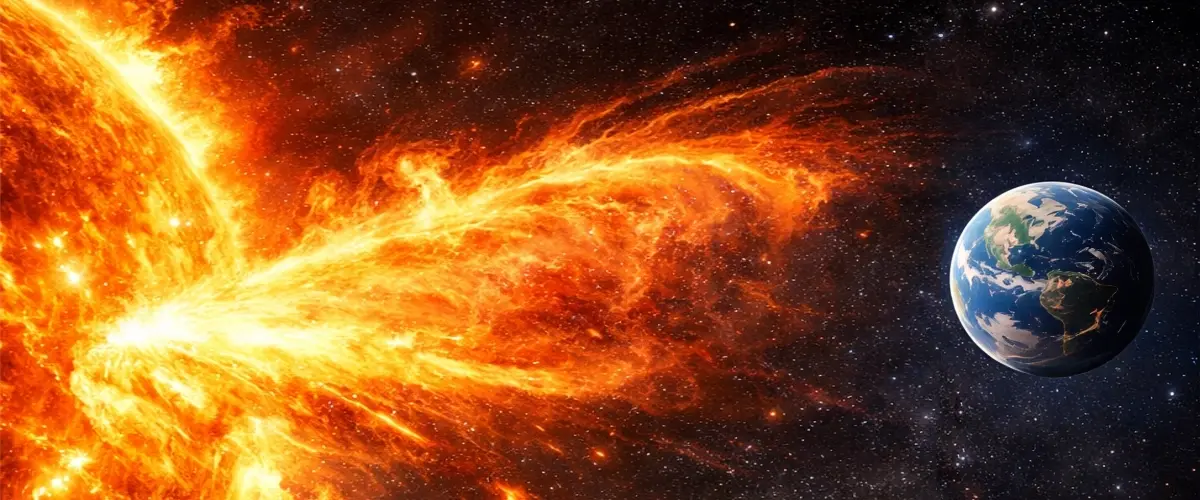
That earlier research identified two back-to-back geomagnetic storms on August 29 and September 2 and estimated disturbances in Earth’s horizontal magnetic field using historical data and magnetic-field modelling.
Together, the studies show how old observatory records can continue to provide useful scientific information. Researchers are increasingly examining historical measurements to improve understanding of extreme space-weather events and the long-term behaviour of the Sun-Earth system.
Archived Science Gains New Value
The Trivandrum records demonstrate how historical scientific observations can become valuable again when combined with modern analysis methods.
More than a century after the original measurements were made, researchers can compare old magnetometer readings with observations from other locations and modern models of Earth’s magnetic field. This allows scientists to reconstruct events that occurred long before satellites and digital monitoring systems existed.
The renewed study of the Trivandrum records adds another important dataset to research on the 1859 Carrington Event and provides a broader picture of the solar and geomagnetic activity surrounding one of the most powerful space-weather events in recorded history.