



Constitution in 22 Languages Released

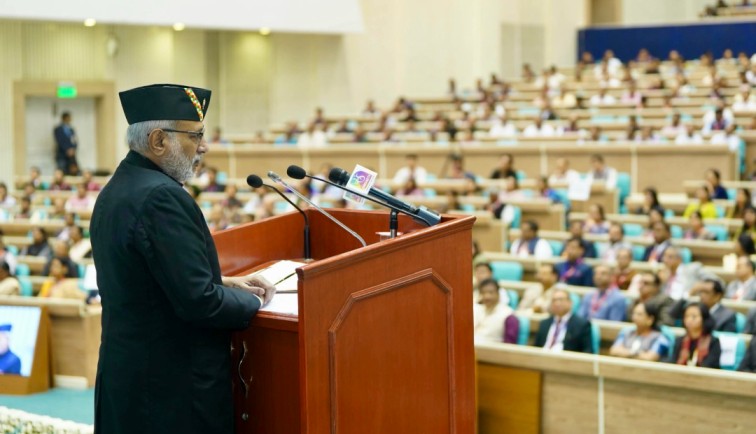
Constitution in 22 Languages became available in updated editions following a special release ceremony held in New Delhi on November 26, 2026. Vice-President C. P. Radhakrishnan released the updated editions of the Constitution of India in all 22 Scheduled Languages at Vigyan Bhawan on Constitution Day. Union Minister of State (Independent Charge) for Law and Justice Arjun Ram Meghwal also attended the event.
The initiative aims to make the country’s most important legal document easier for citizens to read and understand in their own languages. It also seeks to increase awareness of constitutional rights, duties and democratic values across different regions of India.

Updated Constitution Released in 22 Scheduled Languages
The release marks an important step towards making the Constitution accessible in India’s diverse linguistic landscape. For the first time since the Constitution came into force in 1950, updated editions have been made available in all 22 languages listed in the Eighth Schedule of the Constitution.
India is home to many languages and dialects. For a large number of citizens, reading and understanding legal documents in their mother tongue can be easier than relying on another language. Providing the Constitution in Scheduled Languages can help reduce this language barrier and encourage more people to learn about the country’s constitutional framework.
The updated editions are intended to support wider public access to constitutional information. They can be useful for students, teachers, researchers, legal professionals and ordinary citizens who want to understand how India’s democratic system works.
Constitution Day and the Importance of November 26
The release took place on November 26, which is observed every year as Constitution Day, also known as Samvidhan Divas.
The Constituent Assembly adopted the Constitution of India on November 26, 1949. It came into effect on January 26, 1950, marking the beginning of the Republic of India.
Constitution Day is observed to remember the contribution of the members of the Constituent Assembly and promote awareness of constitutional values. The day also highlights the importance of justice, liberty, equality and fraternity, which are reflected in the Preamble to the Constitution.
The release of the updated editions in 22 Scheduled Languages adds a linguistic inclusion initiative to the annual observance.
Strengthening Linguistic Diversity and Democratic Inclusion
During the event, Vice-President C. P. Radhakrishnan highlighted the importance of India’s linguistic diversity. He described the initiative as a reflection of the country’s commitment to making constitutional knowledge accessible to people in their mother tongues.
The release also connects with the spirit of Ek Bharat, Shreshtha Bharat, which promotes cultural understanding and stronger connections among different regions of the country.
Making the Constitution available in multiple languages can help citizens engage more actively with democratic institutions. People who can read constitutional provisions in a familiar language may find it easier to understand the responsibilities of government, the rights of citizens and the principles that guide public administration.
The Eighth Schedule and India’s 22 Languages
The Eighth Schedule of the Indian Constitution currently recognises 22 languages. When the Constitution was adopted in 1950, the Schedule included 14 languages. Over time, constitutional amendments expanded the list.
Sindhi was added through the 21st Constitutional Amendment in 1967. The 71st Constitutional Amendment Act, 1992, added Konkani, Manipuri and Nepali. Later, the 92nd Constitutional Amendment Act, 2003, added Bodo, Dogri, Maithili and Santali.
These additions reflect the country’s changing recognition of its linguistic communities. The Eighth Schedule plays an important role in the constitutional framework for language recognition and development.
Connection with the Vision of Viksit Bharat@2047
The initiative also supports the broader vision of Viksit Bharat@2047, which aims to make India a developed nation by the 100th anniversary of its independence.
Making important public documents accessible in different languages can support wider participation in governance. It can also encourage constitutional literacy beyond major cities and among communities that may face language barriers when accessing official information.
The release of the Constitution in all 22 Scheduled Languages is therefore an effort to connect constitutional awareness with India’s cultural and linguistic diversity. It highlights the importance of making democratic knowledge available to citizens across the country.