



IceCube Cosmic Neutrinos Detected

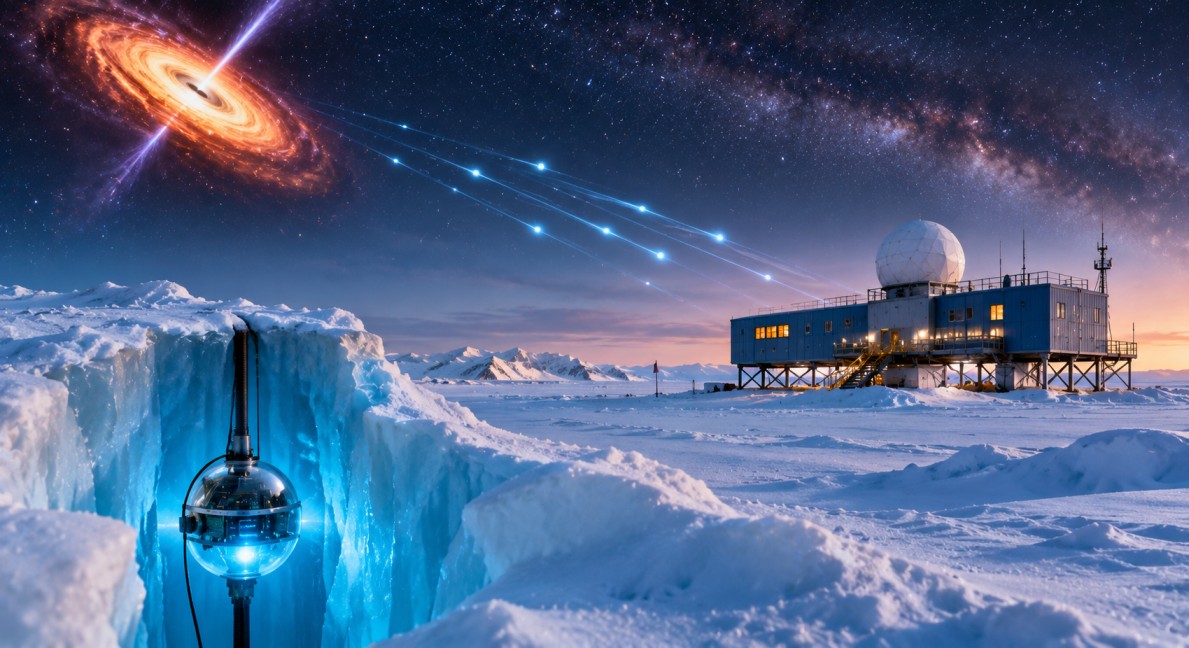
IceCube Cosmic Neutrinos have drawn attention after scientists reported detecting extremely high-energy particles using the IceCube Neutrino Observatory in Antarctica on 2 November 2026. According to the report, these neutrinos carried about 10 billion times more energy than typical solar neutrinos. The finding offers another opportunity to study some of the most powerful and mysterious events in the universe.
Neutrinos are tiny particles that travel through space at nearly the speed of light. They have no electric charge and interact very weakly with matter. This allows them to pass through stars, planets and other objects without being easily stopped.

How IceCube Detects Cosmic Neutrinos
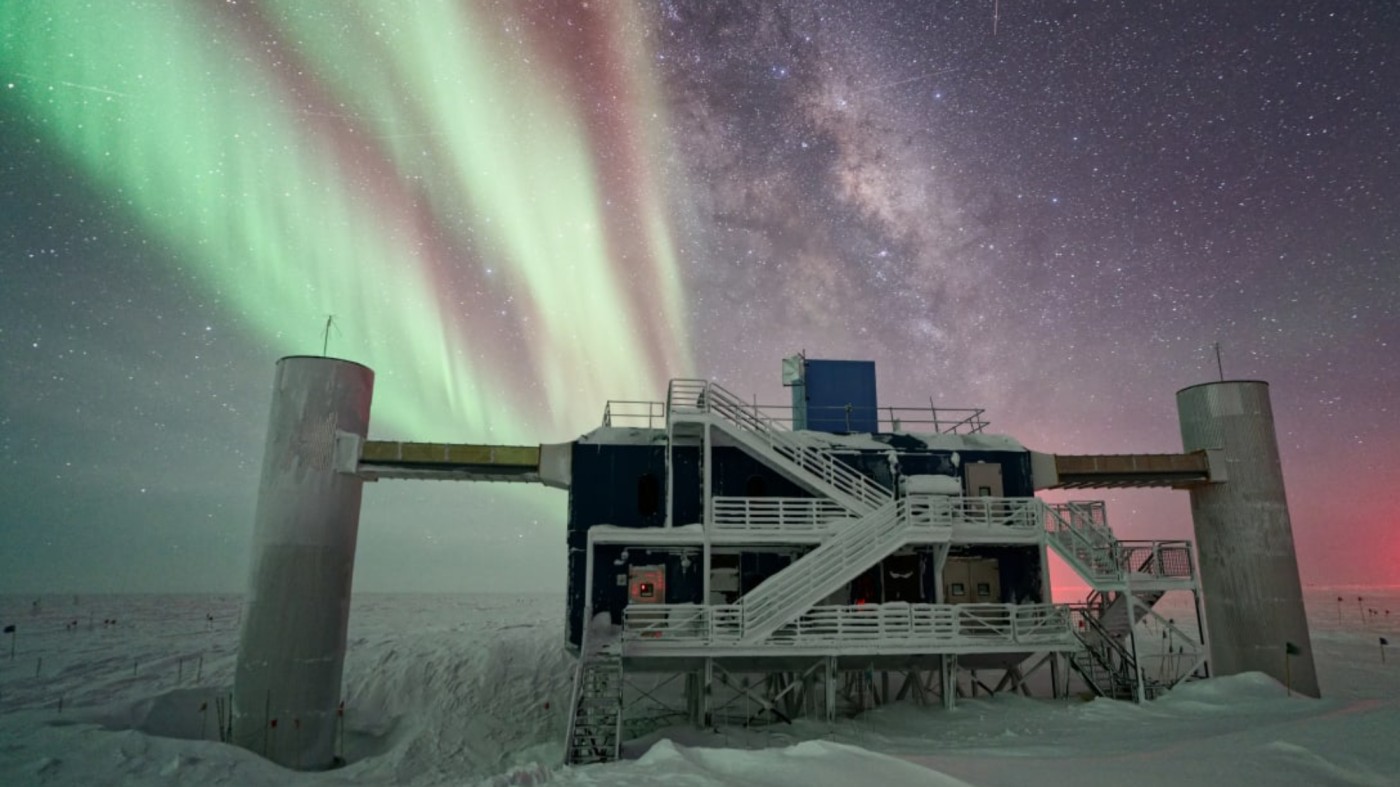
The IceCube Neutrino Observatory is located at the South Pole in Antarctica. It uses around one cubic kilometre of clear ice to search for signs of neutrino interactions.
When a neutrino interacts with the ice, it can produce a charged particle. If this particle moves faster than light travels through the ice, it creates a brief blue flash known as Cherenkov radiation.
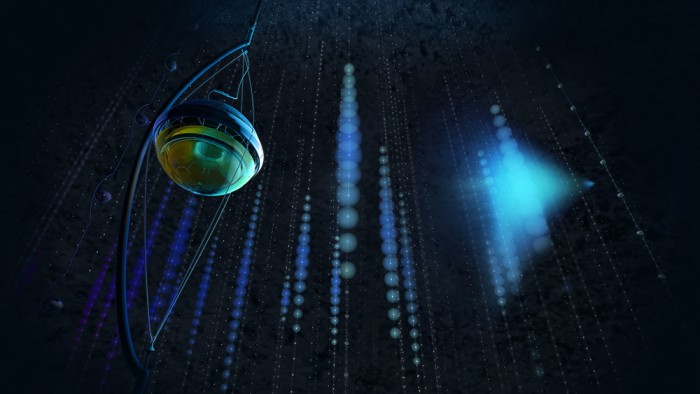
IceCube uses sensitive digital optical sensors to record these flashes. Scientists study the light patterns to estimate the energy and direction of the incoming neutrino.
The observatory detects only a small number of the most energetic neutrinos each year. These events are rare because neutrinos interact so weakly with matter. Most pass through the Earth or the detector without leaving a trace.
Why High-Energy Neutrinos Are Important
Neutrinos can travel across enormous distances without being easily absorbed or deflected. This makes them useful for studying distant and extreme objects in space.
Some high-energy neutrinos may come from regions around black holes, collapsing stars and other powerful cosmic events. These environments can contain strong forces that accelerate particles to very high energies.
Unlike light, neutrinos can escape from dense regions that may block other forms of radiation. This means they can carry information from places that are difficult to observe using ordinary telescopes.
Scientists hope that studying these particles will help explain how cosmic objects produce and accelerate high-energy particles. The findings may also add to research into the early universe and the physical processes that shaped it.
Scientists Still Investigate Their Origins
Despite progress in neutrino astronomy, the sources of the most energetic neutrinos remain uncertain. Researchers are still working to understand which cosmic objects produce them and how they reach such extreme energies.
George Fuller, a physicist at the University of California San Diego, said that the origins and acceleration processes of these high-energy neutrinos are still poorly understood.
Observations from IceCube can help scientists compare neutrino events with other signals from space. When a neutrino detection is linked to an event observed by a telescope, researchers may gain a clearer understanding of the source.
This approach is part of multi-messenger astronomy, which combines information from different signals, including light, neutrinos and gravitational waves.
IceCube and the Study of the Universe
IceCube has become an important tool for exploring the universe through particles that are difficult to detect. Its location beneath the Antarctic ice provides a large, quiet environment for observing rare interactions.
The detector’s optical sensors are arranged in long strings deep below the surface. The sensors record light produced when neutrinos interact with the surrounding ice. Scientists then use the recorded signals to reconstruct the events.
The observatory’s work has helped establish high-energy neutrinos as a new way to investigate astrophysical sources. Each rare detection can provide information about distant events that may not be visible through other methods.
Recognition for IceCube Research
The report also noted that physicist Francis Halzen received the 2026 Nobel Prize in Physics for his contributions to IceCube and the discovery of high-energy neutrinos of astrophysical origin.
The recognition highlights the importance of building large detectors capable of observing rare particles. IceCube’s research continues to expand the ways scientists study the universe, especially its most energetic and difficult-to-observe environments.
As researchers analyse more high-energy neutrino events, they hope to identify their sources and better understand the forces that produce them.