



IIT Madras Hybrid-Rocket VTOL Breakthrough Marks Major Leap in Next-Gen Flight Technology

The IIT Madras Hybrid-Rocket VTOL Breakthrough has marked a historic advancement in India’s aerospace research landscape. Researchers at the Indian Institute of Technology Madras have achieved a major milestone by demonstrating vertical take-off and landing (VTOL) capability using hybrid rocket thrusters. Through the integration of a live hybrid motor with a real-time simulation environment, the team successfully showcased controlled descent and soft-landing performance a key step forward for future planetary landers, VTOL aircraft, and unmanned aerial vehicles (UAVs). This breakthrough highlights India’s growing prowess in advanced propulsion and flight control systems, setting the stage for next-generation air and space missions.
Thank you for reading this post, don't forget to subscribe!Hybrid Propulsion Rationale: Why It Matters
The concept behind the IIT Madras Hybrid-Rocket VTOL Breakthrough lies in the efficiency and flexibility of hybrid propulsion systems. A hybrid rocket combines a solid fuel grain with a liquid or gaseous oxidiser, bridging the gap between solid and liquid engine designs.
This architecture offers three major advantages:
- Throttleability: The thrust can be adjusted mid-flight, a feature absent in conventional solid rockets.
- Restart Capability: Unlike most chemical rockets, hybrid systems can restart multiple times.
- Safety and Simplicity: Hybrids eliminate the need for complex plumbing and cryogenic storage, reducing operational risks and costs.
These characteristics make hybrid propulsion ideal for VTOL and planetary descent missions, where fine thrust modulation near the surface is crucial. Traditional chemical engines often struggle with the balance between precision and complexity something hybrid propulsion elegantly resolves.
Experiment Design and Key Findings
To validate their theory, IIT Madras researchers built a hardware-in-the-loop (HIL) testing framework, a state-of-the-art setup that links a live hybrid rocket thruster to a high-fidelity simulation model.
In this experiment, the hybrid motor provided real physical thrust data, while the simulation replicated vehicle dynamics, atmospheric conditions, and landing control scenarios. Advanced control algorithms were then deployed to modulate thrust and track a target descent rate, mimicking real-world soft landing conditions.
The results were remarkable:
- Stable throttle response across multiple tests.
- Repeatable deceleration profiles leading to consistent terminal velocities.
- Touchdown speeds maintained within acceptable soft-landing envelopes.
- Validated time lag and thrust ramp dynamics, essential for real vehicle integration.
By closing the loop between propulsion physics and virtual flight control, the study proved that hybrid rockets can offer the precision required for vertical landings without the heavy engineering overhead of liquid engines.
Operational Use-Cases and Readiness
The IIT Madras Hybrid-Rocket VTOL Breakthrough could transform how we approach both aerospace exploration and air mobility systems on Earth.
1. Space Exploration Applications
Controlled vertical descent and landing are critical for planetary probes, lunar missions, and Mars landers. The ability to throttle and shut down hybrid engines rapidly makes them ideal for autonomous landing systems operating in unpredictable extraterrestrial environments.
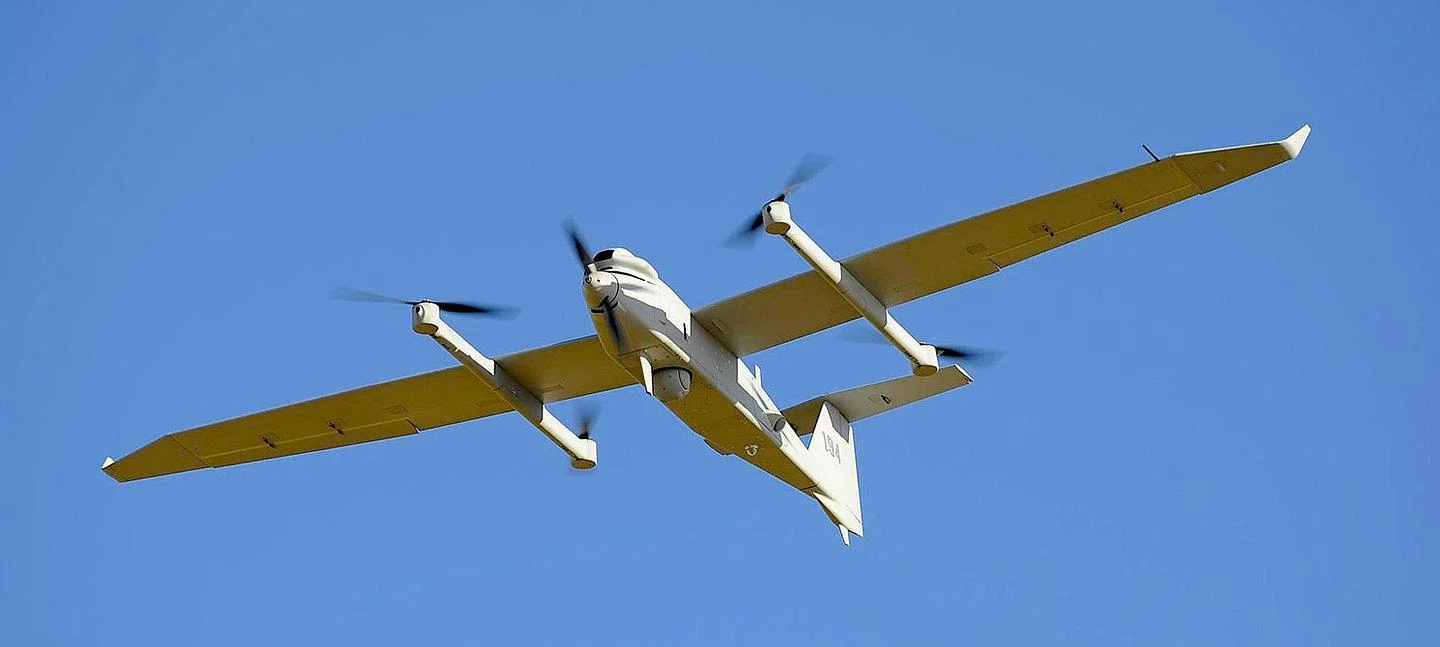
2. Unmanned Aerial Vehicles (UAVs)
In the terrestrial domain, fixed-wing UAVs typically require runways or catapult launches. A hybrid VTOL system eliminates that dependency. UAVs equipped with hybrid rockets can take off and land vertically, yet cruise like fixed-wing aircraft offering greater speed and range compared to helicopters.
3. Defense and Disaster Response
For military logistics or emergency delivery operations in rugged terrain, hybrid VTOL craft could offer rapid deployment, low maintenance, and operational independence from traditional infrastructure.
The IIT Madras team envisions achieving higher Technology Readiness Levels (TRLs) through subsequent tests focusing on attitude stabilization, disturbance rejection, and envelope expansion under varying wind and gust conditions.
Next Steps and Industry Impact
Building on the successful initial trials, the IIT Madras team plans to transition from one dimensional descent simulations to multi degree of freedom (3D) flight tests. The next experimental phase aims to remove assumptions of pre-stabilised attitude, introducing full yaw pitch roll control and sensor fusion for dynamic stability.
Key priorities for the upcoming stages include:
- Enhanced control algorithms for terminal descent accuracy.
- Fault-tolerant actuator systems capable of responding to anomalies.
- Integration with onboard navigation sensors such as IMUs, LIDAR, and altimeters.
If these systems mature, India could soon see hybrid-thruster-powered VTOL aircraft capable of both civilian and defence applications ranging from urban air mobility vehicles to planetary descent probes.
The research also opens the door for commercial partnerships with aerospace firms and startups exploring next generation propulsion for low cost satellite launches, last mile cargo delivery, and autonomous air operations.
Broader Implications
The IIT Madras Hybrid-Rocket VTOL Breakthrough exemplifies India’s growing ability to lead in frontier aerospace technology. By focusing on indigenous development of hybrid propulsion systems, the research aligns with the nation’s push for self-reliant space innovation (Atmanirbhar Bharat) and contributes to global discussions on sustainable, adaptable propulsion architectures.
Moreover, hybrid propulsion’s lower operational risk and fuel flexibility make it suitable for educational testing platforms, student-built rockets, and emerging space startups seeking affordable experimental infrastructure.
In an era where multi-mission versatility defines aerospace progress, the IIT Madras team’s success shows that precision-controlled hybrid propulsion could be a cornerstone for future VTOL systems whether on Earth or beyond.