


ISI Bill 2026 in Lok Sabha

ISI Bill 2026 has become an important topic as the government moves to reshape one of India’s leading research institutions. The new bill was introduced in the Lok Sabha in early August 2026 and aims to replace the old law that has guided the Indian Statistical Institute for decades. This change is not just about updating rules, but also about redefining how the institute functions in today’s data-driven world. With growing importance of data science, artificial intelligence, and economic analysis, the role of such institutions is becoming more critical than ever.
Thank you for reading this post, don't forget to subscribe!A New Legal Framework for the Institute
The main goal of the new bill is to give the Indian Statistical Institute a stronger legal identity. At present, the institute operates as a registered society, which limits its administrative and legal flexibility. By turning it into a statutory body, the government wants to provide a clearer structure for governance and decision-making. This change is expected to impact how the institute manages its resources, conducts research, and plans its future growth.

Historical Importance of the Institution
The Indian Statistical Institute has a long and respected history. Established in 1931 in Kolkata, it has played a major role in shaping statistical research and education in India. Over the years, it has contributed to areas like economic planning, scientific research, and policy development. Many well-known scholars and researchers have been associated with the institute, making it a key part of India’s academic landscape.
Expanding the Meaning of Statistical Sciences
One of the key features of the new bill is the broader definition of statistical sciences. Earlier, the focus was mainly on traditional statistics and mathematics. Now, the scope includes fields like data science, computer science, economics, and even cryptology. This reflects how the world has changed, where data is used in almost every sector, from business and healthcare to governance and technology.
Relevance in the Age of Data and AI
In today’s world, data is often called the new oil. Governments, companies, and researchers rely heavily on data to make decisions. The expansion of statistical sciences in the bill shows an effort to align the institute with modern needs. With the rise of artificial intelligence and machine learning, the demand for skilled professionals in these areas is growing. The institute is expected to play a bigger role in training experts and conducting advanced research.
Changes in Governance Structure
The bill also proposes major changes in how the institute is governed. A new Board of Governors will be created as the main decision-making body. This board will replace the earlier council system, which had a larger number of members. The new structure is expected to be more streamlined, allowing faster decisions and better coordination.
Role of the President as Visitor
Under the proposed law, the President of India will act as the Visitor of the institute. This role includes reviewing the work of the institution and ensuring that it functions properly. The Visitor will also have the power to order inquiries and give directions when needed. This system is similar to other major educational institutions in India, where the Visitor plays a supervisory role.
Debate Around Autonomy and Control
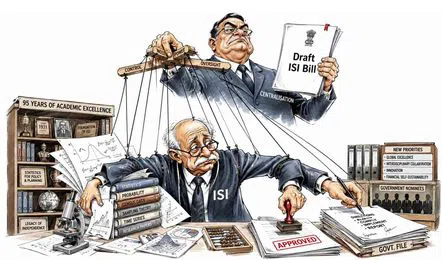
While the bill aims to improve governance, it has also raised concerns among some members of the institute. Faculty, students, and staff have expressed worries about increased central control. They fear that the new structure might reduce the independence of the institution. Autonomy is often seen as essential for academic freedom, allowing researchers to explore ideas without external pressure.
Balancing Reform and Independence
This situation highlights a common challenge in education reforms. On one hand, there is a need for better management and accountability. On the other hand, institutions need freedom to innovate and grow. Finding the right balance between these two aspects is important. The discussion around the bill reflects this ongoing debate in India’s education system.
Impact on Students and Researchers
The changes proposed in the bill could affect students and researchers in several ways. A stronger legal framework may bring better funding opportunities and improved infrastructure. At the same time, concerns about decision-making processes could influence academic activities. Students, especially those in emerging fields like data science, are watching these developments closely.
Link to Broader Education Reforms
The introduction of this bill comes at a time when India is focusing on improving its higher education system. There is a growing emphasis on research, innovation, and global competitiveness. Institutions are being encouraged to adapt to new technologies and collaborate with industry. The ISI Bill 2026 can be seen as part of this larger effort to modernize education.
Global Competition in Data and Research
Countries around the world are investing heavily in data science and research institutions. India also wants to strengthen its position in this area. By updating the structure of the Indian Statistical Institute, the government aims to make it more competitive on a global level. This could attract international collaborations and increase research output.
Voices from the Academic Community
The reaction from the academic community has been mixed. Some experts support the idea of modernization and better governance. Others believe that the proposed changes need more discussion and clarity. Open dialogue between policymakers and the academic community is important to ensure that the final outcome benefits everyone.
Future Direction of the Institute
The bill sets the stage for the future of the Indian Statistical Institute. With a broader academic scope and a new governance model, the institute is expected to evolve in the coming years. Its role in areas like data analysis, economic research, and technological development will likely grow.
Why This Matters Today
The discussion around the ISI Bill 2026 is not just about one institution. It reflects larger changes in how education, research, and governance are being shaped in India. As the country moves towards a more data-driven future, institutions like ISI will play a key role in supporting growth and innovation.