
NCM 2.0 Guidelines Launched

NCM 2.0 guidelines were launched in New Delhi on September 30, 2026, by Union Environment, Forest and Climate Change Minister Bhupender Yadav. The new framework will guide the implementation of the second phase of the National Coastal Mission, a ₹767 crore Central Sector Scheme designed to strengthen the resilience and sustainability of India’s coastal regions and support the country’s blue economy. The programme will run until 2030–31 across nine coastal states and four Union Territories.
Thank you for reading this post, don't forget to subscribe!NCM 2.0 Focuses on Coastal Resilience
The NCM 2.0 programme aims to help coastal areas respond better to environmental and climate-related risks while supporting sustainable economic activities linked to the sea.
The guidelines include vulnerability assessments to identify areas facing greater coastal risks. They also cover ecosystem restoration, pollution management, biodiversity conservation, sustainable tourism and spatial planning. Research and capacity building are additional areas included in the framework.
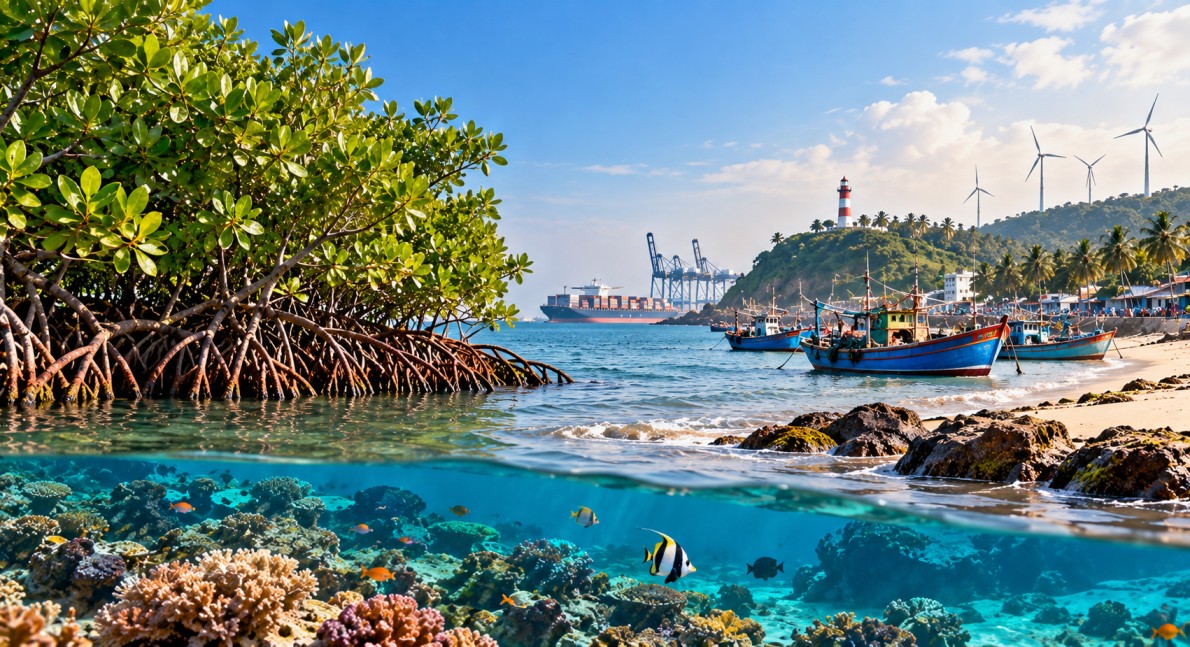
India’s coastal regions face several pressures, including coastal erosion, pollution, habitat loss and the effects of changing weather patterns. Natural ecosystems such as mangroves, coral reefs and other coastal habitats can also help reduce the impact of storms and flooding.
Mission Builds on the First Phase
NCM 2.0 is the second phase of the National Coastal Mission. The first phase was implemented from 2021–22 to 2025–26.
The new phase provides a broader framework for coordination between the Union government, state governments, Union Territories and other stakeholders. The guidelines are designed to make implementation more coordinated and transparent while clarifying institutional responsibilities.
The government has also said that the framework will support convergence with existing government programmes. This approach is intended to reduce duplication and improve coordination between different agencies working on coastal management.
Blue Economy Gets Greater Attention
A major part of NCM 2.0 is the development of India’s blue economy. The term refers to economic activities connected with oceans and coastal resources while maintaining environmental sustainability.
These activities can include fisheries, marine transport, coastal tourism and other ocean-based sectors. The new mission seeks to balance economic opportunities with the protection of coastal ecosystems.
The government has linked the programme with the wider goal of sustainable development of India’s coastal regions. The guidelines also include sustainable tourism and spatial planning, which can help improve how coastal areas are used and managed.
Ecosystem Restoration and Pollution Control
The NCM 2.0 framework gives importance to restoring coastal ecosystems and controlling pollution. Healthy coastal ecosystems provide natural protection and support biodiversity and local livelihoods.
Pollution management is included as a specific area under the mission. This is relevant as coastal waters can receive waste and pollutants from cities, industries, ports, tourism and other activities.
The mission also includes biodiversity conservation, recognising the importance of marine and coastal habitats for ecological health and economic activities.
Whole-of-Government Approach
The new guidelines introduce a whole-of-government approach to coastal management. This means different government departments and levels of administration will work through a more coordinated implementation structure.
The framework assigns institutional responsibilities and includes monitoring and accountability mechanisms. According to the Environment Ministry, these measures are intended to support effective, transparent and timely implementation.
Coastal management involves several areas at the same time, including environmental protection, disaster risk reduction, fisheries, tourism, infrastructure and marine resource management. Better coordination can therefore be important when different agencies are working in the same coastal areas.
Nine States and Four Union Territories Covered
NCM 2.0 will be implemented across nine coastal states and four Union Territories. The programme covers India’s mainland coastal areas as well as island territories administered by the Union government.
The ₹767 crore allocation will support activities under the mission through 2030–31. Implementation will involve participation from coastal states, Union Territories and other stakeholders.
The programme comes as India continues to focus on climate resilience, disaster preparedness and sustainable use of marine resources. Coastal planning has become increasingly important as communities, infrastructure and economic activities are concentrated along India’s shoreline.
Research and Capacity Building
Research and capacity building are also part of NCM 2.0. Scientific information can help authorities understand coastal vulnerability and plan measures suited to local conditions.
Capacity building can support government agencies, local institutions and other stakeholders involved in coastal management. The guidelines therefore combine scientific assessment with institutional planning and implementation.
The mission’s framework is intended to create a more structured approach to coastal resilience while supporting sustainable economic activities connected with India’s oceans and coastal regions.