
Delhi Vehicle Pollution Case

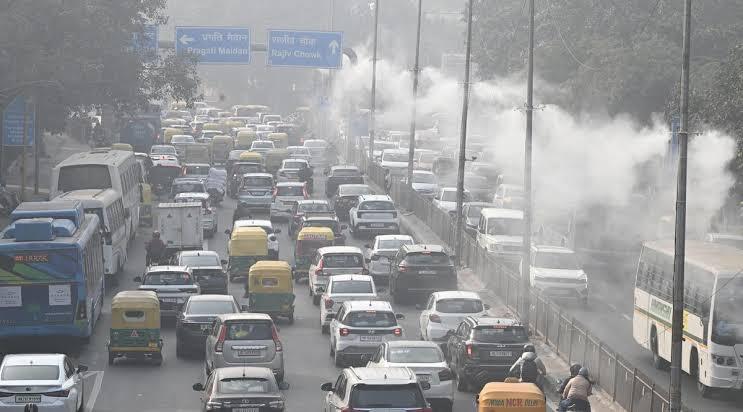
Delhi Vehicle Pollution has become a major concern for the Supreme Court of India, which has asked authorities in Delhi and neighbouring states to explain their plans to control emissions from vehicles. On November 6, 2026, the Court directed Delhi, Uttar Pradesh, Haryana and Rajasthan, along with the Municipal Corporation of Delhi (MCD) and Delhi Police, to submit details of the steps being taken to reduce pollution caused by vehicles across the National Capital Region (NCR).
The directions came during a suo motu case related to air pollution in Delhi-NCR. The Court wants authorities to explain their existing enforcement systems, future plans and the rules followed by private and commercial vehicles travelling within the region.

Supreme Court Gives Authorities Two Weeks
A bench led by Chief Justice Surya Kant, along with Justices Joymalya Bagchi and V Mohana, gave the concerned governments and authorities two weeks to submit their responses.
The Court asked them to provide details of both short-term and long-term measures to control emissions from vehicles. It also sought information about the rules that apply to private cars, commercial vehicles and other transport entering or moving through Delhi-NCR.
The authorities must explain how they identify vehicles that do not meet the required emission standards. They also need to provide information about the enforcement of Pollution Under Control (PUC) certificate requirements.
The Court has asked for figures showing how many vehicles have been inspected, how many challans have been issued and how many vehicles have been refused entry because of pollution-related violations.
Focus on Vehicles That Fail Emission Standards
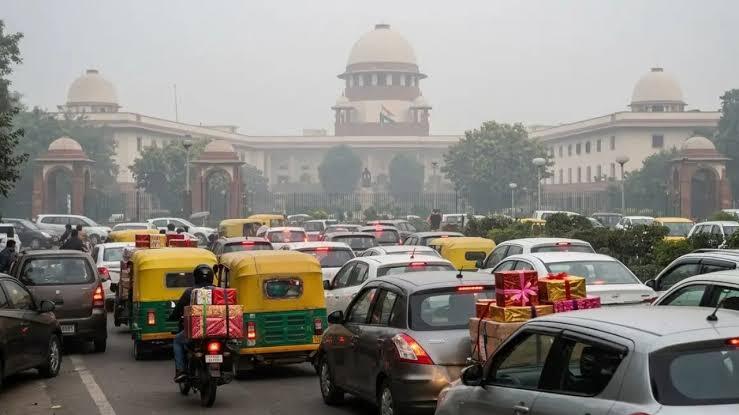
One of the major concerns raised by the Supreme Court is the movement of vehicles that do not meet pollution-control requirements.
Vehicles release pollutants through their exhaust systems. These emissions can include nitrogen oxides, carbon monoxide and particulate matter, depending on the vehicle, fuel and engine condition. Such pollutants can affect air quality and create health risks, particularly in areas with heavy traffic.
A valid Pollution Under Control certificate helps show whether a vehicle meets the applicable emission limits at the time of testing. The Court wants authorities to explain how these requirements are checked and enforced across the NCR.
The Court has also asked for information about systems used to monitor vehicles entering the region. This is important because Delhi-NCR includes areas belonging to different states, and vehicles regularly move between these locations.
Coordination Between Delhi and Neighbouring States
Vehicle pollution cannot be controlled by Delhi alone because the National Capital Region extends across state boundaries. A vehicle registered in one state may regularly travel through another state or enter Delhi.
For this reason, the Supreme Court has asked Delhi, Uttar Pradesh, Haryana and Rajasthan to explain how they coordinate vehicle monitoring and enforcement.
The Municipal Corporation of Delhi and Delhi Police have also been asked to provide details of their responsibilities and actions.
Better coordination can help authorities identify vehicles that violate emission rules, share information and take action across different parts of the region. The Court’s directions highlight the need for a common approach instead of separate enforcement efforts that may leave gaps between state borders.
Supreme Court Raises Concern Over Vehicular Emissions
During the hearing, the bench observed that vehicle emissions remained a growing concern even though stubble-burning incidents had reduced considerably across the four states.
Stubble burning is often discussed during the winter pollution season because smoke from agricultural fields can affect air quality in northern India. However, the Court’s observations highlight that pollution has several sources and that reducing one source does not remove the need to control others.
Vehicular emissions are particularly important in urban areas with large numbers of cars, buses, trucks and two-wheelers. Traffic congestion, older vehicles and poor vehicle maintenance can add to the pollution burden.
The Court has asked the states to respond to recommendations made by the Commission for Air Quality Management (CAQM) and the amicus curiae assisting the Court. It has also called for a time-bound roadmap to improve enforcement.
What Is the Commission for Air Quality Management?
The Commission for Air Quality Management is a statutory body responsible for coordinating air-quality management efforts in Delhi-NCR and adjoining areas.
It works with different state governments and agencies to address pollution-related issues. Its role includes coordinating measures, issuing directions and supporting action to improve air quality across the region.
The Supreme Court’s request for responses to CAQM recommendations indicates the importance of coordinated planning between environmental authorities and state governments.
What Is a PUC Certificate?
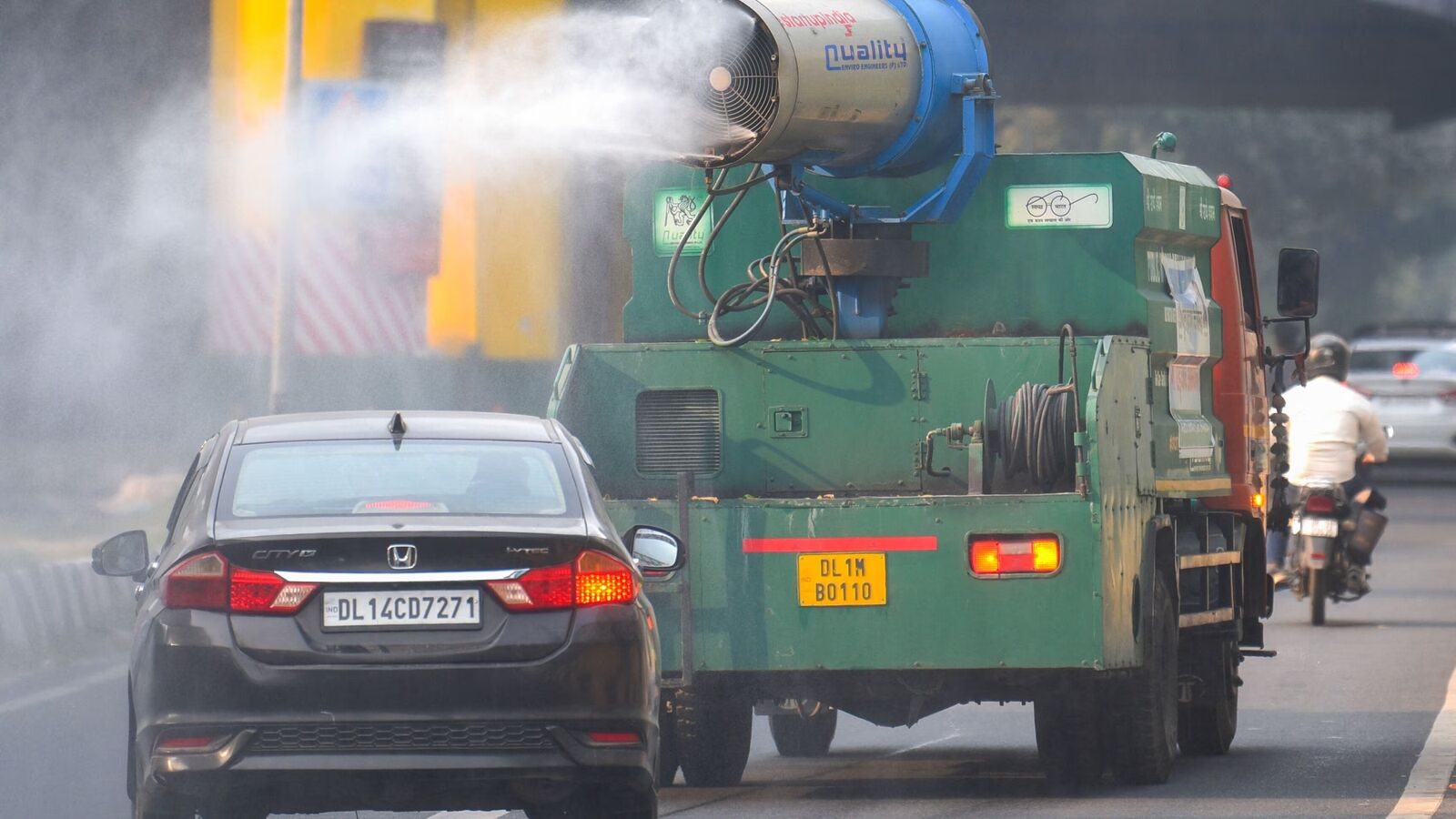
A Pollution Under Control certificate is an official document issued after a vehicle undergoes an emission test at an authorised testing centre.
The test checks whether emissions from a vehicle remain within the applicable limits. Vehicle owners are required to keep their PUC certification valid according to the rules.
Regular emission testing can help identify vehicles that release pollutants beyond permitted levels. However, effective pollution control also depends on proper maintenance, timely inspections and enforcement against vehicles that fail the required standards.
Next Hearing Scheduled for November 23
The Supreme Court has scheduled the next hearing on vehicle emissions and air pollution in Delhi-NCR for November 23, 2026.
Before that hearing, the concerned state governments and authorities are expected to submit their reports within the period given by the Court. Their responses will provide details of existing inspection systems, enforcement figures, inter-state coordination and proposed measures.
The proceedings place renewed attention on vehicle emissions as part of the wider effort to address air pollution in the National Capital Region. The information submitted by the authorities will help the Court examine whether current measures are sufficient and what additional steps may be needed.