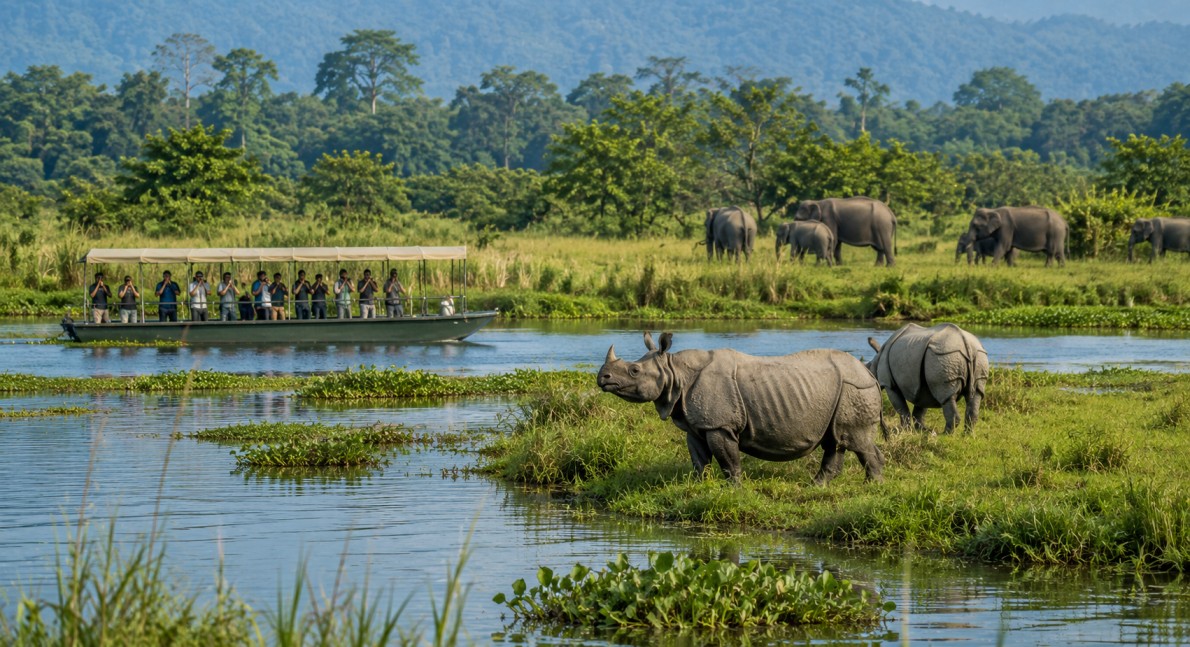
Kaziranga ESZ Plan Sparks Local Debate

Kaziranga ESZ has become a major topic of discussion in Assam after villagers living around Kaziranga National Park expressed support for a site-specific approach to the Eco-Sensitive Zone. The Assam government’s proposal would consider local conditions while deciding the extent of the protected zone instead of applying a uniform 10-kilometre boundary everywhere. Residents say a blanket restriction could affect homes, construction, land use, small businesses and other livelihood activities.
Thank you for reading this post, don't forget to subscribe!The discussion comes at a time when Assam is trying to balance wildlife conservation with the needs of communities living around one of India’s most important wildlife landscapes.
What Is the Kaziranga Eco-Sensitive Zone?
An Eco-Sensitive Zone, or ESZ, is an area around protected forests, national parks and wildlife sanctuaries where certain activities may be regulated to reduce pressure on the environment. The purpose is not to stop all development, but to control activities that could seriously affect wildlife and natural habitats.
Kaziranga National Park is surrounded by villages, agricultural areas, roads and other human settlements. Because people have lived and worked around the park for generations, decisions about the ESZ can directly affect daily life.
The Assam government’s current position is that the ESZ should be decided according to conditions in different parts of the Kaziranga landscape rather than treating every location in the same way.
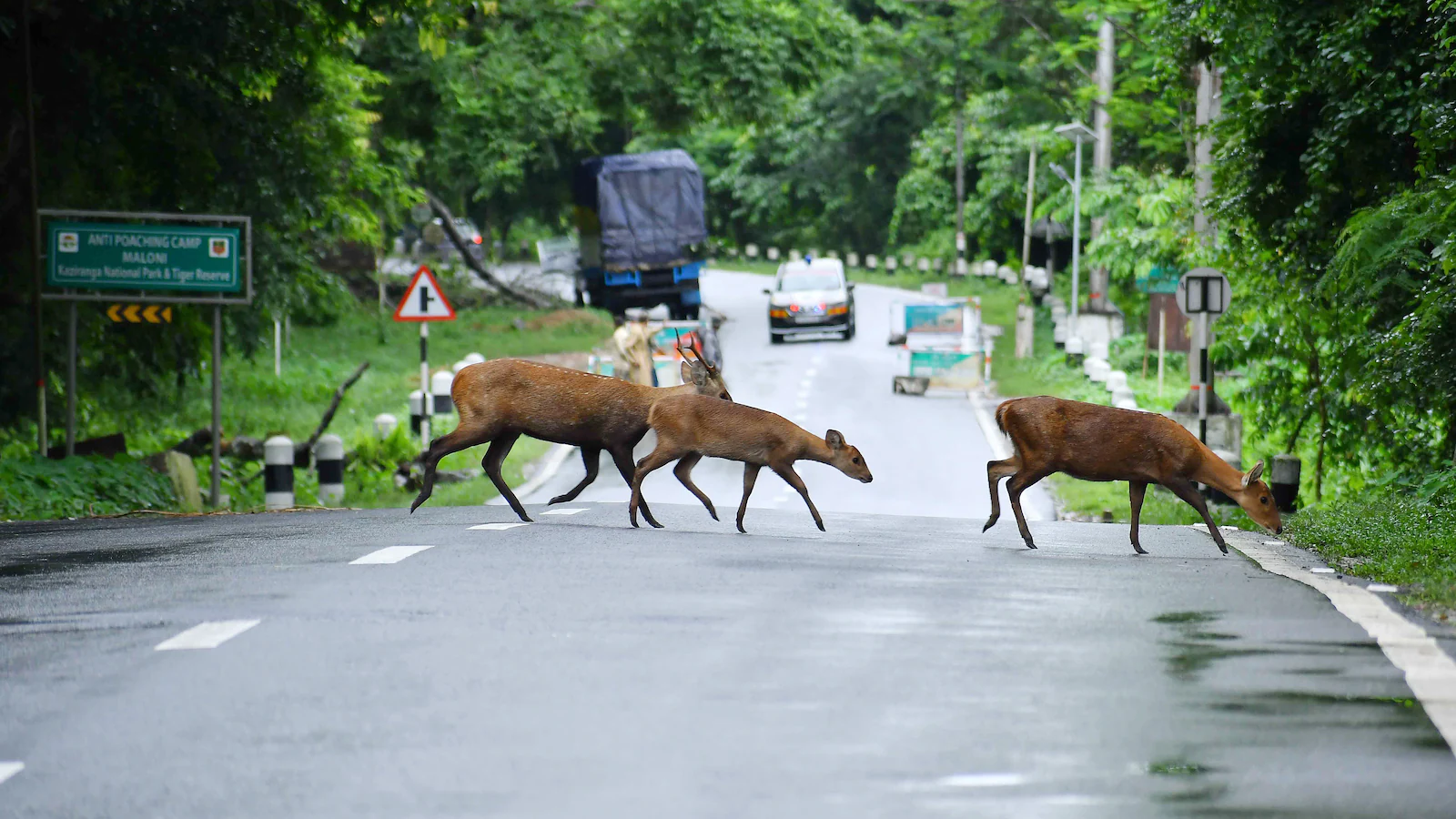
Villagers Raise Livelihood Concerns
Several residents around Kaziranga have said that a blanket 10-kilometre zone could create difficulties for people living outside the park. They are concerned about restrictions on construction, land-related activities and local businesses.
Madhur Mohanta, a resident of Uthori village, said villagers want development without weakening protection for Kaziranga. He also said a smaller or site-specific zone could create opportunities for village tourism and allow visitors to explore communities around the national park.
Another indigenous resident also supported the site-specific approach, pointing out that densely populated areas and forested stretches have very different needs.
The residents have stressed that supporting development does not mean reducing wildlife protection. Their argument is that conservation and community welfare should be considered together.
Why Kaziranga’s Wildlife Corridors Matter
The debate is not limited to the boundary of the national park. Kaziranga’s wider landscape is important because animals move beyond the park, particularly during the annual flood season.
Flooding is a regular part of the Kaziranga ecosystem. When water levels rise, animals move towards higher areas and adjoining landscapes. These movement routes are important for wildlife safety.
The Karbi Anglong hills are particularly important in this context because they provide higher ground for animals moving out of Kaziranga during floods.
This has become one of the main concerns raised by those who want stronger protection across the wider landscape. Critics of a smaller ESZ argue that reducing the protected area around Kaziranga could affect wildlife movement and corridors.
Political Debate Intensifies
The Kaziranga ESZ issue has also developed into a political debate in Assam. Assam Pradesh Congress Committee president and Jorhat MP Gaurav Gogoi has opposed the government’s proposal and participated in protests over the issue.
Gogoi has argued that a wider protection zone is necessary for wildlife and has raised concerns about possible commercial activities in areas connected to the Kaziranga landscape.
He has also questioned spending priorities related to the proposed elevated corridor through the Kaziranga landscape, comparing infrastructure spending with funds available for flood relief and rehabilitation.
The Assam government has rejected the suggestion that its site-specific approach would weaken conservation. The government says protecting Kaziranga remains important while the concerns of communities living around the park also need to be considered.
Assam Government Defends Site-Specific Approach
Chief Minister Himanta Biswa Sarma has argued that the impact of a wider ESZ should be properly assessed rather than simply measured by drawing a fixed distance around the park.
The government has said that the existing 10-kilometre arrangement is an interim measure and that the final ESZ has to be determined through the applicable legal and environmental process.
This means the current debate is not simply about choosing between one kilometre and 10 kilometres. The larger question is how the final boundary should be designed so that populated areas, forests, wildlife corridors and local economic activities are considered separately.
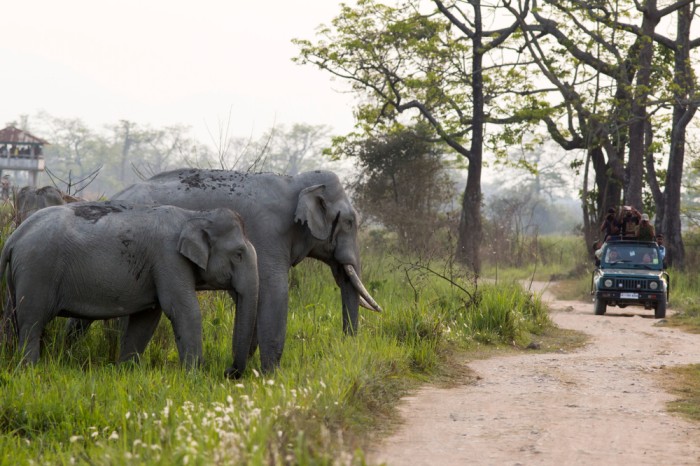
Legal Process Will Shape the Final Decision
The legal framework is an important part of the Kaziranga ESZ discussion. Supreme Court directions have established a minimum ESZ approach for protected areas where a wider legally prescribed zone is not already in place. The exact status and extent of protection can depend on the applicable notifications, court directions and final environmental process.
A March 2026 Gauhati High Court order had noted that the 10-kilometre protection around Kaziranga remained operative at that stage in the absence of a final notified ESZ, according to the report provided.
The final decision will therefore involve more than political statements. Environmental assessments, legal proceedings, government notifications and the concerns of people living around Kaziranga will all remain important as the process moves forward.
Development and Conservation Remain at the Centre
For local residents, the issue is closely connected to everyday life. Houses, roads, farming, tourism and small businesses are part of communities that have developed around Kaziranga over many years.
For conservationists and wildlife advocates, the priority is to protect the wider ecosystem that supports rhinos, elephants, tigers and other species, including the areas used by animals during floods.
The debate over the Kaziranga ESZ therefore brings together two major concerns: the need to protect one of Assam’s most important wildlife landscapes and the need to support communities that live around it. The final site-specific proposal will determine how these interests are balanced across the Kaziranga region.