Magenta Line Longest Metro Corridor Set to Transform Delhi NCR Connectivity

The Magenta Line Longest Metro Corridor is emerging as a major milestone in India’s urban transport story. With the completion of Delhi Metro’s Phase IV works and the newly sanctioned Phase V (A) expansion, the Magenta Line, also known as Line 8, is on track to become the longest corridor in the entire metro network. This development is expected to reshape daily commuting across Delhi and the National Capital Region by offering faster, smoother, and more reliable travel.
Thank you for reading this post, don't forget to subscribe!The Magenta Line is operated by Delhi Metro Rail Corporation, which has steadily expanded the network to meet the growing transport needs of one of the world’s largest urban regions. The planned extensions will significantly strengthen cross city connectivity while setting new standards in automation and underground construction.
A Corridor That Connects the City End to End
Once the ongoing and approved expansions are completed, the Magenta Line will stretch from Botanical Garden in Noida to Inderlok in north Delhi. This long continuous route will allow passengers to travel across the city without changing multiple lines, which is a major advantage for daily commuters.
The extension under Phase V (A), from Ramakrishna Ashram Marg to Indraprastha via Central Vista, has played a key role in redefining the corridor. The Indraprastha to Inderlok section, earlier planned as part of Phase IV, will now function as a direct continuation of the Magenta Line. This integration turns the line into a single, uninterrupted route that links residential areas, business districts, and transport hubs across Delhi NCR.
With a total length of nearly 89 kilometres, the Magenta Line Longest Metro Corridor will surpass all other corridors in the Delhi Metro system in terms of distance. This expansion reflects the scale at which public transport infrastructure is being planned to keep pace with urban growth.
Expansion That Redefines Metro Travel
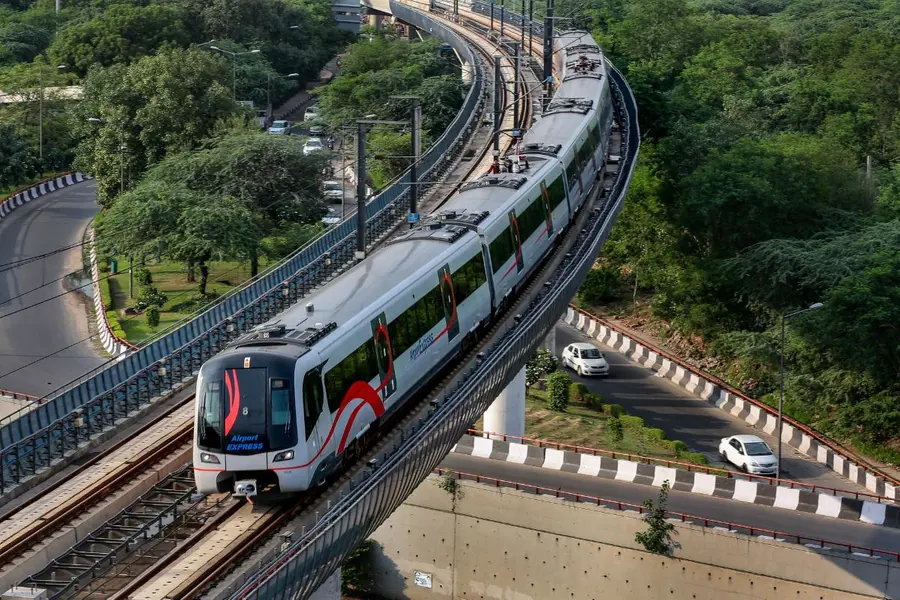
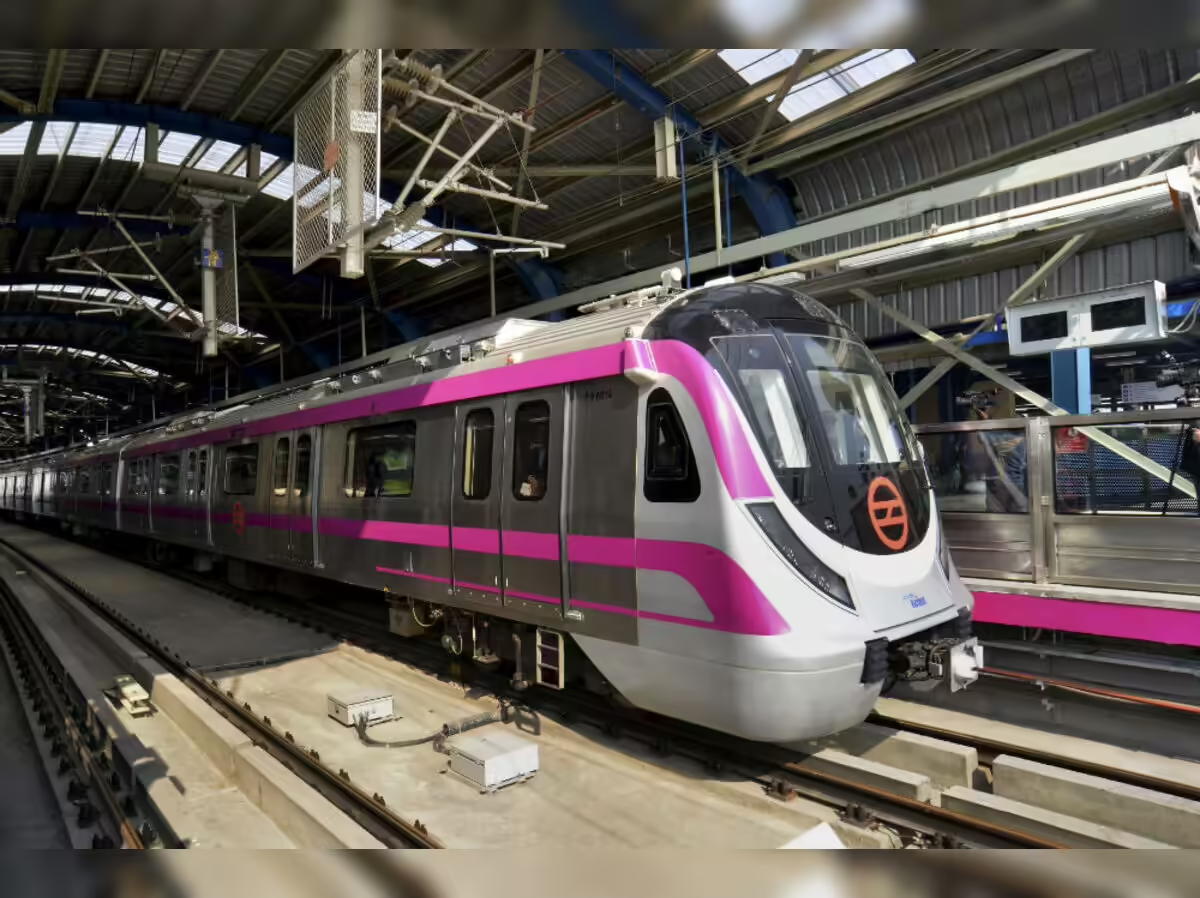
The growing length of the Magenta Line is not just about kilometres. It represents a shift in how metro travel is designed and delivered. The corridor is planned to operate fully as a driverless metro line, using advanced Communication Based Train Control technology. This system allows trains to run at shorter intervals with higher safety and efficiency.
Driverless operations also improve punctuality and reduce human error, making travel more reliable for passengers. For a city where millions depend on public transport every day, such upgrades can make a noticeable difference in daily life.
The corridor will also include a mix of elevated and underground sections, carefully planned to suit dense urban areas. This balanced design ensures minimal disruption on the surface while providing fast movement below ground.
Record Breaking Interchange Network
One of the most impressive features of the Magenta Line Longest Metro Corridor is the number of interchange stations it will offer. After full expansion, the line will have 21 interchange stations, the highest number for any corridor in the Delhi Metro network.
At present, the operational stretch has four key interchange stations at Kalkaji Mandir, Botanical Garden, Janakpuri West, and Hauz Khas. These stations already play a vital role in connecting different parts of the city.
With Phase IV and Phase V (A), 17 more interchange stations will be added. These include Kalindi Kunj, Terminal 1 of IGI Airport, Azadpur, Central Secretariat, New Delhi, and Inderlok. Some of these stations will become triple interchange hubs, allowing passengers to switch between three different metro lines at a single point.
Such a dense interchange network will greatly reduce travel time and make journeys more flexible. Passengers will have more route options and fewer long detours, which is especially helpful during peak hours.
Engineering Feats Beneath and Above Ground
The Magenta Line is also known for its remarkable engineering achievements. Once fully operational, the corridor will include around 65 stations, with about 40 of them located underground. This makes it one of the most tunnel heavy routes in the network.
Among its standout features is Haiderpur Badli Mor, the highest elevated metro station in the system, with a rail level height of over 28 metres. On the other end of the spectrum is Hauz Khas, which remains the deepest underground station, located nearly 29 metres below ground level.
These extremes highlight the technical complexity involved in building the Magenta Line. Constructing tunnels deep below busy city areas and elevated structures above crowded roads requires precise planning and advanced technology. The successful execution of these works shows the growing capability of India’s metro engineering sector.
Impact on Daily Commuters and Urban Life
The expansion of the Magenta Line Longest Metro Corridor is expected to bring lasting benefits to urban mobility in Delhi NCR. By offering direct connectivity across long distances, the corridor will reduce pressure on roads and other metro lines.
Commuters traveling between Noida, south Delhi, central areas, and north Delhi will enjoy shorter and more predictable journeys. The increase in interchange options will also help distribute passenger flow more evenly across the network, reducing overcrowding at major stations.
In the long run, improved metro connectivity encourages people to shift from private vehicles to public transport. This can help lower traffic congestion, reduce pollution, and improve overall quality of life in the region.
The Magenta Line’s transformation into the longest corridor is more than just a record. It reflects a vision of a well connected city where efficient public transport supports economic activity and everyday living. As the extensions move closer to completion, the Magenta Line is set to become a backbone of Delhi NCR’s metro system, carrying millions of passengers across the city with speed, comfort, and reliability.