


National Security Strategies Conference 2026

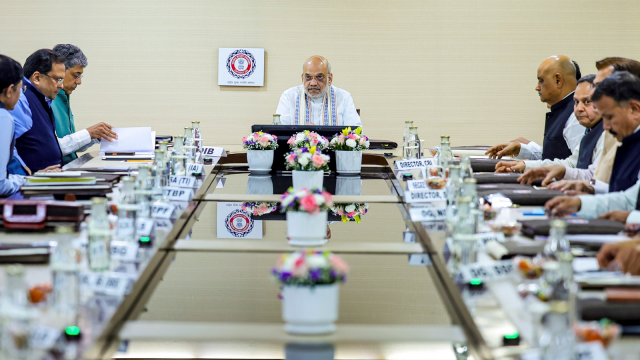
National Security Strategies Conference 2026 began in New Delhi with Union Home Minister Amit Shah inaugurating the two-day 9th edition on 24 August 2026. The conference brought together more than 850 participants, including senior officials from the Intelligence Bureau, Ministry of Home Affairs, central armed police organisations and state police forces.
Thank you for reading this post, don't forget to subscribe!The annual conference provides a platform for security agencies and police organisations to discuss emerging challenges to India’s internal security. The 2026 edition is being held in hybrid mode, allowing officials to participate both physically and through digital platforms.
The discussions focus on several important areas, including counter-terrorism, cybercrime, narcotics control, border management and information warfare.
Focus on Changing Security Threats
The National Security Strategies Conference comes at a time when India’s security environment is becoming more complex. Traditional threats such as terrorism and cross-border infiltration are increasingly connected with cyber attacks, online crime, misinformation and the use of new technologies.
During the opening session, Amit Shah called for stronger measures to prevent border infiltration. He also asked state police chiefs to take steps to identify and deport illegal migrants in accordance with the law.
Border management has become an important part of India’s internal security planning because illegal movement across borders can create challenges related to national security, immigration and law enforcement.
Artificial Intelligence in Security Operations
Technology was another major focus of the conference. Amit Shah asked security agencies to make greater use of artificial intelligence-based analysis through the Multi-Agency Centre (MAC).
The Multi-Agency Centre is an intelligence-sharing platform that helps different security agencies exchange information. Using AI-based tools can help agencies process large amounts of information more quickly and identify possible security threats.
The conference also discussed the need to develop Standard Operating Procedures (SOPs) for dealing with emerging threats. Clear procedures can help agencies respond more quickly when new types of security challenges appear.
Counter-Terrorism and Investigation
Counter-terrorism remained one of the key subjects at the National Security Strategies Conference 2026. The first day included discussions on counter-terrorism and Pakistan’s alleged proxy warfare, along with methods for improving investigation and coordination between agencies.
The meeting also discussed integrated investigative approaches for cases registered under the Unlawful Activities (Prevention) Act, 1967, commonly known as the UAPA.
Another issue highlighted was the use of trial-in-absentia provisions in cases involving fugitives. Such provisions allow legal proceedings to continue in certain circumstances even when an accused person is not physically present before the court.
Cybercrime and Information Warfare
Cybercrime has become an increasingly important part of India’s security planning. Digital systems are now used for financial transactions, communication, government services and critical infrastructure, making cyber security a major national concern.
The conference included discussions on cybercrime policy frameworks and information warfare. Information warfare can involve attempts to influence public opinion or create confusion through digital platforms and other communication channels.
The final day of the conference was scheduled to examine sub-aerial threats, blue economy security, information warfare and bio-security. These subjects reflect the growing need to prepare for security risks beyond traditional land and air threats.
Narcotics Control and PRAHAAR Scheme
Narcotics control was another important topic at the conference. A vision document on narcotics control was included in the first day’s discussions.
Amit Shah also referred to the Ministry of Home Affairs’ PRAHAAR scheme while discussing measures connected with national security and law enforcement. The broader focus is on improving coordination, investigation and action against activities that can threaten internal security.
Drug trafficking is increasingly viewed as a security concern because organised criminal networks can operate across state and international borders. Better intelligence sharing and coordinated investigations can help agencies respond to such networks.
Coordination Between Central and State Agencies
The participation of central and state police organisations is an important feature of the National Security Strategies Conference. Internal security responsibilities are shared among several agencies, making coordination necessary for effective action.
The conference allows senior officials to discuss common challenges and share operational experiences. It also provides an opportunity to identify areas where technology, intelligence sharing and investigative methods can be improved.
The hybrid format further allows a larger number of officials to participate without requiring everyone to be physically present in New Delhi.
Tribute to Intelligence Bureau Personnel
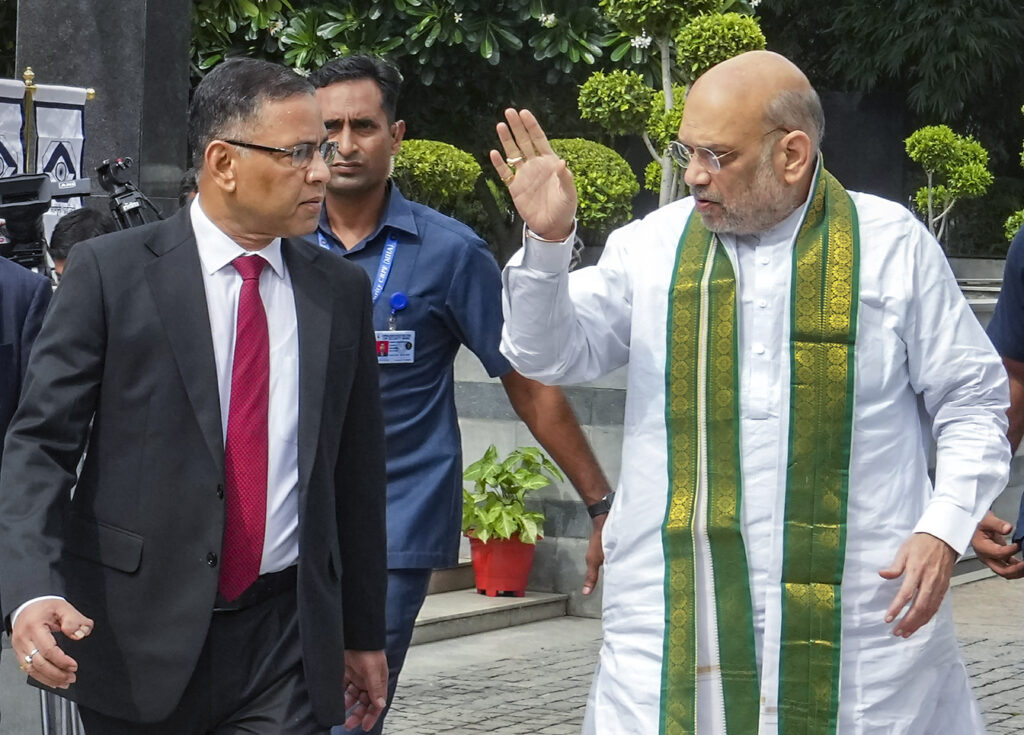
Before inaugurating the conference, Amit Shah paid tribute to Intelligence Bureau personnel who lost their lives while performing their duties. He laid a wreath at the Martyrs’ Column in New Delhi in their memory.
The tribute highlighted the contribution of security personnel involved in protecting the country and dealing with internal security threats.
The National Security Strategies Conference 2026 therefore brings together several areas of India’s security policy, from counter-terrorism and border management to artificial intelligence, cybercrime, narcotics control, information warfare and bio-security.