



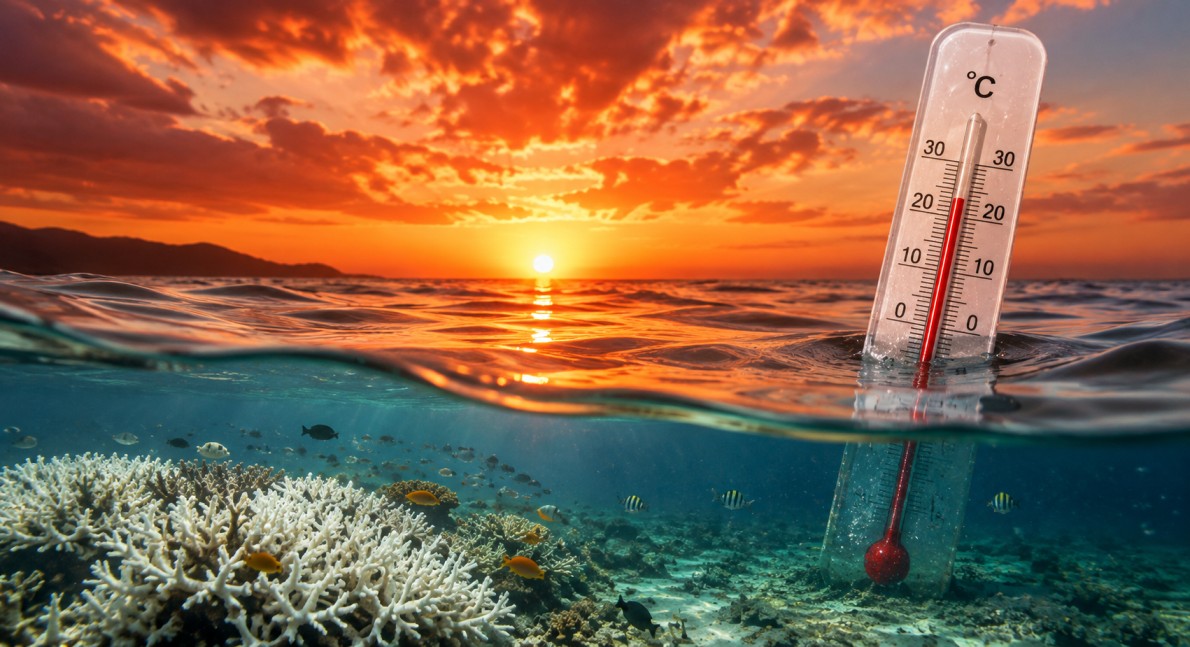
Record Ocean Temperature Reached in 2026

Record Ocean Temperature levels have raised fresh concerns about climate change and the future of marine ecosystems after the world’s extra-polar oceans reached an average sea surface temperature of 21.1°C on August 21 and 22, 2026. The new figure marks the highest daily global sea surface temperature recorded for ocean waters between 60° South and 60° North.
Thank you for reading this post, don't forget to subscribe!The record is particularly notable because global sea surface temperatures usually reach their highest levels around March or April. An exceptionally high reading in August shows how unusual current ocean conditions have become. Scientists and climate monitoring organisations are closely watching these changes because warmer oceans can affect weather, marine life, fisheries and coastal communities around the world.
What Is Sea Surface Temperature?
Sea surface temperature refers to the temperature of the upper layer of the ocean. It is measured using satellites, floating buoys and observations from ships. Scientists use this information to understand changes in climate, weather systems and ocean ecosystems.
The latest record focuses on the extra-polar ocean belt, which includes waters between 60° South and 60° North. This covers a large part of the world’s major oceans and important marine ecosystems while excluding the polar seas.
The previous record was 21.09°C, recorded on March 1, 2024. Although the difference between the old and new records may appear small, even a small increase in average global ocean temperature can represent a huge amount of additional heat stored across the world’s oceans.

Why Are the Oceans Becoming Warmer?
Several factors are contributing to rising ocean temperatures. Human activities that release greenhouse gases remain the main long-term driver of global warming. The oceans absorb much of the excess heat trapped in the Earth’s climate system, causing sea temperatures to rise over time.
Climate patterns such as El Niño can also increase ocean temperatures. El Niño is a natural climate pattern linked to warmer waters in parts of the tropical Pacific Ocean. When combined with long-term human-driven warming, it can push global temperatures to unusually high levels.
The development of strong warming conditions in 2026 has therefore increased attention on the connection between natural climate cycles and long-term climate change. Scientists continue to study how these factors interact and how quickly ocean conditions may change in the coming years.
Marine Life Faces Growing Pressure
Warmer oceans can create serious problems for marine ecosystems. Coral reefs are especially sensitive to temperature changes. When water remains unusually warm for long periods, corals can experience stress and lose the tiny algae that help provide them with energy. This process is known as coral bleaching.
If high temperatures continue for a long time, coral reefs may suffer severe damage. This is important because reefs provide shelter and food for many fish and other marine species.
Fish populations can also move to cooler waters when temperatures rise. This can change traditional fishing areas and affect coastal communities that depend on the sea for food and income. Some species may struggle to survive if they cannot adapt quickly enough to changing conditions.
Warmer water can also contain less oxygen, creating difficult conditions for marine animals. Changes in ocean chemistry and rising acidity can further affect shell-forming organisms and other sensitive species.
Impact on Weather and Food Security
The world’s oceans play a major role in controlling weather and rainfall. As ocean temperatures rise, they can influence rainfall patterns, ocean currents and major weather systems.
Warmer ocean water can provide additional energy to powerful storms and cyclones. While ocean temperature is not the only factor behind extreme weather, unusually warm waters can increase the conditions that support stronger storms.
Ocean warming also has important links with food security. Fisheries and aquaculture depend on stable marine environments. Changes in water temperature can affect fish breeding, migration and food availability. This may create challenges for fishing communities and seafood industries.
Another growing concern is the increase in harmful algal blooms. In some cases, warm water conditions can support the rapid growth of algae that produce harmful toxins. These blooms can affect marine ecosystems and may create risks for seafood safety.
Growing Need for Ocean Monitoring
The latest record has highlighted the importance of continuous ocean monitoring. Satellites, ocean buoys and scientific research ships provide valuable information about changes happening across the world’s seas.
Climate organisations, including the Copernicus Climate Change Service and the National Oceanic and Atmospheric Administration, monitor ocean temperatures and other environmental changes. Their data helps scientists understand marine heatwaves and prepare for possible impacts on weather, ecosystems and coastal communities.
The record temperature in August 2026 is another sign that the world’s oceans are experiencing unusual levels of heat. As climate conditions continue to change, ocean health is becoming increasingly important not only for marine life but also for global weather, food supplies and the millions of people who depend on the sea.