


Plastic-to-Fuel Process Developed

Plastic-to-Fuel technology has taken a new step forward after researchers at the US Department of Energy’s Oak Ridge National Laboratory (ORNL) developed a method to convert polyethylene plastic waste into gasoline-like and diesel-like fuels. The new process, announced on September 21, 2026, uses aluminium-based molten salts to help break down plastic at temperatures below 200 degrees Celsius.
Thank you for reading this post, don't forget to subscribe!The research could offer another approach to dealing with plastic waste, especially polyethylene, which is widely used in packaging, containers, films and plastic bags. Instead of treating used plastic only as waste, the process attempts to recover useful hydrocarbon products from it.
How the Plastic-to-Fuel Process Works
The new Plastic-to-Fuel method focuses on polyethylene, a common type of plastic made from long chains of hydrocarbons. These long chains need to be broken into smaller molecules before they can be converted into fuel-range products.
In the ORNL process, aluminium-based molten salts work as both the reaction medium and the catalyst. A catalyst helps a chemical reaction take place more efficiently without being consumed in the same way as the main reactants.
The researchers found that the process can operate under relatively mild conditions, with temperatures below 200 degrees Celsius. This is important because many conventional thermal processes require much higher temperatures.
Gasoline-Like and Diesel-Like Products
The structure of the polyethylene chains influences the type of fuel-range product produced during the process.
According to the research, simpler polymer chains tend to produce products similar to gasoline, while more complex chains can result in diesel-like products. Experiments using polyethylene waste produced about 60% gasoline under the tested conditions.
This shows how chemical recycling can potentially turn plastic waste into useful hydrocarbon products instead of sending it directly to landfills or incineration.
The exact fuel properties, purification requirements and possible commercial applications would still need to be considered before such technology could be widely used.
Why Polyethylene Is Important
Polyethylene is one of the most commonly used plastics in everyday life. It is found in many types of packaging, containers, films, bags and other consumer products.
Its widespread use also means that large quantities of polyethylene waste are generated. Mechanical recycling can recover some plastic materials, but not every type of plastic waste is suitable for conventional recycling because of contamination, mixed materials or changes in material quality.
Chemical recycling approaches such as the new ORNL process work differently. Instead of simply melting and reshaping plastic, they attempt to change the chemical structure of the polymer and recover smaller molecules.
Difference Between the New Process and Pyrolysis
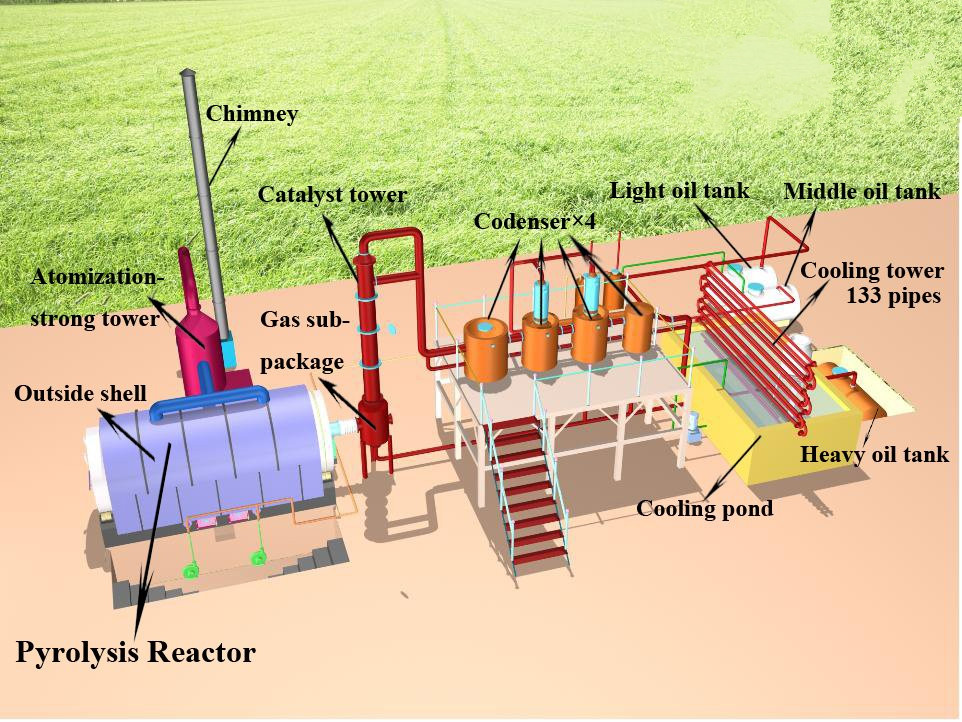
Pyrolysis is one of the better-known methods for converting plastic waste into chemical products and fuels. It involves heating material in the absence of oxygen so that large molecules break down into smaller compounds.
Traditional pyrolysis systems often operate at temperatures significantly higher than 200 degrees Celsius. Some processes may also require external hydrogen, organic solvents or specialised catalysts.
The ORNL method is different because aluminium-based molten salts are used as both the reaction medium and catalyst. The lower operating temperature is one of the features being highlighted by the researchers.
However, the new technology and conventional pyrolysis belong to the wider field of chemical recycling, where researchers are looking for ways to recover value from difficult plastic waste.
Other Plastic-to-Fuel Research
Research into Plastic-to-Fuel technologies is continuing in several parts of the world. In April 2026, Clean Planet Technologies opened a pilot facility in Sandwich, Kent, in the United Kingdom, to process non-recyclable plastic waste into Sustainable Aviation Fuel through a thermal pyrolysis process.
Researchers are also testing different reactor designs and chemical methods to improve the conversion of plastic waste.
In July 2025, researchers from Yale University developed a catalyst-free pyrolysis approach using a three-dimensional printed, electrically heated carbon-column reactor. Such work is aimed at improving the efficiency and control of plastic conversion.
These projects show that plastic waste conversion is not limited to one technology. Different research teams are exploring heat, catalysts, reactor designs and other chemical methods.
Research on Mixed Plastics and Hydrogen
Scientists are also studying methods that can handle more than one type of plastic. In July 2026, researchers from the UCLA Samueli School of Engineering and Ewha Womans University reported an alkaline thermal treatment method for converting mixed plastics such as polyethylene terephthalate (PET), polyethylene (PE) and polypropylene (PP) into high-purity hydrogen fuel.
Hydrogen is being studied as an energy carrier for several sectors, including industry and transportation. Producing hydrogen from waste materials could provide another way to connect waste management with energy production.
The different approaches show the wide range of research taking place in plastic recycling and waste-to-energy technologies.
Plastic Waste as an Energy Resource
The growing amount of plastic waste has encouraged researchers to look beyond traditional recycling methods. Plastic contains carbon and hydrogen-rich chemical structures, which means some forms of plastic can potentially be converted into useful chemicals or fuels.
The idea behind Plastic-to-Fuel technology is to recover some of this stored chemical value. Instead of treating plastic waste only as a disposal problem, chemical conversion can potentially turn it into a feedstock for other products.
However, environmental benefits depend on factors such as energy consumption, emissions, feedstock quality, fuel use and the overall life cycle of the process. These factors are important when evaluating whether a technology can be scaled from laboratory experiments to commercial facilities.
Future Scope of Plastic Conversion
The ORNL research adds another approach to the growing field of plastic chemical recycling. Operating below 200 degrees Celsius and using aluminium-based molten salts could provide researchers with a different pathway for breaking down polyethylene.
Further research will be important to determine how the method performs with different types of plastic waste, how the products can be separated and purified, and whether the process can be scaled economically.
As governments, industries and research institutions continue to search for solutions to plastic pollution, technologies that recover chemicals, fuels or other useful materials from waste are receiving increasing attention.