


Sun Magnetic Fields Reconstruction: IIT Kanpur Scientists Unlock Hidden Solar Secrets

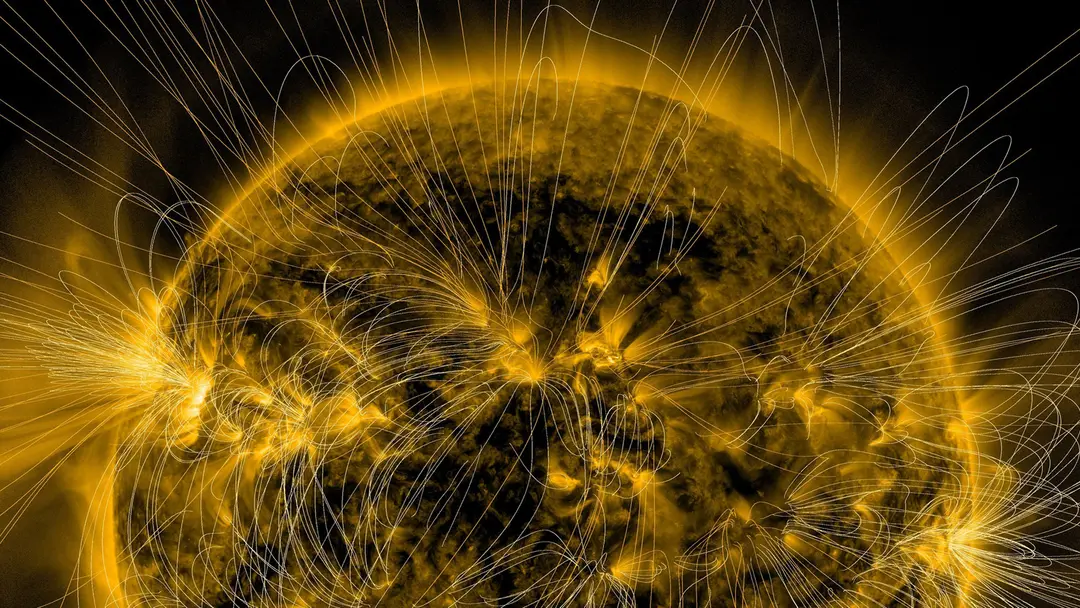
Sun Magnetic Fields Reconstruction is opening a new window into understanding how our star works deep beneath its visible surface. The Sun’s powerful magnetic activity controls solar flares, sunspots, and massive eruptions that can affect satellites, communication systems, navigation networks, and even power grids on Earth. Yet, predicting when these events will occur and how strong they will be has remained one of the biggest challenges in solar science.
Thank you for reading this post, don't forget to subscribe!A new study by researchers from the Indian Institute of Technology (IIT) Kanpur has now provided a promising solution. By using decades of real observational data, scientists have developed a method to rebuild the Sun’s internal magnetic fields, offering better insight into the engine that drives solar activity.
Why the Sun’s Magnetic Cycle Matters
The Sun operates on an average 11-year magnetic cycle. During this cycle, solar activity rises and falls, leading to periods of intense sunspots, flares, and coronal mass ejections. These events release huge amounts of energy and charged particles into space.
When such solar storms reach Earth, they can disturb satellite operations, disrupt radio communications, and cause voltage fluctuations in power lines. Accurate forecasts are therefore essential for protecting modern technological infrastructure.
However, while scientists can observe the Sun’s surface in great detail, they cannot directly see what is happening deep inside the Sun where magnetic fields are generated.
A Breakthrough from IIT Kanpur
In a study published in Astrophysical Journal Letters on January 20, PhD student Soumyadeep Chatterjee and Assistant Professor Gopal Hazra introduced a new technique to reconstruct the Sun’s internal magnetic fields.
Instead of relying mainly on theoretical assumptions, their method uses long-term observations of the Sun’s surface magnetic fields to infer what is happening beneath the surface. The research is based on nearly 30 years of solar data, making it one of the most comprehensive efforts of its kind.
Moving Beyond Simplified Solar Models
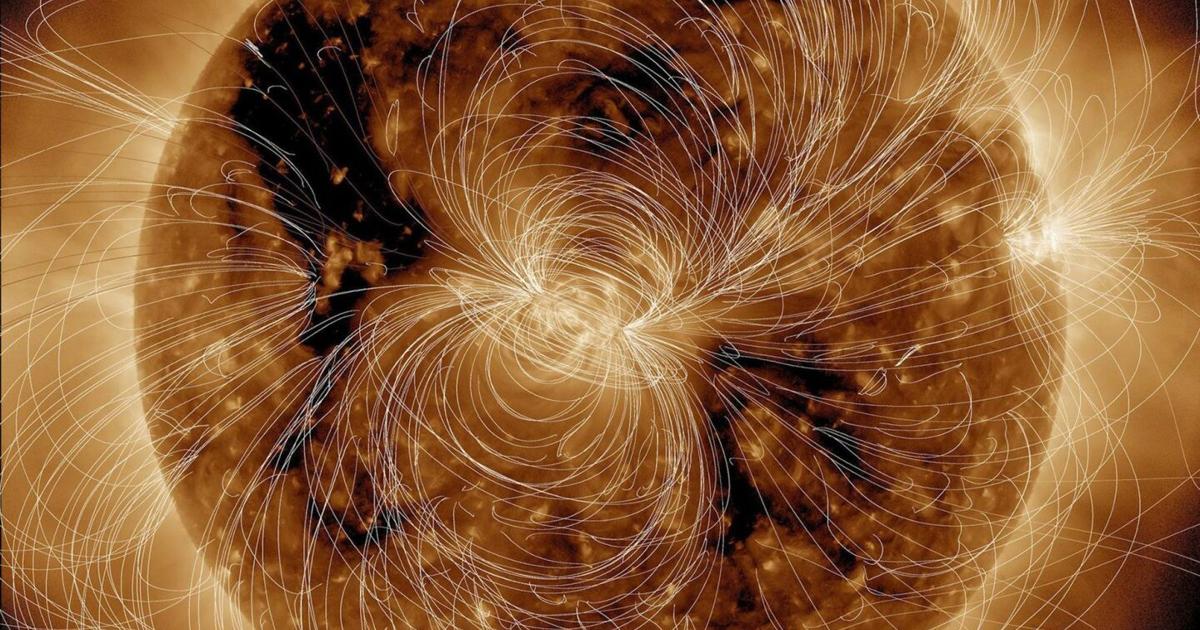
Traditional solar dynamo models try to explain how the Sun produces magnetic fields. These models often treat sunspots as smooth, symmetrical circles and assume idealised conditions. In reality, sunspots are irregular and complex.
Such simplifications reduce the accuracy of predictions. The IIT Kanpur team replaced these idealised rules with real observational inputs. By feeding actual surface magnetic field measurements into their model, they created a system that better reflects the Sun’s true behaviour.
This shift from simplified assumptions to data-driven modelling marks a major improvement in solar physics research.
Using Three Decades of Space Observations
The researchers used magnetic field data collected between 1996 and 2025 by space missions such as the Solar and Heliospheric Observatory (SOHO) and NASA’s Solar Dynamics Observatory.
These satellites continuously monitor the Sun’s surface, providing detailed maps of magnetic field patterns. The team fed this information into a three-dimensional computer model. The model was constrained to match the observed surface fields, allowing scientists to calculate the likely structure of magnetic fields deep inside the solar convection zone.
This region, located beneath the Sun’s surface, is where hot plasma moves in large currents and helps generate magnetic fields.
Recreating the Sun’s Signature Patterns
One key test of the model was whether it could reproduce the famous “butterfly diagram.” This diagram shows how sunspots appear at higher latitudes at the start of a solar cycle and gradually move toward the equator as the cycle progresses.
The model successfully recreated this pattern. It also matched the observed strength of solar cycles 23, 24, and the ongoing solar cycle 25. This close agreement between simulations and real data suggests that the internal magnetic fields were reconstructed with high accuracy.
Better Forecasts for Solar Activity
Perhaps the most exciting result is the model’s predictive power. When tested, it was able to estimate the peak intensity of a solar cycle up to three years in advance.
According to Dr. Gopal Hazra, the study improves scientific understanding of solar magnetism and offers earlier warnings of potentially dangerous solar activity. These early warnings can help space agencies, satellite operators, and power companies take protective measures.
A Step Toward Safer Space Technology Through Sun Magnetic Fields Reconstruction
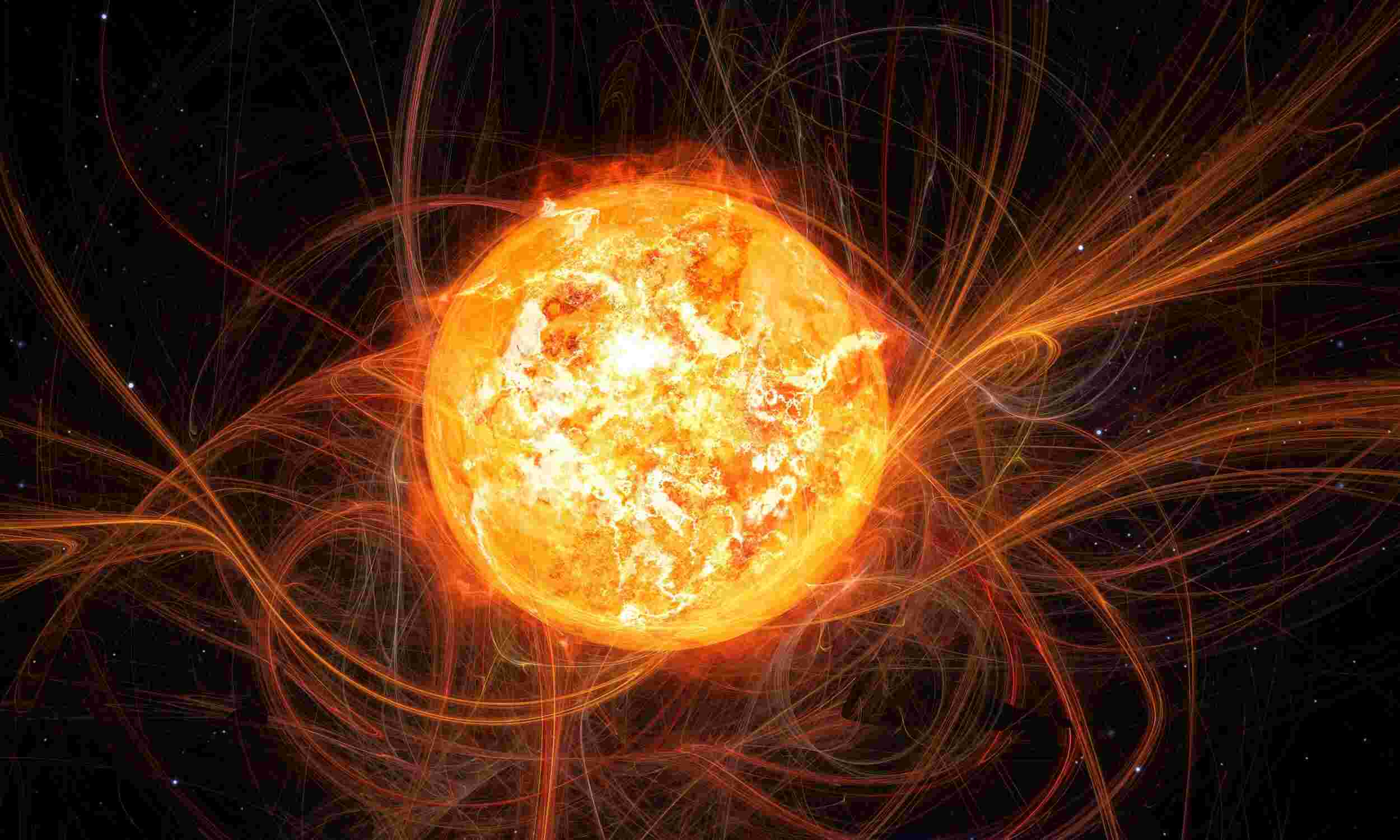
As humanity becomes increasingly dependent on space-based systems, reliable space weather forecasting is more important than ever. This new approach to Sun magnetic fields reconstruction brings scientists closer to building accurate, long-range solar forecasts.
By combining decades of observations with advanced modelling, the IIT Kanpur team has demonstrated how data-driven science can reveal the hidden workings of our star. Their work not only deepens knowledge of the Sun but also strengthens our ability to live safely in an increasingly technology-driven world.