



Teghaza 001: A 4.1-Billion-Year-Old Martian Meteorite

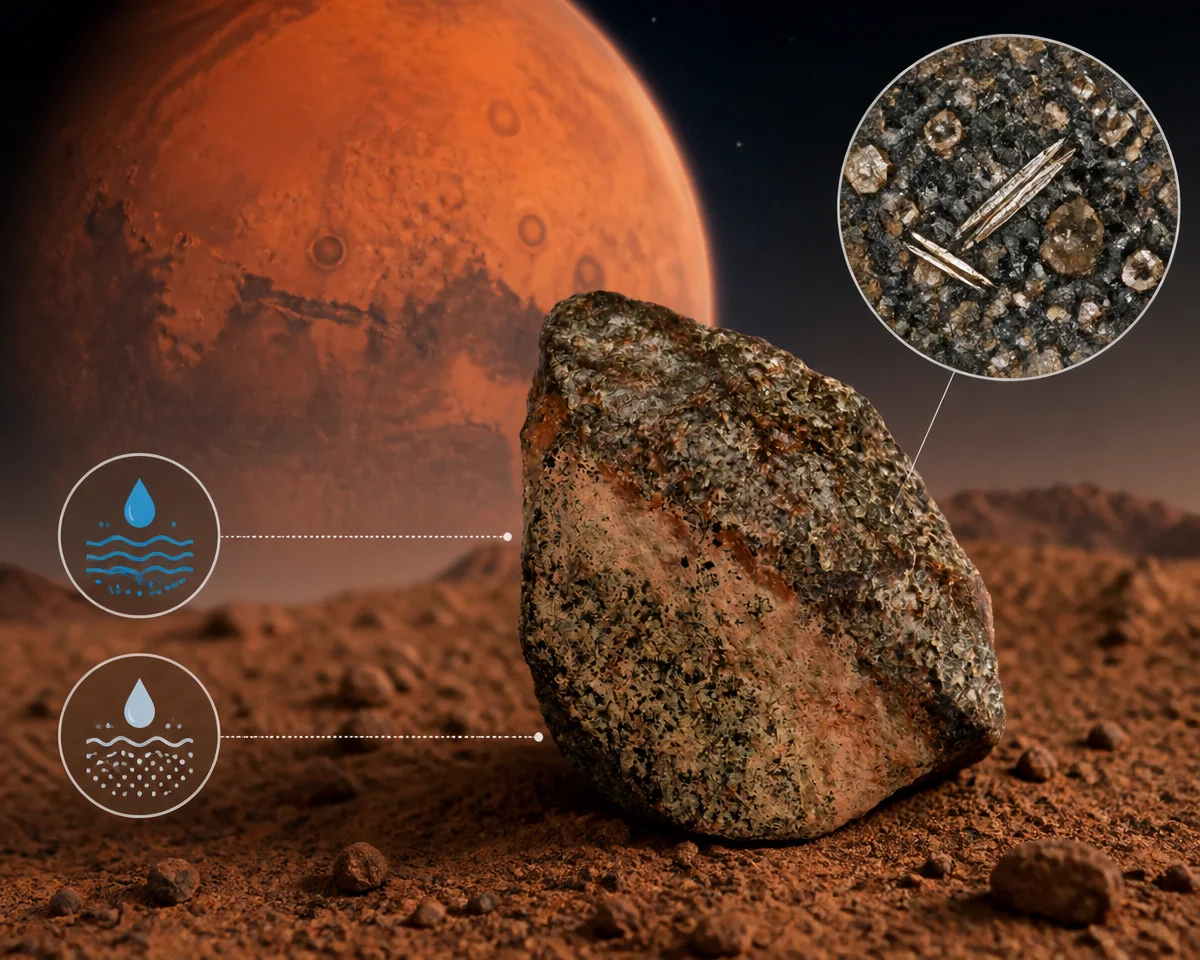
Teghaza 001 is an ancient meteorite from Mars that is helping scientists understand the planet’s early history and the presence of water on its surface. Researchers have identified the rose-coloured space rock, discovered in Mali’s Sahara Desert, as a piece of the Martian crust formed at least 4.1 billion years ago. The findings were published in the journal Science on 29 October 2026.
The discovery is important because rocks from the early history of Mars are rare on Earth. By studying this meteorite, scientists can learn more about the minerals, geological changes and water activity that shaped the Red Planet billions of years ago. The evidence may also help researchers understand whether ancient Mars had environmental conditions that could have supported life.

Discovery of Teghaza 001 in the Sahara Desert
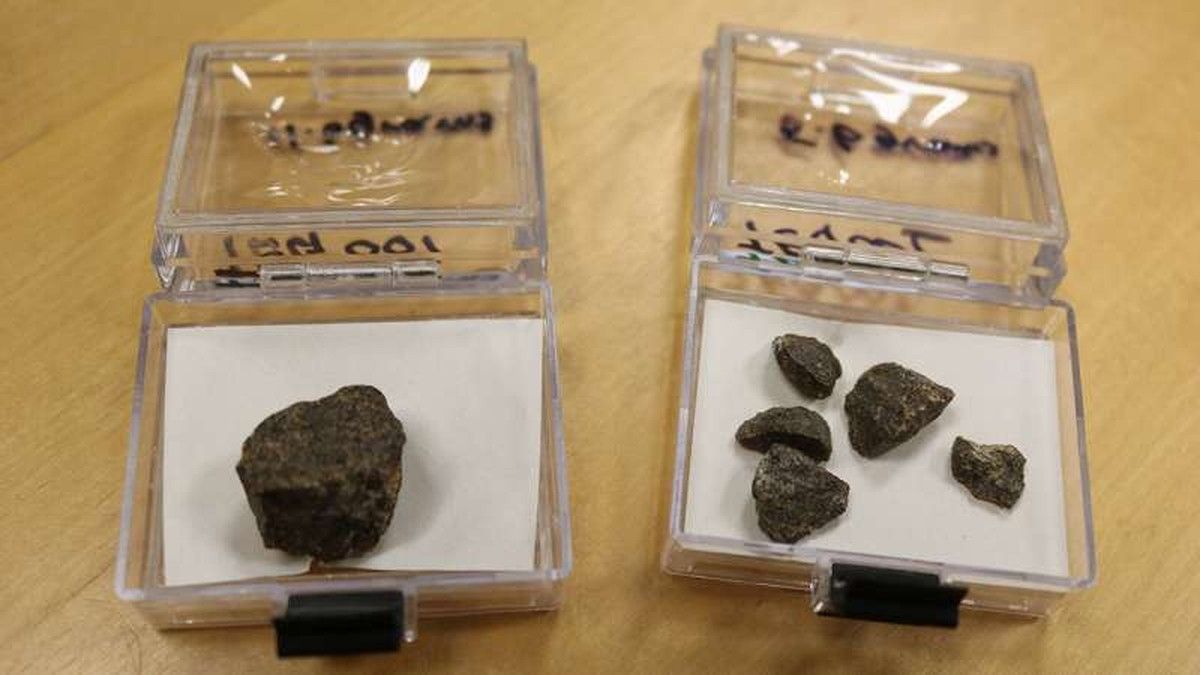
Meteorite hunters discovered Teghaza 001 in 2022 on a salt plain in Mali’s Sahara Desert. Its unusual rose colour and mineral features attracted scientific interest. After detailed laboratory studies, researchers confirmed that the rock came from Mars.
The meteorite consists of eight fragments with a combined weight of about 798.5 grams. Its age is estimated to be at least 4.1 billion years, placing it among the three oldest Martian meteorites discovered on Earth.
Yang Liu, a planetary scientist at NASA’s Jet Propulsion Laboratory, was the lead author of the research. The team examined the meteorite’s chemical composition, minerals and crystal structure to understand its origin and geological history.
What Makes Teghaza 001 Different?
Teghaza 001 has a chemical and mineral composition that distinguishes it from many Martian meteorites studied earlier. One of its important features is the presence of zircon crystals. These crystals can preserve information about the conditions under which rocks formed and changed over time.
Scientists compared the meteorite’s composition with mineral materials observed on Mars. The results showed similarities with materials found in the planet’s southern highlands.
These areas are especially interesting because they contain some of the oldest exposed surfaces on Mars. Researchers used the available mineral and chemical information to identify 13 possible locations on Mars that could match the characteristics of Teghaza 001.
The comparison provides useful clues about the part of Mars from which the meteorite may have originated. However, identifying the exact location requires further research.
Evidence of Water on Ancient Mars
One of the most important findings from the study is evidence that water changed the Martian crust at least 4.1 billion years ago.
Scientists found signs of ancient water-related alteration in the meteorite’s minerals. This suggests that water was active within the Martian crust during the planet’s early history.
The finding supports the idea that ancient Mars had a water cycle. Water may have moved through rocks, interacted with minerals and caused chemical changes in the planet’s crust. Such processes are important for understanding how the Martian environment developed.
The presence of water does not prove that life existed on Mars. However, liquid water is considered one of the major conditions needed for life as we know it. Therefore, evidence of ancient water activity helps scientists identify places and periods that may have offered suitable conditions for microbial life.
How Scientists Confirmed Its Martian Origin
Scientists identify Martian meteorites by studying their minerals, chemical composition and other physical features. Some meteorites also contain tiny pockets of glass formed during powerful impacts.
These glass pockets can preserve gases from the Martian atmosphere. The gases have isotope patterns that closely match measurements made by NASA’s Viking landers on Mars. This evidence has helped researchers confirm the Martian origin of certain meteorites.
Another useful scientific tool is zircon dating. Zircon is a mineral that can preserve information about the age of rocks. Its crystal structure can accept uranium while initially excluding lead. Over time, uranium changes into lead at a known rate. Scientists can use the uranium-lead system to estimate when the zircon crystals formed.
This method is valuable because zircon can preserve its age information even when the surrounding rock experiences some changes.
Role of NASA’s Mars Reconnaissance Orbiter
NASA’s Mars Reconnaissance Orbiter (MRO) plays an important role in studying the surface of Mars. It uses scientific instruments to collect information about the planet’s minerals, surface features and geological history.
One of its instruments, the Compact Reconnaissance Imaging Spectrometer for Mars (CRISM), studies reflected visible and near-infrared light. Different minerals absorb light in different ways, creating patterns that help scientists identify materials on the Martian surface.
Researchers compared the mineral features of Teghaza 001 with orbital observations from Mars. The similarities with materials in the southern highlands helped them identify 13 possible Martian source locations.
This work shows how meteorite research and spacecraft observations can support each other. Meteorites provide physical samples for laboratory testing, while orbiters help scientists study large areas of the planet from space.

Why Teghaza 001 Matters for Mars Research
Teghaza 001 offers a rare opportunity to study the early geological history of Mars. Most rocks from the planet’s ancient past cannot be directly examined in laboratories on Earth. Meteorites provide natural samples that scientists can study using advanced instruments.
The evidence of water-related changes in the meteorite adds to the growing understanding of ancient Mars. It suggests that water interacted with the planet’s crust during a very early period, when Mars was still developing its surface and geological systems.
The discovery also supports ongoing efforts to understand whether Mars once had environments suitable for life. NASA’s Mars missions, including orbiters and robotic rovers, continue to search for signs of ancient water, organic materials and past habitable conditions.
Future studies of Teghaza 001 may provide more information about its exact source region, the history of water on Mars and the conditions that existed on the planet more than four billion years ago.