Turkish UAV BVR First Marks Historic Air Combat Breakthrough

Turkish UAV BVR First has become a major headline in global defence news after Turkey successfully demonstrated the world’s first beyond-visual-range air-to-air engagement performed entirely by an uncrewed fighter jet. The historic moment was achieved by the Bayraktar Kızılelma, an advanced unmanned combat aircraft that shot down a jet-powered target using a long-range missile, marking a technological milestone for Türkiye and the global UAV industry.
Thank you for reading this post, don't forget to subscribe!This achievement signals a major shift in how future air warfare may unfold where uncrewed jets take on roles traditionally reserved for piloted fighters. The demonstration has also highlighted Türkiye’s growing capabilities in developing indigenous defence systems and next-generation military aviation platforms.
Turkish UAV BVR First: A Landmark Demonstration of Autonomous Air Combat
During the latest series of flight tests, Kızılelma tracked and destroyed a high-speed target aircraft using a domestically developed beyond-visual-range missile. The entire sequence detection, tracking, locking and firing was completed by the UAV, proving its independent combat capability.
The aerial engagement was made possible through the MURAD AESA radar, which enabled the UAV to detect the target at long range with high accuracy. After establishing the firing solution, Kızılelma launched the indigenous GÖKDOĞAN air-to-air missile from its under-wing station. The missile successfully struck the target, confirming the aircraft as the world’s first uncrewed platform with verified long-range air-to-air strike capability.
Defence company Baykar noted that the test represents a turning point for autonomous aviation systems. Instead of simply carrying weapons, the UAV has now demonstrated that it can independently conduct complex air-to-air missions.
Turkish UAV BVR First: How Indigenous Sensors and Weapons Made It Possible
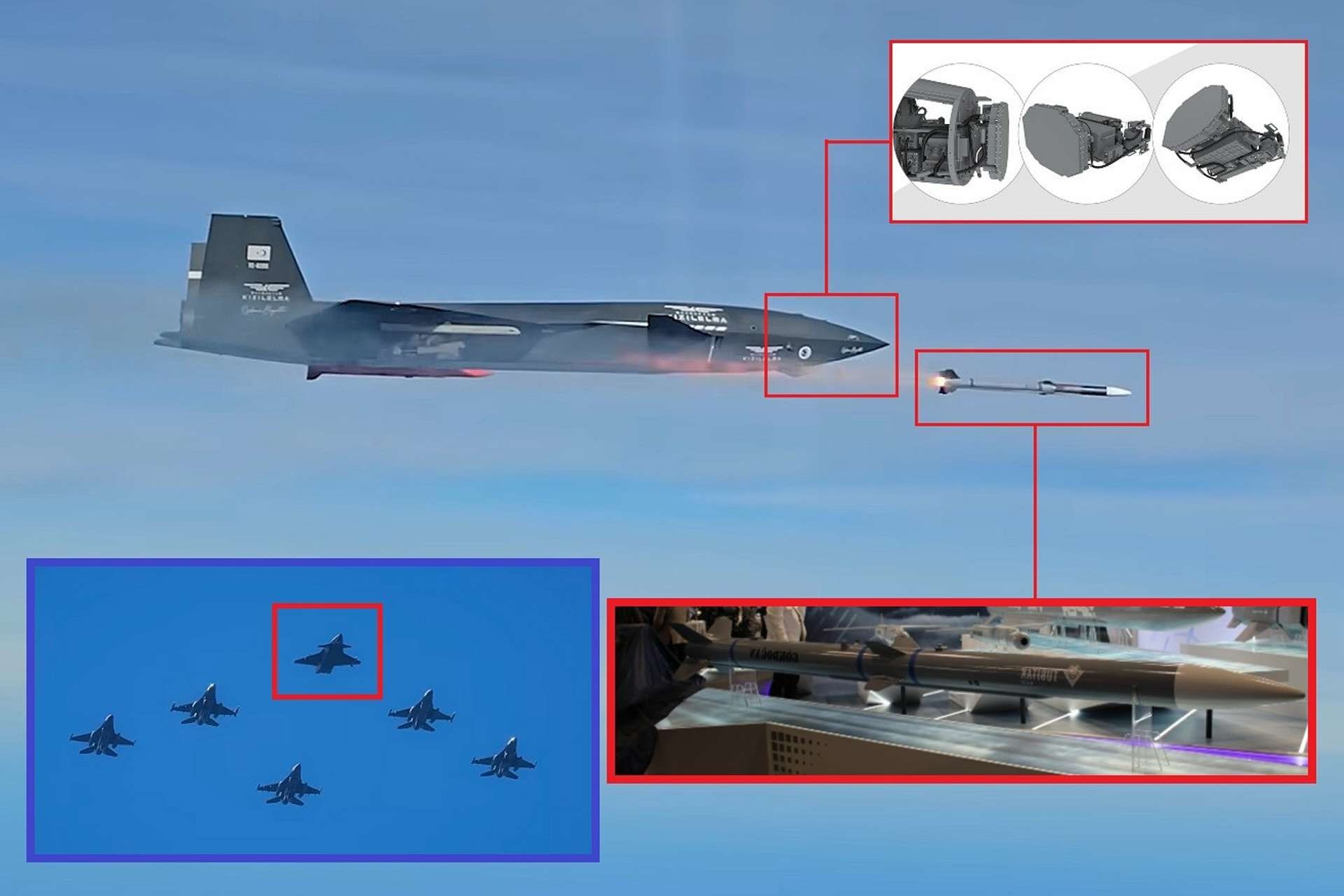
One of the central strengths behind this successful test is the deep integration of domestically engineered technologies. Kızılelma carries advanced systems designed and manufactured entirely within Türkiye, making the platform both self-reliant and strategically secure.
The MURAD AESA radar played a crucial role, offering rapid scanning, strong tracking stability and reliable performance even in challenging electronic environments. This radar was developed to give the UAV the situational awareness normally associated with modern fighter jets.
Along with the radar, the TOYGUN targeting system supports engagement accuracy, improving Kızılelma’s ability to identify and track multiple moving targets. This combination of sensors gives the aircraft the ability to detect threats from long distances while maintaining a low radar signature.
Kızılelma had earlier demonstrated precision-strike capability by deploying indigenous munitions such as TOLUN and TEBER-82. These successful tests built the foundation for the latest air-to-air demonstration, proving that the UAV can perform multirole missions ranging from precision strikes to air superiority tasks.
Turkish UAV BVR First: Crewed and Uncrewed Aircraft Working Together
Another major highlight of the test was the coordinated operation between Kızılelma and five Turkish F-16 fighter jets stationed at Merzifon air base. The joint mission showcased Türkiye’s growing expertise in manned-unmanned teaming, an emerging concept that blends pilot-operated aircraft with autonomous systems.
This type of cooperation opens new possibilities in modern warfare. Uncrewed aircraft can take on dangerous missions, gather intelligence in contested environments and support piloted fighters without risking human lives. During the test, the combined formation demonstrated smooth communication, strategic coordination and efficient task sharing.
Such collaboration indicates that future air missions may routinely include mixed formations, where UAVs act as support wings, intercept platforms or tactical escorts to manned fighters. For Türkiye, this ability strengthens its air force structure and increases operational flexibility.
Turkish UAV BVR First: A New Direction for Global Air Combat Development
The successful demonstration has sparked wide discussions among international defence analysts. Many view it as a major step toward a future where autonomous aircraft will handle increasingly complex combat roles. Kızılelma’s achievement shows that unmanned systems are no longer limited to surveillance or short-range strikes they are now capable of long-range, precision air-to-air engagements.
This development could influence how countries design their future air forces. As uncrewed platforms become more capable, nations may rely more on UAVs for missions that currently require expensive pilot training, high-maintenance fighter jets and substantial risk to personnel.
Türkiye’s achievement also strengthens its position in the global UAV market. The country is already known for producing successful platforms such as Bayraktar TB2 and Akıncı, both widely used around the world. With Kızılelma, Türkiye has entered a new tier of military aviation, competing in a field dominated by technologically advanced nations.
Turkish UAV BVR First: Expanding the Role of Autonomous Combat Aircraft
Beyond the immediate success of the test, the breakthrough represents a broader shift toward autonomous combat systems. Kızılelma’s ability to perform long-range engagements means that future missions can be planned with new strategies ones that place uncrewed aircraft at the forefront of high-risk operations.
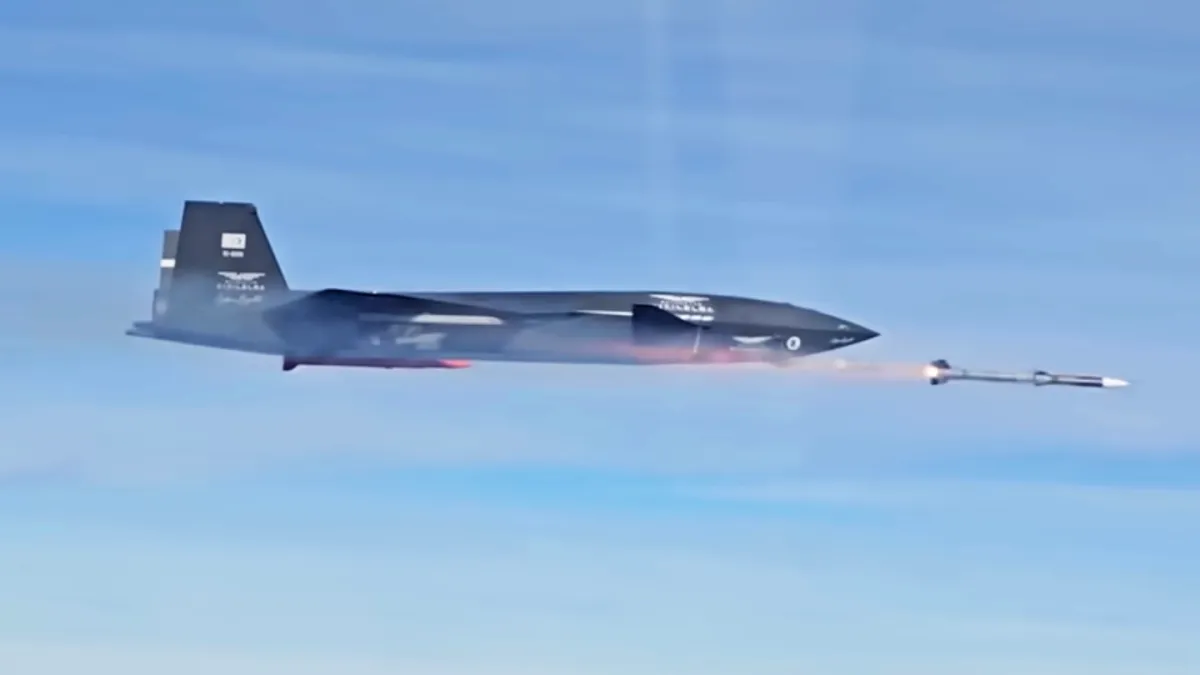
The UAV’s low radar visibility, advanced sensors and multirole design make it suitable for tasks such as air patrols, interception, escort missions and strategic strikes. The platform has the potential to act as an air-to-air guardian for crewed aircraft, intercept incoming threats or operate independently in contested regions.
Industry observers believe that this achievement sets the stage for even more advanced autonomous functions. With every successful test, the UAV moves closer to taking on roles that require real-time decision making and high-precision manoeuvres abilities once thought possible only for skilled human pilots.
Turkish UAV BVR First: A Strong Step Toward the Future of Defence Technology
With this test, Turkey has shown the world that autonomous fighter jets are no longer just a concept. They are becoming operational realities. The Turkish UAV BVR First milestone demonstrates innovation, rapid development and a significant advancement in uncrewed combat aviation. As countries prepare for the next era of air warfare, platforms like Kızılelma are set to play a major role in shaping global defence strategies.