



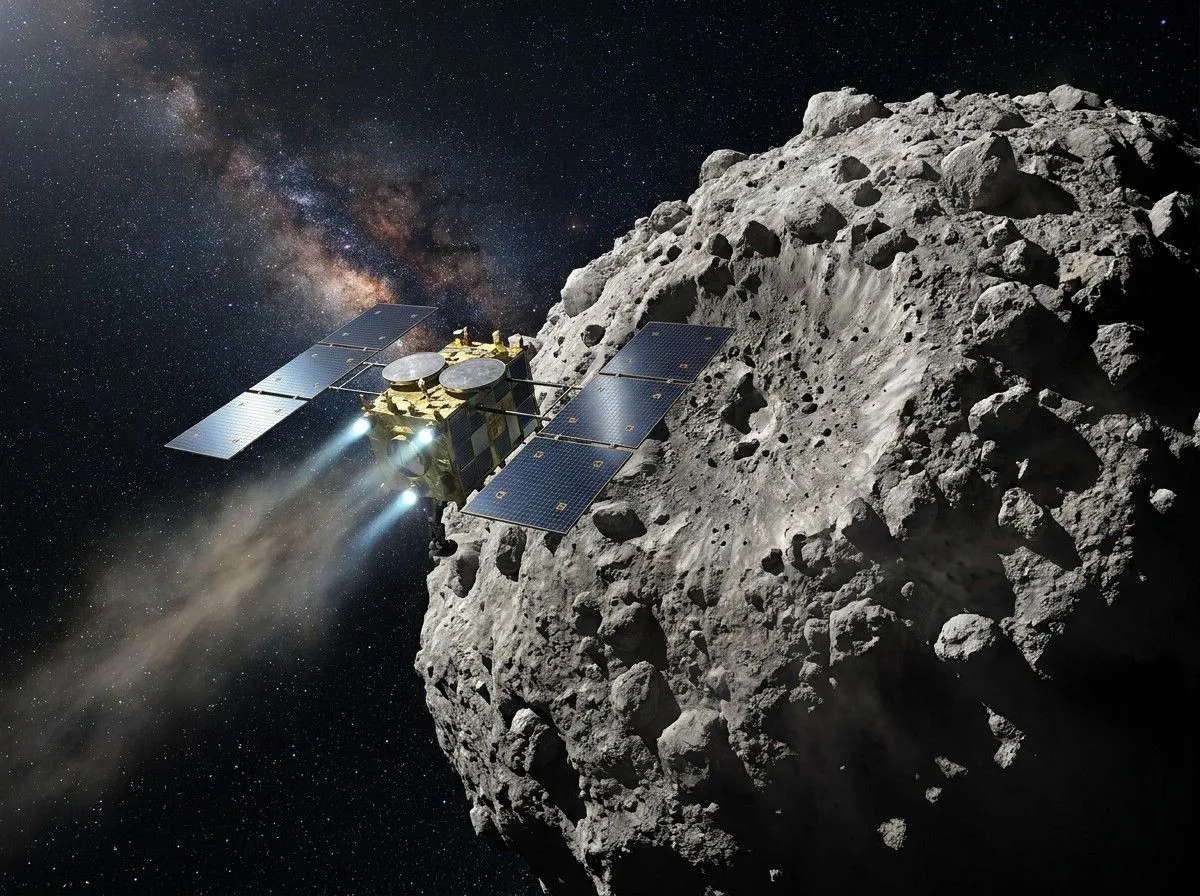
Hayabusa2 Flyby Expands Asteroid Research

Hayabusa2 Flyby has become a major highlight in space exploration as Japan continues to lead advanced asteroid research. On 5 July 2026, the Hayabusa2 spacecraft successfully performed a close and fast flyby of asteroid Torifune, also known as 2001 CC21. The spacecraft passed extremely close to the asteroid, at a distance of around 800 metres from its center, while moving at a speed of nearly 5 kilometres per second. This precise movement shows the level of accuracy achieved in modern space missions.
Thank you for reading this post, don't forget to subscribe!The Hayabusa2 mission is operated by the Japan Aerospace Exploration Agency (JAXA). It is one of the most successful asteroid missions in recent years. The spacecraft had already made headlines in 2020 when it returned samples from asteroid Ryugu back to Earth. That mission helped scientists learn more about the early solar system. Now, the extended mission is focusing on exploring more asteroids and testing new space technologies.
Asteroid Torifune and Close Observation
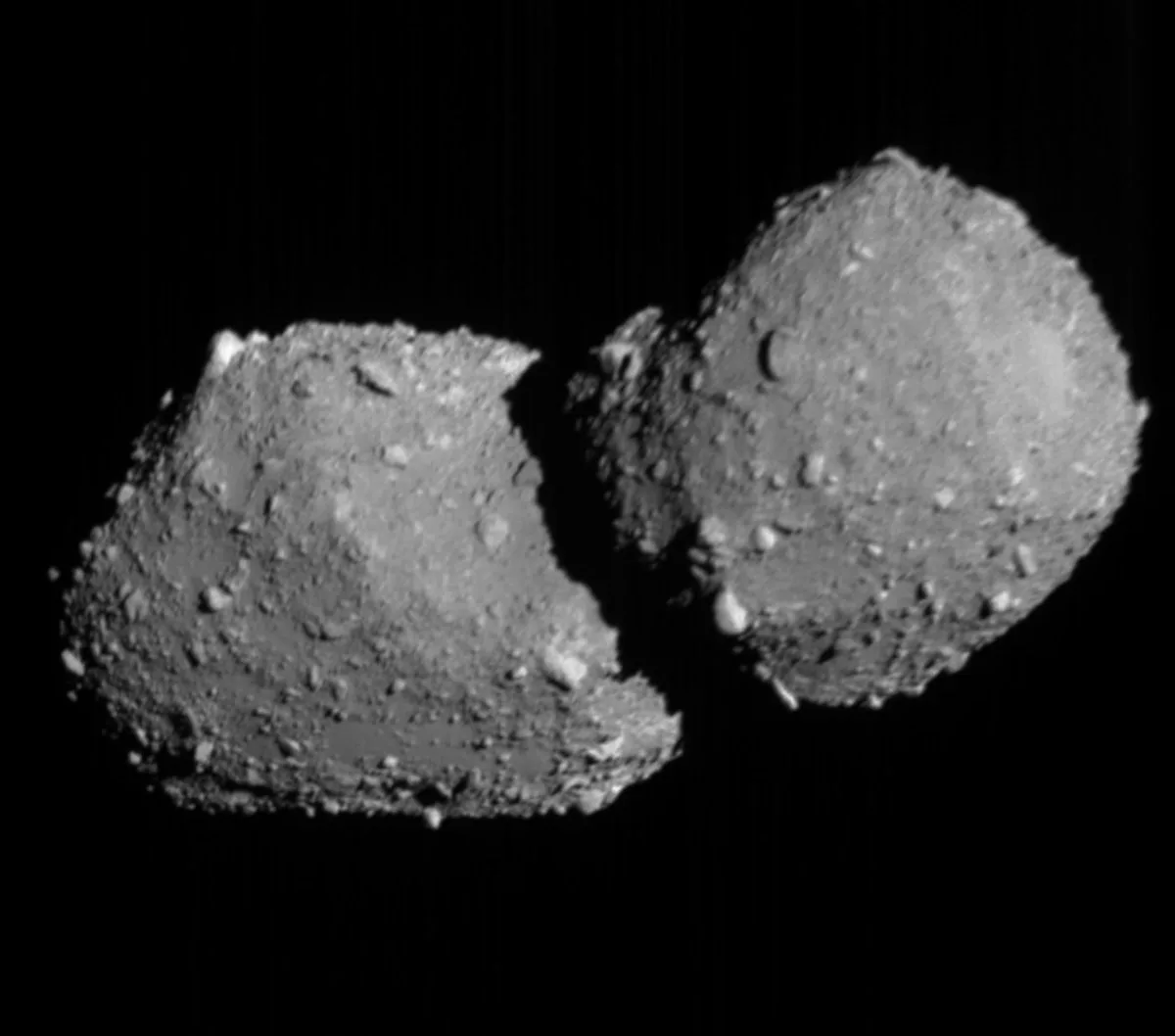
Asteroid Torifune, officially called 2001 CC21, is a near-Earth object with an estimated size of around 450 to 500 metres in diameter. During the Hayabusa2 flyby, scientists were able to collect important data about the asteroid’s surface, shape, and temperature. These observations are useful in understanding how such space objects are formed and how they behave in space.
The close flyby allowed high-quality imaging and detailed measurements in a very short time. Even though the spacecraft was moving at high speed, it was able to maintain stability and continue collecting data without any issues. JAXA confirmed that the spacecraft remained in normal condition after the operation, showing the success of the mission.
Focus on Planetary Defence
One important aspect of the Hayabusa2 flyby is its link to planetary defence. In recent years, space agencies around the world have been focusing on tracking and studying near-Earth objects that could pose a threat to our planet. Missions like this help scientists understand how to respond if an asteroid ever comes close to Earth.
The flyby was also used to test rapid observation techniques. These techniques are important for quickly studying unknown objects in space. If a potential threat is detected, scientists need to act fast, and missions like Hayabusa2 help improve that readiness. The ability to guide a spacecraft with high precision at such speeds is also a big achievement in space navigation.
Technology and Future Missions
The Hayabusa2 flyby is not just about studying one asteroid. It is also about testing advanced technologies that will be used in future space missions. Navigation systems, imaging tools, and data collection methods are all being improved through such missions. These developments are important as space exploration becomes more complex and ambitious.
The spacecraft is now on an extended journey and has more targets ahead. One of its next major goals is asteroid 1998 KY26, which it is expected to reach in 2031. This long-term mission shows how space exploration is planned years in advance and involves continuous learning and improvement.
Global Interest in Asteroid Research
Asteroid research is becoming a global priority. Countries like the United States, Japan, and members of the European space community are all working on missions related to near-Earth objects. This is partly due to growing interest in space resources and partly due to safety concerns.
Asteroids are believed to contain valuable materials, including metals and organic compounds. Studying them can help in future space mining projects. At the same time, understanding their movement is important for protecting Earth from possible impacts.
A Step Forward in Space Science
The success of the Hayabusa2 flyby highlights how far space science has come. From landing on asteroids to returning samples and now performing high-speed flybys, space missions are achieving more than ever before. These efforts are not only about discovery but also about preparing for future challenges in space.
The mission also inspires young scientists and researchers who are interested in space technology. With increasing global cooperation and advancements in technology, the future of space exploration looks promising and full of new possibilities.