


Office of the Speaker of Lok Sabha: Roles, Powers, Election, and Functions

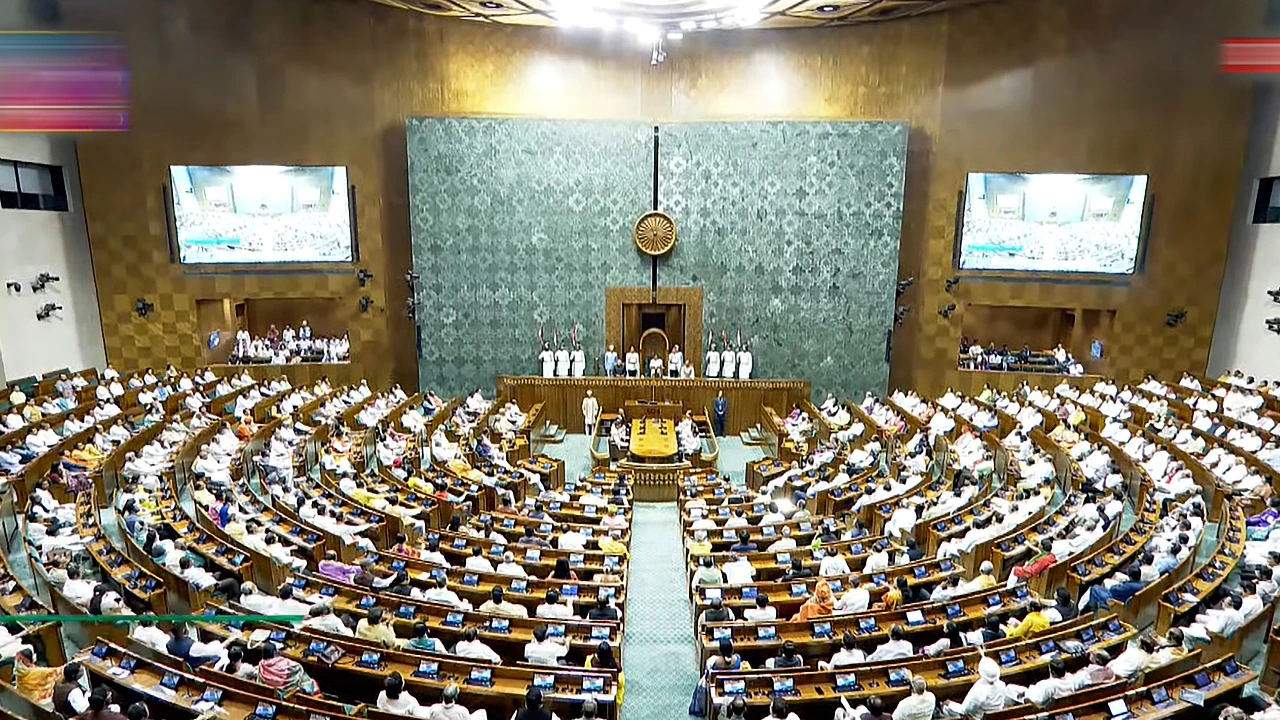
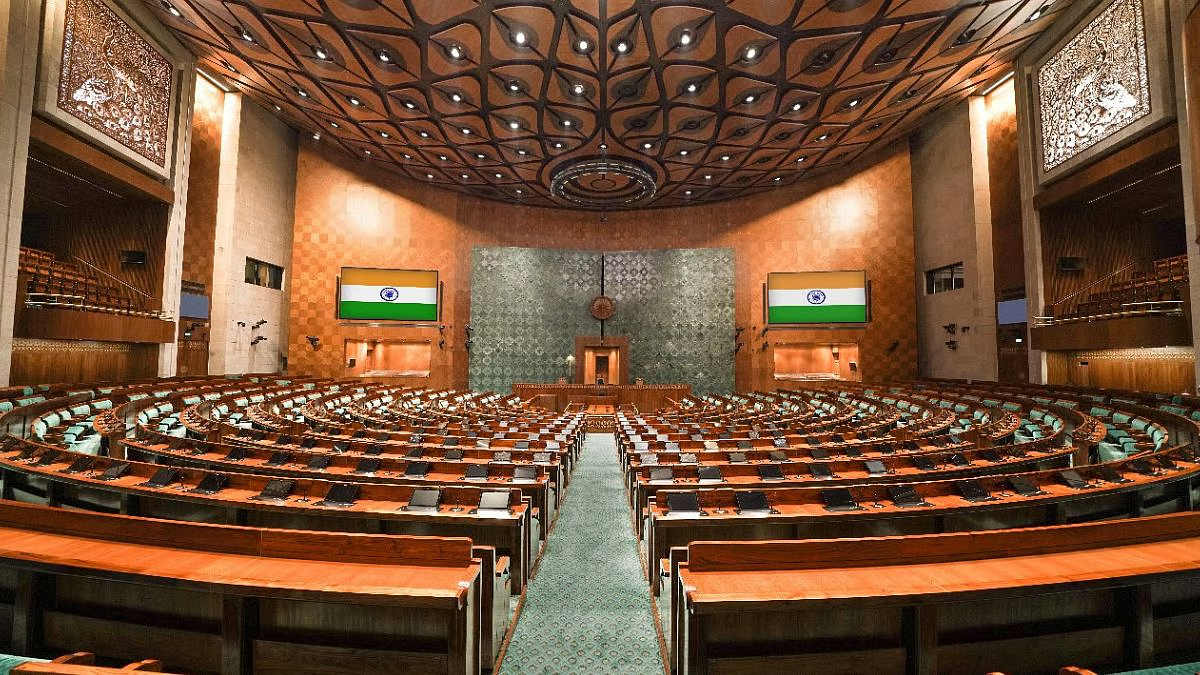
The Office of the Speaker of Lok Sabha is one of the most important positions in India’s parliamentary system. The Speaker is responsible for maintaining order in the Lok Sabha, ensuring smooth discussions, and protecting the rights of members. The Speaker acts as the guardian of parliamentary democracy and ensures that the House functions according to the Constitution and the Rules of Procedure.
Thank you for reading this post, don't forget to subscribe!The Speaker is expected to remain fair and impartial while conducting the business of the House. Even though the Speaker is elected from among the members of the Lok Sabha, once elected, the Speaker performs duties without favoring any political party.
What is the Office of the Speaker of Lok Sabha?
The Office of the Speaker of Lok Sabha is a constitutional office established under Article 93 of the Constitution of India. Article 93 states that the Lok Sabha must elect a Speaker and a Deputy Speaker.
The Speaker is the presiding officer of the Lok Sabha and is responsible for conducting its proceedings in a fair and disciplined manner.
Every House of Parliament has its own presiding officer:
| House | Presiding Officer |
|---|---|
| Lok Sabha | Speaker |
| Lok Sabha | Deputy Speaker |
| Rajya Sabha | Chairman |
| Rajya Sabha | Deputy Chairman |
The Speaker is also considered the constitutional and ceremonial head of the Lok Sabha.
History of the Office of the Speaker
The history of the Office of the Speaker dates back to the British period.
- The post was created in 1921 under the Government of India Act, 1919 (Montagu-Chelmsford Reforms).
- At that time, the presiding officers were called the President and Deputy President.
- These names continued until 1947.
- The Government of India Act, 1935 changed the names to Speaker and Deputy Speaker.
- After India became independent, the Constitution officially recognized these positions.
Today, the Speaker plays a central role in India’s parliamentary democracy.
Election of the Speaker of Lok Sabha
The election of the Speaker is one of the first tasks after a new Lok Sabha is formed.
Eligibility
To become the Speaker:
- The person must be a member of the Lok Sabha.
- The Constitution does not prescribe any special educational or professional qualifications.
- However, knowledge of the Constitution, parliamentary rules, and legislative procedures is considered very useful.
Election Process
Usually, the ruling party or ruling alliance nominates a candidate after discussions with other political parties.
The Speaker is elected by:
- Members of the Lok Sabha.
- A simple majority of members who are present and voting.
Generally, the motion proposing the Speaker is moved by the Prime Minister or the Minister of Parliamentary Affairs.
Term of Office
The Speaker serves from the date of election until just before the first meeting of the next Lok Sabha.
Important points include:
- Normal term is five years.
- The Speaker can be re-elected.
- Even after the Lok Sabha is dissolved, the Speaker continues until the newly elected Lok Sabha holds its first meeting.
This ensures continuity in parliamentary administration.
Powers and Functions of the Speaker of Lok Sabha
The Speaker has several important constitutional and administrative powers.
1. Conducting House Proceedings
The Speaker presides over all sittings of the Lok Sabha and ensures that debates are conducted peacefully.
The Speaker:
- Maintains discipline.
- Gives members permission to speak.
- Ensures rules are followed.
- Prevents disorder inside the House.
2. Final Interpreter of Rules
Within the Lok Sabha, the Speaker is the final authority on:
- Rules of Procedure
- Parliamentary practices
- Constitutional provisions related to House functioning
The Speaker’s rulings are respected by all members.
3. Presiding Over Joint Sessions
When there is a disagreement between the Lok Sabha and the Rajya Sabha on a bill, the President may call a joint sitting.
The Speaker presides over this joint session and conducts the proceedings.
4. Maintaining Quorum
For the Lok Sabha to conduct business, at least one-tenth of its total members must be present.
If there is no quorum, the Speaker can:
- Adjourn the House, or
- Suspend the meeting until enough members are present.
5. Casting Vote
Normally, the Speaker does not vote.
However, if voting results in a tie, the Speaker uses a Casting Vote to break the deadlock and decide the outcome.
6. Decision on Money Bills
One of the most important powers of the Speaker is deciding whether a bill is a Money Bill.
The Speaker’s decision is final and cannot be questioned inside Parliament.
7. Deciding Defection Cases
Under the Tenth Schedule (Anti-Defection Law), the Speaker decides whether a Lok Sabha member should be disqualified for changing political parties.
Although the Speaker makes the decision, the Supreme Court has ruled that such decisions can be reviewed by the judiciary.
8. Formation of Parliamentary Committees
The Speaker appoints members and chairpersons of many parliamentary committees.
Important committees include:
- Business Advisory Committee
- Rules Committee
- General Purposes Committee
These committees help Parliament perform its work efficiently.
9. Guardian of Parliamentary Privileges
The Speaker protects the rights and privileges of:
- The House
- Members of Parliament
- Parliamentary Committees
If there is a complaint regarding breach of privilege, the Speaker may refer the matter to the Committee of Privileges.
10. International Parliamentary Role
The Speaker serves as the ex-officio Chairperson of the Indian Parliamentary Group (IPG).
The Speaker also leads conferences of presiding officers of legislative bodies across India and represents the Indian Parliament in international parliamentary meetings.
Removal of the Speaker
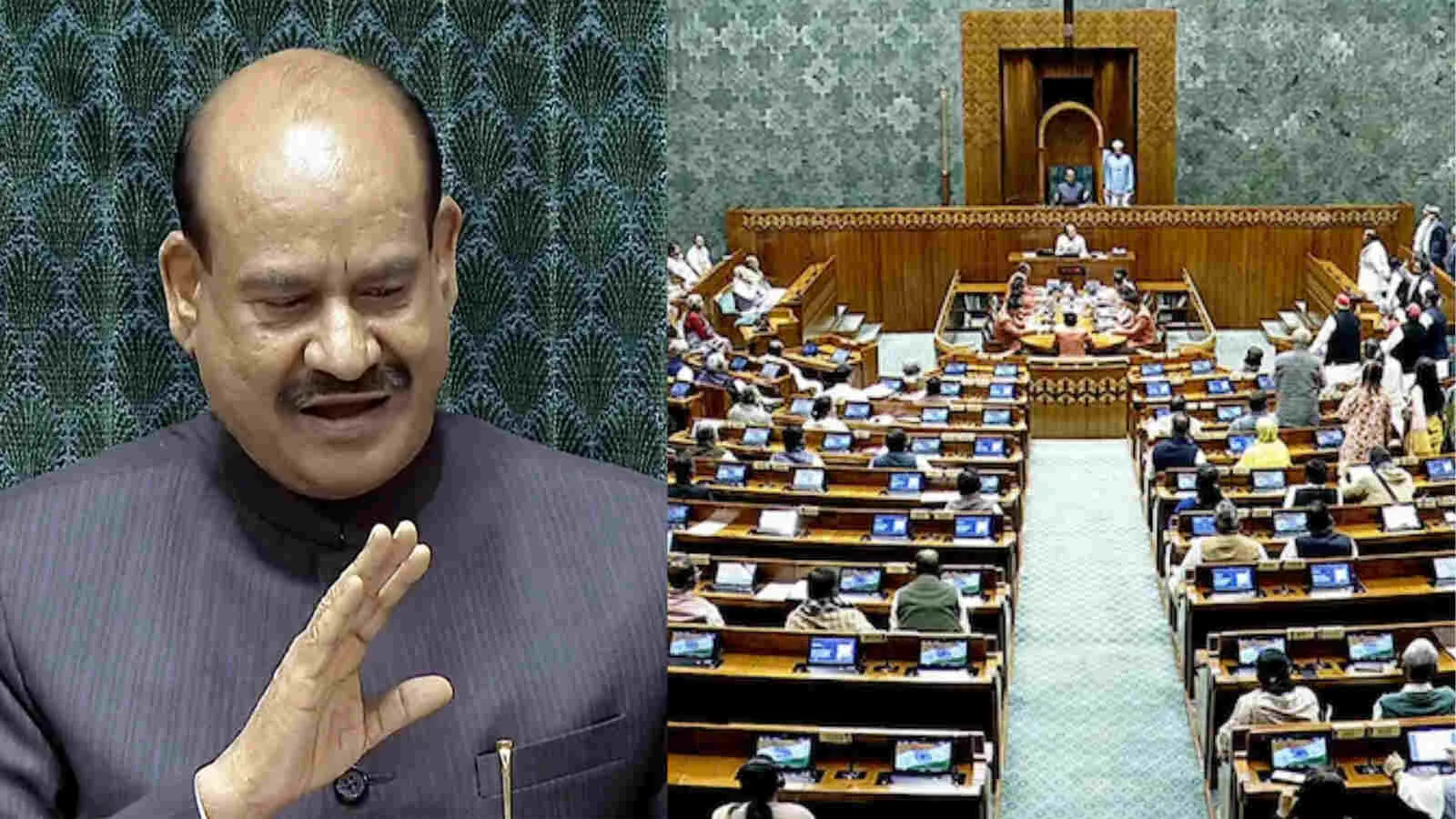
Although the Speaker usually completes the five-year term, the office may become vacant earlier.
The Speaker leaves office if:
| Reason | Description |
|---|---|
| Ceases to be a member | Loses Lok Sabha membership |
| Resignation | Submits resignation to the Deputy Speaker |
| Removal | Removed by a majority resolution of the Lok Sabha |
Before moving such a resolution:
- A 14-day notice must be given.
- During discussion on the removal motion, the Speaker may attend the House but cannot preside over the proceedings.
Deputy Speaker of Lok Sabha
The Deputy Speaker is the second highest presiding officer of the Lok Sabha.
Election
The Deputy Speaker is:
- Elected from among Lok Sabha members.
- Chosen after the Speaker’s election.
- Election date is fixed by the Speaker.
In recent years, it has become a common practice that:
- The Speaker belongs to the ruling party or alliance.
- The Deputy Speaker comes from the main opposition party.
Although this is a convention, it is not a constitutional rule.
Term and Removal
The Deputy Speaker generally serves for five years.
The office becomes vacant if:
- The member ceases to be a Lok Sabha member.
- Resigns by writing to the Speaker.
- Is removed by a majority resolution of the House after giving a 14-day notice.
Powers of the Deputy Speaker
The Deputy Speaker performs all duties of the Speaker whenever:
- The Speaker’s office is vacant.
- The Speaker is absent.
During this period, the Deputy Speaker enjoys all the powers of the Speaker.
Other important responsibilities include:
- Presiding over joint sittings if the Speaker is absent.
- Using the Casting Vote in case of a tie.
- Automatically becoming the Chairperson of any parliamentary committee of which they are appointed a member.
The Deputy Speaker is not subordinate to the Speaker and is directly responsible to the Lok Sabha.
Speaker Pro Tem
A Speaker Pro Tem is a temporary Speaker appointed after a general election.
Appointment
When the previous Speaker vacates office before the first meeting of the newly elected Lok Sabha:
- The President appoints a senior member of the Lok Sabha as the Speaker Pro Tem.
- Usually, the senior-most member is selected.
- The President administers the oath to the Speaker Pro Tem.
Functions of Speaker Pro Tem
The Speaker Pro Tem performs temporary duties until a new Speaker is elected.
Main responsibilities include:
- Presiding over the first sitting of the new Lok Sabha.
- Administering the oath to newly elected members.
- Conducting the election of the new Speaker.
Once the new Speaker is elected, the office of the Speaker Pro Tem automatically ends.
Importance of the Office of the Speaker of Lok Sabha
The Office of the Speaker of Lok Sabha is essential for the successful functioning of India’s parliamentary democracy. The Speaker ensures that debates remain orderly, members follow parliamentary rules, and the House carries out its legislative responsibilities smoothly. The Speaker also protects the rights of members, supervises parliamentary committees, and acts as an impartial authority in important constitutional matters. By maintaining discipline and fairness, the Speaker helps strengthen democratic governance and public trust in Parliament.
Frequently Asked Questions (FAQs)
1. Which Article of the Constitution provides for the Speaker of the Lok Sabha?
Article 93 of the Constitution provides for the election of the Speaker and Deputy Speaker.
2. Who elects the Speaker of the Lok Sabha?
The Speaker is elected by the members of the Lok Sabha through a simple majority.
3. Can the Speaker vote in the Lok Sabha?
The Speaker usually does not vote but can exercise a Casting Vote in case of a tie.
4. Who decides whether a bill is a Money Bill?
The Speaker of the Lok Sabha decides whether a bill is a Money Bill, and the decision is final within Parliament.
5. Who appoints the Speaker Pro Tem?
The President of India appoints the Speaker Pro Tem before the first sitting of the newly elected Lok Sabha.
6. How can the Speaker be removed?
The Speaker can be removed by a resolution passed by a majority of all members of the Lok Sabha after giving at least 14 days’ notice.
7. What is the role of the Deputy Speaker?
The Deputy Speaker performs all the duties of the Speaker whenever the Speaker is absent or the office is vacant.