Mahmud Ghazni: History, Invasions, Somnath Temple Plunder, and Rise of the Ghurids

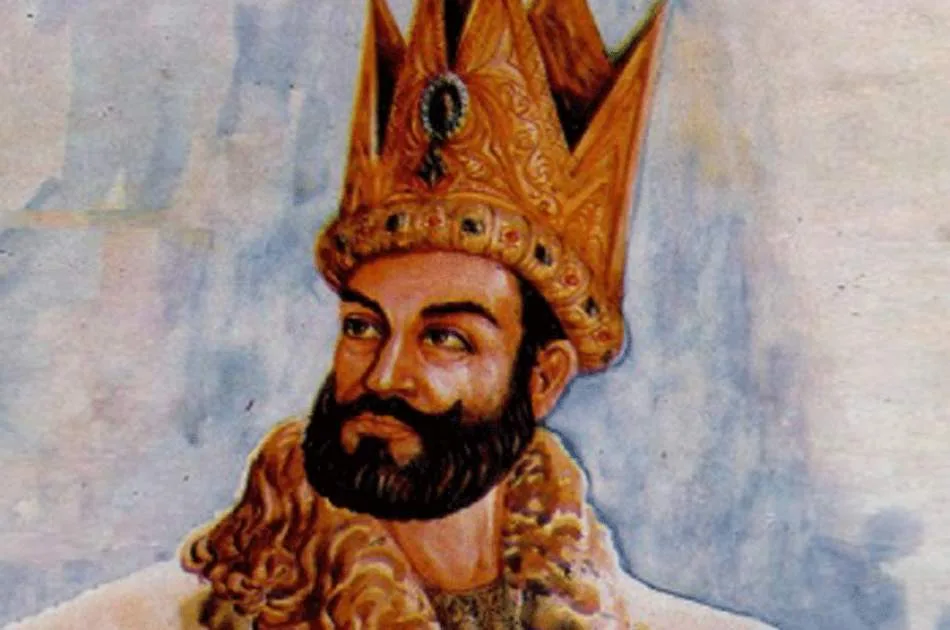
Mahmud Ghazni was one of the most famous rulers of medieval history. He is remembered mainly for his repeated invasions of India, his military strength, and the plunder of wealthy temples and kingdoms. He ruled from Ghazni, located in present-day Afghanistan, and built a large empire through wars and conquests. Mahmud Ghazni is also known for his attack on the Somnath Temple in Gujarat, which became one of the most discussed events in Indian history.
Thank you for reading this post, don't forget to subscribe!Mahmud Ghazni was born in 971 CE and became the ruler of Ghazni after his father Sabuktigin. He is often called the first independent ruler of Ghazni. He expanded his kingdom by conquering many regions in Central Asia and northwestern India. His invasions began around 999 CE and continued for many years.
Though Mahmud Ghazni was a brave and skilled military commander, historians often debate his true objectives. Some believe he invaded India mainly for wealth and treasures, while others think he also wanted political expansion and religious fame. His repeated raids changed the political situation of northern India and opened the way for future Turkish invasions.
Early Life and Rise of Mahmud Ghazni
Mahmud Ghazni was the son of Sabuktigin, a Turkish ruler who established the Ghaznavid dynasty. Sabuktigin had already expanded his control over parts of Afghanistan and nearby regions. After his father’s death, Mahmud fought for the throne and finally became the ruler of Ghazni.
He was highly ambitious and wanted to create a powerful empire. Mahmud strengthened his army and improved military organization. His cavalry forces were especially strong and played an important role in his victories.
Unlike many rulers of his time, Mahmud understood the importance of fast-moving armies and strategic warfare. He used skilled horsemen, archers, and military tactics to defeat his enemies quickly.
Mahmud also received recognition from the Abbasid Caliph of Baghdad, which increased his prestige in the Islamic world. This support helped him gain political legitimacy and greater influence.
Mahmud Ghazni and His Invasions of India
Mahmud Ghazni is famous for launching many invasions into India. Historians generally mention around 17 invasions between 1000 CE and 1027 CE. These attacks targeted rich kingdoms, temples, and cities.
His main aims were:
- To gain wealth and treasure
- To strengthen his empire
- To increase his political power
- To gain fame in the Islamic world
At that time, northern India was divided into many small kingdoms. There was no strong united empire to resist foreign attacks. Mahmud used this political weakness to his advantage.
Battle Against Jayapal
One of Mahmud Ghazni’s earliest major conflicts in India was against Jayapal, the ruler of the Hindu Shahi dynasty.
In 1001 CE, Mahmud attacked Jayapal near Peshawar. This battle became an important event in medieval Indian history. Mahmud’s army was highly trained and used effective cavalry tactics. Jayapal’s forces could not match the speed and discipline of Mahmud’s soldiers.
The battle ended in a major defeat for Jayapal. His capital at Waihind or Peshawar was badly damaged. After suffering humiliation and defeat, Jayapal reportedly ended his life by self-immolation.
This victory gave Mahmud control over important frontier regions and opened the gates for further invasions into India.
Conflict with Anandapal
After Jayapal’s death, his son Anandapal continued resistance against Mahmud Ghazni. Anandapal tried to unite regional rulers against the Turkish invader.
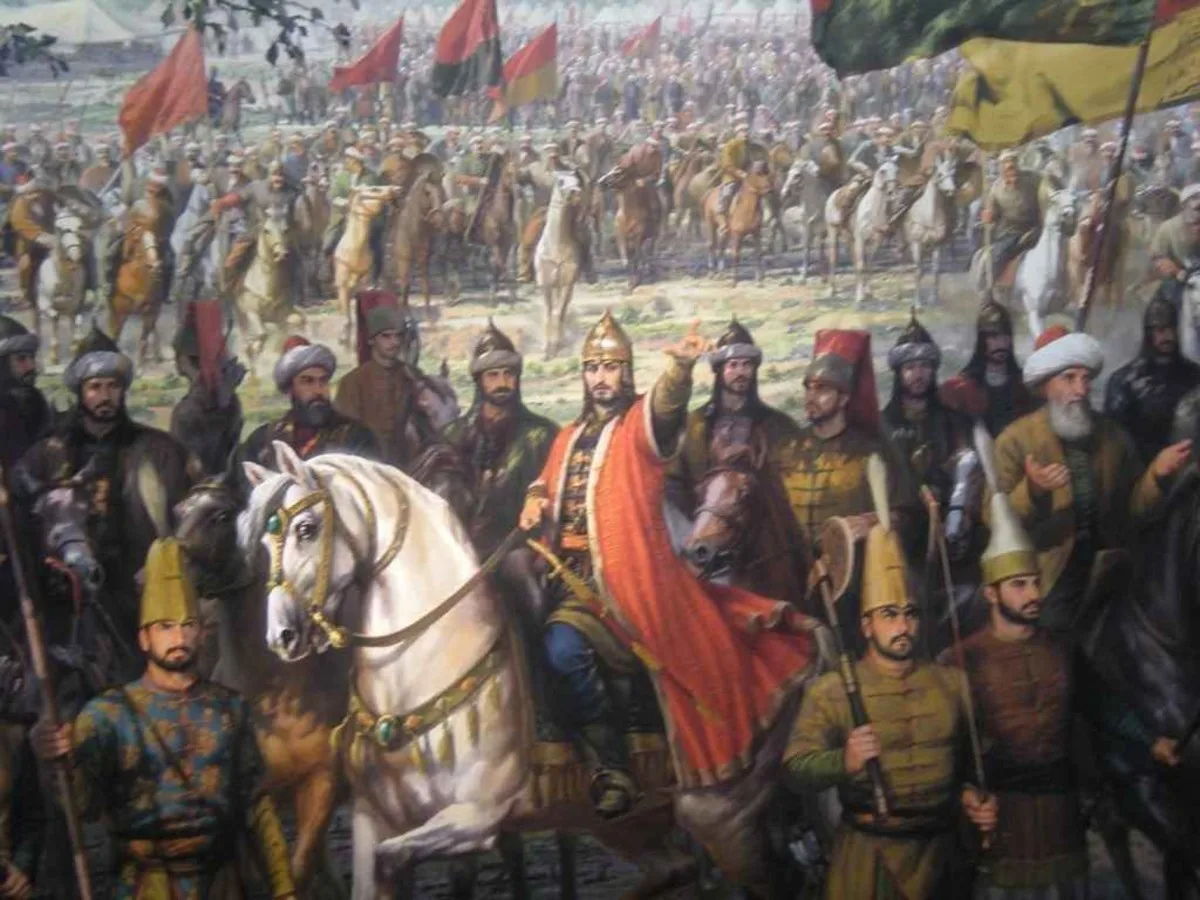
Mahmud faced Anandapal’s forces near the Indus River around 1006 CE. The battle was fierce, but Mahmud again emerged victorious. Anandapal suffered heavy losses in both territory and wealth.
This defeat weakened the Hindu Shahi kingdom permanently. It also reduced organized resistance in the Punjab region. Mahmud now had easier access to northern India.
Annexation of Lahore and Multan
Mahmud Ghazni continued expanding his control after defeating Anandapal. In 1015 CE, he annexed Lahore and extended his authority up to the Jhelum River.
He also conquered Multan, even though it was ruled by a Muslim Sultan. This shows that Mahmud’s invasions were not based only on religion. Political control and wealth were equally important.
By controlling eastern Afghanistan, Punjab, and Multan, Mahmud created a strong base for future invasions into India.
These conquests increased the size and strength of the Ghaznavid Empire.
Expeditions into the Gangetic Plains
After securing Punjab, Mahmud Ghazni turned toward the rich Gangetic plains. These areas were famous for prosperity, trade, agriculture, and temple wealth.
Mahmud conducted major raids into the Ganga valley in 1019 CE and 1021 CE.
His objectives included:
- Breaking local alliances
- Weakening Rajput powers
- Looting wealth and treasures
- Preventing strong kingdoms from rising near Punjab
During these campaigns, Mahmud defeated several rulers. He attacked Baran, now known as Bulandshahr, and also fought against Rajput kingdoms.
The Hindu Shahi rulers and Chandela rulers were among those defeated during these invasions.
However, historians believe Mahmud did not aim to establish permanent rule deep inside India. Most of these campaigns focused on plunder rather than administration.
The wealth collected from Indian kingdoms helped Mahmud fight enemies in Central Asia and maintain his empire.
Mahmud Ghazni’s Military Strength
Mahmud Ghazni became successful mainly because of his powerful military organization.
Some important features of his army included:
Strong Cavalry
His horse-mounted soldiers moved quickly and attacked suddenly. This gave him a major advantage over Indian armies.
Effective Battle Tactics
Mahmud used planned military strategies instead of relying only on numbers.
Disciplined Soldiers
His army followed strict discipline, which improved battlefield performance.
Surprise Attacks
Many Indian rulers were not prepared for sudden invasions, allowing Mahmud to gain quick victories.
Use of Intelligence
Mahmud often gathered information about enemy strength, routes, and wealth before attacking.
Because of these strengths, Mahmud won many battles despite fighting far from his homeland.
Failure to Conquer Kashmir
Although Mahmud Ghazni won many victories, he also faced failures.
One important failure was his attempt to conquer Kashmir in 1015 CE.
The difficult mountain terrain and severe weather conditions created major problems for his army. Heavy snowfall and lack of supplies weakened his forces.
As a result, Mahmud failed to capture Kashmir. This was considered one of his first major defeats in India.
The failure showed that even Mahmud’s powerful army could struggle against natural challenges and difficult geography.
Mahmud Ghazni and the Somnath Temple
One of the most famous events connected with Mahmud Ghazni was his attack on the Somnath Temple in Gujarat in 1025 CE.
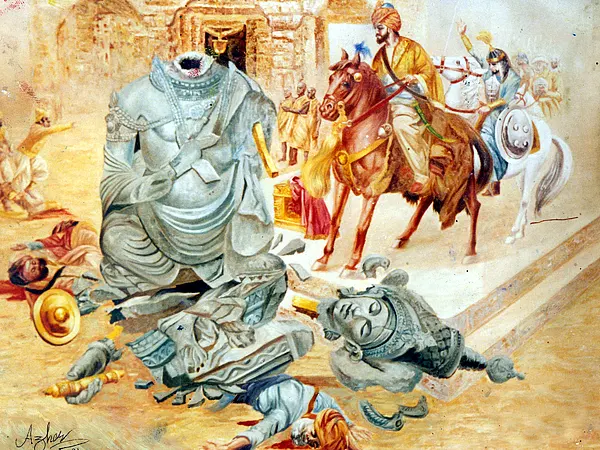
The Somnath Temple was located in Saurashtra on the western coast of India. It was one of the richest and most respected temples of its time.
The temple attracted thousands of pilgrims and possessed enormous wealth in the form of gold, silver, jewels, and precious stones.
Mahmud Ghazni planned a long and difficult march from Multan through desert regions toward Gujarat. During this journey, his army faced many hardships but continued advancing.
Finally, Mahmud reached Somnath and attacked the temple fortress.
Plunder of the Somnath Temple
The battle around Somnath was intense. Many defenders fought bravely to protect the temple.
Historical accounts describe heavy destruction during the invasion. Mahmud’s army reportedly killed thousands of people and seized huge amounts of treasure.
The temple’s famous Shiva Linga and valuable decorations attracted the invaders. The wealth taken from Somnath included gold, jewels, silver, and other precious objects.
The plunder of Somnath became one of the most remembered incidents of medieval India. It increased Mahmud’s fame and reputation in Central Asia and the Islamic world.
The treasure captured from Somnath greatly enriched the Ghaznavid Empire.
Why Did Mahmud Ghazni Attack Temples?
Historians have discussed this question for many years.
There were several reasons behind temple attacks:
Wealth
Temples were extremely rich and stored gold, silver, and valuable items donated by rulers and devotees.
Political Power
Attacking famous temples weakened the prestige of local rulers.
Military Objectives
Temple cities often had strategic and economic importance.
Religious Image
Destroying important temples helped Mahmud gain recognition as a defender of Islam among some groups in Central Asia.
However, many historians believe economic and political reasons were more important than purely religious motives.
Administration and Rule of Mahmud Ghazni
Mahmud Ghazni was a powerful conqueror, but his administrative abilities are often criticized.
He focused mainly on military expansion and wealth collection. Although he built a large empire, he did not create strong institutions for long-term stability.
His empire depended heavily on military success. Areas outside Ghazni often experienced harsh rule and heavy taxation.
Still, Mahmud made Ghazni an important cultural and political center. Scholars, poets, and artists were welcomed in his court.
One famous scholar associated with his period was Al-Biruni, who wrote detailed works about India, culture, science, and society.
Mahmud also supported architecture and built mosques, libraries, and palaces in Ghazni.
Expansion of the Ghaznavid Empire
Mahmud transformed Ghazni from a small kingdom into a vast empire.
His empire included:
- Most of present-day Afghanistan
- Eastern Iran
- Parts of Central Asia
- Northwestern India
This expansion increased Ghazni’s political importance.
The wealth from Indian raids funded military campaigns, administration, and construction projects. Ghazni became a wealthy and influential city during Mahmud’s reign.
Death of Mahmud Ghazni
Mahmud Ghazni died in 1030 CE at the age of about 58.
According to historical accounts, he suffered from malaria during one of his campaigns. Later, he also developed tuberculosis, which weakened his health further.
His death marked the end of an important phase in Ghaznavid history.
Although the empire continued after him, later rulers were not as powerful as Mahmud.
Decline of the Ghaznavid Empire
After Mahmud’s death, the Ghaznavid Empire slowly weakened.
Several reasons caused its decline:
Weak Successors
Later rulers lacked Mahmud’s military talent and leadership abilities.
Lack of Strong Institutions
Mahmud focused more on conquest than administration.
Internal Conflicts
Power struggles weakened the empire from within.
External Threats
New powers emerged in Central Asia and Afghanistan.
Because of these problems, the Ghaznavids gradually lost control over their territories.
Rise of the Ghurids
As the Ghaznavids weakened, a new power called the Ghurids rose in Afghanistan.
The region of Ghur was located between the Ghaznavid Empire and the Seljuqid Empire. It was a mountainous and less developed area.
The people mainly depended on agriculture and cattle-rearing.
The Ghurid rulers, known as the Shansabanids, slowly became powerful during the 12th century.
At first, the Ghaznavids tried to control them. However, tensions increased between the two dynasties.
Conflict Between Ghaznavids and Ghurids
The rivalry between the Ghaznavids and Ghurids became serious after the Ghaznavids captured and poisoned a brother of the Ghurid ruler Alauddin Hussain Shah.
In revenge, Alauddin attacked Ghazni and defeated the Ghaznavid ruler Bahram Shah.
The city of Ghazni was heavily destroyed and plundered.
Because of this destruction, Alauddin received the title “Jahan Soz,” meaning “World Burner.”
This event marked the decline of the Ghaznavids and the rise of the Ghurids.
Later, the Ghurids expanded into India and played a major role in establishing Muslim rule in northern India.
Historical Importance of Mahmud Ghazni
Mahmud Ghazni remains one of the most important figures in medieval Asian history.
His invasions had several long-term effects:
Political Changes
His attacks weakened many north Indian kingdoms.
Economic Impact
Repeated plunder caused heavy economic losses to some regions.
Opening the Route for Future Invasions
Mahmud’s campaigns exposed the military weaknesses of Indian kingdoms.
Growth of Ghazni
The wealth from India transformed Ghazni into a major center of power.
Historical Debate
Historians continue debating whether Mahmud should be remembered mainly as a conqueror, plunderer, empire builder, or religious warrior.
Conclusion
Mahmud Ghazni was a powerful and ambitious ruler of medieval history. Through military skill and repeated invasions, he expanded the Ghaznavid Empire across Afghanistan, Iran, and parts of India. His victories against rulers like Jayapal and Anandapal strengthened his control over northwestern India.
He is most remembered for the plunder of the Somnath Temple, which became one of the most famous events of medieval India. Although he gained enormous wealth and military fame, he failed to build strong institutions for long-term governance.
After his death, the Ghaznavid Empire gradually weakened, and the Ghurids emerged as the next major power in the region. Mahmud Ghazni’s invasions left a lasting impact on Indian and Central Asian history and continue to be studied even today.
FAQs About Mahmud Ghazni
1. Who was Mahmud Ghazni?
Mahmud Ghazni was the ruler of the Ghaznavid Empire who invaded India many times during the 11th century.
2. Why is Mahmud Ghazni famous?
He is famous for his repeated invasions of India and the plunder of the Somnath Temple in Gujarat.
3. How many times did Mahmud Ghazni invade India?
Historians generally mention that Mahmud Ghazni invaded India around 17 times.
4. Which temple was attacked by Mahmud Ghazni?
Mahmud Ghazni attacked the famous Somnath Temple in 1025 CE.
5. Who was defeated by Mahmud Ghazni in 1001 CE?
Mahmud Ghazni defeated Jayapal, the ruler of the Hindu Shahi dynasty, in 1001 CE.
6. What was the capital of Mahmud Ghazni’s empire?
The capital of his empire was Ghazni, located in present-day Afghanistan.
7. Why did Mahmud Ghazni invade India?
He invaded India mainly for wealth, political power, and military expansion.
8. Did Mahmud Ghazni conquer Kashmir?
No, he failed to conquer Kashmir due to difficult weather and geographical conditions.