



Types of Forests in India – Complete Guide to Indian Forest Classification

Types of Forests in India is an important topic in geography and environmental studies. India is a country with rich natural diversity, and forests are one of its most valuable resources. Forests provide oxygen, maintain ecological balance, support wildlife, and help millions of people earn their livelihood.
Thank you for reading this post, don't forget to subscribe!Definition of Forest
At present, in India, there is no clear nationally accepted definition of a “forest.” Different states have the authority to define forests based on their regional conditions. This power comes from the Supreme Court judgment in the case of T.N. Godavarman Thirumulkpad vs Union of India.
In this important judgment, the Supreme Court stated that the term “forest” should be understood according to its dictionary meaning. This means any land that has forest-like characteristics can be treated as a forest, whether it is officially classified as reserved, protected, or unclassified.
This decision played a major role in expanding the scope of forest protection in India.
Constitutional and Legal Provisions for Forests
India has strong legal and constitutional support for forest conservation.
Constitutional Provisions
- Forests are included in the Concurrent List (Seventh Schedule) of the Constitution of India. This means both the Central and State governments can make laws regarding forests.
- Through the 42nd Amendment Act, 1976, forests and wildlife were shifted from the State List to the Concurrent List.
- Article 48A directs the State to protect and improve forests and wildlife.
- Article 51A(g) makes it the fundamental duty of every citizen to protect and improve the natural environment including forests and wildlife.
Statutory Provision
India’s forests are governed by the National Forest Policy, 1988, which focuses on maintaining environmental balance and supporting livelihoods.
Forest Cover Report
According to the India State of Forest Report 2019:
- Forest and tree cover together make up 24.56% (8,07,276 sq km) of India’s total area.
- India aims to increase forest cover to 33% in the long term.
Classification of Forests in India
The Types of Forests in India can be classified into different categories based on administration, ownership, accessibility, composition, and climate.
1. Classification Based on Administration
| Type of Forest | Features | Share of Total Forest Area |
|---|---|---|
| Reserved Forests | Under direct supervision of the government, strict protection, no public use for grazing or cutting | 53% |
| Protected Forests | Managed by government, limited use allowed for local people without causing damage | 29% |
| Unclassified Forests | No strict control, open access for grazing and cutting | 18% |
Reserved forests are the most protected, while unclassified forests have the least restrictions.
2. Classification Based on Ownership
| Type | Description | Coverage |
|---|---|---|
| State Forests | Owned and controlled by central or state government | 94% |
| Commercial Forests | Managed by local bodies like panchayats and municipal corporations | 5% |
| Private Forests | Owned by individuals or private groups | Around 1% |
Most forest areas in India are under government control.
3. Classification Based on Merchantability
| Type | Description | Coverage |
|---|---|---|
| Merchantable Forests | Easily accessible forests for use | 82% |
| Non-Merchantable Forests | Located in high mountains and difficult regions | 18% |
4. Classification Based on Composition
- Coniferous Forests: Found in higher altitudes of the Himalayas and northeastern states like Arunachal Pradesh.
- Broadleaf Forests: Found in plains, plateaus, and mountains across India.
Broadleaf forests cover about 94%, while coniferous forests cover about 6.5%.
5. Types of Forests in India Based on Rainfall and Climate
This is the most detailed and important classification.
Tropical Evergreen Forests
These forests remain green throughout the year.

Moist Evergreen Forests
- Region: Western Ghats, Andaman and Nicobar Islands, North-East India
- Climate: Rainfall above 200 cm, temperature above 22°C
- Features: Trees grow up to 60 meters, dense and evergreen
Trees: Rosewood, Mahogany, Ebony, Jackfruit, Mango, Jamun
Semi-Evergreen Forests
- Found in slightly less rainy areas of evergreen regions
- Mixture of evergreen and deciduous trees
- Trees: White cedar, hollock, kail
Dry Evergreen Forests
- Found in Shivalik Hills and coastal Andhra Pradesh and Karnataka
- Have long dry seasons and cold winters
- Trees: Pomegranate, olive, oleander
Tropical Deciduous Forests (Monsoon Forests)
These forests shed leaves during dry seasons.
Moist Deciduous Forests
- Rainfall: 100–200 cm
- Regions: North-East India, foothills of Himalayas, Odisha, Western Ghats
Trees: Teak, Sal, Shisham, Mahua, Sandalwood, Amla
Dry Deciduous Forests
- Rainfall: 70–100 cm
- Regions: Madhya Pradesh, Gujarat, Andhra Pradesh, Karnataka, Tamil Nadu
Trees: Tendu, Palas, Amaltas, Bel, Khair
These forests look dry in summer due to leaf shedding.
Thorn Forests
- Rainfall: Less than 50 cm
- Regions: Rajasthan, Gujarat, Punjab, Haryana, Madhya Pradesh, Uttar Pradesh
- Features: Short trees, shrubs, and grasses
Trees: Babul, Acacia, Neem, Khejri, Cactus
Plants remain leafless most of the year to reduce water loss.
Montane Forests
Found in mountainous regions of northern and southern India.
Montane Wet Temperate Forests
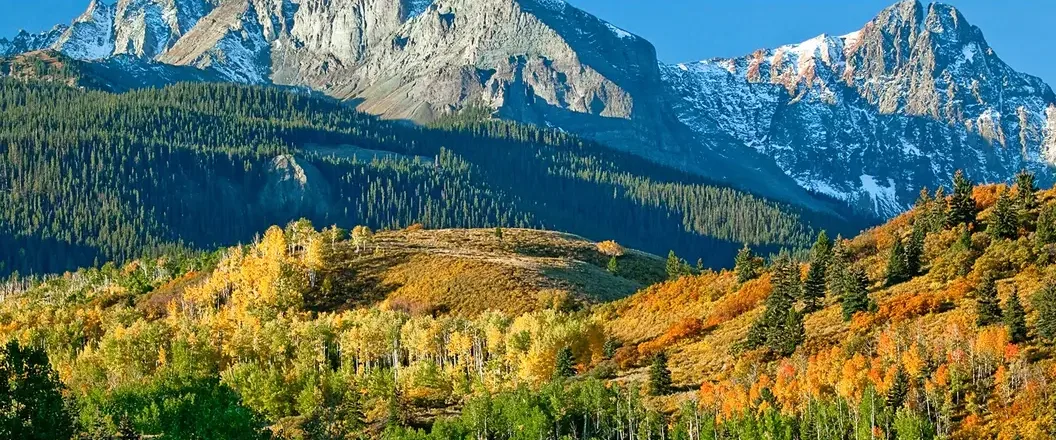
- Height: 1800–3000 meters
- Regions: Arunachal Pradesh, Nilgiri Hills, Kerala highlands
- Trees: Rhododendron, Champa, Eucalyptus
Montane Subtropical Forests
- Rainfall: 100–200 cm
- Temperature: 15°C–22°C
- Regions: Himachal Pradesh, Uttarakhand, Sikkim, Arunachal Pradesh
Trees: Pine (Chir), Oak, Jamun, Rhododendron
Himalayan Forests
Himalayan Moist Forests
- Height: 1000–2000 meters
- Regions: Jammu & Kashmir, Himachal Pradesh, Uttarakhand
- Trees: Oak, chestnut, sal
Himalayan Dry Temperate Forests
- Regions: Himachal Pradesh, Sikkim
- Trees: Deodar, chilgoza, maple, willow
Alpine and Subalpine Forests
- Height: 2500–4000 meters
- Regions: From Kashmir to Arunachal Pradesh
Trees: Juniper, Birch, Larch, Rhododendron
These forests are found at the highest altitudes.
Littoral and Swamp Forests (Mangrove Forests)
These forests grow in coastal and delta regions.

Regions:
- Ganga-Brahmaputra Delta
- Mahanadi, Godavari, Krishna deltas
- Andaman and Nicobar Islands
The largest mangrove forest in the world is the Sundarbans.
Features:
- Trees have special breathing roots
- Dense and difficult to enter
- Protect coastlines from erosion
Common Plants:
- Mangroves
- Palms
- Whistling pines
India has about 6,740 sq km of mangrove forests, which is about 7% of the world’s mangroves.
Importance of Forests in India
- Maintain ecological balance
- Provide oxygen and reduce carbon dioxide
- Prevent soil erosion
- Support wildlife
- Provide livelihood to tribal communities
- Help control climate
Challenges Faced by Forests
- Deforestation
- Urbanization
- Illegal logging
- Forest fires
- Climate change
Protecting forests is essential for sustainable development.
FAQs
1. What are the main types of forests in India?
The main types include Tropical Evergreen, Tropical Deciduous, Thorn, Montane, and Mangrove forests.
2. Which is the largest forest type in India?
Tropical Deciduous forests are the most widespread.
3. Where are mangrove forests found in India?
They are found in coastal areas, especially in the Sundarbans delta.
4. What is the importance of forests?
Forests help maintain ecological balance, support wildlife, and provide resources for humans.
5. What percentage of India is covered by forests?
About 24.56% of India’s land area is covered by forests and trees.