


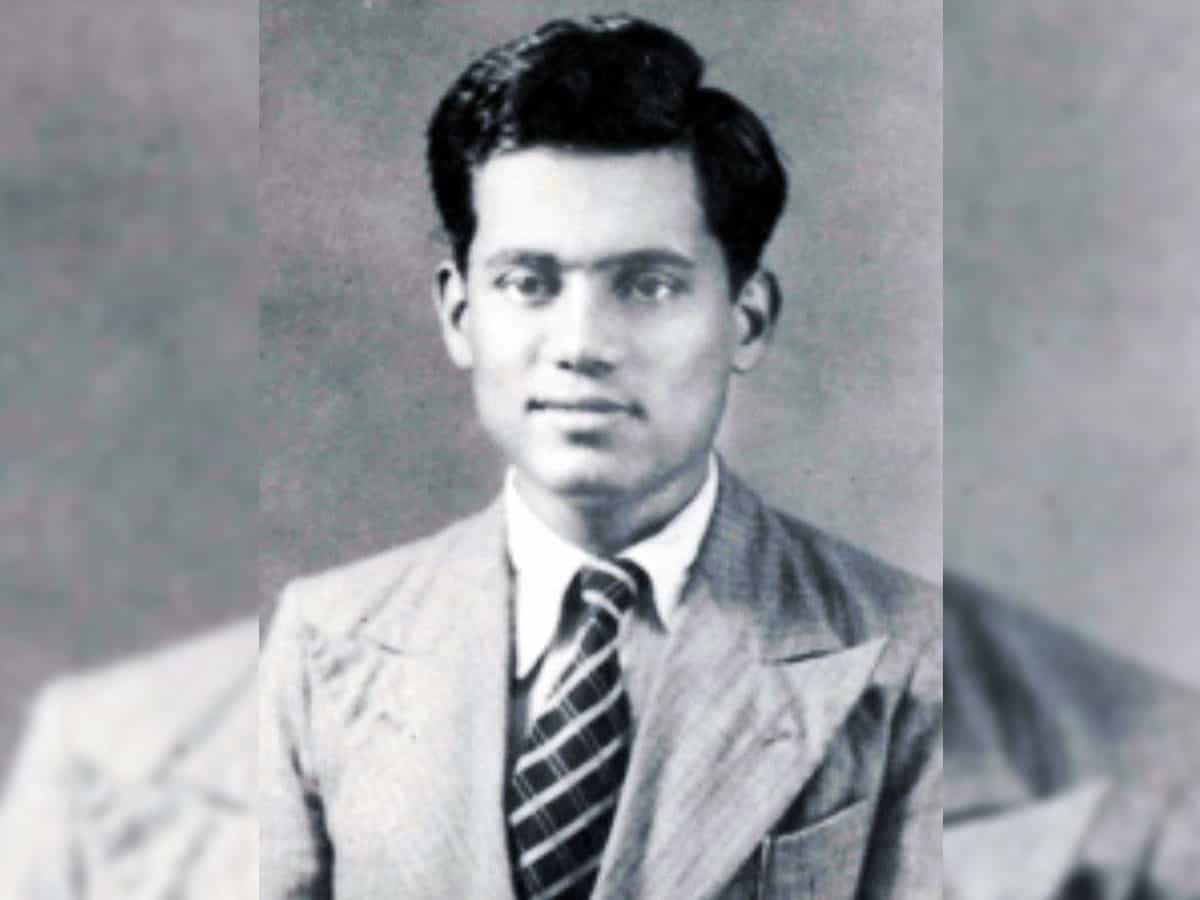
Dr. Dwarkanath Kotnis: The Indian Doctor Who Became a Symbol of India-China Friendship

Dr. Dwarkanath Kotnis was an Indian doctor who dedicated his life to helping people in China during the Second Sino-Japanese War. His courage, kindness, and commitment to saving lives made him a symbol of friendship between India and China. Even during a time of war, when medical facilities were limited and thousands of soldiers were injured, Dr. Kotnis continued to provide treatment to those in need. His selfless service earned him deep respect in China, and his legacy continues to inspire people in both countries.
The story of Dr. Kotnis is not only about medicine but also about humanity, sacrifice, and international friendship. He travelled far from his homeland to help people facing the difficulties of war. Despite the challenges, he chose to remain in China and serve the wounded. His life reminds us that kindness and compassion can connect people beyond national borders.

Who Was Dr. Dwarkanath Kotnis?
Dr. Dwarkanath Shantaram Kotnis was born on October 10, 1910, in Solapur, Maharashtra, India. He was a qualified Indian physician who became widely known for his medical service during China’s struggle against Japanese invasion.
During the Second Sino-Japanese War, which lasted from 1937 to 1945, China faced a serious shortage of doctors, medicines, and medical equipment. Many soldiers were injured on the battlefield, while hospitals struggled to provide proper treatment. In response to China’s request for assistance, the Indian National Congress decided to send a medical mission to support the Chinese people.
Dr. Kotnis volunteered to join this mission. His decision marked the beginning of a remarkable journey that would connect his name permanently with India-China friendship.
He worked with the medical teams supporting the Eighth Route Army, helping injured soldiers and improving medical care in difficult conditions. His contribution demonstrated how doctors could serve humanity even in the middle of war and political conflict.
Why Did India Send a Medical Mission to China?
During the late 1930s, China was fighting against Japanese military aggression. The war caused widespread suffering, and medical services were urgently needed to treat wounded soldiers and civilians.
Chinese leaders, including Marshal Zhu De, appealed to Indian leaders for medical assistance. They requested doctors, medicines, surgical instruments, and other essential supplies.
The Indian National Congress responded by organising a medical mission as a gesture of solidarity with the Chinese people. This initiative reflected the spirit of cooperation between people who were facing difficult circumstances under colonialism and military aggression.
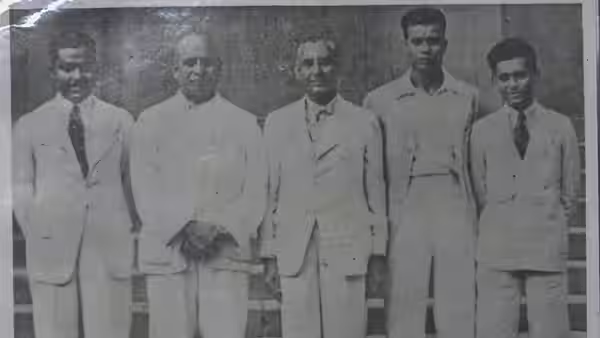
The medical mission consisted of five Indian doctors:
- Dr. M. Atal from Allahabad
- Dr. M. Cholkar from Nagpur
- Dr. M. Mukerji from Kolkata
- Dr. Bijoy Kumar Basu from Kolkata
- Dr. Dwarkanath Kotnis from Solapur
The doctors carried medicines, surgical equipment, an ambulance truck, and X-ray apparatus to support their work in China.
Their mission was more than a medical operation. It represented the willingness of ordinary people to help others during a humanitarian crisis.
Dr. Kotnis’ Journey to China
On September 1, 1938, the Indian medical team left for China aboard the Rajputana steamer. Their journey to Wuhan took approximately 16 days.
During the voyage, Dr. Kotnis began learning Chinese by interacting with people on board. This interest in the local language helped him communicate with Chinese patients and become part of the community he had travelled to serve.
After arriving in China, the team received support from organisations involved in providing medical relief. One such organisation was the Alliance to Defend China, which helped supply medicines and medical equipment to areas affected by the fighting.
The Indian doctors worked in several locations, including Hankou, Yichang, and Chongqing. They treated wounded soldiers, assisted other medical workers, and provided care under difficult conditions.
However, Dr. Kotnis and his colleagues wanted to do more than work in relatively safer areas. They repeatedly requested permission to serve closer to the frontlines, where medical assistance was urgently needed.
Their determination eventually took them to Yan’an and other areas associated with the Chinese resistance.
Dr. Kotnis’ Service on the Frontlines
Dr. Kotnis reached Yan’an in February 1939. There, he began working with soldiers and medical teams operating under challenging wartime conditions.
Medical facilities were often basic, and doctors had to work with limited supplies. Transporting wounded soldiers to hospitals was difficult, particularly in remote and mountainous areas. Despite these problems, Dr. Kotnis continued treating patients with dedication.
In March 1939, he met Mao Zedong during a welcome gathering organised for the Indian medical mission. He also treated important Chinese leaders, including Zhou Enlai, who later became the first Premier of the People’s Republic of China.
In July 1939, Zhou Enlai fractured his right elbow after falling from a horse. Dr. Kotnis and members of the Indian medical team helped provide treatment and regularly attended to the injury.
However, much of Dr. Kotnis’ work focused on ordinary soldiers who needed urgent medical care.
During the Laishui campaign, he reportedly treated nearly 800 wounded and sick soldiers, with 558 undergoing surgery. The Indian medical team also operated mobile clinics, where doctors treated large numbers of patients despite shortages of equipment and supplies.
On some occasions, Dr. Kotnis worked for as long as 72 hours without sleep. His efforts showed his determination to save lives, even when the demands of war placed enormous pressure on medical workers.
A Personal Sacrifice for Humanity
Dr. Kotnis’ dedication to his work became especially clear when he received news of his father’s death while serving in China.
Like anyone else, he had personal responsibilities and family relationships. He faced the difficult choice of returning to India to attend his father’s funeral or remaining in China to care for the thousands of people who needed medical assistance.
According to the account of his life, he chose to continue his service in China.
His decision reflected the deep sense of responsibility he felt towards the wounded people under his care. He understood that his absence could make an already difficult situation even harder for those who depended on the medical team.
This episode remains one of the most remembered parts of his life. It illustrates the personal sacrifices that humanitarian workers sometimes make while helping others during emergencies.
Dr. Kotnis did not view his medical duty as something limited by national boundaries. For him, treating a patient in need was a responsibility that extended beyond his own country.
Marriage and Family Life in China
While working at the Bethune Memorial Base Hospital and Medical School, Dr. Kotnis met Guo Qinglan, a nursing teacher.
The two developed a relationship and married in November 1941. Their marriage became another example of the personal connection that grew between India and China through his service.
Their son, Yin Hua, was born on August 23, 1942. His name is commonly understood as reflecting a connection between India and China.
Despite becoming a husband and father, Dr. Kotnis continued working in demanding medical conditions. His responsibilities at the hospital and his service to wounded soldiers kept him busy for long hours.
His family life in China added a personal dimension to his story. He was not simply an Indian doctor working in a foreign country; he had also built a family and lasting relationships there.
The Death of Dr. Dwarkanath Kotnis
Dr. Dwarkanath Kotnis died on December 9, 1942, at the age of just 32.
His health had suffered after years of exhausting medical work. He developed an epileptic disorder, and his condition eventually led to his untimely death.
His passing was a great loss to the medical community and the Chinese people he had served. He had spent years treating wounded soldiers and providing assistance in circumstances that demanded extraordinary physical and emotional strength.
His death was mourned by Chinese leaders and colleagues. Mao Zedong paid tribute to him in a handwritten message, remembering his service during China’s resistance against Japan and describing him as a friend of the Chinese people.
Zhou Enlai also sent a message of condolence to Dr. Kotnis’ family in March 1943. His tribute expressed the belief that the doctor’s name would continue to live among the Indian and Chinese people he had served.
These tributes showed how deeply Dr. Kotnis’ work had affected those around him.
The Lasting Legacy of Dr. Kotnis
The legacy of Dr. Dwarkanath Kotnis extends far beyond his years of medical service. His life continues to be remembered as an example of humanitarian dedication and friendship between India and China.
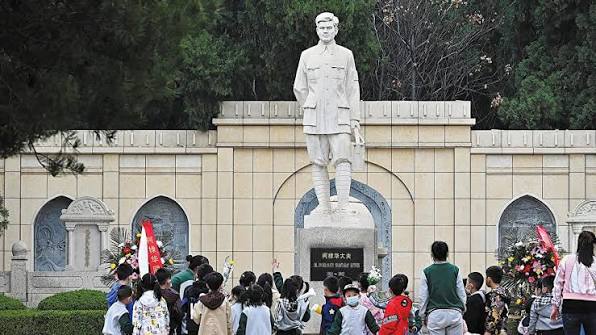
Several memorials and institutions in China honour his contribution.
Memorials and Hospitals
The Kotnis Memorial Hall in Tang County, Hebei Province, commemorates his life and service. A memorial hall associated with the Bethune International Peace Hospital also preserves his memory.
The Second Hospital of Hebei Medical University was renamed the Kotnis India-China Friendship Hospital in recognition of his contribution.
These memorials help new generations learn about his work and the role he played in providing medical assistance during the war.
Tributes from Chinese Leaders
Over the years, several Chinese leaders have paid tribute to Dr. Kotnis and his family.
In 1954, Chinese Premier Zhou Enlai visited the doctor’s family during his visit to India. Later Chinese leaders, including Jiang Zemin, Hu Jintao, and Li Keqiang, also expressed respect for Dr. Kotnis and his contribution.
During Chinese President Xi Jinping’s visit to India in 2014, Dr. Kotnis’ family received further recognition. In 2017, Mao Zedong’s handwritten tribute to the doctor was restored and handed over to the University of Mumbai.
In 2023, China’s former foreign minister Qin Gang met members of Dr. Kotnis’ family and recalled his importance as a friend of the Chinese people.
These occasions demonstrate how his memory has remained part of the historical relationship between the two countries.
A Statue and Other Forms of Recognition
Dr. Kotnis has also been honoured through statues, commemorative displays, and other public tributes in China. A bronze statue unveiled outside a medical school in Shijiazhuang during the COVID-19 period renewed public attention to his contribution.
His story has also reached audiences through Chinese cinema. The 1982 film Ke Di Hua Dai Fu tells the story of his life and service.
Dr. Kotnis is affectionately remembered by some Chinese people as “Old Ke,” reflecting the personal warmth associated with his name.
His legacy has also inspired medical outreach initiatives bearing his name, including volunteer efforts to provide healthcare to people in rural and remote communities.
Dr. Kotnis and India-China Friendship
The story of Dr. Kotnis demonstrates how personal relationships can strengthen connections between countries. His contribution took place during a period of war, but the friendships he built continued long after the conflict ended.
India and China have experienced different phases in their political relationship. However, the story of Dr. Kotnis remains an important historical example of cooperation between their people.
He travelled to China as part of a medical mission, but his work went beyond the original purpose of that mission. He learned the language, worked alongside Chinese colleagues, treated wounded soldiers, built a family, and became part of the community he served.
His life shows that people-to-people relationships can develop through shared experiences, mutual respect, and a commitment to helping others.
The connection between Dr. Kotnis and China also reminds us that humanitarian work can leave a lasting impact. Although he died young, the memory of his service has continued across generations.
Lessons We Can Learn from Dr. Dwarkanath Kotnis
The life of Dr. Kotnis offers several important lessons for students and readers.
Humanity comes first: His medical service showed that human suffering deserves attention regardless of a person’s nationality or background.
Service requires dedication: He continued treating patients even when working conditions were difficult and medical resources were limited.
Courage means taking responsibility: Dr. Kotnis chose to serve people who urgently needed help, even when doing so involved personal sacrifice.
Friendship can cross borders: His relationships with Chinese colleagues and his family life in China strengthened the human connection between the two countries.
A person’s contribution can outlive their life: Although Dr. Kotnis died at 32, his service continues to be remembered through memorials, institutions, films, and public tributes.
These lessons remain relevant for doctors, students, humanitarian workers, and anyone who wants to make a positive difference in society.
Frequently Asked Questions
Who was Dr. Dwarkanath Kotnis?
Dr. Dwarkanath Shantaram Kotnis was an Indian physician who served wounded Chinese soldiers during the Second Sino-Japanese War. He became a symbol of humanitarian service and India-China friendship.
When was Dr. Dwarkanath Kotnis born?
Dr. Kotnis was born on October 10, 1910, in Solapur, Maharashtra, India.
Why did Dr. Kotnis go to China?
He travelled to China in 1938 as part of an Indian medical mission organised to assist the Chinese people and treat soldiers injured during the war against Japan.
How did Dr. Kotnis help China?
He treated wounded soldiers, performed surgeries, worked in mobile medical units, and served in hospitals under difficult wartime conditions.
When did Dr. Dwarkanath Kotnis die?
Dr. Kotnis died on December 9, 1942, at the age of 32, after developing an epileptic disorder.
Who was Dr. Kotnis’ wife?
His wife was Guo Qinglan, a Chinese nursing teacher whom he met while working at the Bethune Memorial Base Hospital and Medical School.
Why is Dr. Kotnis remembered in China?
He is remembered for his medical service, personal sacrifice, and contribution to the Chinese resistance against Japanese aggression. His life also represents friendship between the Indian and Chinese people.
How is Dr. Kotnis’ legacy honoured today?
His legacy is honoured through memorials, hospital names, statues, films, commemorative displays, and medical outreach initiatives associated with his name.
Conclusion
Dr. Dwarkanath Kotnis remains an inspiring figure in the history of India-China relations. His life was marked by courage, compassion, and a commitment to saving lives during one of the most difficult periods in modern history.
He left India to help people in need and continued serving them despite personal loss, exhausting working conditions, and serious health challenges. Although his life ended at a young age, his contribution was never forgotten by the people he treated and the colleagues who worked alongside him.
His story reminds us that true friendship is built through action, sacrifice, and care for others. Dr. Kotnis may have travelled thousands of miles from India to China, but his humanitarian spirit continues to connect the two countries even today.