


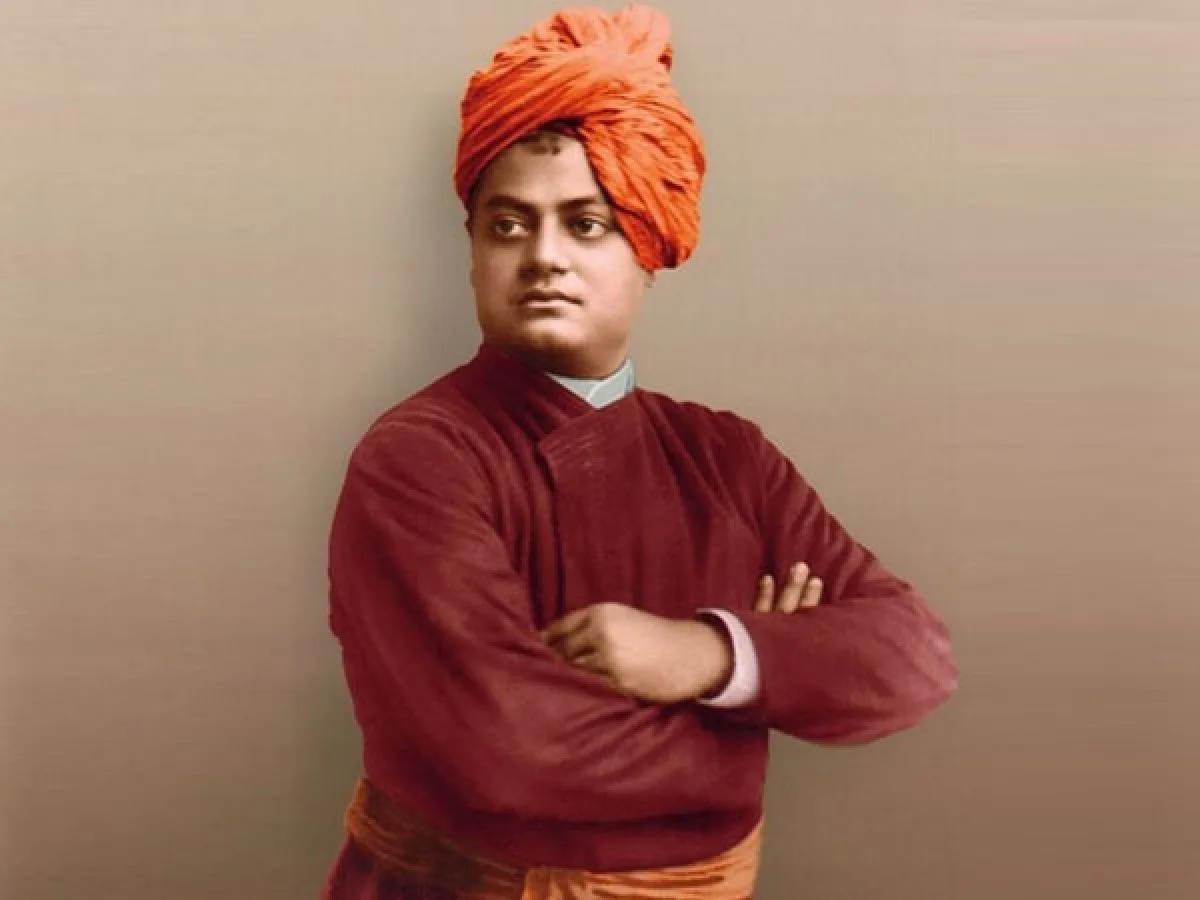
Swami Vivekananda: Life, Philosophy and Teachings

Swami Vivekananda was one of India’s greatest spiritual leaders, thinkers, and social reformers. He inspired millions of people through his teachings on spirituality, education, service, and nationalism. His ideas continue to guide people even today. He believed in the strength of youth, the power of education, and the unity of all religions.
Thank you for reading this post, don't forget to subscribe!Swami Vivekananda was born as Narendra Nath Datta on 12 January 1863 in Kolkata, India. From childhood, he was intelligent, curious, and interested in spiritual questions. He later became a monk and the chief disciple of Ramakrishna Paramahamsa, a famous spiritual teacher of India.
Swami Vivekananda played an important role in introducing Indian philosophy, Vedanta, and Yoga to the Western world. He became internationally famous after his speech at the Parliament of the World’s Religions in Chicago in 1893. His opening words, “Sisters and Brothers of America,” won the hearts of thousands.
About Vedanta
Vedanta is one of the most important schools of Indian philosophy. It is mainly based on the Upanishads, which explain deep spiritual truths.
The main goal of Vedanta is to understand Brahman, the ultimate reality of the universe. According to Vedanta, Brahman is the source of everything. It teaches that every human soul, known as Atman, is connected to Brahman.
Vedanta says that true knowledge leads to Moksha, or liberation from the cycle of birth and death. It focuses more on wisdom and self-realization than rituals and sacrifices. Swami Vivekananda strongly believed in Vedanta and spread its message across the world.
In 1897, he established the Ramakrishna Mission, named after his guru Ramakrishna Paramahamsa. The mission worked for education, healthcare, relief work, and service to humanity.
Ethics According to Swami Vivekananda
Swami Vivekananda gave a powerful message about ethics and morality. He believed that morality should not come from fear of punishment or social criticism. Instead, morality should come from understanding our true nature.
According to him, every person is naturally pure and divine. Good behavior is not something forced from outside; it comes from within. He taught that purity is our real nature.
He also believed in love and service toward others. Since all human beings are connected through one supreme spirit, harming others means harming ourselves. Helping others means serving God.
For Swami Vivekananda, ethics was a way to become a responsible and good citizen.
His View on Religion
Swami Vivekananda made religion easier to understand in modern times. He said religion is not about blind faith, superstition, or rituals alone. True religion is the realization of God within ourselves.
One of his greatest contributions was teaching that all religions are different paths leading to the same truth. He respected every religion and encouraged harmony among them.
He believed that Hinduism, Islam, Christianity, Buddhism, and all other religions aim toward the same supreme truth. This message helped promote peace and interfaith understanding.
According to him, religion should unite people, not divide them.
Importance of Education
Swami Vivekananda gave great importance to education. He believed that education is the strongest tool for building a nation.
According to him, a country becomes strong when education reaches all people, especially the poor and backward sections of society. He wanted education to reach villages and common people.
He famously said that education is the manifestation of the perfection already present in every person. This means every person has hidden power and knowledge within them, and education helps bring it out.
He supported character-building education. For him, education should not only give book knowledge but also build confidence, discipline, honesty, and courage.
He wanted students to become self-reliant and capable of facing life’s challenges. He criticized educated people who ignored the poor and weak.
Rational Thinking and Science
Swami Vivekananda respected science and rational thinking. He did not believe that religion and science were enemies.
He accepted modern scientific methods and supported logical thinking. At the same time, he believed that spiritual experiences and intuition are also important.
According to him, reason helps us understand facts, while intuition helps us understand deeper spiritual truths. But even spiritual truth should be explained logically.
This balanced approach made his philosophy relevant in both spiritual and modern scientific discussions.
Swami Vivekananda and Nationalism
Swami Vivekananda’s nationalism was unique. His love for India was deeply connected with spirituality and morality.
He believed that India’s true strength lies in its spiritual culture, values, and unity. Unlike Western nationalism, which often focuses mainly on politics and economics, his nationalism focused on human values and service.
The main pillars of his nationalism were:
- Love and service for the poor
- Equality and freedom
- National unity
- Universal brotherhood
- Spiritual growth
He believed that serving the poor was equal to serving God. He encouraged Indians to rise above caste divisions and work together for national progress.
His speeches awakened self-confidence among Indians during British rule. He inspired people to feel proud of their culture and heritage.
Message for Youth
Swami Vivekananda had great faith in young people. He believed youth had the power to transform society and the nation.
He often encouraged young people to become fearless, disciplined, and hardworking. According to him, nothing is impossible if the youth are determined.
He said success comes through dedication, hard work, and focus. He wanted young people to be mentally and physically strong.
His famous message was that youth should have “muscles of iron and nerves of steel.” This means they should be physically fit and mentally strong.
He motivated youth to dream big and work tirelessly toward their goals.
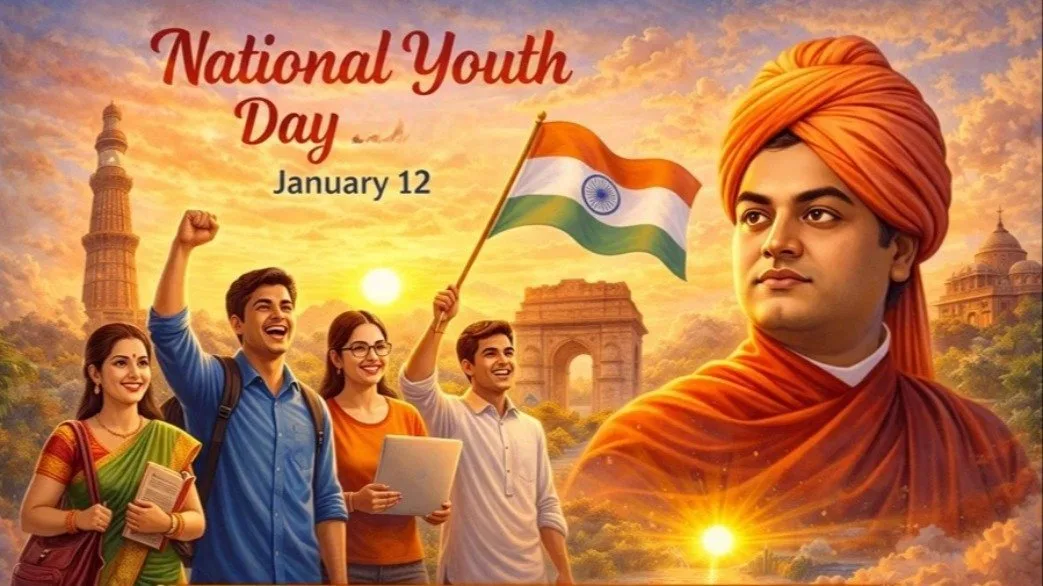
Because of his great influence on young people, his birthday, 12 January, is celebrated as National Youth Day in India.
Every year, the Government of India organizes the National Youth Festival during this period. The festival promotes national unity, cultural exchange, brotherhood, courage, and leadership among youth.
Lasting Legacy of Swami Vivekananda
Swami Vivekananda passed away in 1902 at the age of just 39. Even though his life was short, his impact was enormous.
His teachings still inspire students, leaders, teachers, and spiritual seekers around the world. His message of strength, self-belief, discipline, and service remains relevant even in today’s fast-changing world.
He taught people to believe in themselves and never lose hope. His words continue to motivate millions:
“Arise, awake, and stop not till the goal is reached.”
Swami Vivekananda’s life proves that one person’s vision and dedication can inspire generations. His philosophy continues to guide India and the world toward unity, peace, and progress.
FAQs
Q1. Who was Swami Vivekananda?
Swami Vivekananda was a great Indian monk, philosopher, and spiritual leader who spread the teachings of Vedanta and Yoga worldwide.
Q2. What was the birth name of Swami Vivekananda?
His birth name was Narendra Nath Datta.
Q3. When was Swami Vivekananda born?
He was born on 12 January 1863 in Kolkata, India.
Q4. Why is Swami Vivekananda famous?
He is famous for introducing Indian spirituality, Vedanta, and Yoga to the Western world, especially through his 1893 Chicago speech.
Q5. What is the main message of Swami Vivekananda?
His main message was self-confidence, service to humanity, education, and spiritual growth.
Q6. What is National Youth Day?
National Youth Day is celebrated on 12 January every year to honor Swami Vivekananda’s birth anniversary.