Indus Valley Civilization: A Complete Detailed Study of Harappan Civilization

Indus Valley Civilization is one of the earliest and most remarkable civilizations in human history. The history of India begins with the rise of the Indus Valley Civilization, also known as the Harappan Civilization. It flourished around 2500 BCE in the northwestern regions of South Asia, covering parts of present-day Pakistan and western India.
Thank you for reading this post, don't forget to subscribe!This civilization was one of the four great ancient civilizations of the world, alongside those of Egypt, Mesopotamia, and China. What makes the Indus Valley Civilization unique is its advanced urban planning, well-organized society, and remarkable achievements in architecture, trade, and craftsmanship.
The discovery of this civilization in the 1920s was a turning point in Indian history. Archaeologists unearthed the ruins of major cities such as Harappa and Mohenjodaro, revealing a highly developed and sophisticated culture that existed thousands of years ago.
Discovery of the Indus Valley Civilization
The Indus Valley Civilization was unknown to the modern world until the early 20th century. In 1921, Daya Ram Sahni discovered the site of Harappa, and in 1922, R.D. Banerjee discovered Mohenjodaro.
In 1924, Sir John Marshall, then Director-General of the Archaeological Survey of India, officially announced the discovery of a new ancient civilization to the world. This marked the beginning of systematic archaeological studies in the region.
Important Sites of the Indus Valley Civilization
The Indus Valley Civilization spread across a vast geographical area. Several important sites have been discovered, each providing valuable insights into the life and culture of the Harappans.
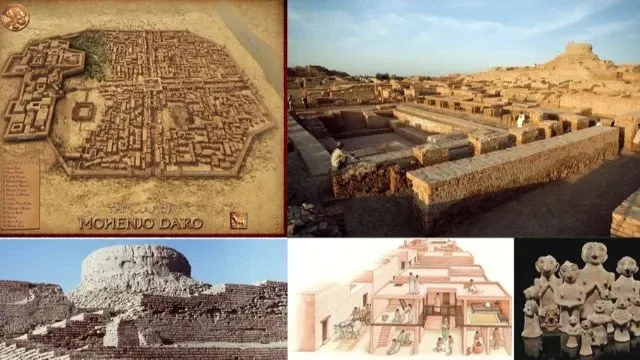
Major Sites and Their Features
| Site | Excavator | Location | Important Findings |
|---|---|---|---|
| Harappa | Daya Ram Sahni (1921) | Punjab (Pakistan), River Ravi | Granaries, sandstone statues, bullock carts |
| Mohenjodaro | R.D. Banerjee (1922) | Sindh (Pakistan), River Indus | Great Bath, bronze dancing girl, seals |
| Lothal | R.Rao (1953) | Gujarat, near Gulf of Cambay | Dockyard, rice husk, fire altars |
| Kalibangan | B.B. Lal & B.K. Thapar | Rajasthan, River Ghaggar | Fire altars, ploughed field |
| Dholavira | R.S. Bisht (1985) | Gujarat, Rann of Kutch | Water reservoirs, advanced water system |
| Chanhudaro | N.G. Majumdar | Sindh | Bead-making factory |
| Banawali | R.S. Bisht | Haryana | Pre-Harappan and Harappan remains |
| Surkotada | J.P. Joshi | Gujarat | Horse bones |
These sites clearly show that the Indus Valley Civilization was not limited to one city but was a widespread and interconnected civilization.
Phases of the Indus Valley Civilization
The development of the Indus Valley Civilization can be divided into three major phases:
1. Early Harappan Phase (3300–2600 BCE)
This phase marked the beginning of urbanization. People started living in organized settlements and engaged in agriculture and trade.
2. Mature Harappan Phase (2600–1900 BCE)
This was the peak period of the Indus Valley Civilization. Cities like Harappa, Mohenjodaro, and Lothal developed into major urban centers with advanced planning and infrastructure.
3. Late Harappan Phase (1900–1300 BCE)
During this phase, the civilization began to decline. Many cities were abandoned, and urban life gradually disappeared.
Town Planning and Architecture
One of the most outstanding features of the Indus Valley Civilization was its advanced town planning.
Key Features:
- Cities were built on a grid system, with roads intersecting at right angles.
- Each city was divided into two parts:
- Citadel (upper town) for elite or administrative class
- Lower town for common people
- Houses were made of burnt bricks, which were strong and durable.
- Almost every house had:
- A courtyard
- A bathroom
- A proper drainage system
Drainage System
The drainage system of the Indus Valley Civilization was highly advanced:
- Covered drains ran along the streets
- Wastewater was efficiently managed
- Regular cleaning systems were in place
Public Buildings
- Granaries for storing food grains
- Great Bath at Mohenjodaro, possibly used for religious purposes
- Dockyard at Lothal, showing maritime trade
This level of planning was unmatched in the ancient world.
Agriculture in the Indus Valley Civilization
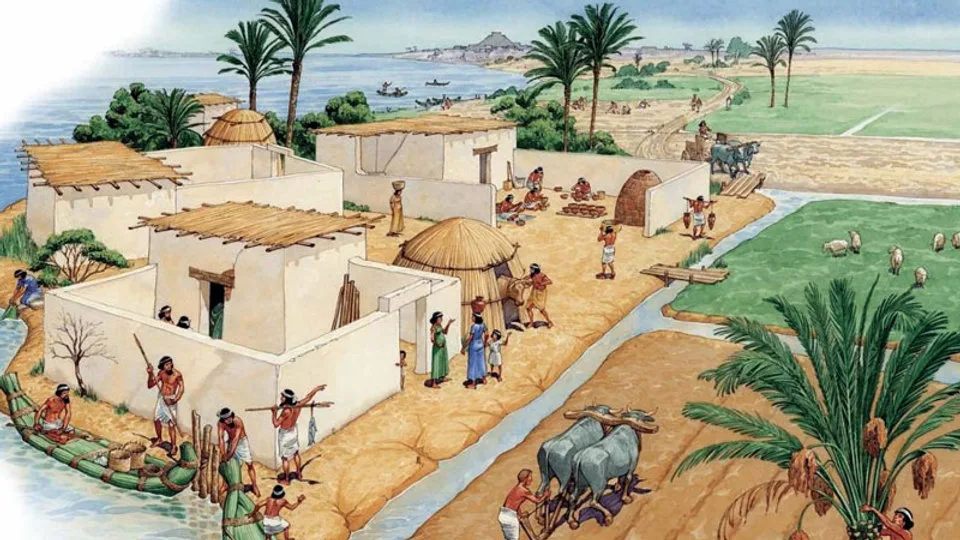
Agriculture was the backbone of the Indus Valley Civilization.
Main Crops:
- Wheat
- Barley
- Rice (limited use)
- Peas
- Mustard
- Sesame
- Cotton (first civilization to grow cotton)
The fertile floodplains of rivers provided ideal conditions for farming.
Farming Techniques:
- Use of oxen for ploughing
- Possible irrigation systems
- Storage of surplus grains in granaries
Animal husbandry was also practiced, including cattle, sheep, and goats.
Economy and Trade
The economy of the Indus Valley Civilization was well-developed and based on trade and commerce.
Trade Features:
- Barter system (no metal currency)
- Use of standardized weights and measures
- Seals used for identification and trade
Internal and External Trade:
- Trade within the region
- Trade with Mesopotamia and Central Asia
- Export of goods like beads, cotton, and precious stones
The dockyard at Lothal indicates strong maritime trade connections.
Crafts and Industries
The people of the Indus Valley Civilization were skilled craftsmen.
Major Crafts:
- Bead making
- Pottery (glossy and well-designed)
- Seal making
- Metalwork (bronze, copper)
- Jewelry making (gold, silver, gemstones)
The presence of workshops shows specialization and division of labor.
Social and Political Life
Understanding the social structure of the Indus Valley Civilization is difficult due to the lack of written records.
Possible Features:
- Society may have been well-organized and equal
- No clear evidence of kings or rulers
- Possibly governed by a group of merchants or elites
Unlike other civilizations, no grand palaces or temples have been found.
Religion in the Indus Valley Civilization
Religion played an important role in the Indus Valley Civilization.
Major Religious Beliefs:
- Worship of Mother Goddess (fertility symbol)
- Worship of a male deity, often identified as Pashupati Mahadeva
- Animal worship (bull, unicorn)
- Tree worship
Other Evidence:
- Terracotta figurines
- Seals with religious symbols
- Amulets used for protection
These beliefs influenced later Indian religious traditions.
Script and Language
The Indus Valley Civilization had its own script, known as the Indus script.
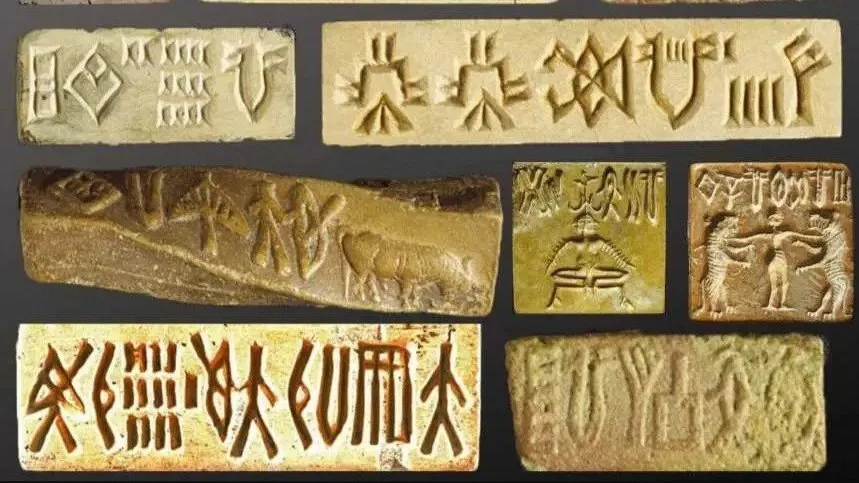
Features:
- Found on seals and pottery
- Contains symbols and signs
- Not yet deciphered
Due to this, much about their political and cultural life remains unknown.
Decline of the Indus Valley Civilization
The decline of the Indus Valley Civilization began around 1900 BCE.
Major Theories:
1. Aryan Invasion Theory
Some historians believed that Aryans invaded and destroyed the civilization. However, this theory is not widely accepted today.
2. Natural Causes
Most scholars believe natural factors caused the decline:
- Earthquakes
- River shifts
- Floods
- Climate change
- Decrease in rainfall
Gradual Decline
The decline was slow and gradual. Many features of the Indus Valley Civilization continued in later cultures.
Legacy of the Indus Valley Civilization
The Indus Valley Civilization left a lasting legacy:
- Advanced urban planning
- Trade networks
- Craftsmanship
- Cultural practices
Many aspects of Indian culture today have roots in this ancient civilization.
Conclusion
The Indus Valley Civilization stands as a symbol of human progress and innovation in ancient times. Its well-planned cities, advanced drainage systems, and thriving trade networks show a highly developed society.
Even though many mysteries remain unsolved, especially regarding its script and governance, the Indus Valley Civilization continues to fascinate historians and archaeologists.
It is not just the beginning of Indian history but also a shining example of early human achievement and civilization.
FAQs on Indus Valley Civilization
1. What is the Indus Valley Civilization?
The Indus Valley Civilization was one of the world’s earliest urban civilizations that developed around 2500 BCE in the northwestern regions of South Asia, mainly in present-day Pakistan and India.
2. Why is the Indus Valley Civilization important?
The Indus Valley Civilization is important because of its advanced town planning, drainage system, trade network, and organized society, which were far ahead of its time.
3. Which are the major cities of the Indus Valley Civilization?
Major cities of the Indus Valley Civilization include Harappa, Mohenjodaro, Lothal, Dholavira, and Kalibangan.
4. What were the main occupations of the people?
People of the Indus Valley Civilization were mainly engaged in agriculture, trade, and crafts like pottery, bead-making, and metalwork.
5. Did the Indus Valley Civilization have a script?
Yes, the Indus Valley Civilization had its own script, but it has not been deciphered yet.
6. What crops were grown in the Indus Valley Civilization?
The Indus Valley Civilization people grew wheat, barley, peas, mustard, sesame, and cotton.
7. What was the main reason for the decline of the Indus Valley Civilization?
The decline of the Indus Valley Civilization is believed to be due to natural causes like climate change, river shifts, floods, and earthquakes.
8. Did the Indus Valley Civilization have kings?
There is no clear evidence of kings in the Indus Valley Civilization, suggesting a possibly equal or decentralized society.