


Human Rights: Meaning, Importance, Laws, Challenges and Protection in India

What are Human Rights?
Human Rights are the basic rights and freedoms that every person has simply because they are human. These rights belong to everyone, regardless of nationality, religion, gender, language, race, caste, or social background. Human rights help people live with dignity, equality, freedom, and respect.
Thank you for reading this post, don't forget to subscribe!These rights include the right to life, education, health, food, work, freedom of speech, and protection from discrimination. Human rights ensure that every person is treated fairly and equally.
Every year, World Human Rights Day is observed on 10 December. This day marks the adoption of the Universal Declaration of Human Rights (UDHR) by the United Nations General Assembly in 1948. The declaration became the foundation of modern human rights across the world.
The Office of the United Nations High Commissioner for Human Rights (OHCHR), based in Geneva, works to promote and protect human rights globally.
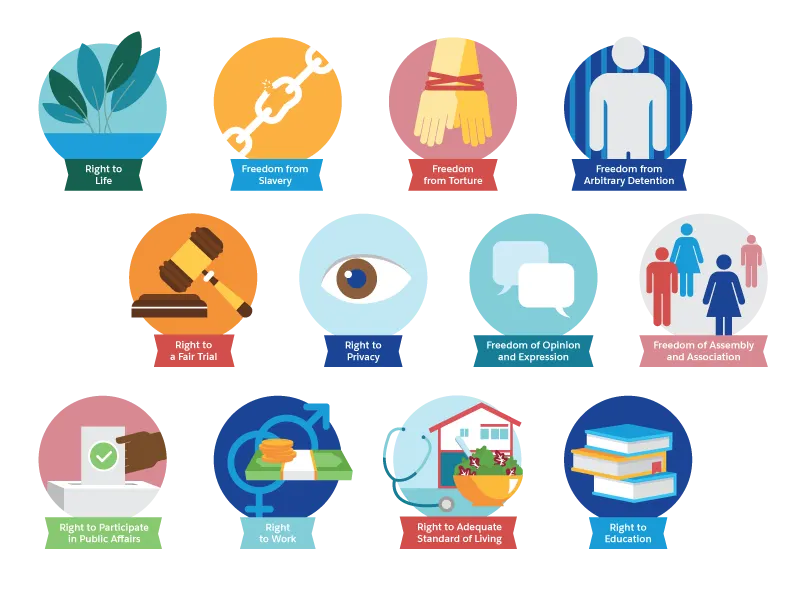
Features of Human Rights
Human rights have several important features that make them universal and meaningful.
| Feature | Description |
|---|---|
| Universal | Every person has these rights. |
| Equal | All people are treated equally under these rights. |
| Inalienable | These rights cannot normally be taken away. |
| Fundamental | They are necessary for a dignified life. |
| Protected by Law | National and international laws safeguard these rights. |
International Bill of Human Rights
After the Second World War, countries realized the need to protect people from violence, discrimination, and injustice. This led to the creation of international human rights laws.
The International Bill of Human Rights consists of three major documents:
| Document | Year | Purpose |
|---|---|---|
| Universal Declaration of Human Rights (UDHR) | 1948 | Lists 30 basic human rights for all people. |
| International Covenant on Civil and Political Rights (ICCPR) | 1966 | Protects civil and political freedoms. |
| International Covenant on Economic, Social and Cultural Rights (ICESCR) | 1966 | Protects rights related to education, health, work, and social welfare. |
Together, these documents form the foundation of international human rights law and guide countries in protecting their citizens.
Important International Human Rights Treaties
Many international agreements have been created to protect different groups of people and prevent discrimination.
Some important treaties include:
- Convention on the Prevention and Punishment of the Crime of Genocide (1948)
- Convention on the Elimination of All Forms of Racial Discrimination (1965)
- Convention on the Elimination of All Forms of Discrimination against Women (1979)
- Convention against Torture (1984)
- Convention on the Rights of the Child (1989)
- International Convention on the Protection of the Rights of Migrant Workers (1999)
- Convention on the Rights of Persons with Disabilities (2006)
- Convention on the Protection of All Persons from Enforced Disappearance (2006)
In 2011, the United Nations Human Rights Council (UNHRC) also introduced the Guiding Principles on Business and Human Rights, encouraging businesses to respect human rights in their activities.
Human Rights in India
India gives great importance to human rights through its Constitution and various laws.
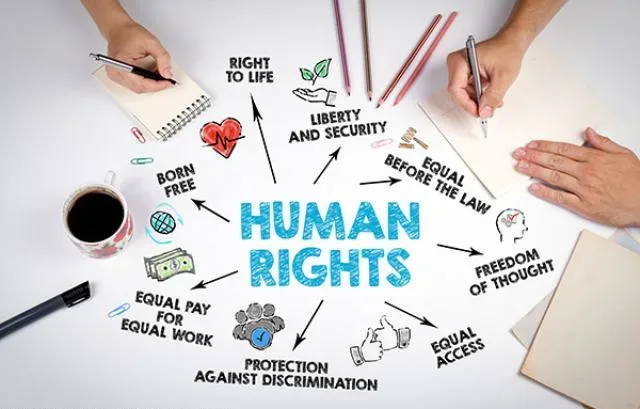
According to the Protection of Human Rights Act, 1993, human rights include the rights related to life, liberty, equality, and dignity guaranteed by the Constitution and international agreements.
Constitutional Protection
The Constitution of India protects human rights through several important provisions.
| Constitutional Provision | Protection Given |
|---|---|
| Articles 14–18 | Right to Equality |
| Article 19 | Freedom of Speech and Expression |
| Article 21 | Right to Life and Personal Liberty |
| Article 32 | Right to approach the Supreme Court for justice |
| Article 226 | Right to approach High Courts |
| Articles 36–51 | Directive Principles of State Policy |
These provisions help protect citizens from unfair treatment and ensure justice.
National Human Rights Commission (NHRC)
The National Human Rights Commission (NHRC) was established in 1993 under the Protection of Human Rights Act, 1993.
Main Functions of NHRC
- Investigates complaints of human rights violations.
- Visits prisons and detention centers.
- Recommends action against violations.
- Promotes awareness about human rights.
- Encourages research and education.
- Advises the government on human rights issues.
India also has State Human Rights Commissions that work at the state level.
Important Human Rights Laws and Government Schemes
India has introduced several laws and welfare schemes to protect human rights and improve people’s lives.
Some important examples include:
- Forest Rights Act, 2006
- Right to Fair Compensation and Transparency in Land Acquisition Act, 2013
- Street Vendors (Protection of Livelihood and Regulation of Street Vending) Act, 2014
- Pradhan Mantri Jan Dhan Yojana
- Pradhan Mantri Ujjwala Yojana
- Pradhan Mantri Awaas Yojana
- National Portal for Transgender Persons
- Garima Greh Scheme
- Law against Triple Talaq
These laws and schemes aim to improve equality, dignity, livelihood, and social justice.
Importance of Human Rights
Human rights are necessary for a peaceful and fair society.
Some major benefits include:
- Protect people from discrimination.
- Ensure equal opportunities for everyone.
- Promote freedom of speech and expression.
- Protect religious freedom.
- Support education and healthcare.
- Encourage justice and equality.
- Help people live with dignity.
- Make governments accountable for their actions.
- Promote peace and social harmony.
Without human rights, society may face injustice, inequality, and exploitation.
Challenges to Human Rights
Although many laws exist, several human rights challenges continue across the world.
Discrimination
Many people still face discrimination based on caste, religion, gender, disability, or economic status.
Poverty
Lack of food, education, healthcare, and employment prevents people from enjoying their basic human rights.
Environmental Pollution
Clean air and clean water are part of the right to life. Pollution caused by industries and urban growth affects public health.
Manual Scavenging
Despite legal bans, manual scavenging continues in some areas, putting workers’ dignity and lives at risk.
Tribal Displacement
Many tribal communities lose their homes due to mining, dams, and wildlife conservation projects. This affects their livelihood and cultural identity.
Women’s Rights
Women continue to face domestic violence, workplace harassment, child marriage, trafficking, and unequal opportunities in many parts of the world.
Prisoners’ Rights
Some prisoners suffer from overcrowded prisons, poor healthcare, violence, torture, and lack of basic facilities. Courts have repeatedly stressed that prisoners also have human rights.
Corruption
Corruption weakens public services and prevents people from receiving benefits meant for them. It also reduces trust in government institutions.
India’s Performance in Human Rights
India is regularly assessed through various international reports and indices related to freedom and human rights.
Some reports examine:
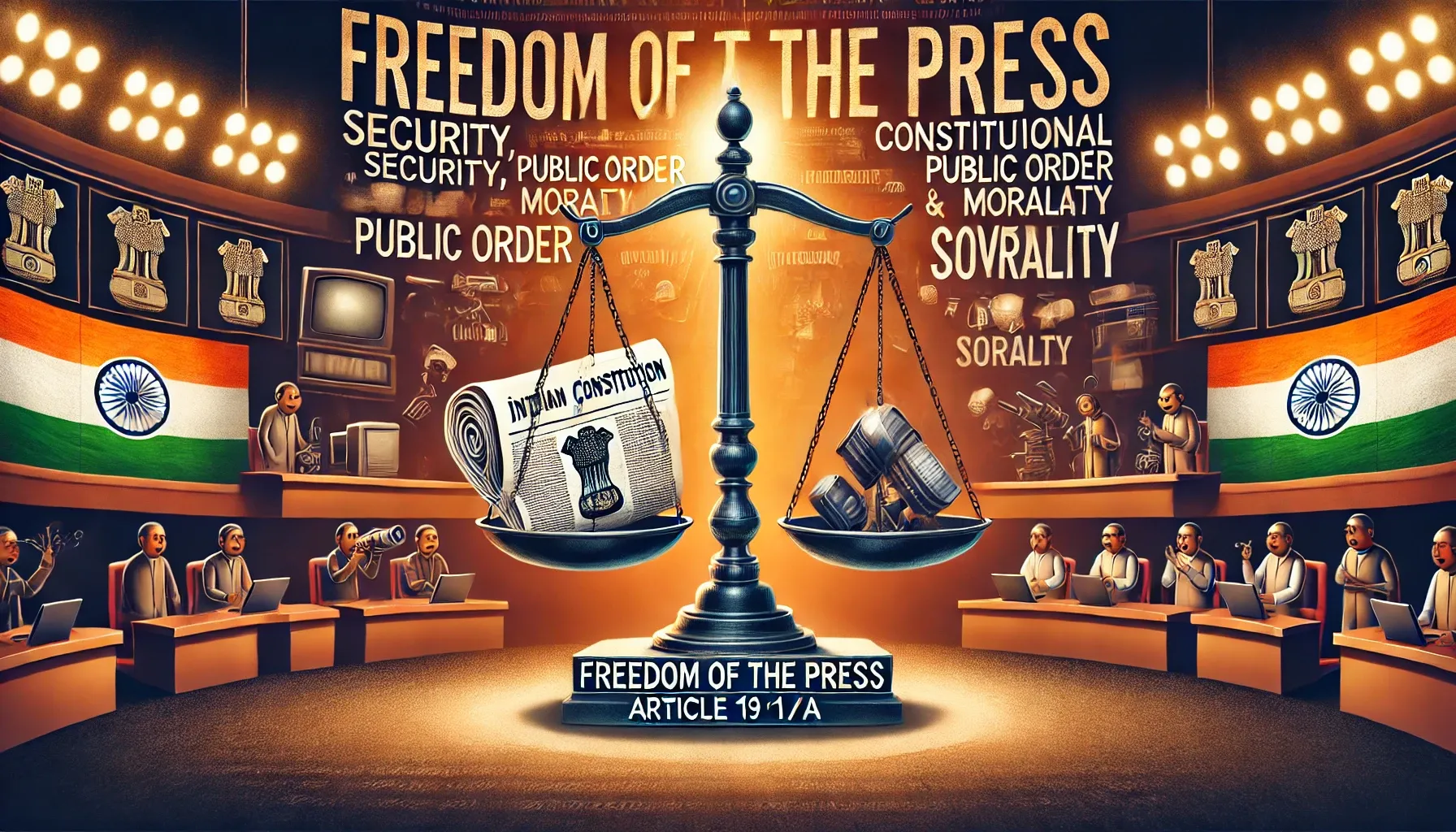
- Freedom of the press
- Civil liberties
- Political rights
- Economic freedom
- Democratic values
These reports often highlight both India’s achievements and the areas where further improvements are needed, such as freedom of expression, judicial efficiency, prison reforms, and protection of vulnerable communities.
Ways to Strengthen Human Rights
Human rights protection requires the efforts of governments, courts, institutions, and citizens.
Some important steps include:
- Ensure transparent and corruption-free governance.
- Provide quick and fair justice to all citizens.
- Improve education and awareness about human rights.
- Strengthen the powers and effectiveness of the NHRC.
- Protect women, children, elderly people, persons with disabilities, and tribal communities.
- Improve prison conditions and police accountability.
- Create more employment and reduce poverty.
- Protect the environment and promote sustainable development.
- Update old laws according to present-day needs.
- Encourage cooperation between governments, civil society, and international organizations.
Human Rights and the Future
Human rights are the foundation of a democratic and just society. They protect every person’s dignity, freedom, and equality. India has strong constitutional provisions and several laws that support human rights, but challenges such as discrimination, poverty, corruption, environmental pollution, and violence still need continuous attention. By improving governance, spreading awareness, strengthening institutions, and ensuring equal opportunities for all, human rights can be better protected, leading to a safer, fairer, and more inclusive society for future generations.
FAQs
1. What are human rights?
Human rights are the basic rights and freedoms that every person has from birth, regardless of religion, race, gender, nationality, or social status.
2. Why are human rights important?
Human rights protect people’s dignity, freedom, equality, and safety. They help ensure that everyone is treated fairly and with respect.
3. What is the Universal Declaration of Human Rights (UDHR)?
The Universal Declaration of Human Rights (UDHR) is a document adopted by the United Nations on 10 December 1948. It lists the basic rights and freedoms of all people.
4. What is the International Bill of Human Rights?
The International Bill of Human Rights includes the Universal Declaration of Human Rights (UDHR), the International Covenant on Civil and Political Rights (ICCPR), and the International Covenant on Economic, Social and Cultural Rights (ICESCR).
5. What is the National Human Rights Commission (NHRC)?
The National Human Rights Commission (NHRC) is an independent body established in 1993 to protect and promote human rights in India.
6. Which Articles of the Indian Constitution protect human rights?
Important constitutional provisions include:
- Article 14 – Right to Equality
- Article 19 – Freedom of Speech and Expression
- Article 21 – Right to Life and Personal Liberty
- Article 32 – Right to Constitutional Remedies
7. What are the biggest human rights challenges in India?
Some major challenges include poverty, discrimination, corruption, violence against women, environmental pollution, manual scavenging, and tribal displacement.
8. When is World Human Rights Day celebrated?
World Human Rights Day is celebrated every year on 10 December to mark the adoption of the Universal Declaration of Human Rights in 1948.