

Prime Minister and PMO: Powers, Functions, Appointment, and Role in India

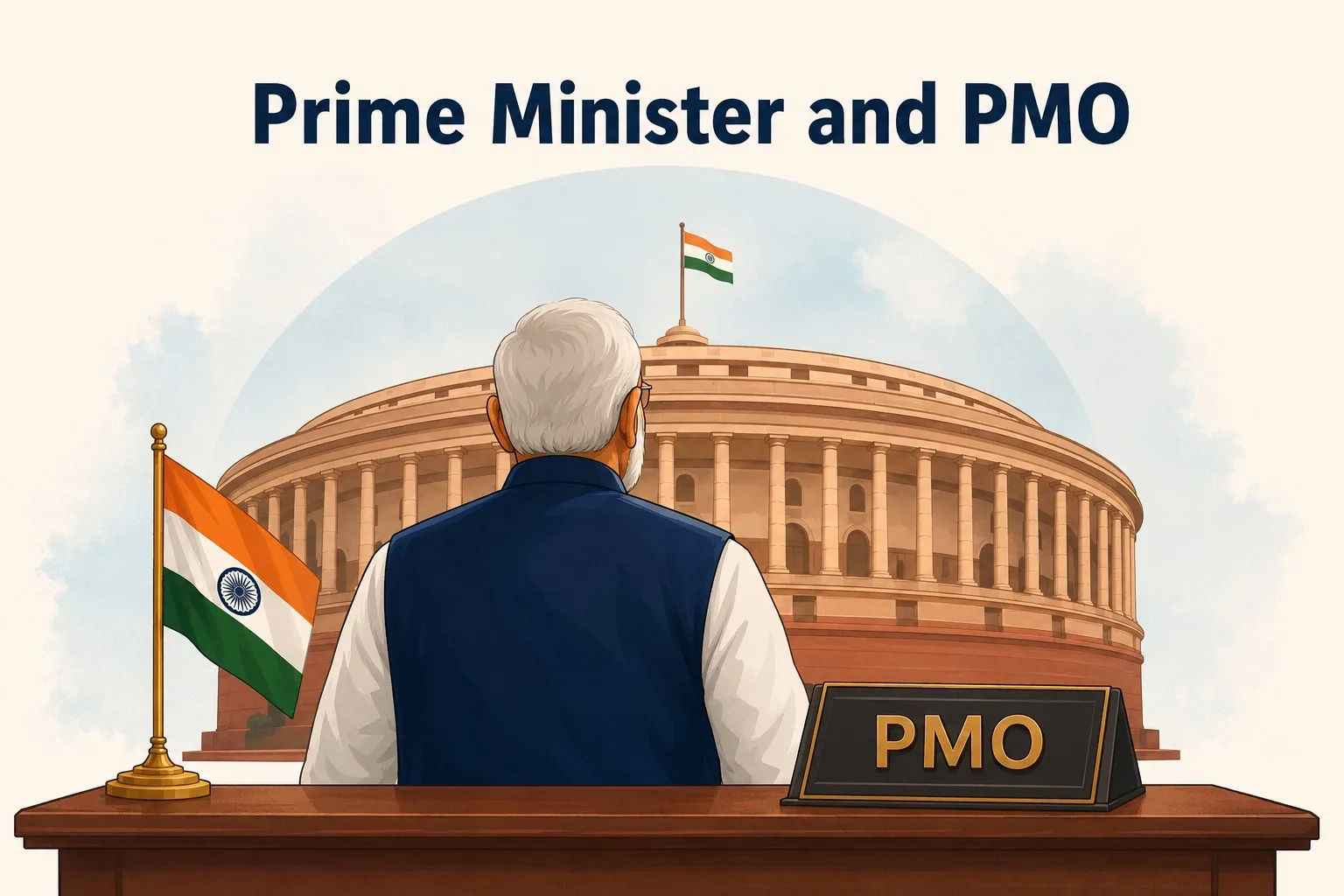
The Prime Minister and PMO are the most important parts of the executive branch of the Government of India. India follows a parliamentary system of government where the President is the constitutional head of the country, while the Prime Minister is the real executive authority. The Prime Minister leads the Union Government, makes major policy decisions, and coordinates the work of different ministries. The Prime Minister’s Office (PMO) provides administrative and policy support to help the Prime Minister perform these duties effectively.
Thank you for reading this post, don't forget to subscribe!Who is the Prime Minister?
The Prime Minister is the head of the Union Council of Ministers and the leader of the Central Government. Although the President is the constitutional head of the country, the Prime Minister exercises the real executive powers. The Prime Minister plays a key role in making government policies, implementing laws, and leading the administration of the country.
Appointment of the Prime Minister
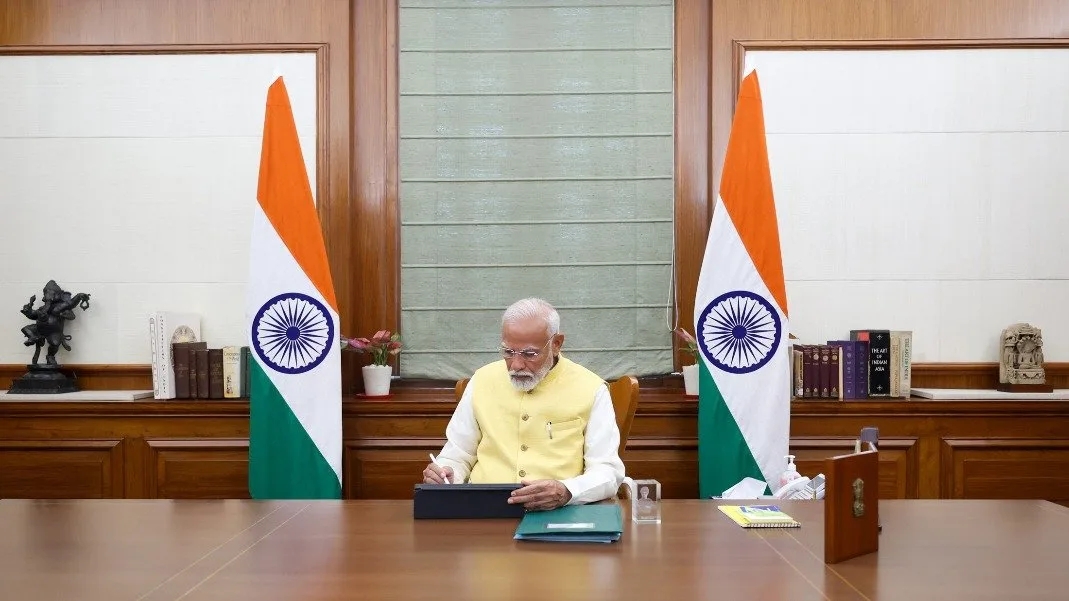
Article 75 of the Indian Constitution states that the President appoints the Prime Minister. However, the Constitution does not explain the detailed procedure for selecting the Prime Minister.
According to parliamentary convention, the President appoints the leader of the political party or alliance that has a majority in the Lok Sabha.
Sometimes, no political party gets a clear majority after an election. In such situations, the President may use discretion to appoint the leader who is most likely to prove majority support in the Lok Sabha.
If a sitting Prime Minister dies or resigns before completing the term, the ruling party elects a new leader. The President then appoints that leader as the new Prime Minister.
Important Court Judgements
The Indian judiciary has also clarified some rules regarding the appointment of the Prime Minister.
In 1980, the Delhi High Court ruled that a person does not need to prove majority support before being appointed as Prime Minister. The President can appoint the Prime Minister first and later ask them to prove majority on the floor of the Lok Sabha within a reasonable time.
In 1997, the Supreme Court ruled that a person who is not a Member of Parliament can become the Prime Minister. However, that person must become a member of either the Lok Sabha or the Rajya Sabha within six months. If not, they must leave the office.
Unlike the United Kingdom, where the Prime Minister must be a member of the House of Commons, the Indian Prime Minister can be a member of either House of Parliament.
Oath of Office and Secrecy
Before taking office, the President administers two oaths to the Prime Minister.
Oath of Office
The Prime Minister promises to:
- Bear true faith and allegiance to the Constitution of India.
- Protect the sovereignty and integrity of India.
- Perform official duties honestly and faithfully.
- Treat every citizen fairly without fear, favour, affection, or ill will.
Oath of Secrecy
The Prime Minister also promises not to reveal confidential government information except when required for official duties.
These oaths ensure that the Prime Minister performs responsibilities with honesty, loyalty, and confidentiality.
Term of the Prime Minister
The Prime Minister holds office as long as they enjoy the confidence of the Lok Sabha.
Although the Constitution states that the Prime Minister holds office during the pleasure of the President, this does not mean that the President can remove the Prime Minister whenever desired.
As long as the Prime Minister has the support of the majority in the Lok Sabha, they continue in office.
If the Prime Minister loses the majority, they must resign. If they refuse, the President may dismiss them.
Salary and Allowances
The salary and allowances of the Prime Minister are decided by Parliament from time to time.
The Prime Minister receives the salary and benefits available to Members of Parliament. In addition, the office includes several facilities such as:
- Official residence
- Travelling allowance
- Medical facilities
- Daily allowances
- Other official benefits required for performing government duties
Constitutional Articles Related to the Prime Minister
Several Articles of the Constitution explain the powers and responsibilities of the Prime Minister.
| Article | Subject | Importance |
|---|---|---|
| Article 74 | Aid and Advice | The President acts on the advice of the Council of Ministers headed by the Prime Minister. |
| Article 75 | Appointment | The President appoints the Prime Minister and other ministers on the Prime Minister’s advice. |
| Article 75 | Collective Responsibility | The Council of Ministers is collectively responsible to the Lok Sabha. |
| Article 78 | Duties Towards the President | The Prime Minister keeps the President informed about government decisions and important matters. |
These constitutional provisions ensure smooth coordination between the President, the Prime Minister, and the Council of Ministers.
Powers and Functions of the Prime Minister
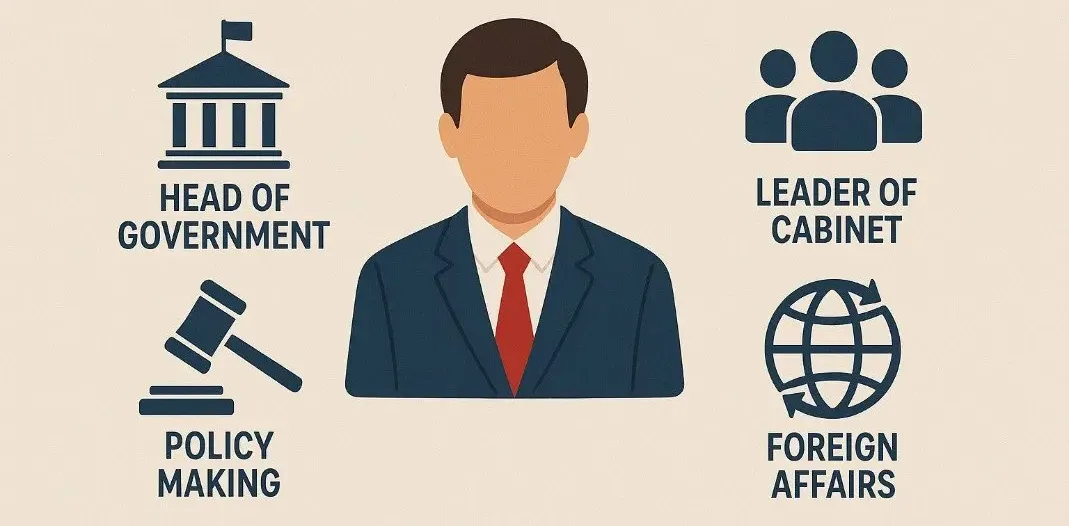
The Prime Minister is the most powerful executive authority in India. He or she leads the government and ensures that every ministry works efficiently. The Prime Minister performs many important duties related to the Council of Ministers, the President, Parliament, and the administration of the country.
As the Head of the Union Council of Ministers
The Prime Minister is the leader of the Council of Ministers. Every minister works under the leadership of the Prime Minister.
The major responsibilities include:
- Recommending the names of ministers to the President for appointment.
- Advising the President to remove a minister if necessary.
- Distributing different ministries and departments among ministers.
- Changing or reshuffling ministerial portfolios whenever required.
- Presiding over meetings of the Council of Ministers.
- Coordinating the work of all ministries.
- Resolving differences between ministers.
- Guiding the government in making important policy decisions.
The Prime Minister is the central figure of the Council of Ministers. If the Prime Minister resigns or dies while in office, the entire Council of Ministers also comes to an end. A new Council is formed only after a new Prime Minister takes office.
Powers in Relation to the President
The Prime Minister acts as the main link between the President and the Council of Ministers.
Some important responsibilities include:
- Informing the President about all major decisions taken by the Union Government.
- Providing information whenever the President asks for it.
- Presenting matters before the Council of Ministers if the President requests further discussion.
- Advising the President on the appointment of important constitutional authorities.
The Prime Minister also advises the President on the appointment of:
- Attorney General of India
- Comptroller and Auditor General (CAG)
- Election Commissioners
- Chairman and members of the Finance Commission
- Other important constitutional and statutory officials
This relationship helps maintain smooth communication between the executive and the constitutional head of the country.
Powers in Relation to Parliament
The Prime Minister plays an important role in the functioning of Parliament.
The Prime Minister:
- Leads the Lok Sabha if he or she is a member of the House.
- Advises the President to summon or prorogue Parliament.
- Can recommend the dissolution of the Lok Sabha before the completion of its term.
- Introduces and explains important government policies in Parliament.
- Answers questions raised by Members of Parliament.
- Leads discussions on national issues.
Through these responsibilities, the Prime Minister ensures that the government remains accountable to Parliament.
Other Important Functions
Apart from constitutional duties, the Prime Minister performs several national and international responsibilities.
These include:
- Chairperson of NITI Aayog.
- Chairperson of the National Integration Council.
- Chairperson of the Inter-State Council.
- Leading India’s foreign policy.
- Representing India in international meetings and summits.
- Acting as the chief spokesperson of the Union Government.
- Managing political and administrative crises during emergencies.
- Coordinating the work of different ministries and departments.
Because of these responsibilities, the Prime Minister is considered the most important political leader of the country.
Prime Minister’s Office (PMO)
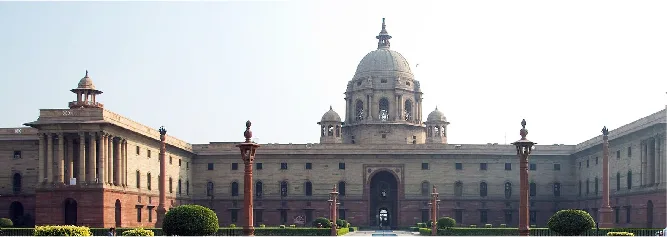
The Prime Minister’s Office, commonly known as the PMO, is an important administrative office that helps the Prime Minister perform official duties efficiently.
It provides policy advice, administrative support, coordination among ministries, and communication with different government departments.
The PMO itself does not have independent executive powers. Instead, it supports the Prime Minister in carrying out constitutional responsibilities.
Organization of the PMO
The PMO is headed politically by the Prime Minister.
Its administrative head is the Principal Secretary to the Prime Minister.
The office also includes several senior officers, such as:
- Secretary
- Additional Secretary
- Joint Secretaries
- Deputy Secretaries
- Directors
- Under Secretaries
- Section Officers and supporting staff
These officers are generally selected from different civil services based on their experience and expertise.
Functions of the PMO
The Prime Minister’s Office performs many important administrative functions.
Its main functions include:
- Assisting the Prime Minister in daily official work.
- Coordinating with different ministries and government departments.
- Communicating with State Governments.
- Monitoring important government projects.
- Helping the Prime Minister as the Chairperson of various councils and committees.
- Handling correspondence from citizens and public representatives.
- Managing relations with the media.
- Reviewing important files before they reach the Prime Minister.
- Coordinating with the President, Governors, and foreign diplomats.
- Providing policy advice on national and international issues.
The PMO ensures that government decisions are implemented efficiently and without unnecessary delay.
Evolution of the PMO
The Prime Minister’s Office has changed significantly since India’s Independence.
In the early years, the PMO mainly handled routine office work such as maintaining files, preparing official letters, and managing correspondence.
Over time, its responsibilities increased as the government became more complex.
Today, the PMO has become one of the most important administrative institutions in India. It works as:
- A policy advisory body.
- A coordination centre for ministries.
- A monitoring agency for government projects.
- A communication centre for the Prime Minister.
- A scheduling office for domestic and international visits.
- A support system for quick decision-making.
Although the PMO has become stronger over the years, its influence largely depends on the leadership style of the Prime Minister in office.
Importance of the Prime Minister and PMO
The Prime Minister and PMO are essential for the smooth functioning of the Government of India.
The Prime Minister provides leadership, makes important policy decisions, and ensures that different ministries work together. At the same time, the PMO offers administrative support, policy advice, coordination, and communication that help the Prime Minister perform these responsibilities effectively.
Together, they strengthen governance, improve decision-making, and ensure efficient implementation of government policies across the country.
Frequently Asked Questions (FAQs)
1. Who appoints the Prime Minister of India?
The President of India appoints the Prime Minister, usually the leader of the majority party or coalition in the Lok Sabha.
2. Which Article of the Constitution deals with the Prime Minister?
Article 75 mainly deals with the appointment of the Prime Minister and the Council of Ministers.
3. What is the Prime Minister’s Office (PMO)?
The PMO is the administrative office that assists the Prime Minister in policy-making, coordination, communication, and governance.
4. Who heads the PMO?
The Prime Minister is the political head, while the Principal Secretary is the administrative head of the PMO.
5. Why is the Prime Minister considered the real executive?
The Prime Minister leads the Council of Ministers, makes key government decisions, and manages the administration of the country, making the office the real executive authority.