Sangam Age: History, Society and Culture

Sangam Age is one of the most important and fascinating periods in the history of ancient South India. It reflects a time of rich culture, powerful kingdoms, advanced trade systems, and remarkable literary achievements. The Sangam Age is generally considered to have existed between the 3rd century BCE and the 3rd century CE, covering regions south of the rivers Krishna and Tungabhadra. This era is especially known for its unique Tamil literature, vibrant social life, and flourishing economy.
Thank you for reading this post, don't forget to subscribe!Introduction to the Sangam Age
The term Sangam refers to assemblies or academies of learned scholars and poets. These gatherings were believed to have been held under the patronage of the Pandya rulers in Madurai. In these assemblies, scholars composed, reviewed, and preserved literary works. The literature created during this time is collectively known as Sangam Literature, which serves as the primary source of information about this period.
According to Tamil tradition, there were three Sangams:
- The First Sangam was held in Madurai, attended by gods and sages, but no literary works from this period survive.
- The Second Sangam was conducted at Kapadapuram, and only one important text, Tolkappiyam, remains.
- The Third Sangam, also held in Madurai, produced most of the surviving literary works.
These literary texts provide deep insights into the political, social, economic, and cultural life of the people during the Sangam Age.
Sangam Literature: The Main Source of Information
Sangam Literature is the backbone of our knowledge about this period. It consists of several important works:
1. Tolkappiyam
Tolkappiyam is the oldest Tamil literary work, written by Tolkappiyar. Although it is primarily a grammar book, it also gives valuable information about society, politics, and economy of that time.
2. Ettutogai (Eight Anthologies)
This collection includes eight works such as:
- Aingurunooru
- Narrinai
- Aganaanooru
- Purananooru
- Kuruntogai
- Kalittogai
- Paripadal
- Padirruppatu
These poems deal with love, war, ethics, and daily life.
3. Pattuppattu (Ten Idylls)
It consists of ten long poems like:
- Thirumurugarruppadai
- Porunararruppadai
- Sirupanarruppadai
- Perumpanarruppadai
- Mullaippattu
- Nedunalvadai
- Maduraikkanji
- Kurinjippattu
- Pattinappalai
- Malaipadukadam
These works give detailed descriptions of kings, cities, and landscapes.
4. Pathinenkilkanakku
This group includes eighteen works that mainly focus on ethics and moral values. The most famous among them is Tirukkural by Thiruvalluvar, which is still widely respected today.
5. Sangam Epics
- Silappathikaram by Elango Adigal
- Manimegalai by Sittalai Sattanar
These epics provide detailed descriptions of society, culture, and governance.
Other Historical Sources
Apart from literature, other sources also provide valuable information:
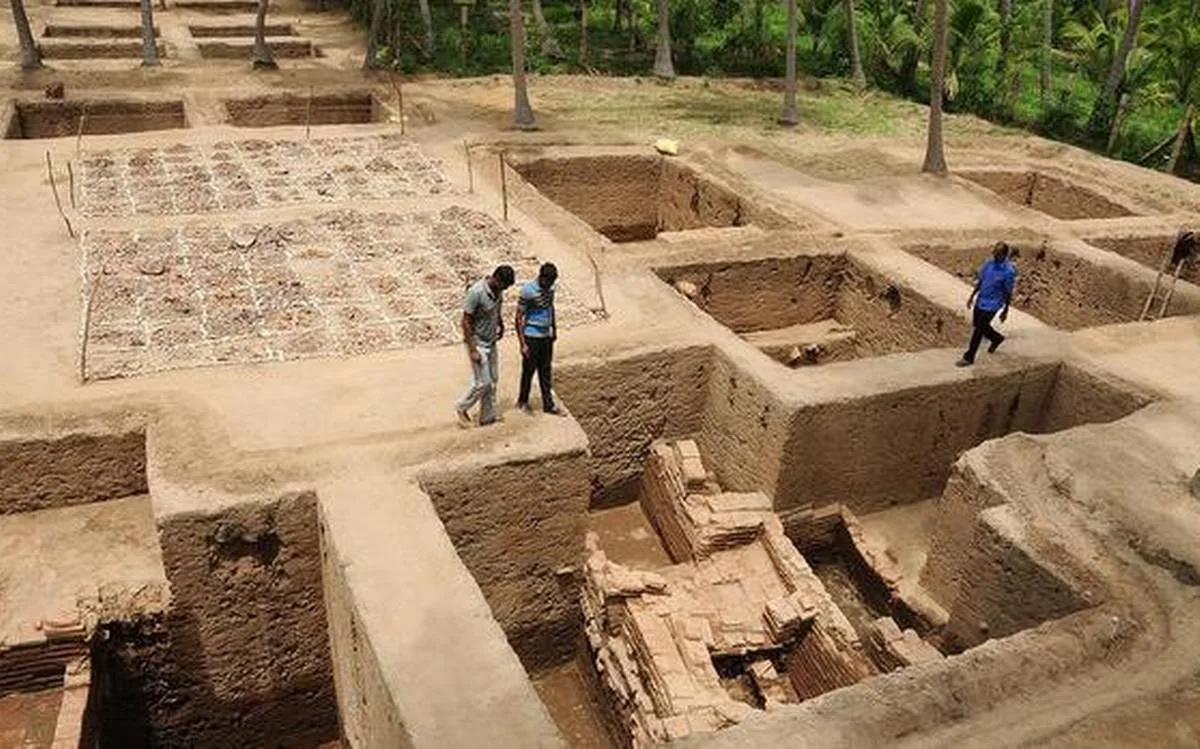
- Greek writers like Megasthenes, Strabo, and Pliny mentioned trade relations.
- Ashokan inscriptions refer to the southern kingdoms.
- Hathigumpha inscription of Kharavela mentions Tamil rulers.
Political History of the Sangam Age
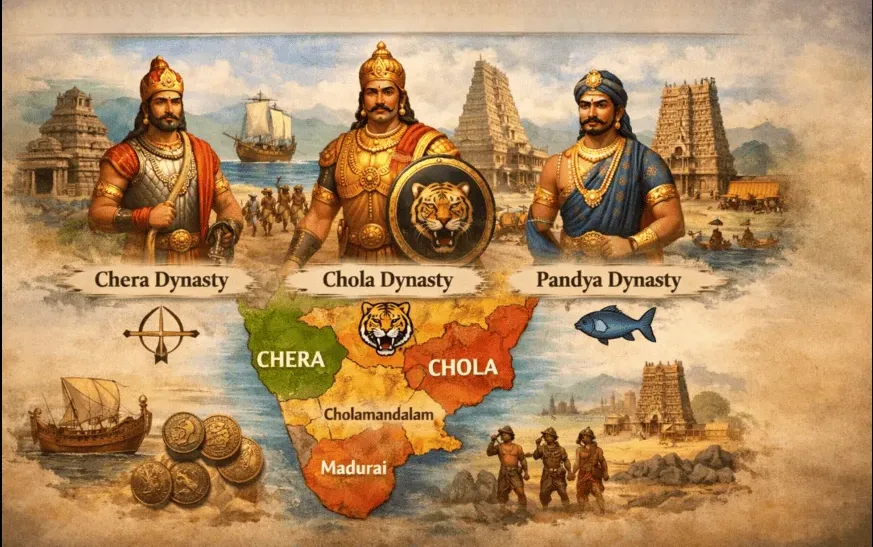
During the Sangam Age, South India was mainly ruled by three powerful dynasties: Chera, Chola, and Pandya. Most of the information about their rule comes from Sangam literature and other historical sources. These kingdoms were strong in administration, trade, and military power.
Chera Dynasty
- The Cheras ruled over central and northern Kerala and parts of western Tamil Nadu (Kongu region). Their capital was Vanji, and they controlled important west coast ports like Musiri and Tondi, which helped in trade.
- Their royal emblem was the bow and arrow. The Pugalur inscription of the 1st century AD mentions three generations of Chera rulers, showing a strong ruling tradition.
- The Cheras had good trade relations with the Romans and gained wealth through overseas trade. They even built a temple for Emperor Augustus, showing foreign connections.
- The greatest ruler was Senguttuvan (2nd century AD), known as the “Red Chera.” He is said to have led military campaigns up to the Himalayas and promoted the Pattini cult (worship of Kannagi). He also sent the first South Indian embassy to China.
Chola Dynasty
- The Cholas ruled the central and northern parts of Tamil Nadu, especially the fertile Kaveri delta region known as Cholamandalam. Their capital was Uraiyur, and Puhar (Kaveripattinam) was their major port city.
- Their emblem was the tiger, and they had a strong and efficient navy, which helped them control sea trade and coastal regions.
- King Karikala was the most famous Chola ruler. Sangam texts like Pattinappalai describe his achievements, including the Battle of Venni, where he defeated the Cheras, Pandyas, and several chieftains.
- Karikala improved trade and infrastructure. He built the port city of Puhar and constructed long embankments (about 160 km) along the Kaveri River to control floods and improve agriculture.
Pandya Dynasty
- The Pandyas ruled from their capital Madurai, which was also an important cultural and literary center. Their emblem was the fish.
- Their main port was Korkai, located near the Tamraparni river. It was famous for pearl fishing and chank diving, making it an important trade center.
- The Pandyas supported Sangam literature and helped in the compilation of many poems. They maintained a regular army, and trade was highly developed, especially in pearls.
- Society during their rule had practices like caste system, idol worship, and Sati, and widows often faced hardships. They followed Vedic traditions and supported Brahmin priests.
- Their power declined after the invasion of the Kalabhras. After the Sangam Age, they lost importance for some time but later revived again in the 6th century.
Administration and Governance
The Sangam Age had a well-organized political system based on hereditary monarchy.
- The king was the supreme authority.
- He was assisted by five types of officials:
- Ministers (Amaichar)
- Priests (Anthanar)
- Envoys (Thuthar)
- Military commanders (Senapathi)
- Spies (Orrar)
Revenue sources included:
- Land tax
- Customs duties
- War booty
Infrastructure like roads and highways were maintained for trade and safety.
Society During the Sangam Age
Sangam society was well-structured and diverse.
Five Types of Landscapes
According to Tolkappiyam, land was divided into five types:
- Kurinji (mountain)
- Mullai (forest)
- Marudam (agricultural land)
- Neydal (coastal area)
- Palai (desert)
Each landscape had its own lifestyle and occupations.
Social Classes
Society was divided into groups:
- Arasar (rulers)
- Anthanar (priests)
- Vanigar (traders)
- Vellalar (farmers)
Tribal groups like Thodas, Irulas, Nagas, and Vedars also lived during this time.
Position of Women
Women in the Sangam Age enjoyed a relatively respectable and honorable position in society. Sangam literature provides detailed insights into their lives, roles, and status.
- Education and Intellectual Role:
Women were educated and actively involved in intellectual pursuits. They participated in discussions, poetry, and cultural activities, showing that society valued their knowledge and wisdom. - Women Poets and Contributions:
Several women poets like Avvaiyar, Nachchellaiyar, and Kakkaipadiniyar made significant contributions to Tamil literature. Their works reflect creativity, emotions, and social values of that time. - Freedom in Marriage:
Women were allowed to choose their life partners, indicating a level of personal freedom and social acceptance. Love marriages were also common and accepted in many cases. - Condition of Widows and Sati Practice:
Despite their respected status, widows often lived a difficult and restricted life. There are also references to the practice of Sati, especially among higher classes of society.
Religion and Beliefs
Religion during the Sangam Age was rich, diverse, and closely connected with daily life, nature, and heroic traditions.
Hero Stone (Nadukal) Worship:
The practice of erecting Hero Stones or Nadukal was significant. These stones were set up in memory of brave warriors who died in battle and were worshipped as symbols of honor and bravery.
Worship of Murugan:
The primary deity of the Sangam period was Murugan, known as the Tamil God. His worship had ancient roots, and many festivals dedicated to him are mentioned in Sangam literature.
Arupadai Veedu (Six Abodes):
Murugan was honored through six sacred places known as Arupadai Veedu. These places became important centers of worship and pilgrimage during that time.
Other Gods and Deities:
Apart from Murugan, people also worshipped Mayon (Vishnu), Vendan (Indra), Varunan, and Korravai. This shows a mix of local and Vedic religious traditions.
Economy of the Sangam Age
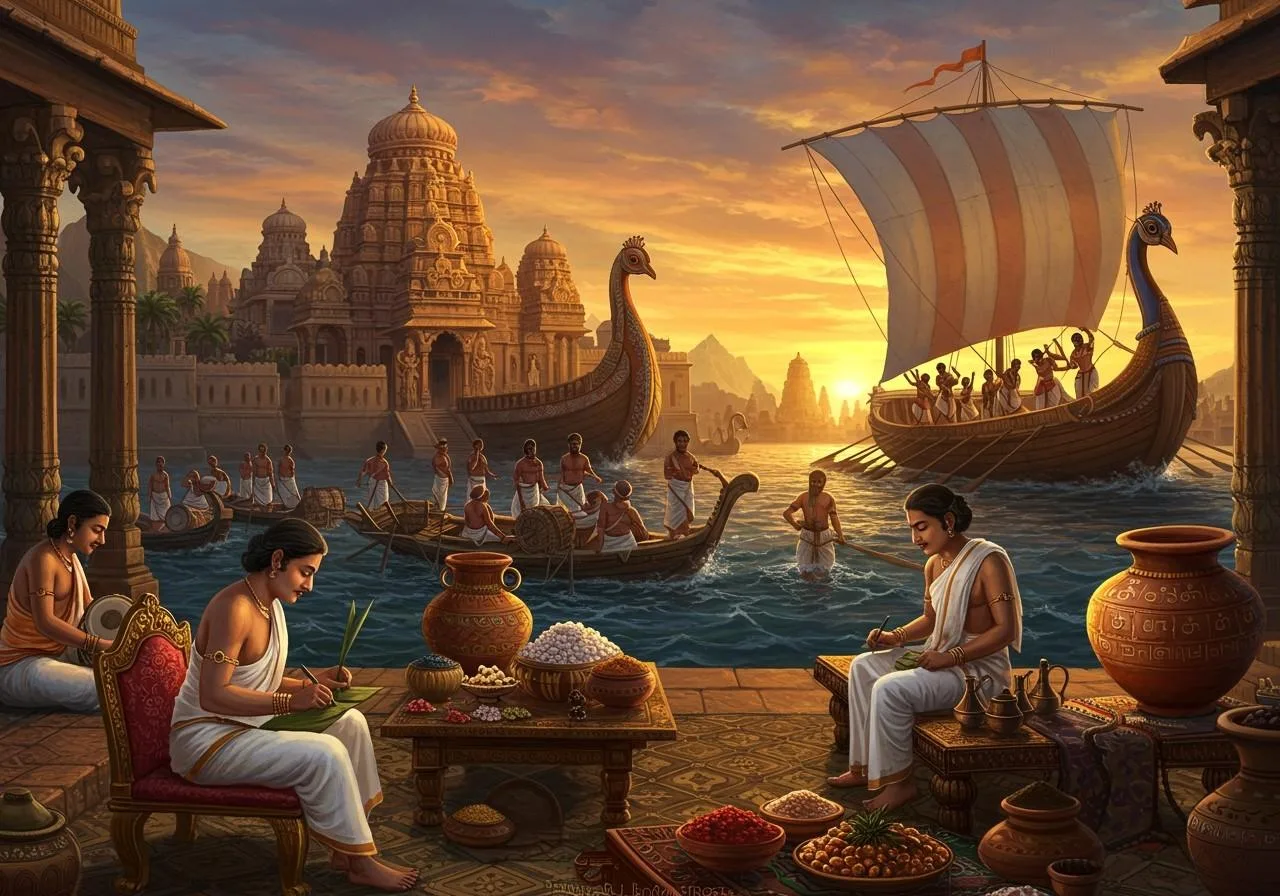
The economy of the Sangam Age was strong, active, and well-developed. It was mainly based on agriculture, handicrafts, and trade. Both internal and foreign trade flourished, making this period economically rich and stable.
Agriculture
- Agriculture was the chief occupation of the people during the Sangam Age.
- Rice was the most important and commonly grown crop, forming the staple food.
- Farmers depended on rivers, rainfall, and irrigation systems for cultivation.
- Fertile lands, especially in river valleys like the Kaveri region, supported high agricultural production.
Handicrafts
- Handicrafts played a major role in the economy, including weaving, metalwork, carpentry, and shipbuilding.
- Artisans also made beautiful ornaments using beads, stones, and ivory, which were highly valued.
- Spinning and weaving of cotton and silk reached a high level of skill and quality.
- Cotton textiles, especially those produced at Uraiyur, were famous and in great demand in foreign markets.
Trade and Commerce
- Trade and commerce were highly developed, both within the country and with foreign lands.
- Important port cities like Puhar became centers of international trade where large ships carried precious goods.
- Other major ports included Tondi, Musiri, Korkai, Arikamedu, and Marakkanam, which supported active trade networks.
- Trade with the Roman Empire was very strong, as seen from the discovery of Roman gold and silver coins in Tamil Nadu.
Foreign Trade
- The Sangam Age had flourishing overseas trade connections, especially with the western world.
- Roman emperors like Augustus, Tiberius, and Nero issued coins that have been found in South India, proving strong trade relations.
- Ports were busy with ships bringing and taking valuable goods, showing economic prosperity.
- Foreign traders visited these ports regularly, increasing cultural and economic exchange.
Exports
- Major exports included cotton textiles, which were highly popular in foreign countries.
- Spices like pepper, ginger, cardamom, cinnamon, and turmeric were exported in large quantities.
- Other export items included pearls, ivory products, and precious stones.
- These goods were in great demand, especially in the Roman world.
Imports
- The Sangam traders imported horses, which were important for warfare and transport.
- Gold was another major import, reflecting the wealth of trade activities.
- Sweet wine and luxury items were also brought from foreign countries.
- These imports indicate a high standard of living and strong international connections.
Decline of the Sangam Age
The Sangam Age began to decline around the 3rd century CE.
- The Kalabhras invaded Tamil regions.
- This period (300–600 CE) is often called a “dark age” due to lack of records.
- Traditional dynasties lost power temporarily.
Conclusion
The Sangam Age stands as a golden period in South Indian history. It highlights a time when literature, culture, trade, and governance reached great heights. The Sangam texts not only provide historical information but also reflect the values, emotions, and lifestyle of people.
This period laid the foundation for Tamil culture and continues to influence modern South India. Its contributions in literature, administration, and trade remain significant even today.
FAQs
1. What is the Sangam Age?
The Sangam Age refers to a period in South India between 3rd century BCE and 3rd century CE known for its literature and culture.
2. What are the main sources of Sangam Age?
Sangam literature like Tolkappiyam, Ettutogai, and Pattuppattu are the main sources.
3. Who were the main rulers of this period?
The Cheras, Cholas, and Pandyas were the major dynasties.
4. What was the main occupation?
Agriculture was the main occupation.
5. Why did the Sangam Age decline?
It declined due to invasions by the Kalabhras.