

India-Sri Lanka Relations

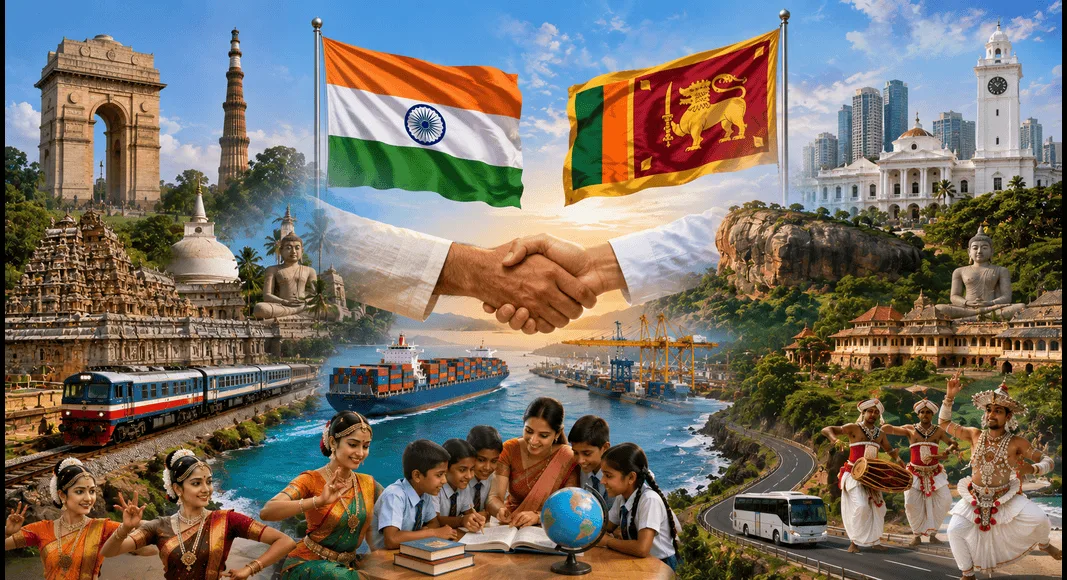
India-Sri Lanka Relations are among the oldest and most important bilateral relationships in South Asia. The connection between the two countries is not limited to diplomacy and trade. It is deeply rooted in history, culture, religion, language, education, and people-to-people contacts. India and Sri Lanka have shared close ties for more than 2,500 years, making their relationship unique in the region.
Thank you for reading this post, don't forget to subscribe!Over time, both countries have worked together in areas such as trade, tourism, education, defense, infrastructure development, and regional cooperation. Despite occasional challenges, India and Sri Lanka continue to strengthen their partnership through mutual respect, cooperation, and shared interests.
Historical Background of India-Sri Lanka Relations
The relationship between India and Sri Lanka dates back to ancient times. Religious, cultural, and commercial exchanges connected the people of the Indian subcontinent with the island nation of Sri Lanka.
One of the strongest links between the two countries is Buddhism. Buddhism reached Sri Lanka from India during the reign of Emperor Ashoka in the 3rd century BCE. Since then, Buddhist traditions have created strong spiritual and cultural ties between the people of both nations.
Apart from religion, trade and migration also played an important role in shaping bilateral relations. People moved across the seas for trade, education, and cultural exchanges, creating long-lasting connections.
After India gained independence in 1947 and Sri Lanka became independent in 1948, both countries established formal diplomatic relations and continued to cooperate on various issues.
Importance of Sri Lanka for India
Sri Lanka occupies a strategic position in the Indian Ocean. Its location makes it extremely important for India’s security, trade, and regional interests.
Strategic Importance
Sri Lanka is located near important international sea routes through which a large portion of global trade passes. Any major development in Sri Lanka directly affects maritime activities in the Indian Ocean region.
The country is situated close to India’s southern coast and separated by the Palk Strait. Because of this geographical proximity, India considers Sri Lanka an important partner for regional stability and security.
Security Importance
A friendly Sri Lanka helps India maintain security in the Indian Ocean. Cooperation in naval surveillance, anti-piracy operations, and maritime security contributes to regional peace.
India also closely monitors external influences in Sri Lanka because developments there can impact India’s strategic interests.
Economic Importance
Sri Lanka serves as an important trading partner for India. Strong economic relations benefit businesses, industries, and consumers in both countries.
The island nation also provides opportunities for Indian investments in infrastructure, energy, tourism, banking, telecommunications, and manufacturing sectors.
Geopolitical Significance of Sri Lanka
Sri Lanka’s location has attracted the attention of major global powers for decades.
Situated in the center of the Indian Ocean, Sri Lanka has several strategically important ports. Some of these ports are located near some of the busiest shipping routes in the world.
Colombo Port
Colombo Port is one of the busiest container ports in the world. It plays a major role in international trade and shipping.
Trincomalee Harbour
Trincomalee possesses one of the largest natural deep-water harbors in the world. Historically, it served as an important naval base during World War II.
Hambantota Port
Hambantota Port gained international attention because of Chinese investments and its strategic location. The port lies close to major maritime routes and has become an important part of discussions regarding regional geopolitics.
Because of these strategic assets, Sri Lanka remains an important country in the Indian Ocean region.
Political Relations Between India and Sri Lanka
Political relations between India and Sri Lanka have generally remained friendly and cooperative.
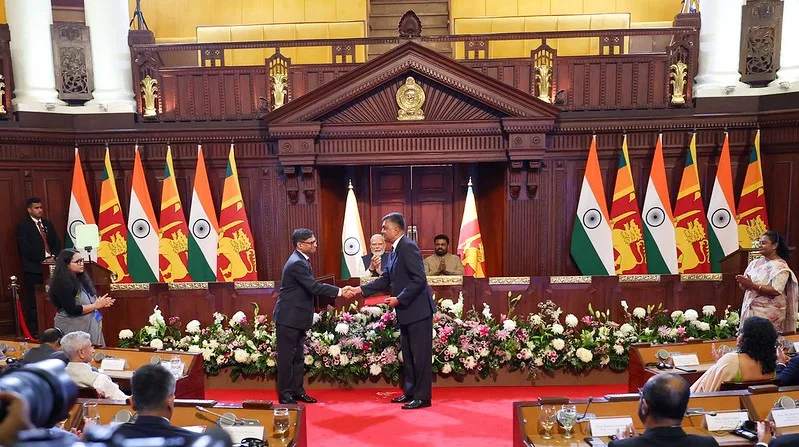
High-level visits by leaders from both countries have strengthened diplomatic ties. Regular meetings between presidents, prime ministers, ministers, and officials help address common concerns and promote cooperation.
India follows its Neighbourhood First Policy, which emphasizes strong relations with neighboring countries. Sri Lanka occupies an important place in this policy.
Similarly, Sri Lanka recognizes India as a key regional partner and works closely with New Delhi on various bilateral and regional issues.
Sri Lankan Civil War and India’s Role
One of the most significant chapters in India-Sri Lanka Relations was the Sri Lankan Civil War.
Causes of the Conflict
After independence, ethnic tensions increased between the Sinhalese majority and Tamil minority communities.
Several government policies created dissatisfaction among Tamils, leading to demands for greater rights and autonomy.
In 1976, the Liberation Tigers of Tamil Eelam (LTTE) emerged and started an armed movement seeking a separate Tamil homeland.
The conflict intensified over the years and resulted in thousands of deaths and displacement.
India’s Involvement
Because of cultural and ethnic links between Sri Lankan Tamils and people in Tamil Nadu, India closely followed developments in Sri Lanka.
In 1987, the Indo-Sri Lanka Accord was signed to promote peace and political solutions.
The agreement proposed:
- Devolution of powers to provinces
- Establishment of provincial councils
- Protection of minority rights
India also deployed the Indian Peace Keeping Force (IPKF) under Operation Pawan. However, due to escalating violence and changing circumstances, the force was later withdrawn.
End of the Civil War
The civil war officially ended in 2009 when Sri Lankan government forces defeated the LTTE.
After the conflict, India supported reconstruction and rehabilitation efforts in affected areas, especially in northern and eastern Sri Lanka.
India continues to advocate a political solution that ensures dignity, equality, and rights for all communities.
Trade Relations Between India and Sri Lanka
Trade forms a major pillar of India-Sri Lanka Relations.
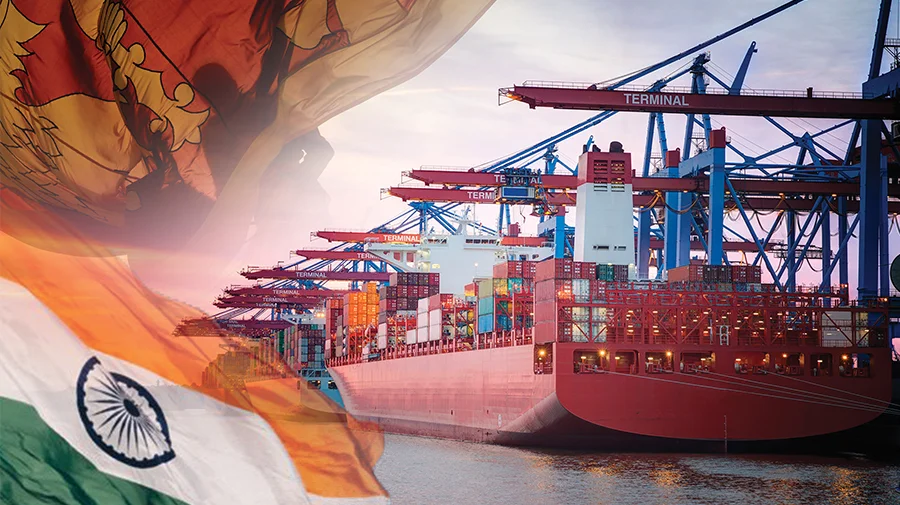
India is one of Sri Lanka’s largest trading partners, while Sri Lanka is an important trading partner for India in South Asia.
India-Sri Lanka Free Trade Agreement (ISFTA)
The India-Sri Lanka Free Trade Agreement was signed in 1998 and came into effect in 2000.
The agreement aims to:
- Reduce trade barriers
- Promote exports and imports
- Increase economic cooperation
- Encourage investments
Following the agreement, bilateral trade expanded significantly.
Major Areas of Trade
India exports:
- Petroleum products
- Machinery
- Vehicles
- Pharmaceuticals
- Food products
Sri Lanka exports:
- Tea
- Rubber products
- Textiles
- Agricultural products
- Processed goods
The free trade agreement has helped strengthen economic integration between the two countries.
Investment and Economic Cooperation
Indian companies have invested in various sectors in Sri Lanka, including:
- Telecommunications
- Banking
- Information technology
- Tourism
- Infrastructure
- Manufacturing
Similarly, Sri Lankan businesses have increased investments in India.
Economic cooperation contributes to employment generation, industrial development, and economic growth in both countries.
Tourism Relations
Tourism is another important aspect of India-Sri Lanka Relations.
India is among the largest sources of tourists visiting Sri Lanka every year.
Tourists travel for:
- Religious tourism
- Cultural tourism
- Historical tourism
- Leisure travel
- Business purposes
Buddhist pilgrimage circuits attract many Sri Lankan visitors to India, while Indian tourists visit Sri Lanka’s beaches, cultural sites, and historical monuments.
The introduction of simplified visa procedures has further boosted tourism.
Cultural Relations
Cultural ties form the foundation of India-Sri Lanka Relations.
The two countries share deep connections in:
- Religion
- Language
- Art
- Literature
- Music
- Dance
Buddhist Heritage
Buddhism remains one of the strongest cultural links between India and Sri Lanka.
Important Buddhist sites in India attract thousands of Sri Lankan pilgrims every year.
Cultural Exchanges
Regular cultural programs are organized between the two countries.
These include:
- Dance performances
- Music festivals
- Art exhibitions
- Educational exchanges
- Yoga programs
The Indian Cultural Centre in Colombo actively promotes Indian culture and traditions.
Educational Cooperation
Education plays a significant role in strengthening bilateral relations.
India offers hundreds of scholarships annually to Sri Lankan students.
Sri Lankan students pursue studies in:
- Engineering
- Medicine
- Management
- Information Technology
- Humanities
India also provides training programs through various educational and technical cooperation initiatives.
These opportunities help develop human resources and strengthen people-to-people connections.
Indian Community in Sri Lanka
A large number of people of Indian origin live in Sri Lanka.
These communities include:
- Tamils of Indian origin
- Gujaratis
- Sindhis
- Malayalis
- Telugus
- Parsis
Many Indian-origin Tamils work in tea and rubber plantations, while others are engaged in business and professional occupations.
Their presence contributes to the cultural diversity of Sri Lanka and serves as a bridge between the two nations.
Defence and Security Cooperation
India and Sri Lanka maintain close defense cooperation.
Joint Military Exercises
The two countries regularly conduct military exercises such as:
- Mitra Shakti (Army Exercise)
- SLINEX (Naval Exercise)
These exercises improve coordination and preparedness.
Maritime Security
India and Sri Lanka cooperate in:
- Coastal security
- Anti-piracy operations
- Counter-terrorism
- Intelligence sharing
- Maritime surveillance
Following the Easter Sunday terrorist attacks in Sri Lanka in 2019, security cooperation between the two countries became even stronger.
Major Challenges in India-Sri Lanka Relations
Although relations are friendly, some issues continue to require attention.
Chinese Influence
China has invested heavily in Sri Lanka’s infrastructure projects.
Projects such as Hambantota Port and Colombo Port developments have raised strategic concerns for India.
India seeks to ensure that these developments do not affect regional security.
Fishermen Issue
The fishermen issue remains one of the most sensitive bilateral concerns.
Many fishermen from India and Sri Lanka accidentally cross the International Maritime Boundary Line while fishing.
This often results in:
- Arrests
- Seizure of boats
- Diplomatic tensions
To address this issue, both countries have established Joint Working Groups and continue discussions to find a long-term solution.
Trade Imbalance
Trade between the two countries is growing, but there remains a significant imbalance in favor of India.
Sri Lanka seeks greater market access and opportunities to increase exports to India.
Areas of Future Cooperation
India and Sri Lanka have many opportunities to strengthen cooperation in the future.
Infrastructure Development
Joint projects in ports, railways, roads, housing, and energy can deepen economic ties.
Blue Economy
Cooperation in marine resources, fisheries, renewable energy, and ocean research can benefit both countries.
Digital Partnership
Information technology and digital connectivity offer new opportunities for collaboration.
Tourism Expansion
Ferry services, cruise tourism, and religious tourism can improve people-to-people contacts.
Regional Cooperation
Both countries can work together through organizations such as:
- SAARC
- BIMSTEC
Regional cooperation can promote peace, connectivity, and economic growth.
Conclusion
India-Sri Lanka Relations are based on centuries of shared history, cultural ties, religious connections, and geographic proximity. Over the years, both countries have developed strong partnerships in trade, defense, education, tourism, infrastructure, and regional cooperation.
While challenges such as the fishermen issue and strategic competition in the Indian Ocean remain, both nations continue to engage through dialogue and cooperation. With mutual trust, respect, and understanding, India and Sri Lanka can further strengthen their partnership and contribute to peace, stability, and prosperity in South Asia and the Indian Ocean region.
FAQs on India-Sri Lanka Relations
1. What are India-Sri Lanka Relations?
India-Sri Lanka Relations refer to the diplomatic, economic, cultural, educational, and security ties between India and Sri Lanka.
2. Why is Sri Lanka important to India?
Sri Lanka is strategically located in the Indian Ocean and plays an important role in India’s security, trade, and regional interests.
3. What is the India-Sri Lanka Free Trade Agreement (ISFTA)?
ISFTA is a trade agreement that came into force in 2000 to promote trade and economic cooperation between the two countries.
4. How are India and Sri Lanka connected culturally?
The two countries share deep cultural and religious links, especially through Buddhism, language, literature, and historical exchanges.
5. What role did India play in the Sri Lankan Civil War?
India supported peace efforts, signed the Indo-Sri Lanka Accord in 1987, deployed the IPKF, and later assisted in reconstruction and rehabilitation.
6. What is the fishermen issue between India and Sri Lanka?
The fishermen issue arises when fishermen from either country cross the International Maritime Boundary Line while fishing, leading to disputes and arrests.
7. How does India support Sri Lanka’s development?
India provides financial assistance, infrastructure projects, housing schemes, scholarships, and technical cooperation programs.
8. What are the major defense collaborations between India and Sri Lanka?
Both countries conduct joint military exercises such as Mitra Shakti and SLINEX and cooperate on maritime security and counter-terrorism.
9. How does China affect India-Sri Lanka Relations?
China’s investments in Sri Lankan ports and infrastructure projects have strategic implications that India closely monitors.
10. What is the future of India-Sri Lanka Relations?
The future looks promising with greater cooperation in trade, tourism, connectivity, education, energy, security, and regional development.