



Cooperative Movement in India: History, Growth and Challenges

Cooperative Movement in India is an important part of the country’s economic and social development. A cooperative is an organization formed by a group of people who work together to meet their common needs. These needs can be economic, social, or cultural. In simple words, people join together, contribute resources, and run an organization democratically for mutual benefit.
Thank you for reading this post, don't forget to subscribe!The International Cooperative Alliance (ICA) defines a cooperative as an autonomous association of people who voluntarily come together to fulfill common economic, social, and cultural needs through a jointly owned and democratically controlled enterprise.
Cooperatives play a major role in sectors like agriculture, banking, dairy, credit, and rural development in India.
Constitutional Provisions for Cooperatives
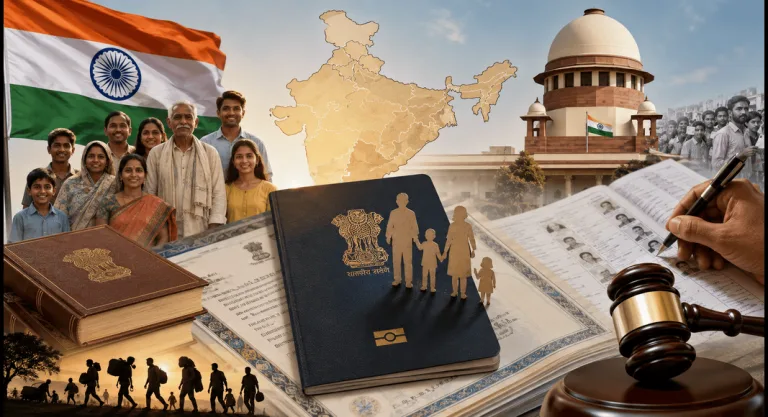
The 97th Constitutional Amendment Act, 2011 gave special importance to cooperative societies in India.
Important changes made under this amendment:
| Provision | Details |
|---|---|
| Part IXB | Added to the Constitution for cooperative societies |
| Article 19(1)(c) | Citizens got the right to form cooperatives |
| Article 43B | Government should promote cooperative societies |
This amendment gave citizens the fundamental right to form cooperative societies.
Supreme Court Judgment
In July 2021, the Supreme Court of India partially struck down the 97th Amendment.
Main points of the judgment:
- Cooperative societies fall under the State List
- States have the main power to make laws related to cooperatives
- Parliament passed some provisions without approval from enough state legislatures
- Therefore, some parts were invalid
However, the court kept the provisions related to Multi-State Cooperative Societies (MSCS) valid because such societies operate in more than one state.
Beginning of Cooperative Movement in India
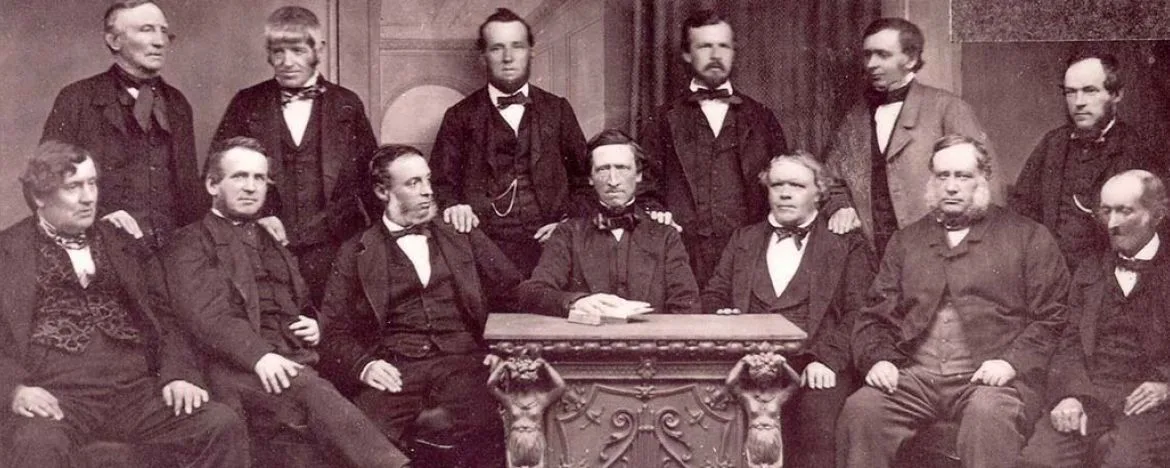
The Cooperative Movement in India started during the late 19th century. At that time, Indian farmers faced serious financial problems.
Main reasons behind the movement:
- Decline of village industries after the Industrial Revolution
- More dependence on agriculture
- Small and fragmented land holdings
- Heavy land revenue collection
- Irregular rainfall and crop failures
- Exploitation by moneylenders
Farmers often borrowed money at very high interest rates. This created a need for affordable credit systems.
Early Informal Cooperatives
Even before official laws, cooperative-style systems existed in India.
Examples include:
- Devarai / Vanarai
- Chit Funds
- Kuries
- Bhishies
- Phads
- Nidhis in Madras Presidency
These systems were based on mutual support and trust.
One important early proposal came from Sir William Wedderburn, who suggested agricultural banks after the Deccan riots to reduce rural debt.
Cooperative Movement Before Independence
Initial Stage (1904–1911)
The first major step came after the Indian Famine Commission (1901).
The government formed a committee under Sir Edward Law, which recommended cooperative societies.
This led to the Cooperative Credit Societies Act, 1904.
Features of the 1904 Act
- Minimum 10 people could form a cooperative credit society
- Members had to belong to the same village, town, class, or tribe
- Societies were classified as rural and urban
- Rural societies could not distribute profits
- Urban societies could distribute profits after keeping 25% in reserve fund
Problems of the 1904 Act
The act had many weaknesses:
- No support for non-credit societies
- Poor system for mobilizing urban savings
- Rural-urban classification was impractical
- Limited scope for growth
Because of these problems, reforms became necessary.
Modification Stage (1912–1918)
To remove the weaknesses of the 1904 Act, the government introduced the Cooperative Societies Act, 1912.
Features of the 1912 Act
| Feature | Description |
| Wider Scope | Credit and non-credit societies allowed |
| Federal Structure | Central banks and unions could be registered |
| Share Limit | One member could not hold too much share capital |
| Tax Benefits | Exemptions from income tax and stamp duty |
This law greatly improved the cooperative system.
Maclagan Committee (1915)
The government formed the Maclagan Committee under Sir Edward Maclagan.
The committee found several problems:
- Illiteracy among members
- Misuse of funds
- Nepotism
- Delay in loan approval
- Poor understanding of cooperative principles
Recommendations:
- Teach cooperative principles to all members
- Maintain honesty in lending
- Loans should go only to genuine members
- Follow one member, one vote rule
- Monitor loan usage properly
Many suggestions could not be fully implemented because of World War I.
Expansion Stage (1919–1929)
The Montagu-Chelmsford Reforms of 1919 made cooperation a provincial subject.
This gave more power to states.
As a result:
- States made their own cooperative laws
- Membership increased
- More cooperative institutions were formed
Impact of Great Depression
The year 1929 brought the Great Economic Depression.
Its effects:
- Agricultural prices fell sharply
- Farmers lost income
- Loan repayment became difficult
- Overdue loans increased
- Many cooperative societies suffered losses
This period slowed the growth of cooperatives.
Restructuring Stage (1930–1946)
During this phase, many committees were formed in:
- Madras
- Bombay
- Travancore
- Mysore
- Gwalior
- Punjab
Their goal was to improve weak cooperative institutions.
In 1937, Congress ministries in several provinces renewed efforts to strengthen cooperatives.
Role of World War II
The Second World War changed the economic situation.
Important changes:
- Prices of agricultural products increased
- Farmers earned more income
- Marketing cooperatives expanded
- Consumer and production societies grew rapidly
In 1945, the All India Cooperative Planning Committee further encouraged cooperative development.
Gandhiji’s View on Cooperatives
Mahatma Gandhi strongly supported cooperation.
He believed cooperatives could help create a fair and decentralized society.
Gandhi’s Ideas
- Cooperatives can reduce inequality
- They empower ordinary people
- They prevent concentration of wealth
- They support village self-reliance
Phoenix Settlement
In South Africa, Gandhi created the Phoenix Settlement.
It followed cooperative principles where members worked together and shared resources.
Tolstoy Farm
Gandhi also established Tolstoy Farm.
It was built to support families affected by the freedom struggle in South Africa.
Cooperatives for Farmers
After returning to India, Gandhi saw the suffering of farmers.
He believed industries related to agriculture such as:
- Cotton
- Sugar
- Oil seeds
- Wheat
should be run cooperatively so farmers get fair prices.
Cooperative Movement After Independence
After 1947, cooperatives became an important part of India’s development strategy.
India adopted a mixed economy, which had:
| Sector | Role |
| Public Sector | Government-owned industries |
| Private Sector | Private businesses |
| Cooperative Sector | Member-owned organizations |
Cooperatives acted as a balance between public and private sectors.
Role in Five-Year Plans
Cooperatives became an important part of India’s Five-Year Plans.
Pandit Jawaharlal Nehru considered three pillars of democracy:
- Panchayat
- Schools
- Cooperatives
This shows how important cooperatives were for nation-building.
National Policy on Cooperatives
In 1958, the National Development Council (NDC) recommended a national cooperative policy.
Important suggestions:
- Better training
- Cooperative marketing societies
- Stronger administration
Later, the Government of India announced the National Policy on Cooperatives in 2002.
Establishment of NCDC
The National Cooperative Development Corporation (NCDC) was established under the NCDC Act, 1962.
Main objectives:
- Promote cooperative development
- Provide financial assistance
- Support agriculture and rural sectors
Major Committees After Independence
Rural Credit Survey Committee (1954)
Recommendations:
- Greater state participation
- Better credit support for rural areas
S.T. Raja Committee
This committee suggested:
- Changes in cooperative laws
- Government participation in management
- Better regulation of cooperative societies
Successful Cooperatives in India
India has many successful cooperative institutions.

Agriculture and Allied Sector
- National Cooperative Development Corporation (NCDC)
- NAFED
- IFFCO
- AMUL
- CORDET
Banking Sector
- PMC Bank
- Bharat Cooperative Bank
- Saraswat Cooperative Bank
Among these, AMUL is one of the best examples of successful cooperative models in India.
Problems Faced by Cooperative Sector
Despite success, the Cooperative Movement in India faces several challenges.
1. Too Many Laws
Different states have different cooperative laws.
This creates confusion and uneven development.
2. Poor Governance
Many cooperative boards suffer from:
- Weak leadership
- Lack of accountability
- Slow decision-making
3. Lack of Recognition
Many policymakers and citizens do not fully understand the economic importance of cooperatives.
4. Shortage of Skilled Professionals
Cooperatives often fail to attract experienced managers and experts.
5. Weak Capital Formation
Many societies struggle to raise funds.
Low member contribution affects growth.
6. Lack of Awareness
Many people do not understand:
- Cooperative objectives
- Rules and regulations
- Member rights and responsibilities
This reduces active participation.
Future of Cooperative Movement in India
The Cooperative Movement in India remains highly important for future growth.
Cooperatives help in:
- Rural development
- Financial inclusion
- Employment generation
- Farmer empowerment
- Democratic participation
They strengthen collective power and social trust.
In a country like India, where millions depend on agriculture and small businesses, cooperatives can create sustainable and inclusive development. Strong management, better awareness, and policy support can make cooperatives even more effective in the coming years.
FAQs
Q1. What is the Cooperative Movement in India?
The Cooperative Movement in India is a system where people voluntarily join together to meet common economic and social needs.
Q2. When did cooperative movement start in India?
It officially started with the Cooperative Credit Societies Act of 1904.
Q3. What is the purpose of cooperative societies?
Their purpose is to provide mutual support, fair services, affordable credit, and collective growth.
Q4. What is the 97th Constitutional Amendment?
It gave constitutional status to cooperative societies and added provisions for their promotion.
Q5. Which is the most successful cooperative in India?
Amul is considered one of the most successful cooperatives in India.