



UK Union Faces Fresh Independence Push

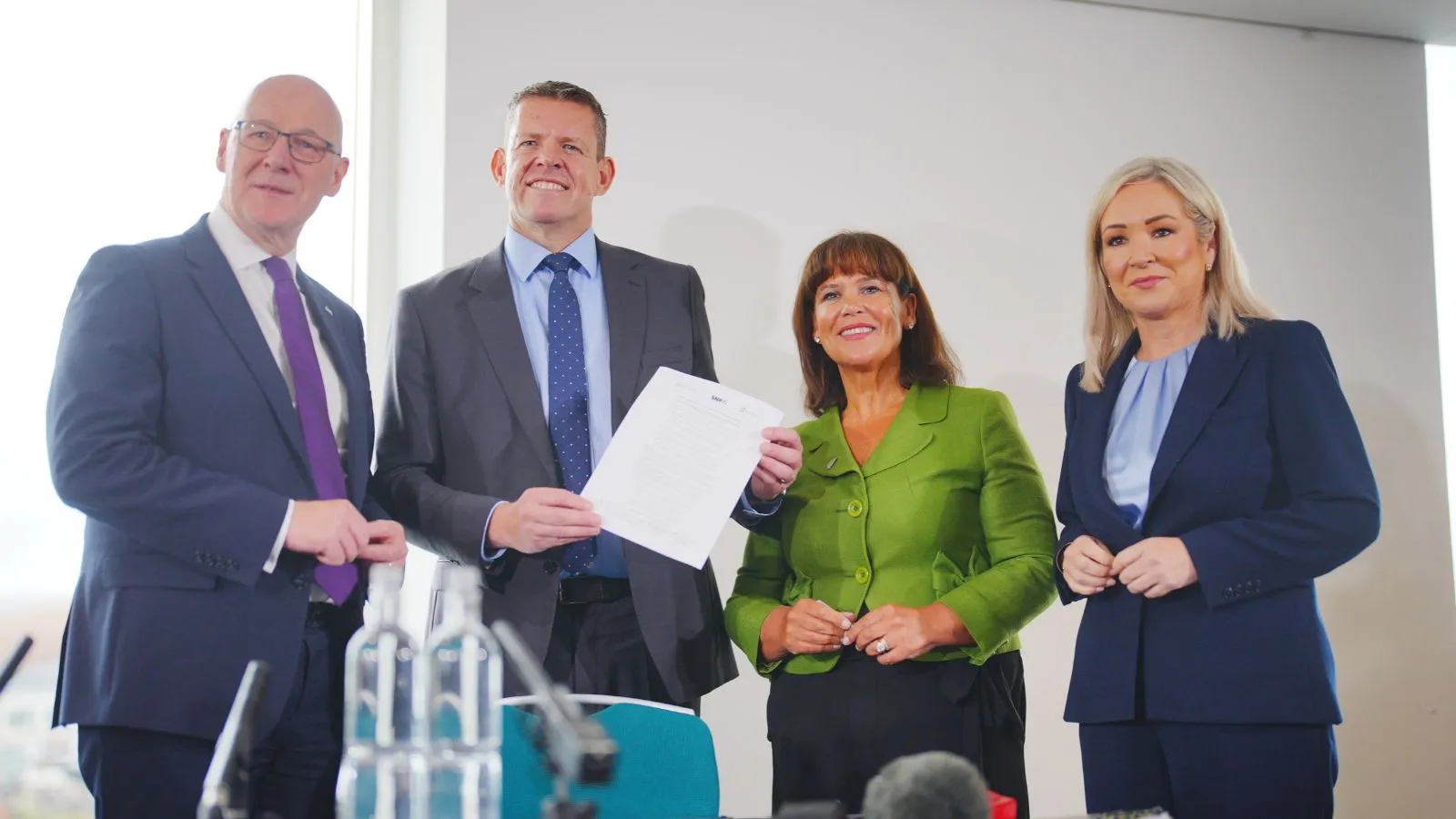
UK Union is facing renewed debate after political leaders from Scotland, Wales and Northern Ireland signed a joint memorandum in Cardiff on September 14, 2026, calling for the right of their nations to decide their own constitutional futures. The agreement was signed by SNP leader John Swinney, Plaid Cymru leader Rhun ap Iorwerth and Sinn Féin vice-president Michelle O’Neill. The three parties have different constitutional goals and timelines, but all are seeking greater self-government and eventual change to their relationship with Westminster.
Thank you for reading this post, don't forget to subscribe!Three Nations Join the Debate
The Cardiff agreement is notable because nationalist parties are currently leading politics in all three devolved nations. Swinney leads the Scottish National Party, ap Iorwerth leads Plaid Cymru in Wales, and O’Neill is a senior Sinn Féin figure and Northern Ireland’s First Minister.
The leaders met as party representatives rather than acting jointly as heads of their respective governments. Their memorandum says each nation should be able to determine its own future and calls for cooperation in areas including the economy, energy, Europe and international relations.
However, the three movements do not have identical aims. The SNP supports Scottish independence, Plaid Cymru supports greater Welsh self-government and independence, while Sinn Féin seeks Irish reunification, which would mean Northern Ireland leaving the UK and joining the Republic of Ireland.
Scotland Renews Its Independence Demand
Scotland remains the most established independence movement within the UK. In the 2014 referendum, Scottish voters rejected independence, with 55% voting to remain in the United Kingdom.
The issue returned to the centre of political debate after Brexit. Scotland voted by about 62% to remain in the European Union in 2016, while the UK as a whole voted to leave.
The SNP argues that Scotland should have greater control over decisions involving its economy, taxation, public services and international relationships. It has also highlighted the possibility of closer ties with the European Union after independence.
The UK government, however, has continued to oppose another Scottish independence referendum under current circumstances. Recent statements from Prime Minister Andy Burnham’s government have stressed that another vote is not presently being authorised.
Wales Takes a Different Approach
Wales has traditionally had a smaller independence movement than Scotland, but the issue has gained more political attention. Plaid Cymru has called for greater powers for Wales and has placed constitutional reform on its political agenda.
Rhun ap Iorwerth did not set a specific timetable for a Welsh independence referendum during the Cardiff meeting. Reports also indicate that Plaid Cymru does not intend to hold such a referendum during the current Senedd term.
Instead, the Welsh position has focused on transferring additional powers from Westminster and strengthening Wales’s ability to make decisions over areas such as economic development, energy and public services.
The Cardiff memorandum allows Wales to participate in the wider discussion without committing it to the same timetable as Scotland or Northern Ireland.
Northern Ireland Seeks Irish Unity
The constitutional question is different in Northern Ireland because the main nationalist demand is not an independent Northern Irish state. Sinn Féin wants Northern Ireland to become part of a united Ireland.
The 1998 Good Friday Agreement provides a legal framework for a border poll on Irish unity if the UK government considers that it is likely that a majority would support Northern Ireland leaving the UK.
Michelle O’Neill has argued that preparations for a possible constitutional change should begin. Unionist parties strongly oppose Irish reunification and continue to support Northern Ireland’s place within the United Kingdom.
The debate gained international attention after US President Donald Trump publicly said during his September visit to Ireland that he would like to see a united Ireland. The UK government subsequently said its position on Irish unity had not changed.
Brexit Remains a Major Issue
Brexit continues to influence the constitutional debate across the UK. Scotland and Northern Ireland both voted to remain in the European Union in 2016, but left the bloc because of the UK-wide result.
For independence supporters, the UK’s departure from the EU is evidence that decisions made at Westminster can have different effects across the four nations.
The Cardiff memorandum also refers to cooperation with Europe. The parties involved have discussed a future in which Scotland and Wales could seek European integration, while Northern Ireland would remain linked to the EU if it became part of a united Ireland.
Supporters of the union, meanwhile, point to the UK’s shared institutions, common market, fiscal arrangements and defence structures as important parts of the current system.
What Happens Next
The Cardiff memorandum does not itself trigger an independence referendum or change the constitutional status of Scotland, Wales or Northern Ireland. Any major constitutional change would require further political and legal steps.
In Scotland, the central question remains whether Westminster would authorise another referendum. In Northern Ireland, the Good Friday Agreement provides the framework for a possible border poll, subject to the conditions set out in the agreement.
In Wales, the debate is currently more focused on gaining additional powers and building public support for constitutional change.
The latest agreement therefore brings the constitutional question back into the centre of British politics, while the three nations continue to pursue different routes and timelines within the wider debate over the future of the UK Union.