



Moon Crater Larger Than Colosseum

Moon Crater discoveries are helping scientists understand how often space objects strike the lunar surface and how these impacts change the Moon’s landscape. NASA’s Lunar Reconnaissance Orbiter (LRO) has identified a newly formed impact crater on the Moon’s near side that appeared between April 11 and May 22, 2024. The crater, named McGetchin, is about 222 metres wide and up to 43 metres deep, making it larger than Rome’s famous Colosseum.
Thank you for reading this post, don't forget to subscribe!The discovery provides scientists with an opportunity to study a very recent lunar impact and observe the effects of a powerful collision on the Moon’s surface.
NASA Detects a New Moon Crater
The newly identified Moon Crater was found using observations from NASA’s Lunar Reconnaissance Orbiter. The spacecraft has been studying the Moon since its launch in 2009 and has collected detailed information about the lunar surface.
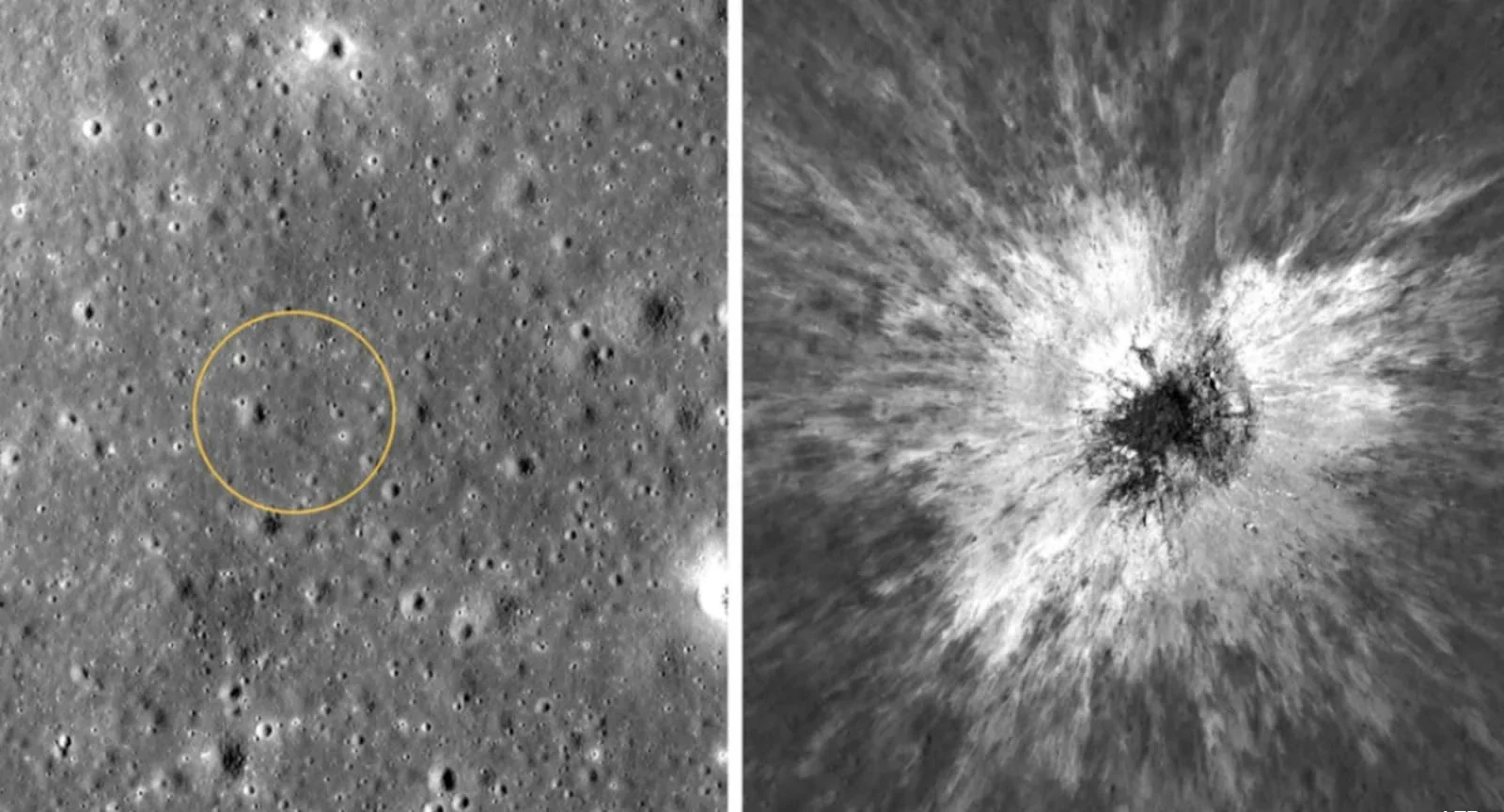
The new crater was named McGetchin in honour of Thomas McGetchin of the Lunar and Planetary Institute in Houston. Researchers were able to determine that the crater formed during a relatively short period in 2024 by comparing images of the same lunar area taken at different times.
This type of before-and-after observation is particularly useful for finding newly formed impact features on the Moon.
McGetchin Crater Measures 222 Metres
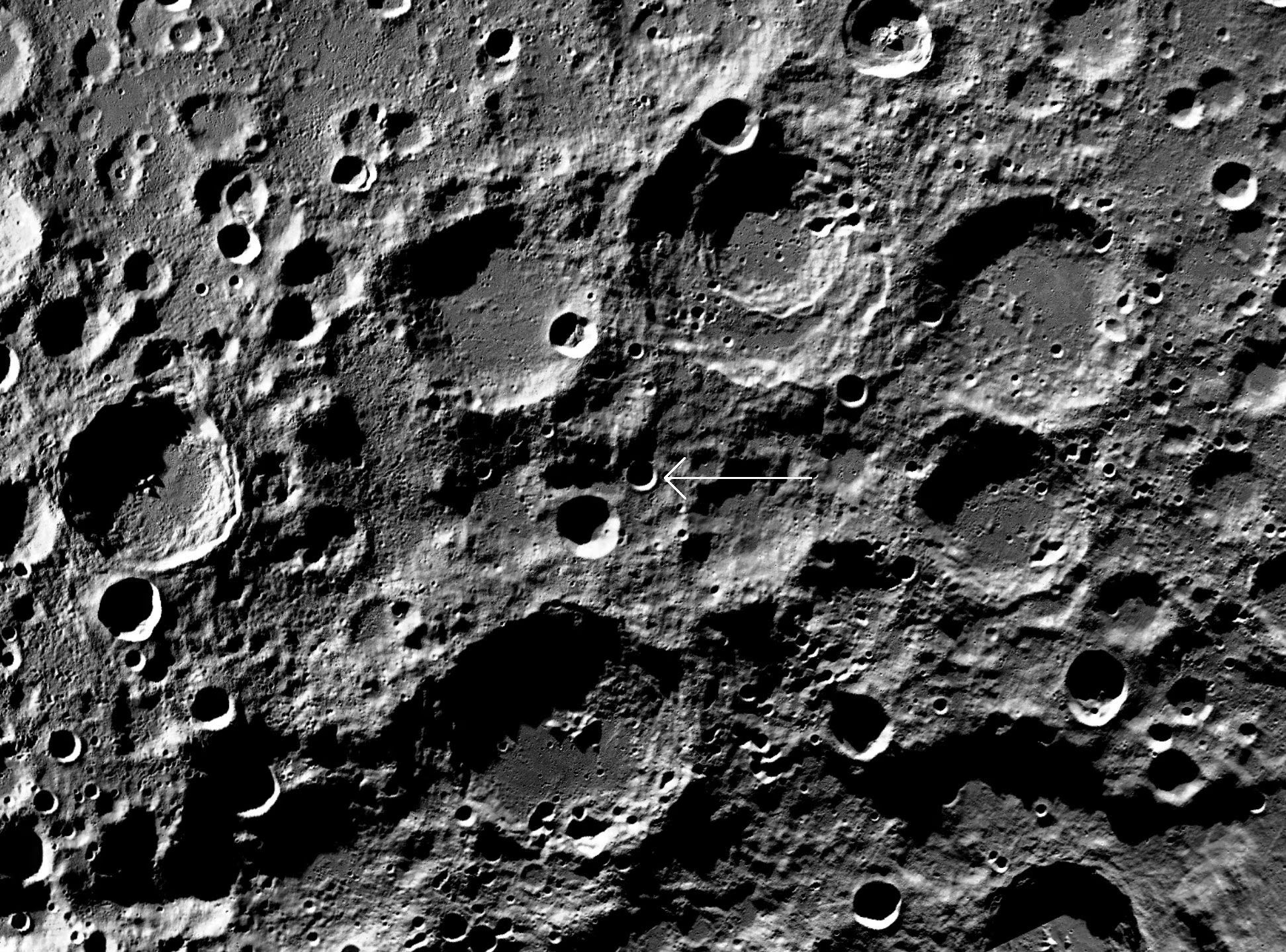
The McGetchin Moon Crater measures approximately 222 metres across and reaches a depth of up to 43 metres.
Its size makes it much larger than the previous recent impact crater identified by the Lunar Reconnaissance Orbiter about a decade earlier. Researchers describe McGetchin as the largest known recent impact crater in the solar system.
The comparison with the Roman Colosseum helps give a better idea of the crater’s scale. The Colosseum is one of the best-known ancient structures in the world, while the newly discovered crater represents a major geological change on the Moon.
Impact Happened Between April and May 2024
Scientists determined that the impact occurred between April 11 and May 22, 2024. The exact moment of impact was not initially observed directly by telescopes on Earth or in space.
Instead, researchers found the new crater by examining LRO images and identifying changes on the lunar surface.
The impactor was estimated to have been roughly the size of a three- to six-storey building. An object of this size striking the Moon at high speed can release a large amount of energy and throw lunar material across a wide area.
How Impact Craters Form
Impact craters are created when asteroids, comets or meteoroids collide with a planetary or lunar surface at very high speed.
The Moon is particularly exposed to these impacts because it has no substantial atmosphere. On Earth, our atmosphere burns up or slows down many smaller space rocks before they reach the ground.
The Moon does not have the same level of atmospheric protection. As a result, objects of different sizes can strike its surface and create craters.
Over billions of years, these impacts have produced the heavily cratered landscape visible across the Moon.
Material Thrown More Than 100 Kilometres
The McGetchin impact produced effects well beyond the immediate crater area. Researchers found evidence that lunar material was thrown over a distance of more than 100 kilometres.
The collision excavated rocks and soil from beneath the surface and launched the material outward. Some of the material was thrown at a higher angle than scientists had expected.
Studying this material can help researchers understand the strength of the impact and how the lunar surface responds when struck by a high-speed object.
A Cold Spot Around the Crater
Scientists also identified a cold spot about 7 kilometres wide around the newly formed crater.
The cold area is linked to changes in the upper layer of lunar soil caused by the impact. Researchers believe the observation is consistent with the loosening or disturbance of the Moon’s surface material.
This upper layer is known as regolith. Lunar regolith consists of loose dust, broken rocks and impact debris that have accumulated on the Moon’s surface over extremely long periods.
A fresh impact gives scientists an opportunity to study how regolith behaves immediately after a major collision.
What Is the Lunar Reconnaissance Orbiter?
NASA’s Lunar Reconnaissance Orbiter, or LRO, is a spacecraft dedicated to studying the Moon.
It was launched in 2009 and carries several scientific instruments, including cameras and equipment designed to study lunar topography, illumination, radiation and surface characteristics.
Over the years, LRO has created detailed maps and images of the lunar surface. Its long-term observations are particularly valuable for detecting changes that happen over time.
The discovery of the McGetchin crater demonstrates how continued monitoring can reveal geological events that might otherwise go unnoticed.
Discovery Confirmed Through Detailed Images
Wide-angle images from the LRO were processed in August 2025, allowing researchers to identify changes associated with the new crater. More detailed images were collected later in 2025.
Scientists confirmed the discovery in early 2026. Two research studies about the impact and its effects were published in Science Advances on September 15, 2026.
The studies provide additional information about the crater’s formation, the movement of material across the lunar surface and the changes produced in the surrounding regolith.
Why Recent Lunar Impacts Matter
A newly formed Moon Crater offers scientists something that older craters cannot provide as easily: a clearly defined event with a known approximate time period.
Most lunar craters formed millions or billions of years ago. Their exact formation dates are often difficult to determine.
A fresh crater allows researchers to compare the lunar surface before and after an impact. Such observations can improve scientific understanding of impact processes and help refine estimates of how frequently objects strike the Moon.
The findings can also contribute to broader research into the impact history of the Moon and other rocky bodies in the solar system.
The Moon’s Near Side
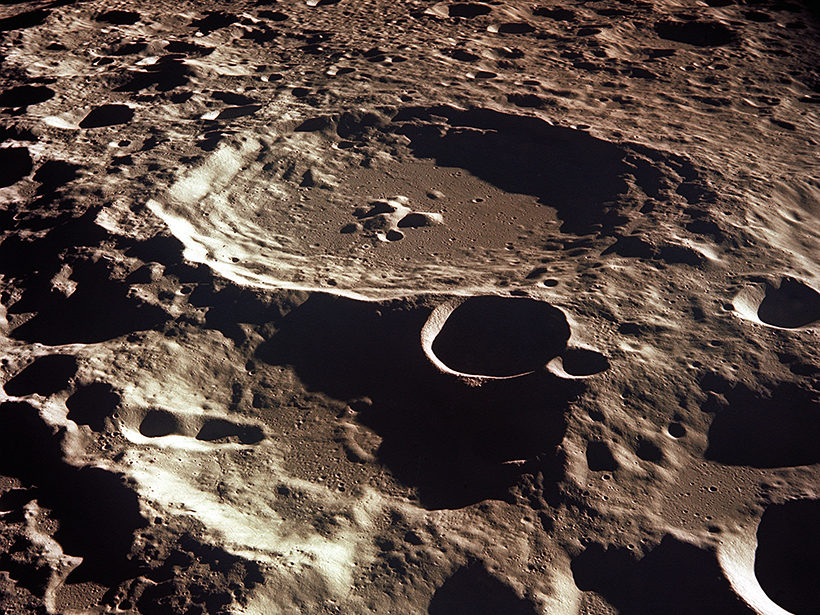
The McGetchin crater was found on the Moon’s near side, the hemisphere that faces Earth.
Because the Moon is tidally locked with Earth, it rotates once on its axis in approximately the same time it takes to orbit Earth. This means the same general side of the Moon remains facing our planet.
LRO can observe both the near and far sides of the Moon, allowing scientists to monitor the lunar surface in much greater detail than is possible from Earth alone.
The McGetchin Moon Crater is therefore not just a new feature on the lunar surface but also a valuable natural event that allows researchers to study how the Moon changes after a high-speed space impact.