



Salient Features of Indian Constitution

The Salient Features of Indian Constitution make it one of the most unique and respected constitutions in the world. It is the foundation of India’s democracy and explains how the country is governed. It protects the rights of citizens, defines the powers of the government, and ensures justice, equality, and liberty for everyone.
Thank you for reading this post, don't forget to subscribe!The Constitution of India came into force on 26 January 1950, making India a sovereign democratic republic. It was drafted by the Constituent Assembly under the chairmanship of Dr. B. R. Ambedkar, who is known as the Architect of the Indian Constitution.
What are the Salient Features of Indian Constitution?
Salient features are the most important characteristics that make the Indian Constitution different from other constitutions. These features help India function as a democratic and united nation.
1. Lengthiest Written Constitution in the World
One of the biggest features of the Indian Constitution is that it is the longest written Constitution in the world.
When it was adopted in 1949, it contained:
- 395 Articles
- 22 Parts
- 8 Schedules
Today, after several constitutional amendments, it contains:
- More than 470 Articles
- 25 Parts
- 12 Schedules
Why is it so lengthy?
There are several reasons:
- India is a very large and diverse country.
- It includes detailed administrative provisions.
- It contains provisions for both the Union and State Governments.
- Many ideas were borrowed and modified from different constitutions.
- The framers wanted to avoid confusion by explaining everything in detail.
2. Borrowed Features from Different Countries
The Indian Constitution is often called a “bag of borrowings” because many of its provisions were inspired by other countries. However, these features were carefully modified to suit Indian conditions.
Some important sources include:
- Britain – Parliamentary system, Rule of Law, Cabinet system, Single Citizenship.
- United States – Fundamental Rights, Judicial Review, Independent Judiciary, Vice-President.
- Ireland – Directive Principles of State Policy and election of the President.
- Canada – Federal system with a strong Centre.
- Australia – Concurrent List and Joint Sitting of Parliament.
- France – Liberty, Equality and Fraternity.
- Russia (USSR) – Fundamental Duties.
- Germany – Emergency provisions.
- South Africa – Amendment procedure.
- Japan – Procedure established by law.
Instead of copying blindly, India adopted only those provisions that suited its democratic system.
3. Blend of Rigidity and Flexibility
The Indian Constitution is neither completely rigid nor completely flexible.
Some provisions can be changed easily through a simple majority in Parliament, while others require a special majority and, in some cases, approval from at least half of the states.
This balance allows the Constitution to change with time without losing its basic values.
Importance
- Protects the Constitution from unnecessary changes.
- Allows reforms according to changing needs.
- Maintains stability in governance.
4. Federal System with a Strong Centre
India follows a federal system, which means powers are divided between the Central Government and State Governments.
The Constitution clearly divides powers through:
- Union List
- State List
- Concurrent List
However, the Centre has stronger powers than the states, especially during emergencies.
That is why India is often described as:
- Federal in structure
- Unitary in spirit
- Quasi-federal
Article 1 describes India as a “Union of States”, meaning no state has the right to separate from the Union.
5. Parliamentary Form of Government
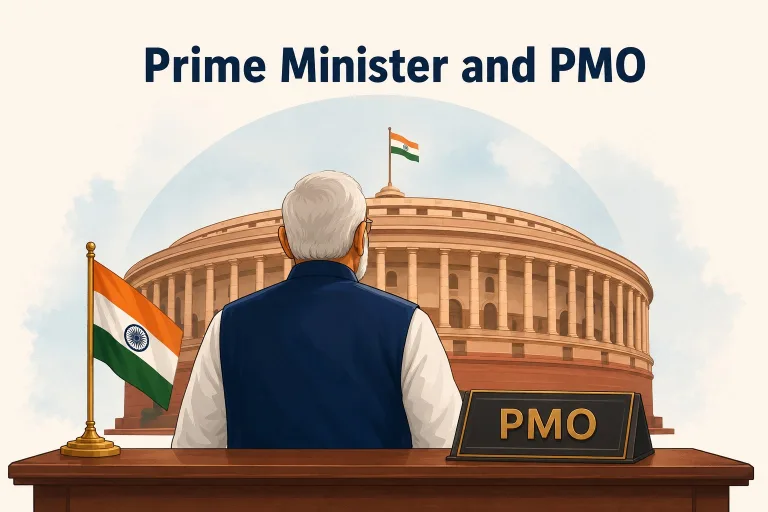
India follows the British Parliamentary System.
In this system:
- The President is the constitutional head.
- The Prime Minister is the real executive.
- The Council of Ministers is collectively responsible to the Lok Sabha.
Main Features
- Prime Minister leads the government.
- Ministers are members of Parliament.
- Government remains in power only while it enjoys majority support.
- The Lok Sabha can be dissolved before completing its term.
This system ensures accountability of the government to the people.
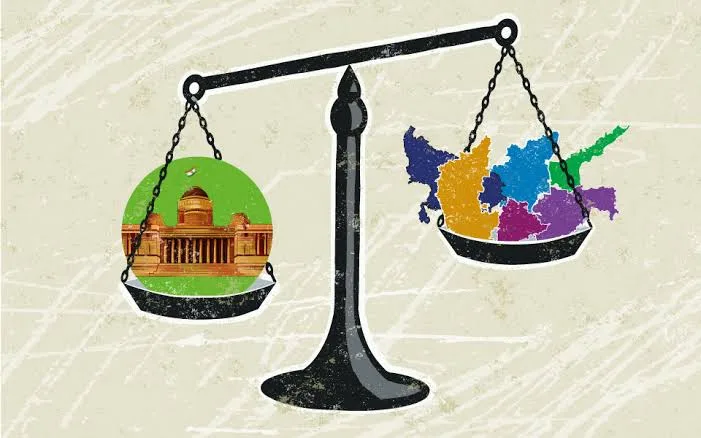
6. Balance Between Parliament and Judiciary
The Constitution creates a balance between the powers of Parliament and the Judiciary.
Parliament
- Makes laws.
- Can amend most parts of the Constitution.
Judiciary
- Interprets the Constitution.
- Protects Fundamental Rights.
- Can strike down unconstitutional laws through Judicial Review.
This balance prevents misuse of power and strengthens democracy.
7. Independent and Integrated Judiciary
India has a single integrated judicial system.
The hierarchy is:
- Supreme Court
- High Courts
- District Courts
- Subordinate Courts
The Supreme Court is:
- The highest court.
- Protector of Fundamental Rights.
- Guardian of the Constitution.
- Final court of appeal.
Judges enjoy security of tenure, fixed salaries, and independence from political pressure.
This helps ensure fair justice.
8. Fundamental Rights
Fundamental Rights are basic rights guaranteed to every citizen under Part III of the Constitution.
These rights protect individual freedom and dignity.
The six Fundamental Rights are:
- Right to Equality
- Right to Freedom
- Right against Exploitation
- Right to Freedom of Religion
- Cultural and Educational Rights
- Right to Constitutional Remedies
If any Fundamental Right is violated, citizens can approach the courts for protection.
These rights are essential for democracy.
9. Directive Principles of State Policy (DPSP)
Directive Principles are mentioned in Part IV of the Constitution.
They are guidelines for governments while making laws and policies.
Although they are not legally enforceable, they help create a welfare state.
They aim to provide:
- Social justice
- Economic equality
- Better education
- Public health
- Environmental protection
- Equal opportunities
Many government welfare schemes are based on these principles.
10. Fundamental Duties
Fundamental Duties were added by the 42nd Constitutional Amendment Act, 1976.
Later, one more duty was added through the 86th Amendment Act, 2002, making the total 11 Fundamental Duties.
Some important duties include:
- Respect the Constitution.
- Protect national unity.
- Safeguard public property.
- Protect the environment.
- Promote harmony among citizens.
- Develop scientific temper.
These duties remind citizens that rights and responsibilities go together.
11. Secular State
India is a secular country, which means it does not have any official religion.
Every citizen has the freedom to:
- Follow any religion.
- Change religion.
- Practice religious beliefs.
- Propagate religion peacefully.
The government treats all religions equally without discrimination.
This promotes unity in India’s diverse society.
12. Universal Adult Franchise
Every Indian citizen who is 18 years or older has the right to vote.
There is no discrimination based on:
- Religion
- Caste
- Gender
- Wealth
- Education
- Language
The voting age was reduced from 21 to 18 years through the 61st Constitutional Amendment Act, 1988.
Universal voting strengthens democracy by giving every adult an equal voice.
13. Single Citizenship
Unlike some countries, India provides only one citizenship.
An Indian citizen enjoys the same rights in every state of the country.
Single citizenship promotes:
- National unity
- Equality
- Free movement
- Equal opportunities
14. Independent Constitutional Bodies
The Constitution establishes several independent institutions that ensure transparency and accountability.
These include:
Election Commission of India (ECI)
Conducts free and fair elections.
Union Public Service Commission (UPSC)
Recruits officers for civil services.
State Public Service Commissions
Recruit state government officials.
Comptroller and Auditor General (CAG)
Audits government accounts and ensures proper use of public money.
These institutions strengthen democracy.
15. Emergency Provisions
The Constitution provides emergency powers to deal with extraordinary situations.
There are three types:
National Emergency
Declared during war, external aggression, or armed rebellion.
President’s Rule
Applied when a state’s constitutional machinery fails.
Financial Emergency
Declared if India’s financial stability is threatened.
These provisions help protect national unity during crises.
16. Three-Tier Government
Initially, India had only two levels of government:
- Central Government
- State Government
The 73rd and 74th Constitutional Amendments (1992) introduced local self-government.
Today India has:
- Union Government
- State Governments
- Local Governments
Local governments include:
- Panchayats in rural areas
- Municipalities in urban areas
This decentralization improves local governance.
17. Constitutional Status to Co-operative Societies
The 97th Constitutional Amendment Act, 2011 gave constitutional recognition to cooperative societies.

These societies help people work together in areas such as:
- Agriculture
- Banking
- Dairy
- Housing
- Marketing
They encourage economic development through cooperation.
Criticism of the Indian Constitution
Although the Constitution is widely respected, some scholars have criticised it.
1. Borrowed Constitution
Some believe it borrowed too many features from foreign constitutions.
However, these provisions were modified to suit Indian conditions.
2. Too Lengthy
Its detailed nature makes it lengthy.
But considering India’s diversity, such detail is necessary.
3. Complex Legal Language
Some constitutional provisions are difficult for ordinary citizens to understand.
However, legal precision is important to avoid confusion.
4. Too Many Amendments
The Constitution has been amended many times.
Still, the Basic Structure Doctrine protects its core principles from being changed.
Importance of the Salient Features of the Indian Constitution
The special features of the Constitution help India in many ways.
They:
- Protect democracy.
- Safeguard Fundamental Rights.
- Maintain national unity.
- Ensure social justice.
- Balance powers between the Centre and the States.
- Promote equality and secularism.
- Encourage citizen participation.
- Strengthen local self-government.
- Maintain the rule of law.
- Support peaceful governance.
These features make the Constitution one of the strongest democratic documents in the world.
Recent Constitutional Developments
The Constitution continues to evolve through judicial decisions and amendments.
Some important developments include:
- Greater emphasis on digital privacy after the Supreme Court recognized the Right to Privacy as a Fundamental Right.
- Expansion of digital governance while ensuring constitutional safeguards.
- Increasing role of local governments in development.
- Continued use of Judicial Review to protect constitutional values.
- Discussions on electoral reforms, simultaneous elections, and judicial appointments continue in India.
These developments show that the Constitution remains a living document capable of adapting to modern challenges.
Conclusion
The Salient Features of Indian Constitution make it one of the finest constitutions in the world. It combines the best ideas from different countries while preserving India’s own democratic values and traditions. It protects citizens’ rights, balances the powers of different institutions, ensures justice, and promotes equality among all people.
Even after more than seven decades, the Constitution continues to guide India’s political, social, and economic development. It is not just a legal document but also a symbol of the hopes, dreams, and aspirations of every Indian citizen. Understanding its important features helps students, citizens, and competitive exam aspirants appreciate the strength of Indian democracy and the values on which the nation stands.
FAQs
1. What are the salient features of the Indian Constitution?
The main features include a written Constitution, federal system, parliamentary government, Fundamental Rights, Directive Principles, Fundamental Duties, independent judiciary, secularism, and universal adult franchise.
2. Why is the Indian Constitution called the longest written Constitution?
It is the world’s longest written Constitution because it contains detailed provisions covering governance, administration, rights, duties, and emergency powers.
3. From which countries did India borrow constitutional features?
India borrowed features from the UK, USA, Ireland, Canada, Australia, France, Germany, South Africa, Japan, and the Government of India Act, 1935.
4. What is the meaning of federalism in the Indian Constitution?
Federalism means powers are divided between the Central Government and State Governments, while the Centre remains stronger in certain situations.
5. What are Fundamental Rights?
Fundamental Rights are basic rights guaranteed by the Constitution that protect the freedom, equality, and dignity of every citizen.
6. What are Directive Principles of State Policy (DPSPs)?
DPSPs are guidelines for the government to promote social and economic welfare. They are not legally enforceable but help in policy-making.
7. What are Fundamental Duties?
Fundamental Duties are moral responsibilities of every citizen, such as respecting the Constitution, protecting the environment, and promoting harmony.
8. Why is the Indian judiciary considered independent?
The judiciary functions independently from the executive and legislature, ensuring fair justice and protecting the Constitution.
9. What is Universal Adult Franchise?
It gives every Indian citizen aged 18 years or above the right to vote without discrimination based on religion, caste, gender, or wealth.
10. Why is the Indian Constitution considered unique?
It combines the best features of different constitutions while adapting them to India’s diverse society, making it flexible, democratic, and inclusive.