

Article 370: Jammu and Kashmir Special Status

Article 370 was one of the most debated provisions of the Indian Constitution. It gave special status to the former state of Jammu and Kashmir and defined its relationship with the Union of India. On 5 August 2019, the Government of India made major changes to Article 370 and reorganized the state into two Union Territories. This decision became one of the most significant constitutional and political developments in modern Indian history.
Thank you for reading this post, don't forget to subscribe!To understand the importance of this change, it is necessary to know the history, constitutional background, key changes, challenges, and possible impacts of Article 370.
Article 370 was included in the Indian Constitution as a temporary provision. It granted special autonomy to Jammu and Kashmir and allowed the state to have its own Constitution, flag, and certain special rights.
Unlike other states in India, Jammu and Kashmir had a unique constitutional position. Many provisions of the Indian Constitution applied to the state only through Presidential Orders and with the consent of the state government.
For several decades, Article 370 remained a subject of political debate. Some people believed it helped preserve the unique identity of Jammu and Kashmir, while others argued that it prevented complete integration of the state with the rest of India.
The changes made in August 2019 completely transformed this arrangement.
Historical Background of Article 370
The history of Article 370 is closely connected with the accession of Jammu and Kashmir to India.
In 1947, when India gained independence, princely states were given the option to join either India or Pakistan. Jammu and Kashmir was ruled by Maharaja Hari Singh. Initially, he wanted to remain independent.
However, after tribal invasions supported from Pakistan entered Kashmir in October 1947, the Maharaja signed the Instrument of Accession with India. As a result, Jammu and Kashmir became a part of India.
Since the situation in the state was complex and sensitive, special constitutional arrangements were made.
On 17 October 1949, Article 370 was added to the Indian Constitution. It was introduced by N. Gopalaswami Ayyangar in the Constituent Assembly as Article 306A, which later became Article 370.
The purpose of the provision was to provide temporary autonomy to Jammu and Kashmir while maintaining its connection with India.
Main Features of Article 370
Article 370 gave several special powers and privileges to Jammu and Kashmir.
Some important features included:
- Jammu and Kashmir had its own Constitution.
- The state had its own flag.
- Parliament’s powers over the state were limited.
- Many central laws required the approval of the state government before being applied.
- The state enjoyed greater autonomy compared to other Indian states.
- The President of India could extend constitutional provisions through Presidential Orders.
This arrangement made Jammu and Kashmir different from every other state in the country.
What Was Article 35A?
Article 35A was another important provision connected to Article 370.
It was introduced through a Presidential Order in 1954.
Article 35A empowered the Jammu and Kashmir legislature to define “permanent residents” of the state and provide them with special rights and privileges.
These privileges included:
- Ownership of land and property.
- Government jobs in the state.
- Scholarships and educational benefits.
- Other welfare measures.
People who were not considered permanent residents did not enjoy these benefits.
Because of these special provisions, Article 35A remained controversial for many years.
Changes Made on 5 August 2019
On 5 August 2019, the President of India issued the Constitution (Application to Jammu and Kashmir) Order, 2019.
Through this order, the Government of India modified the operation of Article 370 and extended all provisions of the Indian Constitution to Jammu and Kashmir.
Soon after, Parliament passed the Jammu and Kashmir Reorganisation Act, 2019.
These decisions brought major constitutional changes.
Jammu and Kashmir Reorganized
The former state was divided into two Union Territories:
- Jammu and Kashmir
- Ladakh
This was the first time in Indian history that a state was converted into a Union Territory.
New Political Structure
- Jammu and Kashmir became a Union Territory with a Legislative Assembly.
- Ladakh became a Union Territory without a Legislative Assembly.
- The post of Governor was replaced by a Lieutenant Governor.
- The Assembly term became five years instead of six years.
Major Effects of the Changes
The 2019 decision resulted in several important changes.
End of Special Status
The special status granted under Article 370 was effectively removed.
Jammu and Kashmir became subject to the Indian Constitution in the same way as other regions of India.
Separate Constitution Removed
The Constitution of Jammu and Kashmir ceased to operate separately.
The Indian Constitution became the sole governing constitutional document.
Separate Flag Removed
The separate state flag was abolished.
Only the national flag of India remained officially recognized.
Article 35A Became Inoperative
Since Article 35A originated from Article 370, it also became ineffective after the changes.
Special rights reserved only for permanent residents were removed.
Fundamental Rights Fully Applicable
All citizens in Jammu and Kashmir became entitled to the same Fundamental Rights available throughout India.
Central Laws Extended
All laws passed by Parliament became applicable in Jammu and Kashmir.
Important laws such as:
- Right to Information Act (RTI)
- Right to Education Act (RTE)
- Various social welfare laws
became fully enforceable.
Financial Emergency Provision
Article 360, which deals with Financial Emergency, also became applicable.
Indian Penal Code Applied
The Ranbir Penal Code, which was specific to Jammu and Kashmir, was replaced by the Indian Penal Code (IPC).
Why Did the Government Make These Changes?
The Government of India provided several reasons for changing Article 370.
Greater National Integration
Supporters believed Article 370 created a psychological and political gap between Jammu and Kashmir and the rest of India.
Removing the special status was seen as a step toward complete integration.
Equal Rights for Citizens
Many argued that certain groups, including women, marginalized communities, and refugees living in the state, faced limitations under the earlier arrangement.
The extension of the Indian Constitution aimed to provide equal rights.
Economic Development
The government argued that uniform application of laws would encourage investment, employment, and development.
Better Governance
Applying central laws directly was expected to improve governance and administration.
Security Concerns
The government also linked the decision to concerns about terrorism, separatism, and regional stability.
Constitutional Challenges
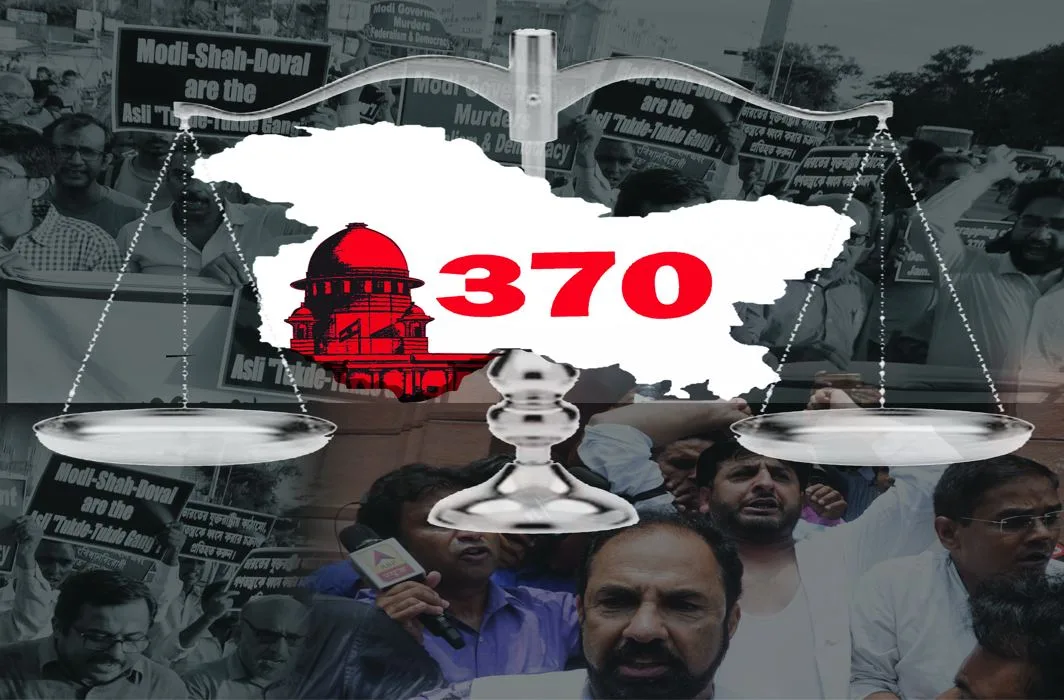
The decision generated legal debates and constitutional challenges.
Interpretation of Article 370
Critics argued that Article 370(3) required the recommendation of the Constituent Assembly of Jammu and Kashmir before major changes could be made.
However, the Constituent Assembly had dissolved in 1957 after framing the state’s Constitution.
The government used constitutional interpretation to modify the provision through Presidential Orders.
Changes in Article 367
The 2019 order altered the interpretation of certain terms.
The term “Constituent Assembly” was effectively interpreted through the existing legislative framework, which became a major point of legal dispute.
State Reorganization Issue
Questions were also raised regarding the conversion of a full-fledged state into a Union Territory.
Some experts argued that this raised concerns about federal principles.
These issues were challenged before the Supreme Court.
Federalism and Article 370
India follows a federal system where powers are shared between the Centre and the states.
The changes to Article 370 sparked debates about federalism.
Supporters argued that the move strengthened national unity.
Critics believed it reduced the autonomy that had been promised to Jammu and Kashmir at the time of accession.
The debate highlighted the balance between national integration and regional autonomy.
Possible Consequences of the Changes
The decision had both potential benefits and challenges.
Positive Outcomes
Better Integration
Jammu and Kashmir became constitutionally similar to other parts of India.
Uniform Laws
Citizens received the benefits of national laws and welfare schemes.
Development Opportunities
The government expected greater private investment and economic growth.
Administrative Efficiency
A more uniform governance structure was expected to improve implementation of policies.
Challenges
Public Sentiment
Many residents viewed Article 370 as an important symbol of identity and autonomy.
Its removal created emotional and political reactions.
Security Concerns
There were concerns about protests, unrest, and increased militancy.
Political Opposition
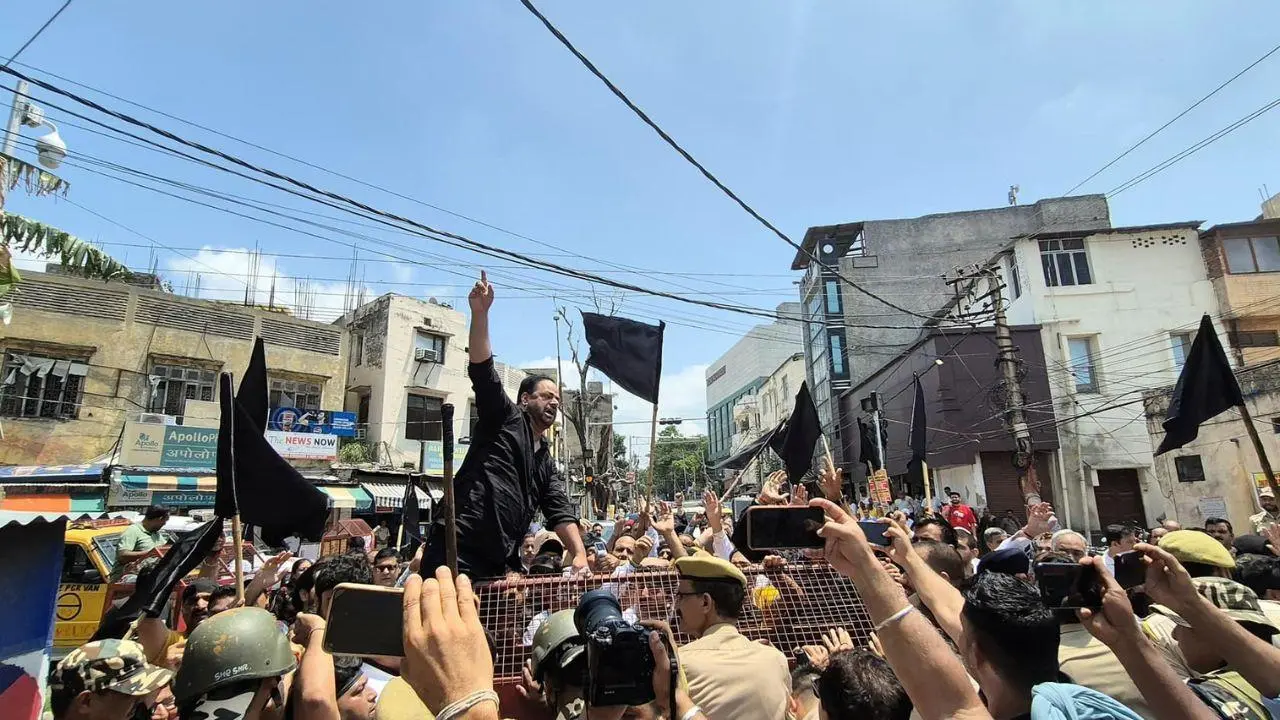
Several political parties opposed the move and questioned its constitutional validity.
Legal Disputes
The matter became the subject of extensive judicial review.
Impact on Pakistan and International Relations
The Kashmir issue has long been linked to India-Pakistan relations.
Supporters of the decision argued that the removal of Article 370 reduced Pakistan’s ability to use the provision as a diplomatic issue.
At the same time, Pakistan strongly criticized the move and raised concerns at international forums.
The decision also attracted global attention because of the strategic importance of Kashmir.
Importance of Development in Jammu and Kashmir
Constitutional changes alone cannot solve all challenges.
Long-term peace and progress require:
- Better education
- Employment opportunities
- Infrastructure development
- Healthcare improvements
- Tourism promotion
- Skill development programs
Economic growth and social progress are essential for improving the lives of people in the region.
The Way Forward
The future of Jammu and Kashmir depends on peace, development, and democratic participation.
Several steps can help build trust and stability:
Strengthening Democracy
Regular elections and public participation can improve governance.
Promoting Employment
Creating jobs for young people can reduce frustration and increase economic opportunities.
Encouraging Investment
Investment in industries, tourism, and infrastructure can boost growth.
Focusing on Education
Education can play a major role in empowering future generations.
Building Trust
Dialogue, inclusiveness, and respect for local aspirations remain important.
Following the Principles of Kashmiriyat, Insaniyat, and Jamhooriyat
Former Prime Minister Atal Bihari Vajpayee emphasized three guiding principles:
- Kashmiriyat (the cultural identity of Kashmir)
- Insaniyat (humanity)
- Jamhooriyat (democracy)
These principles continue to be seen as important for lasting peace and reconciliation.
Conclusion
Article 370 was a unique constitutional provision that shaped the relationship between Jammu and Kashmir and the Union of India for nearly seven decades. It granted special autonomy to the state and allowed it to maintain a distinct constitutional identity.
The changes made in August 2019 marked a historic turning point. Jammu and Kashmir lost its special constitutional status, Article 35A became ineffective, and the state was reorganized into two Union Territories.
Supporters view these changes as a step toward national integration, equal rights, and development. Critics continue to raise concerns regarding constitutional procedure, federalism, and regional autonomy.
The long-term success of these changes will depend not only on constitutional reforms but also on peace, economic growth, democratic governance, and the welfare of the people of Jammu and Kashmir. A balanced approach focused on development, inclusion, and trust-building will be essential for ensuring a stable and prosperous future for the region.
FAQs on Article 370
1. What is Article 370?
Article 370 was a provision in the Indian Constitution that granted special status to Jammu and Kashmir.
2. When was Article 370 added to the Constitution?
It was added on 17 October 1949 as a temporary provision.
3. Who introduced Article 370?
It was introduced by N. Gopalaswami Ayyangar in the Constituent Assembly.
4. What was Article 35A?
Article 35A allowed the Jammu and Kashmir legislature to define permanent residents and provide them special rights.
5. What happened to Article 370 in 2019?
On 5 August 2019, the Government of India changed its application and removed Jammu and Kashmir’s special constitutional status.
6. How was Jammu and Kashmir reorganized?
The state was divided into two Union Territories: Jammu and Kashmir and Ladakh.
7. Does Jammu and Kashmir have its own Constitution now?
No. The Indian Constitution now applies fully to Jammu and Kashmir.
8. Why was Article 370 controversial?
Supporters viewed it as protection of regional identity, while critics believed it hindered integration with the rest of India.
9. Can Parliament’s laws now apply to Jammu and Kashmir?
Yes, all laws passed by Parliament apply to the Union Territory.
10. What are the major challenges after the removal of Article 370?
Key challenges include political stability, development, security concerns, and public trust.