


Water ATMs: A Smart Solution for Safe Drinking Water in India

Water ATMs are becoming an important solution for providing safe and affordable drinking water to people across India. Access to clean drinking water is still a major challenge in many rural and urban areas. Millions of people depend on contaminated water sources, which can cause serious health problems. To address this issue, governments, private companies, and social organizations are promoting Water ATMs as an easy and cost-effective way to supply purified drinking water.
Recently, the Delhi government announced plans to install several water vending machines equipped with Reverse Osmosis (RO) technology in slum areas. These machines are expected to reduce the difficulties faced by residents who depend on water tankers for their daily water needs.

What are Water ATMs?
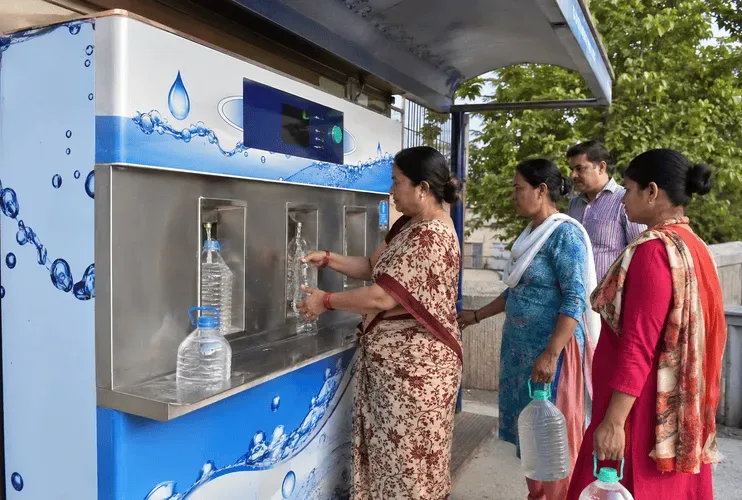
A Water ATM is a machine that dispenses purified drinking water to users. It works similarly to a bank ATM, but instead of money, it provides clean water.
People can access water through:
- Coins
- Smart cards
- Digital payment systems
- Manual operation in some locations
Most Water ATMs use purification technologies such as Reverse Osmosis (RO), ultraviolet (UV) treatment, and filtration systems to ensure the water is safe for drinking.
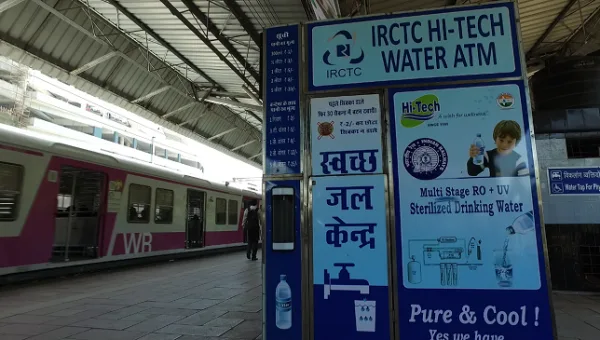
These machines are usually installed in:
- Railway stations
- Bus stands
- Markets
- Religious places
- Schools
- Hospitals
- Rural villages
- Urban slums
Water ATMs are generally operated by private companies, local communities, or government-supported organizations.
Why are Water ATMs Needed?
India faces a serious water quality problem. Although the country has many rivers and groundwater sources, much of the available water is contaminated.
Several factors highlight the need for Water ATMs:
Lack of Safe Drinking Water
A large section of the population still does not have access to safe piped drinking water. Many families depend on wells, ponds, hand pumps, or tanker water, which may not always be safe.
Water Pollution
Industrial waste, sewage, chemicals, and agricultural runoff contaminate many water sources. Polluted water can cause severe health issues.
Water-Borne Diseases
Unsafe water is responsible for many communicable diseases. Some common diseases linked to contaminated water include:
- Cholera
- Diarrhoea
- Dysentery
- Typhoid
- Hepatitis A
- Polio
These diseases affect millions of people every year and place a burden on the healthcare system.
High Cost of Household Purifiers
Many families cannot afford expensive water purification systems for their homes. Water ATMs provide purified water at a much lower cost.
Sustainable Development Goals
The United Nations aims to ensure clean and safe water for everyone by 2030. Water ATMs can play a significant role in helping India achieve this goal.
Growth of Water ATMs in India
Over the last decade, Water ATMs have expanded rapidly across the country.
The growth has been driven by:
- Government support
- Corporate Social Responsibility (CSR) projects
- Rising awareness about water quality
- Demand for affordable drinking water
Many companies have installed community water purification plants and Water ATMs as part of their social responsibility programs. These projects help create community assets while improving public health.
The increasing popularity of Water ATMs shows that people are willing to pay a small amount for reliable and safe drinking water.
Advantages of Water ATMs
1. Affordable Drinking Water
One of the biggest benefits of Water ATMs is affordability.
Packaged drinking water bottles can be expensive, especially for low-income families. Water ATMs provide purified water at a much lower price, making safe drinking water accessible to more people.
2. Easy Availability
Water ATMs are often available throughout the day and night. This ensures that people can collect water whenever they need it.
In areas where water supply is irregular, this feature becomes extremely useful.
3. Better Public Health
Clean drinking water reduces the risk of water-borne diseases.
When communities regularly use purified water, cases of diarrhoea, cholera, and other illnesses can decrease significantly.
4. Environmental Benefits
Water ATMs help reduce the use of plastic bottles.
People can bring reusable containers and refill them whenever needed. This reduces plastic waste and supports environmental conservation.
5. Improved Accessibility
Modern Water ATMs support cashless transactions and smart card systems.
This makes water collection easier and more convenient for users.
6. Support for Women
In many villages, women spend hours every day collecting water from distant sources.
Water ATMs located near homes can save time and energy, allowing women to focus on education, employment, and family care.
7. Reliable Water Quality
Water ATMs use advanced purification technologies that remove harmful contaminants from water.
This ensures that consumers receive safe and clean drinking water consistently.
Challenges Faced by Water ATMs
Despite their benefits, Water ATMs face several challenges.
1. Concerns About Privatization
Some people believe Water ATMs may lead to the privatization of water services.
Since private companies often operate these systems, concerns arise regarding pricing and access for poor communities.
2. Maintenance Issues
Water purification systems require regular maintenance.
Filters must be replaced on time, and equipment must be monitored to ensure proper functioning. Poor maintenance can affect water quality.
3. Electricity Dependence
Most Water ATMs require a continuous electricity supply.
In rural areas where power shortages are common, operating these machines can be difficult.
4. High Cost of RO Technology
Reverse Osmosis systems are effective but can be expensive.
They also waste a portion of water during the purification process, raising concerns about water conservation.
5. Groundwater Depletion
If too much groundwater is extracted from one location, local water levels may decrease.
This can worsen water scarcity in already water-stressed regions.
6. Community Awareness
Some communities may hesitate to use Water ATMs due to lack of awareness or trust in new technologies.
Public education campaigns are necessary to encourage adoption.
Government Initiatives Related to Safe Drinking Water
The Government of India has launched several programs to improve water availability and quality.
Swajal Scheme
The Swajal Scheme focuses on providing sustainable drinking water solutions in rural areas.
Key features include:
- Community ownership
- Solar-powered water supply systems
- Piped water connections
- Training for local technicians
The scheme also creates employment opportunities for rural youth.
MGNREGA for Water Conservation
The Mahatma Gandhi National Rural Employment Guarantee Act (MGNREGA) supports water conservation projects.
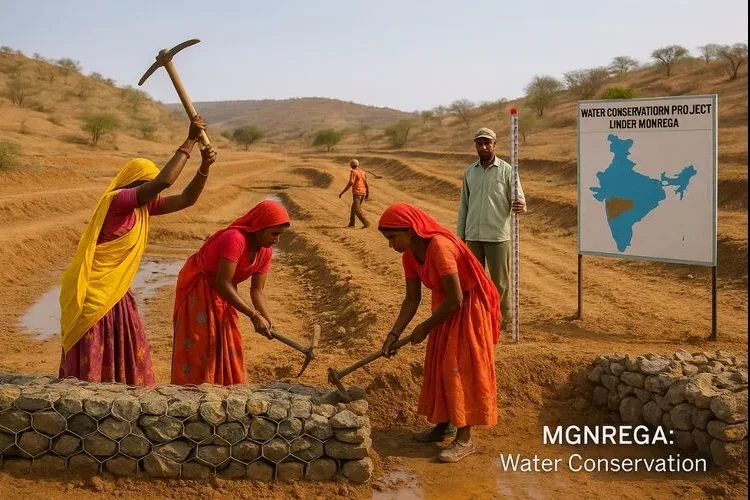
Activities include:
- Rainwater harvesting
- Pond construction
- Water storage structures
- Groundwater recharge projects
These efforts help improve water availability in rural areas.
Jal Kranti Abhiyan
This initiative promotes water conservation at the village level.
Under the Jal Gram Scheme, model villages are developed to demonstrate effective water management practices that can be replicated elsewhere.
National Water Mission
The National Water Mission aims to:
- Conserve water resources
- Reduce wastage
- Improve water use efficiency
- Promote integrated water management
One major goal is to increase water-use efficiency across sectors.
National Rural Drinking Water Programme
This program focuses on providing adequate and safe drinking water to rural households on a sustainable basis.
It aims to improve the quality and reliability of rural water supply systems.
Composite Water Management Index
Developed by the government think tank NITI Aayog, this index measures the performance of states in water resource management.
The index encourages states to improve water conservation and management practices.
Jal Shakti Ministry and Jal Jeevan Mission
The creation of the Ministry of Jal Shakti brought various water-related departments under one umbrella.
The Jal Jeevan Mission aims to provide functional household tap connections and safe drinking water to rural households across India.
The Way Forward
Water ATMs can play a valuable role in improving access to safe drinking water. However, they should not be seen as the only solution to India’s water challenges.
For long-term water security, the country must focus on:
- Water conservation
- Rainwater harvesting
- Groundwater recharge
- Efficient water use
- Pollution control
- Protection of rivers and lakes
The government must also ensure proper regulation of Water ATMs by setting standards for:
- Water quality
- Pricing
- Maintenance
- Service delivery
Access to safe drinking water is a basic human right. Therefore, governments, communities, and private organizations must work together to ensure that every citizen has access to clean and affordable water.
Conclusion
Water ATMs are an innovative and practical solution to India’s growing demand for safe drinking water. They provide affordable, accessible, and purified water to communities that may otherwise struggle to obtain it. While challenges such as maintenance, electricity supply, and groundwater management remain, Water ATMs can significantly improve public health and quality of life when implemented properly. Along with water conservation efforts and strong government policies, Water ATMs can contribute to a healthier and water-secure future for India.
FAQs on Water ATMs
1. What is a Water ATM?
A Water ATM is a machine that provides purified drinking water to people through coins, smart cards, or digital payments.
2. How do Water ATMs work?
Water ATMs use purification technologies such as Reverse Osmosis (RO), UV treatment, and filtration systems to provide safe drinking water.
3. Why are Water ATMs important in India?
They help provide affordable and safe drinking water in areas where clean water is not easily available.
4. Where are Water ATMs usually installed?
They are commonly installed at railway stations, bus stands, schools, hospitals, villages, markets, and urban slum areas.
5. What are the benefits of Water ATMs?
They offer affordable drinking water, reduce plastic waste, improve public health, and ensure easy access to clean water.
6. Do Water ATMs help reduce water-borne diseases?
Yes, by providing purified water, they help reduce diseases such as cholera, diarrhoea, typhoid, and dysentery.
7. What challenges do Water ATMs face?
Major challenges include maintenance costs, electricity requirements, groundwater depletion, and regular filter replacement.
8. Are Water ATMs environmentally friendly?
Yes, they reduce the use of plastic water bottles and encourage the use of reusable containers.