


Coral Bleaching: Causes, Effects, and Ways to Protect Coral Reefs

Coral bleaching is one of the biggest environmental problems affecting oceans across the world today. Coral reefs are often called the “rainforests of the sea” because they support a huge variety of marine life. However, rising ocean temperatures, pollution, and climate change are damaging these beautiful ecosystems at an alarming rate. In recent years, mass coral bleaching events have increased rapidly, especially in famous reef systems such as the Great Barrier Reef in Australia.
Coral reefs are very important for marine biodiversity, fishing industries, tourism, and coastal protection. Millions of people around the world depend on healthy coral reefs for food, jobs, and safety from storms. Unfortunately, many coral reefs are dying due to human activities and global warming. Understanding coral bleaching, its causes, impacts, and solutions is necessary to protect the future of oceans.

What are Corals?
Corals are tiny living organisms called polyps. These polyps live together in large groups and build coral reefs over thousands of years. Coral polyps have microscopic algae called zooxanthellae living inside their tissues. These algae and corals share a special relationship called mutualism.
The coral provides shelter and nutrients to the algae. In return, the algae produce food through photosynthesis and provide energy to the corals. The algae are also responsible for the bright and beautiful colours of coral reefs.
Corals use calcium carbonate from seawater to build hard skeletons. Over many years, these skeletons form large reef structures. Coral reefs are among the largest living structures on Earth and can even be seen from space.
Types of Corals
There are mainly two types of corals:
1. Hard Corals
Hard corals are also called stony corals or reef-building corals. These corals build strong calcium carbonate skeletons which form coral reefs. They usually grow in warm and shallow waters where sunlight is available.
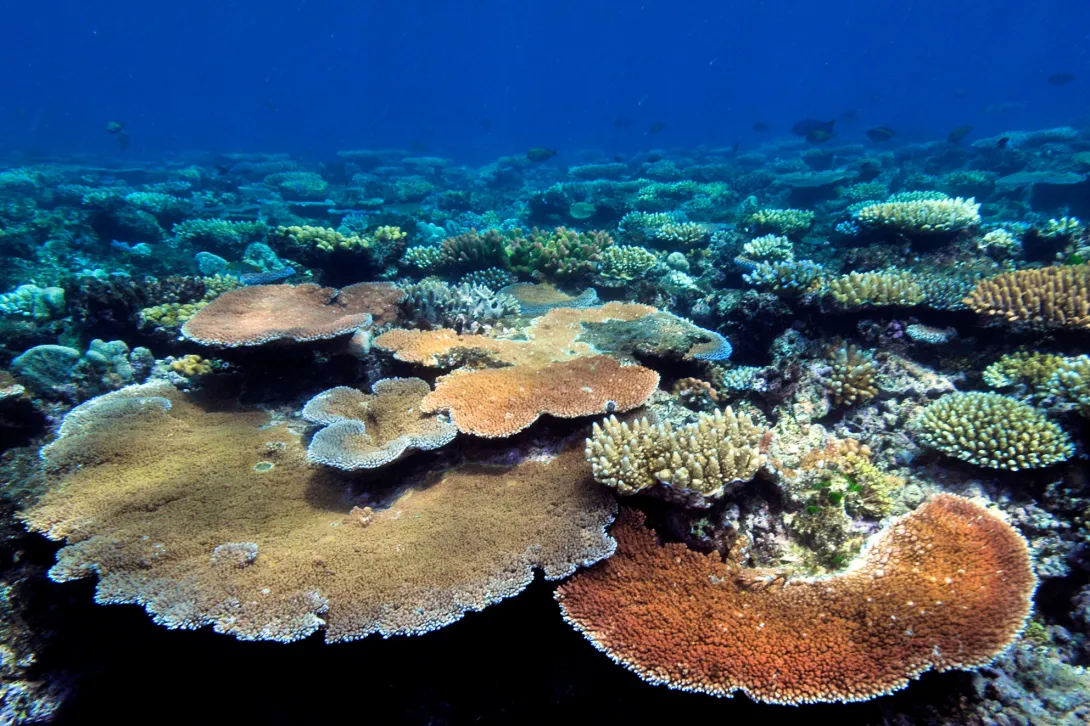
Hard corals are extremely important because they create habitats for thousands of marine species.
2. Soft Corals
Soft corals do not produce large hard skeletons like stony corals. They are softer in structure and often look like underwater plants. Soft corals can survive in deeper and colder waters where sunlight is limited.
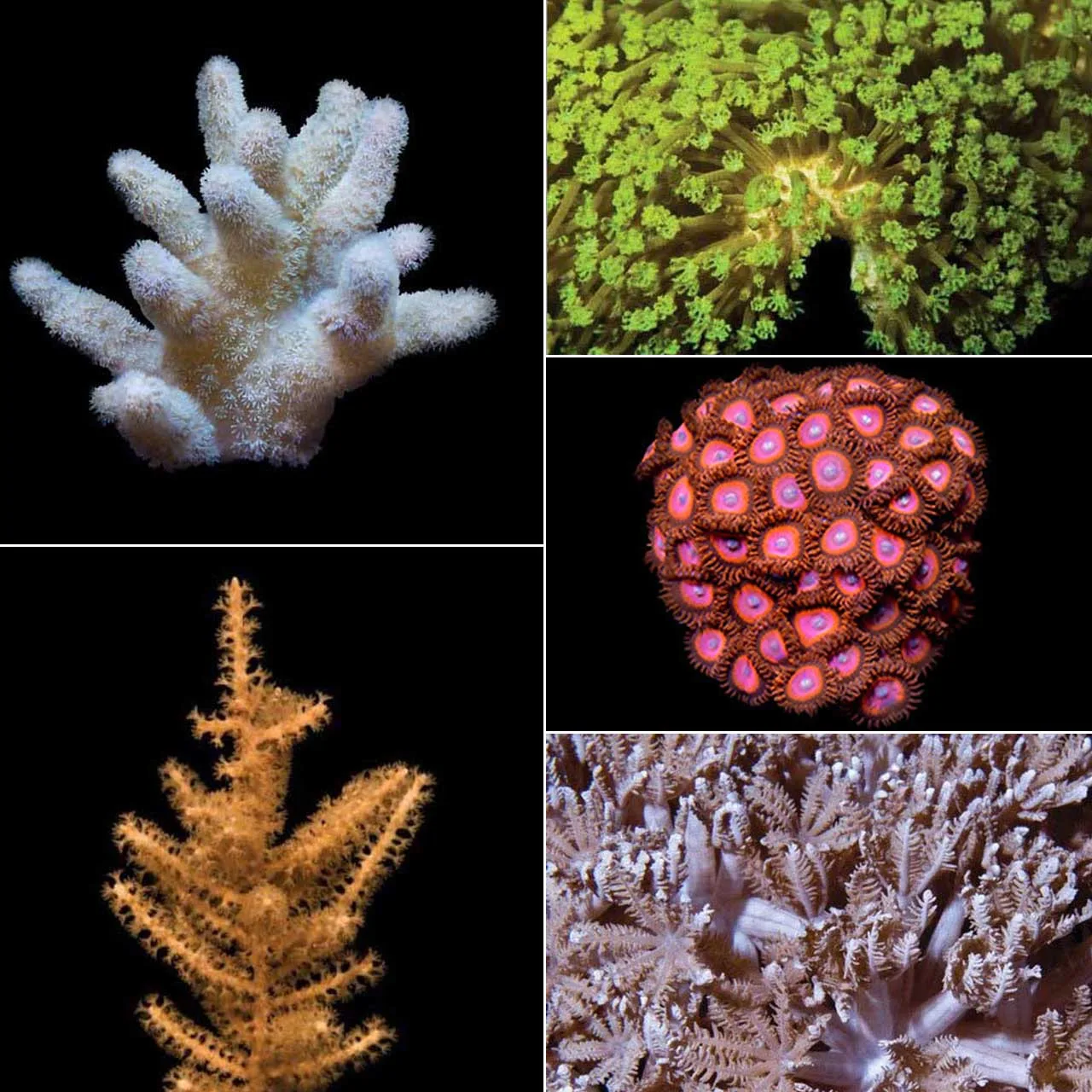
Although soft corals do not build reefs directly, they contribute to reef ecosystems and increase marine biodiversity.
What is the Great Barrier Reef?
The Great Barrier Reef is the world’s largest coral reef system. It is located in the Coral Sea near the coast of Queensland, Australia. The reef stretches over 2,300 kilometres and contains nearly 3,000 individual reefs.
The Great Barrier Reef supports:
- Around 400 species of corals
- More than 1,500 species of fish
- Thousands of marine animals and plants
- About 4,000 types of molluscs
This reef system is one of the richest marine ecosystems on Earth and was declared a UNESCO World Heritage Site in 1981.
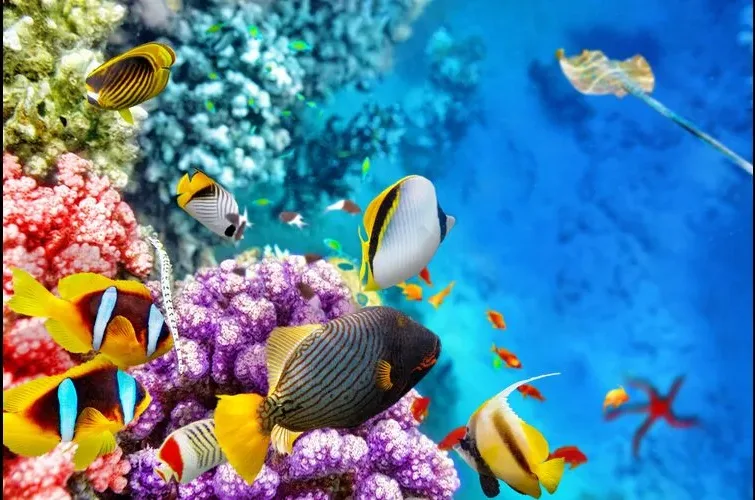
However, the Great Barrier Reef has suffered several mass coral bleaching events in recent years due to rising sea temperatures and climate change.
What is Coral Bleaching?
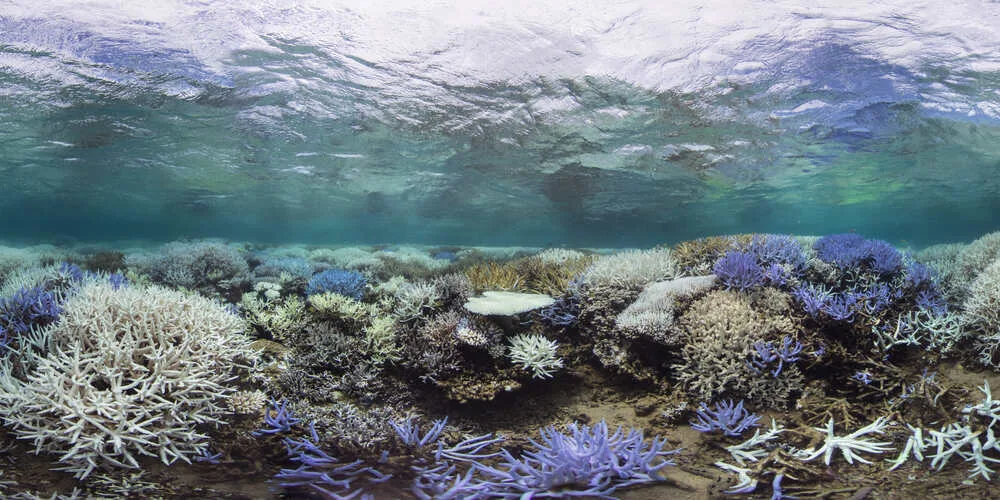
Coral bleaching happens when corals become stressed due to changes in environmental conditions such as increased temperature, pollution, or changes in light. During stress, corals expel the zooxanthellae living inside them.
When the algae leave, the corals lose their colour and turn white. This process is called coral bleaching.
The white colour seen during bleaching is actually the coral’s calcium carbonate skeleton becoming visible through transparent tissues.
Bleached corals are not immediately dead, but they become weak and vulnerable. If normal environmental conditions return quickly, the algae may return and the corals can recover. However, if stressful conditions continue for a long time, the corals eventually die.
Mass Coral Bleaching Events
Mass coral bleaching has become more common due to global warming and climate change.
First Mass Bleaching Event – 1998
The first major global bleaching event happened in 1998 during a strong El Niño weather event. Ocean temperatures increased significantly, causing around 8% of the world’s coral reefs to die.
Second Mass Bleaching Event – 2002
Another major bleaching event occurred in 2002. Coral reefs in many regions suffered damage due to unusually warm sea temperatures.
Third Major Bleaching Event – 2014 to 2017
The most damaging bleaching event took place between 2014 and 2017. Coral reefs in the Pacific Ocean, Indian Ocean, and many other regions were affected.
This event exposed more than three times as many reefs to dangerous heat stress compared to the 1998 event.
Studies later showed that around 14% of the world’s coral reefs were lost between 2009 and 2018 mainly because of bleaching.
Main Causes of Coral Bleaching
There are several reasons behind coral bleaching. Most of these causes are linked to human activities and climate change.
1. Rise in Sea Temperature
The increase in ocean temperature is the biggest cause of coral bleaching. Corals can survive only within a limited temperature range. Even a small rise in temperature can create stress.
Global warming caused by greenhouse gases has made oceans warmer than normal. Heat waves in oceans damage corals and force them to expel algae.
El Niño events also increase sea temperatures and worsen bleaching.
2. Ocean Acidification
Oceans absorb large amounts of carbon dioxide from the atmosphere. This increases the acidity of seawater.
Acidic water makes it difficult for corals to build calcium carbonate skeletons. Weak skeletons reduce coral growth and survival.
3. Pollution
Pollution from industries, agriculture, and cities harms coral reefs. Chemicals, oil spills, sewage, fertilizers, and pesticides pollute ocean water.
These pollutants increase the growth of harmful algae and reduce oxygen levels in water. Polluted water weakens corals and increases bleaching.
4. Excessive Sunlight and Ultraviolet Radiation
Changes in weather patterns can reduce cloud cover and increase sunlight exposure. Excessive ultraviolet radiation damages the photosynthetic system of zooxanthellae, leading to coral stress.
5. Sedimentation
Deforestation, mining, and coastal construction increase soil erosion. Mud and silt enter oceans and settle on coral reefs.
Sediments block sunlight and reduce photosynthesis in corals. Heavy sedimentation can completely smother coral colonies.
6. Infectious Diseases
Certain bacteria and pathogens attack corals, especially in warm water conditions. Rising sea temperatures increase the spread of coral diseases.
Diseases weaken coral tissues and damage the relationship between corals and algae.
7. Human Activities
Many human activities directly damage coral reefs, including:
- Overfishing
- Coral mining
- Coastal development
- Tourism pressure
- Plastic pollution
- Industrial waste disposal
These activities destroy reef ecosystems and make corals more vulnerable to bleaching.
Effects of Coral Bleaching
Coral bleaching has serious environmental, economic, and social impacts.
1. Loss of Marine Biodiversity
Coral reefs provide shelter, breeding grounds, and food for thousands of marine species. When reefs die, many fish and marine animals lose their habitat.
This reduces biodiversity and disrupts marine ecosystems.
2. Disturbance in Food Chains
Many marine species depend on coral reefs for survival. The death of corals affects fish populations and other marine organisms.
As a result, ocean food chains become unbalanced.
3. Economic Loss
Healthy coral reefs attract tourists, divers, and researchers from around the world. Coral bleaching reduces tourism activities and affects local businesses.
Fishing industries also suffer because fish populations decline near damaged reefs.
The global economic value of coral reefs is estimated to be trillions of dollars every year through tourism, fisheries, and coastal protection.
4. Threat to Food Security
Millions of people depend on fish as a major source of protein. Coral reef destruction reduces fish availability and affects food supply in coastal communities.
Poor fishing communities are especially affected.
5. Coastal Erosion and Flooding
Coral reefs act as natural barriers against ocean waves and storms. They protect coastlines from erosion, flooding, and cyclone damage.
When reefs die, coastal areas become more vulnerable to natural disasters.
Coral Reefs in India
India has several important coral reef regions, including:
- Gulf of Mannar
- Lakshadweep Islands
- Andaman and Nicobar Islands
- Gulf of Kachchh
These coral reefs support marine biodiversity and local livelihoods. However, Indian reefs are also facing threats from climate change, pollution, and coastal development.
Initiatives to Protect Coral Reefs
Many international and national organizations are working to conserve coral reefs.
International Initiatives
International Coral Reef Initiative (ICRI)
This initiative promotes global cooperation for coral reef conservation and sustainable management.
Global Coral Reef Monitoring Network (GCRMN)
The GCRMN monitors the condition of coral reefs worldwide and provides scientific information for conservation efforts.
Global Coral Reef Alliance (GCRA)
This organization works on reef restoration projects and awareness programs.
Global Coral Reef R&D Accelerator Platform
This platform supports research and innovation for coral reef protection.
Initiatives Taken in India
Coastal Zone Studies
India’s Ministry of Environment, Forest and Climate Change supports coral reef studies under Coastal Zone Studies programs.
Biorock Technology
The Zoological Survey of India, along with Gujarat’s forest department, is using biorock technology to restore damaged coral reefs.
This technology uses low-voltage electricity to encourage coral growth.
National Coastal Mission Programme
This programme focuses on protecting and conserving coastal ecosystems, including coral reefs.
Steps to Protect Coral Reefs
Protecting coral reefs requires cooperation between governments, industries, scientists, and ordinary people.
1. Reduce Global Warming
Climate change is the greatest threat to coral reefs. Reducing greenhouse gas emissions is essential.
Countries should promote renewable energy, reduce fossil fuel use, and encourage sustainable development.
2. Control Pollution
Industrial waste, plastics, chemicals, and sewage should not be dumped into oceans.
Proper waste treatment systems must be developed to reduce marine pollution.
3. Promote Sustainable Fishing
Overfishing damages reef ecosystems. Governments should encourage responsible fishing practices and ban destructive fishing methods.
4. Prevent Unplanned Coastal Development
Construction activities near coastlines should be carefully controlled to prevent sedimentation and habitat destruction.
5. Encourage Eco-Tourism
Tourism activities should be environmentally friendly. Tourists must avoid touching or damaging corals while diving or boating.
6. Reduce Use of Harmful Chemicals
Farmers should minimise the use of chemical fertilizers and pesticides that eventually reach oceans through rivers.
Organic farming and eco-friendly agricultural practices should be encouraged.
7. Spread Awareness
Public awareness is very important for coral conservation. Schools, colleges, media, and environmental organizations should educate people about coral reefs and their importance.
Conclusion
Coral bleaching is a serious environmental issue that threatens marine ecosystems across the world. Rising sea temperatures, pollution, ocean acidification, and human activities are destroying coral reefs at a dangerous rate.
Coral reefs are extremely valuable because they support biodiversity, protect coastlines, provide food, and support tourism and fishing industries. If coral bleaching continues unchecked, future generations may lose these beautiful and important ecosystems forever.
Protecting coral reefs requires immediate global action. Reducing pollution, controlling climate change, promoting sustainable practices, and spreading awareness can help save coral reefs from further destruction.
Every individual, community, and nation has a responsibility to protect oceans and marine life. By taking proper environmental measures today, we can ensure that coral reefs continue to survive and support life on Earth for many years to come.
FAQs on Coral Bleaching
1. What is coral bleaching?
Coral bleaching is a process in which corals turn white after losing the algae called zooxanthellae due to stress like high sea temperature.
2. What causes coral bleaching?
The main causes of coral bleaching are rising sea temperature, climate change, pollution, ocean acidification, and harmful human activities.
3. Why are coral reefs important?
Coral reefs support marine biodiversity, protect coastlines, support fishing industries, and attract tourism.
4. Can bleached corals recover?
Yes, bleached corals can recover if environmental conditions return to normal quickly and the algae return to the corals.
5. What is the Great Barrier Reef?
The Great Barrier Reef is the world’s largest coral reef system located near Queensland, Australia.
6. How does climate change affect coral reefs?
Climate change increases ocean temperatures and ocean acidification, which stress corals and lead to bleaching.
7. What are the effects of coral bleaching?
Coral bleaching causes loss of biodiversity, decline in fish populations, economic losses, and coastal erosion.
8. Which coral reefs are found in India?
Major coral reefs in India are found in Lakshadweep, Gulf of Mannar, Gulf of Kachchh, and Andaman and Nicobar Islands.
9. How can coral reefs be protected?
Coral reefs can be protected by reducing pollution, controlling global warming, promoting sustainable fishing, and spreading awareness.
10. Why are coral reefs called the rainforests of the sea?
Coral reefs are called the rainforests of the sea because they support a large variety of marine plants and animals.