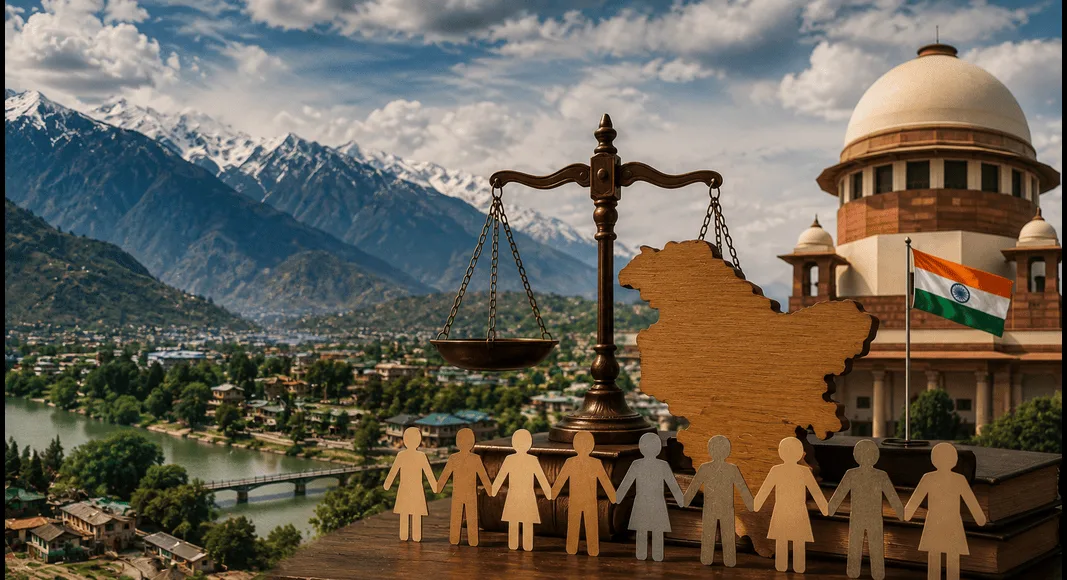
Article 35A: Meaning, History, Features, Controversy and Revocation

Article 35A was a special provision in the Constitution of India that gave special rights and privileges to the permanent residents of Jammu and Kashmir (J&K). It was added to the Constitution through a Presidential Order in 1954 under Article 370. Article 35A allowed the Jammu and Kashmir government to define who the permanent residents of the state were and what special rights they would receive.
Thank you for reading this post, don't forget to subscribe!The provision became one of the most debated constitutional issues in India. Supporters believed that Article 35A protected the identity, culture, land, and rights of the people of Jammu and Kashmir. Critics argued that it violated the principles of equality and national unity because it treated citizens from other Indian states differently.
The debate over Article 35A became more serious after several petitions were filed in the Supreme Court challenging its constitutional validity. In August 2019, the Government of India revoked the special status of Jammu and Kashmir under Article 370, which also resulted in the removal of Article 35A.
The issue of Article 35A is important because it is connected to constitutional law, federalism, citizenship rights, regional identity, national integration, and the political history of Jammu and Kashmir.
What is Article 35A?
Article 35A was a provision that gave special rights to the permanent residents of Jammu and Kashmir.
It was added to the Indian Constitution through a Presidential Order in 1954.
The article empowered the Jammu and Kashmir legislature to define:
- Who would be considered permanent residents
- What special rights and privileges they would receive
These rights were not available to people from other Indian states.
How Was Article 35A Added to the Constitution?
Article 35A was introduced through the:
Constitution (Application to Jammu and Kashmir) Order, 1954
The order was issued by the President of India under Article 370.
Unlike many constitutional amendments, Article 35A was not added through the regular amendment process under Article 368.
This later became one of the major points of controversy.
Relationship Between Article 370 and Article 35A
Article 370 and Article 35A were closely connected.
Article 370
Article 370 granted special status to Jammu and Kashmir.
It allowed the state to have:
- Its own Constitution
- Separate laws
- Special autonomy in internal matters
Article 35A
Article 35A was introduced under the powers given by Article 370.
While Article 370 gave autonomy to the state, Article 35A specifically granted special rights to permanent residents.
Special Rights Under Article 35A
Article 35A gave several privileges to permanent residents of Jammu and Kashmir.
These included rights related to:
- Property ownership
- Government jobs
- Scholarships
- Settlement rights
Right to Own Property
Only permanent residents of Jammu and Kashmir could buy or own immovable property in the state.
People from other Indian states were not allowed to purchase land or property there.
This was one of the most important features of Article 35A.
Government Employment
Certain government jobs in Jammu and Kashmir were reserved only for permanent residents.
Outsiders were not eligible for these positions.
Scholarships and Welfare Benefits
State-sponsored scholarships and welfare schemes were available mainly to permanent residents.
Permanent Settlement Rights
People from outside Jammu and Kashmir could not permanently settle in the state under the provisions of Article 35A.
Right to Property in Jammu and Kashmir
The Fundamental Right to Property had a special status in Jammu and Kashmir for a long time.
Property rights were strongly protected for permanent residents under state laws.
Definition of Permanent Residents
The Jammu and Kashmir legislature had the power to define who qualified as a permanent resident.
This definition could only be changed through a law passed with a two-thirds majority in the state assembly.
Historical Background of Article 35A
To understand Article 35A, it is important to understand the history of Jammu and Kashmir after independence.
Accession of Jammu and Kashmir to India
In 1947, India gained independence from British rule.
At that time, princely states had the choice to join India or Pakistan.
The ruler of Jammu and Kashmir was:
Maharaja Hari Singh
Initially, he wanted Jammu and Kashmir to remain independent.
However, after tribal invasions supported from Pakistan, he signed the:
Instrument of Accession
This document officially made Jammu and Kashmir a part of India.
Special Status for Jammu and Kashmir
Because of the special political situation, Jammu and Kashmir was granted a unique constitutional position.
This led to the introduction of Article 370.
The state retained significant autonomy compared to other Indian states.
Purpose Behind Article 35A
The main objective of Article 35A was to protect the interests of local residents.
Supporters believed it would help preserve:
- Local culture
- Demographic balance
- Employment opportunities
- Land ownership
- Political rights
The provision was meant to prevent outsiders from dominating the region economically or socially.
Controversy Around Article 35A
Article 35A remained controversial for many years.
Critics and supporters had very different opinions about it.
Arguments Against Article 35A
Many people believed Article 35A was unconstitutional and discriminatory.
Issue of Constitutional Procedure
One major criticism was that Article 35A was added without following the constitutional amendment process under Article 368.
What is Article 368?
Article 368 gives Parliament the power to amend the Constitution.
Critics argued that such an important change should have been approved by Parliament.
They claimed that adding Article 35A through a Presidential Order was unconstitutional.
Violation of Equality
Critics argued that Article 35A violated the principle of equality.
Article 14
Article 14 guarantees equality before the law.
Opponents said Article 35A created discrimination between:
- Residents of Jammu and Kashmir
- Citizens from other Indian states
Restrictions on Property Rights
Citizens from other states could not buy property in Jammu and Kashmir.
Critics believed this violated their constitutional rights.
Restrictions on Employment
Non-residents were denied government jobs in Jammu and Kashmir.
Opponents argued that all Indian citizens should have equal employment opportunities anywhere in the country.
National Unity Concerns
Some people argued that Article 35A went against the spirit of national unity.
They believed it created a separate identity that weakened integration with the rest of India.
Gender Discrimination Issue
There were concerns about discrimination against women.
In some situations, women who married non-residents faced complications regarding property rights for their children.
This raised questions about gender equality.
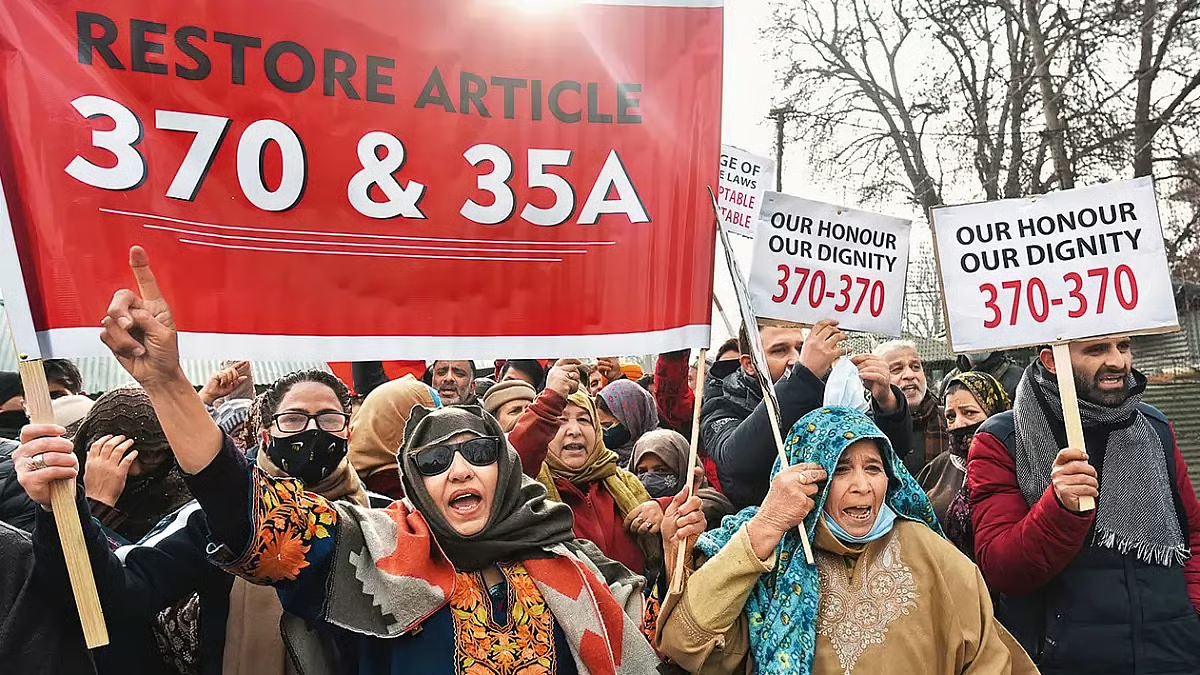
Arguments in Support of Article 35A
Supporters strongly defended Article 35A.
They believed it was necessary to protect the unique identity of Jammu and Kashmir.
Protection of Local Identity
Supporters argued that Article 35A protected:
- Culture
- Language
- Traditions
- Demographic balance
They feared that large-scale migration from outside could change the character of the region.
Historical Agreement
Supporters said Article 35A was part of the agreement between:
- Maharaja Hari Singh
- Government of India
Therefore, removing it would break the promises made during accession.
Protection of Land Rights
The provision prevented outsiders from buying land.
Supporters believed this protected local residents from economic exploitation.
Similar Laws in Other States
Supporters also pointed out that some other states have restrictions on land ownership by outsiders.
For example:
- Himachal Pradesh
- Uttarakhand
- Certain northeastern states
These protections are meant to preserve local interests.
Protection of Autonomy
Supporters argued that removing Article 35A would weaken the autonomy granted under Article 370.
They feared that the political and cultural identity of Jammu and Kashmir would be harmed.
Impact on Demography
Many people feared that removing Article 35A would allow outsiders to settle permanently in Jammu and Kashmir.
This could alter the population balance of the region.
Supreme Court Petitions
Several petitions were filed in the Supreme Court challenging Article 35A.
Petitioners argued that:
- It violated Fundamental Rights
- It was added unconstitutionally
- It discriminated against Indian citizens
At the same time, political parties and organisations in Jammu and Kashmir strongly defended the provision.
The issue became politically sensitive and emotionally charged
Revocation of Article 370 and Article 35A
A major constitutional change happened on:
5 August 2019
The Government of India revoked the special status of Jammu and Kashmir.
Presidential Order of 2019
The President issued:
Constitution (Application to Jammu and Kashmir) Order, 2019
This order effectively revoked Article 370.
Since Article 35A existed because of Article 370, it also became ineffective.
Jammu and Kashmir Reorganisation Act, 2019
The Parliament passed the:
Jammu and Kashmir Reorganisation Act, 2019
This law divided the former state into two Union Territories:
Jammu and Kashmir
- With a legislative assembly
Ladakh
- Without a legislative assembly
This was a historic political and constitutional decision.
Changes After Revocation
The removal of Article 35A brought major changes.
Property Rights
People from other Indian states can now buy property in Jammu and Kashmir under certain legal conditions.
Government Jobs
The government introduced new domicile rules for government jobs.
Uniform Application of Laws
Many central laws that were previously not applicable to Jammu and Kashmir became applicable after the revocation.
Domicile Rules in Jammu and Kashmir
In 2020, the Ministry of Home Affairs introduced new domicile rules.
These rules define who can be considered a domicile of Jammu and Kashmir.
Criteria for Domicile
A person can become a domicile if:
- They have lived in Jammu and Kashmir for 15 years, or
- They studied there for seven years and appeared in Class 10 or 12 exams there, or
- They are registered migrants
Children of certain central government employees serving in Jammu and Kashmir can also qualify.
Jammu and Kashmir Reorganisation (Adaptation of State Laws) Order, 2020
This order amended many state laws.
Major Changes
- 109 laws were amended
- 29 laws were repealed
- Domicile provisions were introduced
These changes aimed to integrate Jammu and Kashmir more closely with the Indian legal system.
Impact of Revocation of Article 35A
The revocation had both supporters and critics.
Positive Impact According to Supporters
Supporters believed the removal of Article 35A would:
- Increase national integration
- Promote investment
- Improve development
- Create employment opportunities
- Reduce separatism
They argued that equal laws for all citizens would strengthen unity.
Concerns Raised by Critics
Critics expressed several concerns.
They feared:
- Loss of local identity
- Demographic changes
- Political marginalisation
- Weakening of federalism
Some also argued that the decision was taken without adequate consultation with local leaders.
Economic Impact
Supporters hoped that opening land and investment opportunities would improve the economy.
Possible benefits included:
- Tourism development
- Industrial investment
- Infrastructure growth
- Employment generation
However, the long-term economic impact is still debated.
Social Impact
The issue deeply affected emotions and politics in Jammu and Kashmir.
Some people welcomed the changes, while others opposed them strongly.
The debate continues even today.
Constitutional Debate
The revocation of Article 35A also created an important constitutional debate.
Questions were raised about:
- Federalism
- State autonomy
- Powers of Parliament
- Constitutional procedure
These issues are still discussed by legal experts and political analysts.
Importance of Federalism
India follows a federal system where powers are divided between the Centre and states.
The Jammu and Kashmir issue highlighted tensions between:
- National integration
- Regional autonomy
Balancing these two ideas remains a major challenge in Indian democracy.
Human Rights Concerns
After the revocation, there were concerns regarding:
- Restrictions on communication
- Internet shutdowns
- Political detentions
Human rights organisations discussed the impact of these measures on civil liberties.
Security Concerns
The government argued that the decision was necessary for:
- National security
- Stability
- Better governance
Jammu and Kashmir has faced militancy and cross-border terrorism for many years.
The government believed stronger integration would help improve security.
Political Reactions
Different political parties reacted differently.
Some parties strongly supported the revocation, while others opposed it.
The issue became one of the most important political developments in recent Indian history.
International Attention
The revocation of Article 35A and Article 370 also received international attention.
Several countries and organisations discussed the issue because of its political and human rights implications.
Way Forward
The future of Jammu and Kashmir depends on peace, development, democracy, and trust-building.
Need for Development
Economic growth and employment opportunities are important for the youth of the region.
Investment in:
- Education
- Tourism
- Healthcare
- Infrastructure
can improve living conditions.
Protection of Culture
Local culture and traditions should be respected and preserved.
Development should not harm the unique identity of the people.
Democratic Participation
Strong democratic institutions and public participation are necessary for long-term peace and stability.
Ensuring Security and Human Rights
Security measures should be balanced with protection of civil liberties and human rights.
Dialogue and Cooperation
Peaceful dialogue between the government and local communities is important for building trust and stability.
Conclusion
Article 35A was one of the most important and controversial constitutional provisions related to Jammu and Kashmir. It granted special rights and privileges to permanent residents and aimed to protect the region’s identity, land, and employment opportunities.
Supporters viewed it as a safeguard for local culture and autonomy, while critics considered it discriminatory and against the principle of equality. The constitutional debate around Article 35A reflected larger questions about federalism, national integration, and citizens’ rights in India.
The revocation of Article 35A in August 2019 marked a historic turning point in Indian politics and constitutional history. The decision brought major administrative, legal, political, and social changes to Jammu and Kashmir.
Even today, the discussion around Article 35A continues in political, legal, and academic circles. Understanding this issue is important for understanding India’s Constitution, democracy, and the complex history of Jammu and Kashmir.
FAQs on Article 35A
1. What was Article 35A?
Article 35A was a provision in the Indian Constitution that gave special rights and privileges to permanent residents of Jammu and Kashmir.
2. When was Article 35A added to the Constitution?
Article 35A was added in 1954 through a Presidential Order issued under Article 370.
3. What rights were given under Article 35A?
It provided special rights related to property ownership, government jobs, scholarships, and permanent settlement in Jammu and Kashmir.
4. Who could buy property in Jammu and Kashmir under Article 35A?
Only permanent residents of Jammu and Kashmir could buy or own immovable property there.
5. What was the connection between Article 370 and Article 35A?
Article 35A was introduced through the powers granted under Article 370, which gave special status to Jammu and Kashmir.
6. Why was Article 35A controversial?
Critics argued that it violated equality, restricted rights of other Indian citizens, and was added without proper constitutional amendment.
7. When was Article 35A removed?
Article 35A was effectively removed on 5 August 2019 after the revocation of Article 370.
8. What happened after the removal of Article 35A?
Jammu and Kashmir lost its special status and was reorganised into two Union Territories: Jammu and Kashmir, and Ladakh.
9. What are domicile rules in Jammu and Kashmir?
Domicile rules define who can qualify for certain jobs and rights in Jammu and Kashmir after the revocation of Article 35A.
10. Why did supporters defend Article 35A?
Supporters believed it protected the culture, identity, land, and employment opportunities of local residents.