



Statutory, Regulatory and Quasi Judicial Bodies in India

Statutory, Regulatory and Quasi Judicial Bodies in India are important institutions that help the government run the country smoothly. These bodies perform different functions such as making rules, regulating industries, protecting citizens’ rights, solving disputes, and ensuring that laws are followed properly. Some bodies are created by the Constitution of India, while others are formed through Acts passed by Parliament or State Legislatures
Thank you for reading this post, don't forget to subscribe!What are Constitutional Bodies?
A Constitutional Body is an institution that gets its powers directly from the Constitution of India. The Constitution itself creates these bodies and clearly explains their powers, duties, composition, and responsibilities. Since they are mentioned in the Constitution, they cannot be removed without following the constitutional amendment process.
These bodies play an important role in maintaining democracy, transparency, and good governance in India.
Main Features of Constitutional Bodies
- Created directly by the Constitution of India.
- Powers and responsibilities are defined in the Constitution.
- They are permanent institutions.
- They help maintain accountability and fairness in governance.
Examples of Constitutional Bodies
| Constitutional Body | Main Function |
|---|---|
| Election Commission of India (ECI) | Conducts free and fair elections |
| Union Public Service Commission (UPSC) | Conducts recruitment for civil services |
| Finance Commission | Recommends sharing of taxes between Centre and States |
| Goods and Services Tax (GST) Council | Recommends GST-related policies |
| Comptroller and Auditor General (CAG) | Audits government accounts |
| National Commission for Scheduled Castes (NCSC) | Protects the rights of Scheduled Castes |
| National Commission for Scheduled Tribes (NCST) | Protects the rights of Scheduled Tribes |
| National Commission for Backward Classes (NCBC) | Safeguards the interests of backward classes |
Each constitutional body has a unique responsibility and works independently within its assigned area.
What are Statutory Bodies?
Statutory Bodies are organizations established through an Act passed by Parliament or a State Legislature. Unlike Constitutional Bodies, these institutions are not mentioned in the Constitution.
The government creates statutory bodies whenever there is a need to regulate a particular sector, provide public services, or perform specialized administrative work.
These bodies receive their powers from the law under which they are established.
Features of Statutory Bodies
- Created by an Act of Parliament or State Legislature.
- Their powers come from the law, not directly from the Constitution.
- They focus on specific sectors or issues.
- Parliament can modify or abolish them by changing the law.
It is important to remember that one statutory body may also perform regulatory or quasi-judicial functions depending on the law.
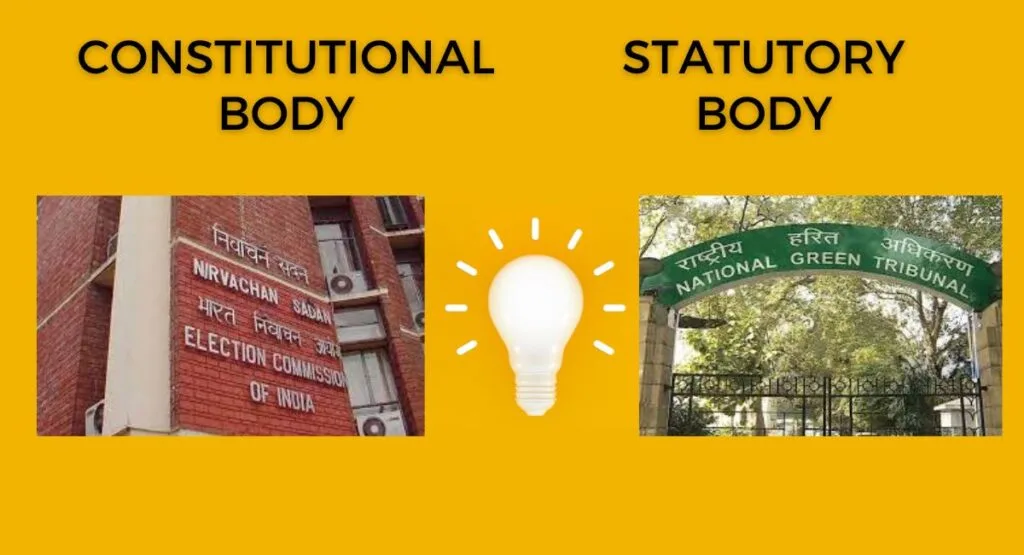
Difference Between Constitutional Bodies and Statutary Bodies
| Constitutional Bodies | Statutory Bodies |
| Created by the Constitution | Created by an Act of Parliament or State Legislature |
| Powers come from the Constitution | Powers come from a law passed by the legislature |
| Difficult to change | Can be changed through amendments to the Act |
| Permanent constitutional institutions | Created to meet specific administrative needs |
Major Statutory Bodies in India
India has many statutory bodies that perform important functions in different sectors such as banking, finance, environment, women’s welfare, and human rights.
Reserve Bank of India (RBI)
The Reserve Bank of India (RBI) is India’s central bank. It was established on 1 April 1935 under the Reserve Bank of India Act, 1934. Initially, it was privately owned, but it became a government-owned institution after nationalization in 1949.
The RBI is responsible for maintaining financial stability and managing India’s monetary system.
Securities and Exchange Board of India (SEBI)
The Securities and Exchange Board of India (SEBI) was established as a statutory body on 12 April 1992 under the SEBI Act, 1992.
Its main objective is to regulate India’s securities market and protect the interests of investors.
Functions of SEBI
- Protects investors from fraud.
- Regulates stock exchanges.
- Registers brokers and market intermediaries.
- Prevents unfair trading practices.
- Promotes transparency in the securities market.
- Regulates mutual funds and venture capital funds.
- Has powers to investigate, conduct inquiries, and impose penalties.
SEBI also performs quasi-legislative and quasi-judicial functions while regulating the capital market.
National Human Rights Commission (NHRC)
The National Human Rights Commission (NHRC) was established on 12 October 1993 under the Protection of Human Rights Act, 1993.
Its main objective is to protect the fundamental human rights of every citizen.
Functions of NHRC
- Investigates cases of human rights violations.
- Protects the rights to life, liberty, equality, and dignity.
- Recommends action against human rights violations.
- Reviews constitutional safeguards.
- Promotes awareness about human rights.
- Can use officers of Central and State Governments for investigations.
The NHRC has powers similar to those of a civil court during investigations.
National Commission for Women (NCW)
The National Commission for Women (NCW) was established in January 1992 under the National Commission for Women Act, 1990.
It works to protect and promote the rights of women in India.
Functions of NCW
- Advises the government on women’s issues.
- Investigates complaints related to violence against women.
- Examines cases of discrimination.
- Recommends legal reforms.
- Promotes gender equality.
- Creates awareness about women’s rights.
The Commission also studies issues such as dowry, workplace harassment, domestic violence, and women’s education.
National Green Tribunal (NGT)
The National Green Tribunal (NGT) was established under the National Green Tribunal Act, 2010.
It is a specialized tribunal that deals with environmental disputes.
Functions of NGT
- Handles cases related to environmental protection.
- Protects forests and natural resources.
- Decides pollution-related disputes.
- Ensures quick disposal of environmental cases.
- Works under important environmental laws such as the Water Act, Air Act, and Forest Conservation Act.
The NGT aims to settle most cases within six months of filing.
Central Vigilance Commission (CVC)
The Central Vigilance Commission (CVC) is India’s highest vigilance institution for preventing corruption in the Central Government.
It was first established in 1964 following the recommendations of the Santhanam Committee. Later, it received statutory status under the Central Vigilance Commission Act, 2003.
Functions of CVC
- Supervises vigilance administration in Central Government departments.
- Advises government organizations on anti-corruption measures.
- Monitors investigations related to corruption.
- Reviews vigilance activities of public sector organizations.
- Promotes transparency and accountability in government offices.
The CVC functions independently and is not controlled by any executive authority.
Armed Forces Tribunal (AFT)
The Armed Forces Tribunal (AFT) is a statutory body established under the Armed Forces Tribunal Act, 2007. It started functioning on 8 August 2009.
The main purpose of the AFT is to provide speedy justice to members of the Indian Armed Forces. Before the tribunal was created, military personnel had to approach regular courts, which often took a long time to decide cases.
Functions of AFT
- Hears service-related disputes of Army, Navy, and Air Force personnel.
- Decides matters related to appointments, promotions, salaries, pensions, and retirement benefits.
- Examines complaints regarding service conditions.
- Provides faster justice compared to ordinary courts.
- Reduces the workload of High Courts.
The tribunal deals with matters related to the Army Act, 1950, Navy Act, 1957, and Air Force Act, 1950.
Competition Commission of India (CCI)
The Competition Commission of India (CCI) is a statutory body established under the Competition Act, 2002. It became fully operational in March 2009.
The main objective of the CCI is to ensure fair competition in the Indian market. It prevents companies from using unfair business practices that may harm consumers or other businesses.
Functions of CCI
- Prevents anti-competitive agreements.
- Stops abuse of dominant market position.
- Regulates mergers and acquisitions.
- Promotes healthy market competition.
- Protects consumer interests.
- Encourages innovation and fair business practices.
Central Board of Film Certification (CBFC)
The Central Board of Film Certification (CBFC) is a statutory body under the Ministry of Information and Broadcasting. It works according to the Cinematograph Act, 1952.
The CBFC certifies films before they are released for public viewing in India.
What are Regulatory Bodies?
Regulatory bodies are government agencies created to regulate specific sectors of the economy or public services. Their main responsibility is to make rules, monitor activities, issue licences, and ensure that organizations follow the law.
Many regulatory bodies work independently so that they can make fair decisions without political interference.
Some regulatory bodies are also statutory bodies because they are created through Acts of Parliament.

Main Functions of Regulatory Bodies
Regulatory bodies perform several important functions.
- Make rules and regulations.
- Issue licences and approvals.
- Monitor industries and businesses.
- Conduct inspections.
- Ensure quality standards.
- Protect consumers.
- Resolve disputes.
- Take action against rule violations.
- Promote transparency and accountability.
Examples of Regulatory Bodies
Some well-known regulatory bodies in India include:
| Regulatory Body | Sector |
| NABARD | Agriculture and Rural Development |
| FSSAI | Food Safety |
| TRAI | Telecommunications |
| NPPA | Drug Pricing |
| CCI | Competition in Markets |
| CDSCO | Drug Regulation |
National Bank for Agriculture and Rural Development (NABARD)
The National Bank for Agriculture and Rural Development (NABARD) was established in 1982 under the National Bank for Agriculture and Rural Development Act, 1981.
NABARD plays an important role in the development of agriculture and rural India.
Functions of NABARD
- Promotes agricultural development.
- Supports rural infrastructure projects.
- Provides financial assistance to rural institutions.
- Supervises Cooperative Banks.
- Regulates Regional Rural Banks (RRBs).
Food Safety and Standards Authority of India (FSSAI)
The Food Safety and Standards Authority of India (FSSAI) is a statutory and regulatory body established under the Food Safety and Standards Act, 2006.
It functions under the Ministry of Health and Family Welfare.
Its main objective is to ensure that food sold in India is safe and hygienic.
Functions of FSSAI
- Frames food safety standards.
- Issues licences to food businesses.
- Monitors food quality.
- Advises the government on food safety policies.
- Conducts awareness programmes.
- Collects information on food contamination.
- Supports food testing laboratories.
- Creates a nationwide food safety information network.
Telecom Regulatory Authority of India (TRAI)
The Telecom Regulatory Authority of India (TRAI) was established on 20 February 1997 under the Telecom Regulatory Authority of India Act, 1997.

TRAI regulates India’s telecom sector, including mobile, internet, broadband, and communication services.
Functions of TRAI
- Regulates telecom services.
- Recommends telecom policies.
- Ensures quality of telecom services.
- Protects consumer interests.
- Maintains transparency in tariff plans.
- Promotes healthy competition among service providers.
- Advises the government on licensing issues.
National Pharmaceutical Pricing Authority (NPPA)
The National Pharmaceutical Pricing Authority (NPPA) was established in 1997 under the Department of Pharmaceuticals.
The authority monitors and controls the prices of essential medicines in India.
Functions of NPPA
- Implements the Drug Price Control Order (DPCO).
- Fixes prices of essential medicines.
- Monitors medicine availability.
- Prevents artificial shortages.
- Collects data on pharmaceutical production.
- Studies drug pricing trends.
- Advises the Central Government on medicine pricing.
- Handles legal matters related to drug pricing.
Issues Faced by Regulatory Bodies
Although regulatory bodies perform many important functions, they also face several challenges.
Political Interference
Sometimes political pressure affects the independent functioning of regulatory authorities. This can reduce public confidence in their decisions.
Lack of Accountability
Many regulatory bodies do not have strong systems for regular performance reviews. This can affect their efficiency.
Shortage of Experts
Many organizations face vacancies in technical and expert positions. Without qualified professionals, it becomes difficult to make informed decisions.
Overlapping Powers
Different regulatory bodies sometimes perform similar functions, leading to confusion.
For example:
- Environmental matters may involve both the Central Pollution Control Board (CPCB) and the National Green Tribunal (NGT).
- Technical education has been regulated by different authorities, creating overlapping responsibilities.
Delay in Decision Making
Some regulatory authorities take a long time to approve licences, investigate complaints, or resolve disputes. These delays can affect businesses and public services.
What are Quasi Judicial Bodies?
Statutory, Regulatory and Quasi Judicial Bodies in India perform different roles in the country’s governance. Among them, quasi judicial bodies are special institutions that have some powers similar to a court of law. However, they are not regular courts.
A quasi judicial body is created to settle disputes in a particular field. It follows legal procedures, hears both parties, examines evidence, and gives decisions based on the law. These bodies help reduce the burden on regular courts by providing faster and specialized justice.
For example, the Election Commission of India has quasi judicial powers in certain matters related to elections, even though its main function is not that of a court.
Features of Quasi Judicial Bodies
Quasi judicial bodies have several important features that make them different from ordinary courts.
1. Resolve Disputes
These bodies hear disputes related to specific sectors such as taxation, telecommunications, consumer protection, environment, and information rights.
2. Limited Jurisdiction
Unlike regular courts, quasi judicial bodies can hear only those cases that come under their specific area of responsibility.
3. Follow Legal Procedures
Although they are not courts, they follow fair legal procedures while hearing cases. Both parties get an opportunity to present their arguments.
4. Expert Members
These bodies are usually headed by experts from fields such as law, economics, finance, engineering, administration, or public policy.
5. Can Impose Penalties
Many quasi judicial bodies have the power to impose fines, issue directions, cancel licences, or order compensation.
6. Decisions Can Be Challenged
The decisions of quasi judicial bodies can generally be appealed before higher courts if any party is not satisfied.
Powers of Quasi Judicial Bodies
Quasi judicial bodies have several powers that help them perform their duties effectively.
Conduct Hearings
They hear both parties before making a decision. This ensures fairness and transparency.
Examine Evidence
They study documents, records, reports, and witness statements before deciding a case.
Apply the Law
They interpret the relevant laws and apply them to the facts of the case.
Pass Orders
They can issue legally valid orders that both parties are expected to follow.
Impose Penalties
Depending on the law, they may impose fines, compensation, or other penalties for violations.
Ensure Compliance
They monitor whether their orders are being followed and may take further action if necessary.
Major Quasi Judicial Bodies in India
India has several important quasi judicial bodies that deal with different types of disputes.
Income Tax Appellate Tribunal (ITAT)
The Income Tax Appellate Tribunal is one of the oldest quasi judicial bodies in India.
It hears appeals against the orders passed by Income Tax authorities. Both taxpayers and the Income Tax Department can approach the tribunal if they are dissatisfied with earlier decisions.

Functions of ITAT
- Hears income tax appeals.
- Reviews orders of tax authorities.
- Ensures fair tax administration.
- Provides quick resolution of tax disputes.
Telecom Disputes Settlement and Appellate Tribunal (TDSAT)
The Telecom Disputes Settlement and Appellate Tribunal (TDSAT) resolves disputes related to the telecom sector.
Its jurisdiction was later expanded to include broadcasting, airport tariff matters, and certain cyber-related issues.
Functions of TDSAT
- Resolves disputes between telecom companies.
- Hears cases involving service providers and consumers.
- Deals with broadcasting disputes.
- Examines appeals against telecom regulatory decisions.
Central Information Commission (CIC)
The Central Information Commission is the highest appellate authority under the Right to Information Act, 2005.
It helps citizens obtain information from public authorities.
Functions of CIC
- Hears appeals under the RTI Act.
- Decides complaints regarding denial of information.
- Promotes transparency in government.
- Ensures proper implementation of the Right to Information Act.
Lok Adalat
Lok Adalat is an alternative dispute resolution system that helps settle cases through mutual agreement instead of lengthy court proceedings.
It provides simple, quick, and low-cost justice.
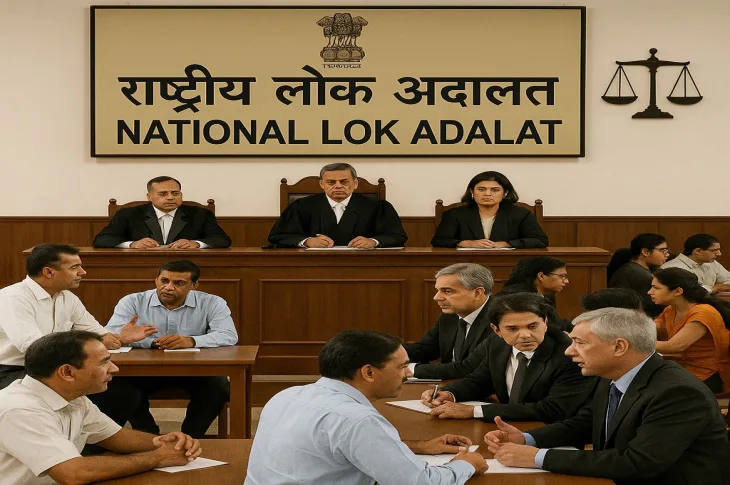
Functions of Lok Adalat
- Settles civil disputes.
- Resolves motor accident claims.
- Handles family disputes.
- Encourages compromise between parties.
- Reduces the burden on regular courts.
National Consumer Disputes Redressal Commission (NCDRC)
The National Consumer Disputes Redressal Commission protects consumer rights at the national level.
It hears complaints involving defective goods, poor services, unfair trade practices, and consumer disputes.
Functions of NCDRC
- Protects consumer rights.
- Hears appeals from State Consumer Commissions.
- Awards compensation to consumers.
- Promotes fair business practices.
National Green Tribunal (NGT)
The National Green Tribunal also performs quasi judicial functions while dealing with environmental disputes.
It hears cases related to pollution, forest conservation, biodiversity, and environmental protection.
Railway Claims Tribunal (RCT)
The Railway Claims Tribunal settles claims related to railway accidents, loss of goods, damaged luggage, and passenger compensation.
It provides a faster process than ordinary civil courts.
Difference Between Judicial and Quasi Judicial Bodies
| Basis | Judicial Bodies | Quasi Judicial Bodies |
|---|---|---|
| Meaning | Regular courts established under the Constitution or law | Specialized bodies with some court-like powers |
| Authority | Full judicial authority | Limited authority within a specific field |
| Independence | Highly independent | Limited administrative control may exist |
| Jurisdiction | Can hear a wide range of civil and criminal cases | Can hear only cases assigned under specific laws |
| Decision Making | Can create legal precedents | Apply existing laws to individual cases |
| Members | Judges appointed according to constitutional or legal provisions | Judges, legal experts, technical experts, or specialists |
| Procedure | Strict legal procedures | Comparatively simpler and faster procedures |
| Appeals | Decisions can be appealed to higher courts | Decisions are usually appealable before higher judicial forums |
Importance of Statutory, Regulatory and Quasi Judicial Bodies in India
These institutions are essential for effective governance and democratic administration.
Their importance includes:
- Protecting the rights of citizens.
- Promoting transparency and accountability.
- Regulating important sectors of the economy.
- Ensuring fair competition.
- Protecting consumers.
- Preserving the environment.
- Maintaining financial stability.
- Reducing the burden on regular courts.
- Providing faster dispute resolution.
- Supporting economic growth and good governance.
Together, these institutions strengthen India’s administrative system and improve the delivery of public services.
Frequently Asked Questions (FAQs)
1. What are statutory bodies in India?
Statutory bodies are organizations established through an Act passed by Parliament or a State Legislature. They perform specialized functions in administration, regulation, and public welfare.
2. What is the difference between constitutional and statutory bodies?
Constitutional bodies are created directly by the Constitution, while statutory bodies are created through laws passed by the legislature.
3. What are regulatory bodies?
Regulatory bodies are institutions that regulate specific sectors by making rules, issuing licences, monitoring activities, and enforcing standards.
4. What are quasi judicial bodies?
Quasi judicial bodies are organizations that have powers similar to courts for deciding disputes in specific fields but are not regular courts.
5. Is SEBI a statutory body?
Yes. SEBI is a statutory body established under the SEBI Act, 1992, and it also performs regulatory and quasi judicial functions.