Good Governance : Transparency and Public Service Reforms

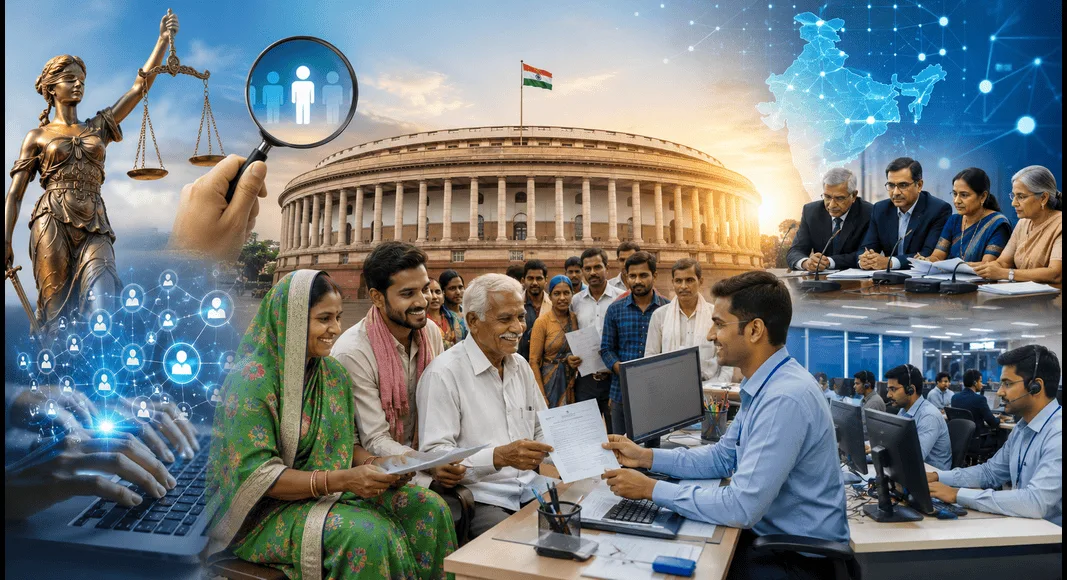
The Good Governance initiatives introduced by the Ministry of Personnel, Public Grievances and Pensions focused on making government services more transparent, accountable, citizen-friendly, and efficient. During 2019, the Government of India introduced several reforms to improve public administration, strengthen anti-corruption institutions, modernize grievance redress systems, and promote the use of digital technology in governance.
Thank you for reading this post, don't forget to subscribe!Good governance is essential for a strong democracy. It ensures that government decisions are transparent, public services are delivered fairly, corruption is reduced, and citizens receive timely responses to their concerns. The Ministry plays a key role in improving the functioning of government departments and ensuring better service delivery.
What is the Ministry of Personnel, Public Grievances and Pensions?
The Ministry of Personnel, Public Grievances and Pensions is responsible for improving the functioning of the Government of India.
Its major responsibilities include:
- Administrative reforms
- Public grievance redressal
- Personnel management
- Pension administration
- Promotion of transparency
- Anti-corruption measures
- Good governance initiatives
The ministry works to make government services faster, more transparent, and more accessible to citizens.
Good Governance Index (GGI)
One of the most important initiatives launched in 2019 was the Good Governance Index (GGI).
The index was launched on 25 December 2019, celebrated as Good Governance Day.
What is the Good Governance Index?
The Good Governance Index is a tool used to measure and compare governance performance across Indian States and Union Territories.
It evaluates how effectively governments deliver public services and implement policies.
Objectives of GGI
The main objectives are:
- Measure governance performance.
- Compare States and Union Territories.
- Encourage healthy competition.
- Improve public service delivery.
- Promote result-oriented administration.
- Help governments identify areas needing improvement.
The index encourages states to adopt better governance practices based on measurable outcomes.
Lokpal: India’s Anti-Corruption Ombudsman
Another major development in 2019 was the appointment of the Lokpal Chairperson and Members.
Justice Pinaki Chandra Ghose became the first Chairperson of the Lokpal of India.
What is Lokpal?
Lokpal is an independent statutory body established under the Lokpal and Lokayuktas Act, 2013.
Its primary role is to investigate allegations of corruption against certain public officials.
Lokpal works as an ombudsman, ensuring accountability in public administration.
History of Lokpal
The idea of Lokpal was discussed for many years before becoming law.
Some important milestones include:
- The concept was proposed in the early 1960s.
- The terms Lokpal and Lokayukta were coined by Dr. L. M. Singhvi.
- Parliament passed the Lokpal and Lokayuktas Act in 2013.
- The Act came into force in January 2014.
- The first Lokpal was appointed in 2019.
This marked an important step in strengthening anti-corruption institutions in India.
Right to Information (RTI) Amendment Act, 2019
Parliament passed the Right to Information (Amendment) Act, 2019.
The amendment changed the provisions related to:
- Tenure of the Chief Information Commissioner.
- Tenure of Information Commissioners.
- Salary and service conditions.
These matters were to be determined by the Central Government instead of being fixed in the original Act.
The amendment generated discussions about balancing administrative flexibility with the independence of information commissions.
What is the Right to Information (RTI)?
The Right to Information Act, 2005 gives every Indian citizen the legal right to request information from public authorities.
It is considered one of the strongest tools for ensuring government transparency.
The RTI Act completed 14 years in 2019.
Unlike many laws, RTI did not create a separate bureaucracy. Instead, it required government departments to become more open and share information with citizens.
Objectives of the RTI Act
The RTI Act aims to:
- Empower citizens.
- Promote transparency.
- Improve accountability.
- Reduce corruption.
- Strengthen democracy.
- Encourage citizen participation in governance.
The Act has helped millions of citizens access government records and improve accountability.
Central Information Commission (CIC)
The Central Information Commission (CIC) was established under the RTI Act in 2005.
The Commission is headed by the Chief Information Commissioner.
Functions of the CIC
The Commission:
- Hears appeals from citizens.
- Resolves RTI complaints.
- Monitors implementation of the RTI Act.
- Issues important decisions.
- Submits annual reports to the Government.
Each state also has its own State Information Commission, which performs similar functions at the state level.
Centralised Public Grievance Redress and Monitoring System (CPGRAMS)
One of India’s most important citizen service platforms is CPGRAMS.
What is CPGRAMS?
The Centralised Public Grievance Redress and Monitoring System is an online portal where citizens can submit complaints regarding government services.
It was developed by the National Informatics Centre (NIC) in collaboration with the Department of Administrative Reforms and Public Grievances (DARPG).
Benefits
- Online complaint registration.
- Faster grievance redressal.
- Digital monitoring.
- Transparency in complaint handling.
- Better coordination among departments.
Today, millions of complaints are handled through this platform every year.
Shillong Declaration
The 22nd National Conference on e-Governance was held in Shillong, Meghalaya, in August 2019.
The conference adopted the Shillong Declaration.
Purpose
The declaration provided a roadmap for improving digital governance across India.
It encouraged:
- Digital public services.
- Better use of technology.
- Citizen-centric governance.
- Innovation in administration.
- Improved service delivery.
Nagpur Resolution
Another important development in 2019 was the adoption of the Nagpur Resolution.
Its objectives included:
- Better Citizen Charters.
- Timely public services.
- Higher service standards.
- Continuous improvement.
- Citizen empowerment.
The resolution emphasized making government departments more responsive and accountable.
Importance of Transparency in Governance
Transparency builds trust between the government and citizens.
When government information is easily available:
- Corruption decreases.
- Public confidence increases.
- Better decisions are made.
- Government performance improves.
- Citizens become active participants in democracy.
Initiatives like RTI, CPGRAMS, and the Good Governance Index contribute significantly to these goals.
Digital Governance in India
The Government has increasingly adopted digital platforms to improve governance.
Digital governance offers:

- Online services.
- Faster approvals.
- Paperless administration.
- Reduced corruption.
- Better monitoring.
- Easy access to government schemes.
Digital India has further strengthened these efforts.
Developments After 2019 (2020-2025)
Several important governance reforms continued after 2019.
Expansion of CPGRAMS
The CPGRAMS portal became more user-friendly with:
- Faster grievance disposal.
- Better tracking systems.
- Department-wise monitoring.
- Improved accountability.
The Government regularly monitored complaint resolution performance.
New Good Governance Index Reports
Updated editions of the Good Governance Index were released to measure governance improvements across states and Union Territories.
The reports encouraged healthy competition among states in improving public service delivery.
Growth of Digital Governance
Government services increasingly shifted online through:
- Digital certificates.
- Online recruitment.
- E-office systems.
- Digital pension services.
- Online grievance platforms.
These initiatives reduced paperwork and improved efficiency.
RTI Continues to Promote Transparency
The RTI Act remained one of the most widely used transparency laws in India.
Citizens continued using RTI to seek information related to government decisions, expenditure, recruitment, welfare schemes, and public administration.
Pension Reforms
The Government introduced several digital initiatives for pensioners, including:
- Digital life certificates.
- Online pension processing.
- Simplified pension rules.
- Faster settlement of pension cases.
These reforms improved convenience for retired government employees.
Challenges in Good Governance
Despite significant progress, some challenges remain.
These include:
- Delays in grievance resolution.
- Digital divide in rural areas.
- Awareness about RTI rights.
- Administrative delays.
- Need for stronger accountability.
- Capacity building of government staff.
Continuous reforms and technology adoption are essential to address these issues.
Conclusion
The Good Governance initiatives demonstrated India’s commitment to building a more transparent, accountable, and citizen-friendly administration. The launch of the Good Governance Index, appointment of the first Lokpal, strengthening of grievance redress mechanisms, promotion of digital governance, and implementation of the RTI Amendment reflected important reforms in public administration.
Between 2020 and 2025, India further expanded digital governance, improved grievance redress systems, modernized pension services, and continued promoting transparency through RTI and governance reforms. As technology becomes an integral part of administration, these initiatives are helping create a more efficient government that better serves the needs of citizens while strengthening democratic values and public trust.
FAQs
1. What is Good Governance 2019?
Good Governance 2019 refers to the major reforms introduced by the Government of India to improve transparency, accountability, public service delivery, and digital governance.
2. What is the Good Governance Index (GGI)?
The Good Governance Index (GGI) is a tool launched in 2019 to measure and compare governance performance across Indian States and Union Territories based on various development indicators.
3. What is Lokpal?
Lokpal is an independent statutory body established under the Lokpal and Lokayuktas Act, 2013 to investigate corruption complaints against certain public officials.
4. What is the purpose of the Right to Information (RTI) Act?
The RTI Act, 2005 empowers citizens to seek information from public authorities, promoting transparency, accountability, and citizen participation in governance.
5. What changed in the RTI Amendment Act, 2019?
The RTI Amendment Act, 2019 allowed the Central Government to determine the tenure, salaries, allowances, and service conditions of the Chief Information Commissioner and Information Commissioners.
6. What is CPGRAMS?
CPGRAMS (Centralised Public Grievance Redress and Monitoring System) is an online platform where citizens can submit complaints related to government services and track their resolution.
7. What is the Central Information Commission (CIC)?
The Central Information Commission (CIC) is the apex body established under the RTI Act to hear appeals, resolve complaints, and ensure proper implementation of the Right to Information law.
8. What is the Shillong Declaration?
The Shillong Declaration is a roadmap adopted during the National Conference on e-Governance in 2019 to strengthen digital governance and improve citizen-centric public services.
9. What is the Nagpur Resolution?
The Nagpur Resolution focuses on improving public service delivery through updated Citizen Charters, timely grievance redressal, and better governance standards.
10. What progress was made in governance after 2019?
Between 2020 and 2025, India expanded digital governance, strengthened CPGRAMS, improved pension services, released updated Good Governance Index reports, and enhanced online public service delivery.