


Information Sharing and Transparency in Government

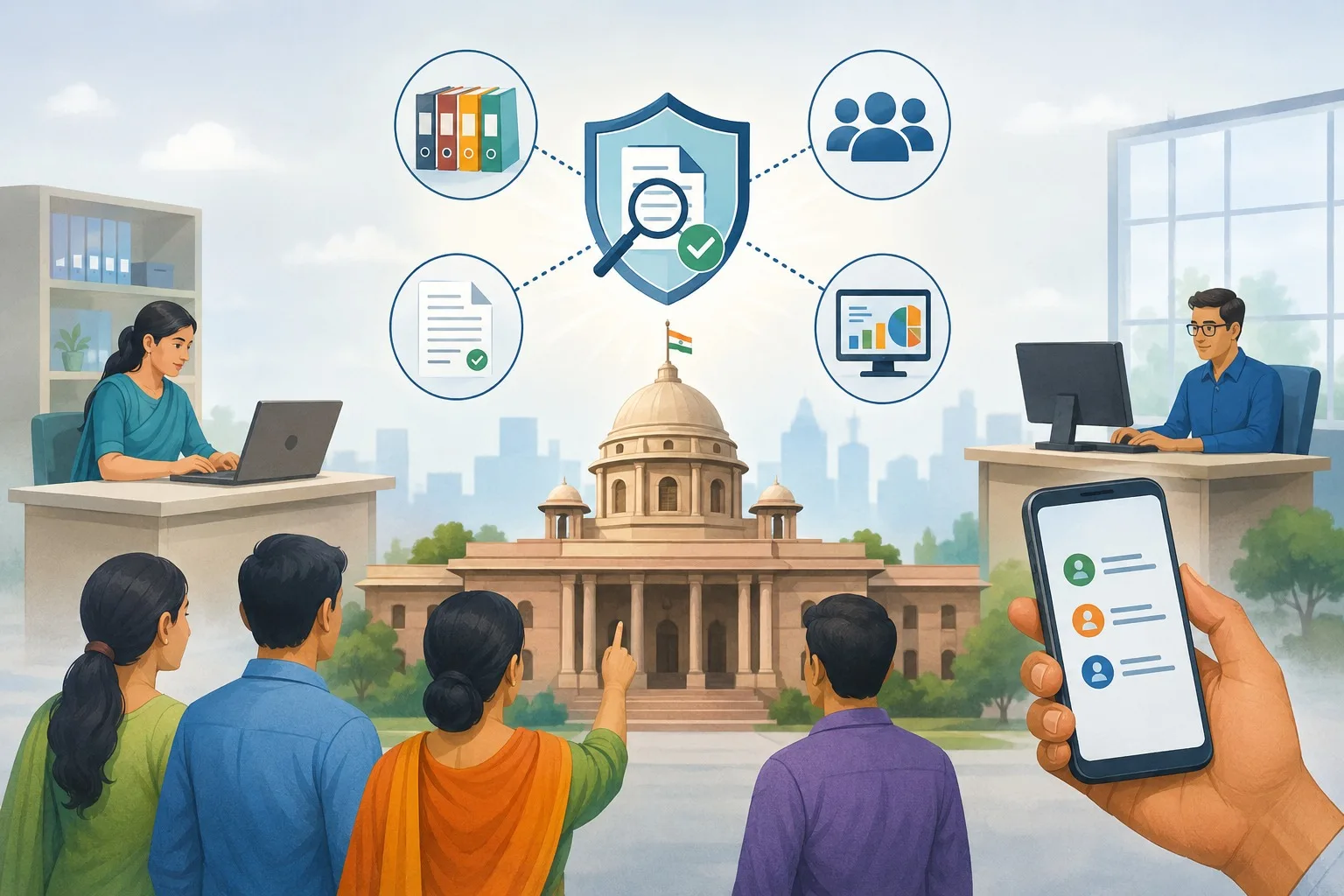
Information Sharing and Transparency in Government are very important for building trust between citizens and the government. A transparent government works openly and honestly, allowing people to know how decisions are made and how public money is used. When information is shared properly, citizens can participate more actively in democracy and hold authorities accountable.
Thank you for reading this post, don't forget to subscribe!What is Information?
Information is processed data that has meaning and value. It helps people understand facts, make decisions, and solve problems. Data alone may not be useful, but when it is organized and analyzed, it becomes information.
In today’s digital age, data is often called the “new oil” because it is highly valuable. Information created from data helps governments plan policies, improve services, and respond to public needs.
Good decision-making depends on three important qualities of information:
- Accuracy – Information should be correct.
- Completeness – Information should include all important details.
- Timeliness – Information should be available at the right time.
Without these qualities, decisions may become weak or harmful.
What is Information Sharing?
Information sharing means making useful information available to others. It is the voluntary process of exchanging information between individuals, organizations, departments, or governments.
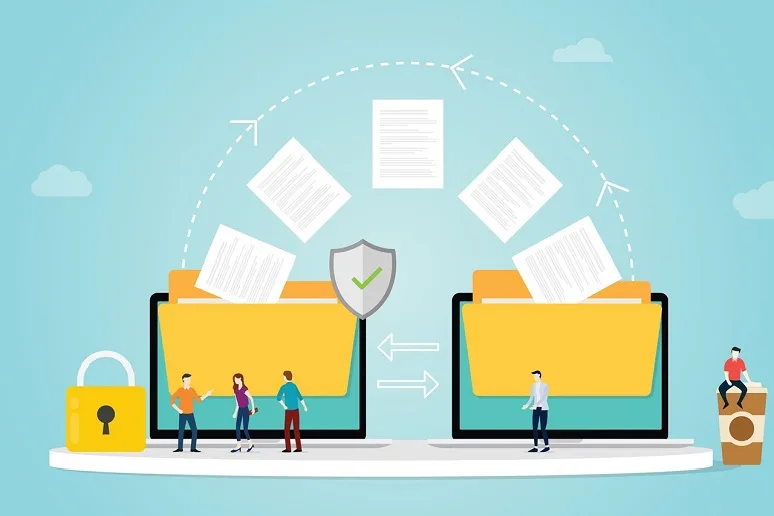
Today, information sharing has become much easier due to technology such as:
These technologies allow quick exchange of information across departments and even across countries.
In government systems, information sharing helps departments coordinate better and provide faster public services.
Importance of Transparency in Information Sharing
Transparency means openness in actions and decisions. A transparent system does not hide important information from the public unless there is a valid security reason.
Transparency in information sharing depends on:
- Relevance of information
- Accuracy of data
- Proper timing
- Honest communication
When governments share information openly, people gain confidence in public institutions.
Transparency helps in:
- Reducing corruption
- Increasing accountability
- Improving governance
- Building public trust
- Encouraging citizen participation
Modern information technology plays a major role in maintaining transparency. Digital platforms make records easier to store, access, and monitor.
Right to Information (RTI) Act
The Right to Information (RTI) is one of the most powerful tools for transparency in India.
The idea of access to information became stronger after the Universal Declaration of Human Rights (1948), which recognized every person’s right to seek and receive information.
India passed the Right to Information Act, 2005, giving citizens the legal right to request information from public authorities.
Objectives of RTI Act
The main objectives are:
- To empower citizens
- To promote transparency and accountability
- To reduce corruption
- To strengthen democracy
- To increase public participation in governance
RTI allows citizens to ask government offices about decisions, expenses, records, and public work.
Reasons for Adoption of RTI
Several reasons led to the adoption of the RTI Act:
Corruption and Scandals
Corruption in public offices created a demand for transparency. People wanted to know how government money was being used.
Public Activism
Social activists and civil society groups strongly demanded citizens’ right to access public information.
Global Influence
Many countries had already introduced information laws. International pressure also encouraged reforms.
Digital Modernization
As technology improved, storing and sharing records became easier, making transparency more practical.
Significance of RTI Act
The RTI Act brought a major change in Indian governance.
It did not create a separate large bureaucracy. Instead, existing government officers were given responsibility to provide information.
This changed government culture from secrecy to openness.
Important benefits of RTI include:
Stronger Democracy
Citizens can question authorities and participate more actively in governance.
Better Governance
Government departments work more carefully when they know records can be examined.
Protection of Weaker Sections
Poor and marginalized communities can demand information related to welfare schemes and benefits.
Reduced Corruption
Transparency reduces opportunities for misuse of power and funds.
Improved Decision-Making
When secrecy decreases, better and more responsible decisions are made.
The Information Commission acts as an important authority under RTI. It can order departments to provide information and can penalize officials who refuse without valid reason.
E-Procurement and Transparency
Government procurement involves purchasing goods and services for public work. Since large amounts of public money are involved, transparency is essential.
Central Public Procurement Portal (CPPP)
The Central Public Procurement Portal was developed by the National Informatics Centre (NIC) under the Ministry of Electronics & Information Technology, along with the Ministry of Finance.
Its main purpose is to provide a single platform for procurement information across government departments.
Benefits of CPPP:
- Easy access to tender information
- Transparent bidding process
- Better monitoring
- Reduced manual errors
- Less corruption
Government e-Marketplace (GeM)
Government e-Marketplace is India’s online procurement portal where government departments buy goods and services.
It serves Central Government, State Government, and Public Sector Undertakings (PSUs).
GeM offers:
- Online purchasing
- E-bidding
- Reverse e-auction
- Competitive pricing
This ensures the government gets better value for public money.
Vision of GeM
To transform public procurement into a system that is:

- Transparent
- Efficient
- Inclusive
Mission of GeM
- Create a unified procurement system
- Encourage reforms
- Improve efficiency
- Promote innovation
- Ensure quality products at fair prices
Core Values of GeM
- Commitment
- Responsiveness
- Accountability
- Integrity
- Social inclusion
- Innovation
These values help build trust in government procurement.
E-Governance
E-Governance means using Information and Communication Technology (ICT) to provide government services and improve administration.
This includes:
- Online services
- Digital records
- Electronic payments
- Information portals
- Citizen service platforms
E-Governance improves communication between the government and the public.
Why Governments Choose E-Governance
Modern governance has become highly complex. Governments handle huge populations, multiple services, and growing public expectations.
Major reasons for adopting e-governance include:
- Faster service delivery
- Reduced paperwork
- Better transparency
- Higher efficiency
- Easier access to information
Citizens today expect quick, simple, and digital services.
Objectives of E-Governance
Main objectives include:
Better Public Services
Citizens can access services from anywhere.
Greater Transparency
Digital records reduce hidden processes.
Citizen Empowerment
People can access information directly.
Administrative Efficiency
Government departments coordinate better.
Better Business Interaction
Industries and businesses can communicate with government more easily.
Pillars of E-Governance
E-Governance depends on four major pillars:
People
Citizens and government workers who use the system.
Process
Rules and workflows for delivering services.
Technology
Digital tools, software, and internet systems.
Resources
Money, infrastructure, and skilled workers.
All four pillars are necessary for successful implementation.
Types of Interaction in E-Governance
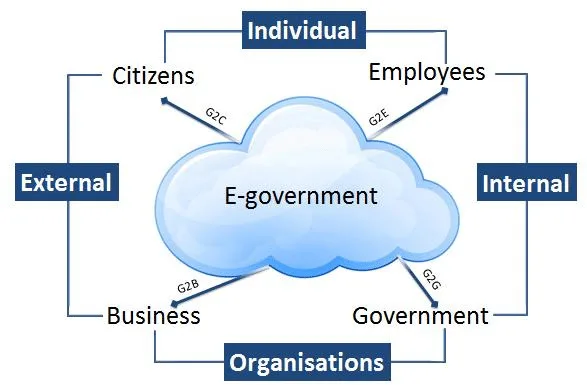
G2G (Government to Government)
Communication between government departments.
Example: Coordination between central and state governments.
G2C (Government to Citizen)
Services provided directly to citizens.
Example: Online certificates, licenses, or tax services.
G2B (Government to Business)
Interaction between government and businesses.
Example: Business registration and procurement.
G2E (Government to Employees)
Services for government workers.
Example: Payroll, leave management, and internal systems.
Significance of Information Sharing and Transparency
Information sharing and transparency are essential for effective governance.
One of the biggest challenges is removing communication barriers. When information flows freely, systems become more efficient.
Major benefits include:
- Improved quality of public services
- Better citizen participation
- Stronger accountability
- Reduced corruption
- Faster decision-making
- Increased trust in government
Citizens play a major role in maintaining transparency. Public awareness and active participation help ensure government accountability.
A government that shares information openly creates a stronger democracy and better governance for everyone.
FAQs
1. What is information sharing in government?
Information sharing in government means exchanging important data and records between departments, officials, and citizens to improve public services and decision-making.
2. Why is transparency important in government?
Transparency helps citizens understand government actions, reduces corruption, and increases accountability.
3. What is the RTI Act?
The Right to Information (RTI) Act, 2005 is a law in India that allows citizens to request information from government offices.
4. How does RTI help citizens?
RTI helps citizens access government records, question public authorities, and ensure public money is used properly.
5. What is e-governance?
E-governance is the use of digital technology and the internet to provide government services and share information efficiently.
6. What are the main pillars of e-governance?
The four pillars of e-governance are:
- People
- Process
- Technology
- Resources
7. What is GeM?
Government e-Marketplace (Government e-Marketplace) is an online platform where government departments purchase goods and services.
8. How does transparency reduce corruption?
When information is openly available, it becomes harder to hide misuse of power or public funds, which reduces corruption.