


Connect Central Asia Policy: Opportunities and Challenges

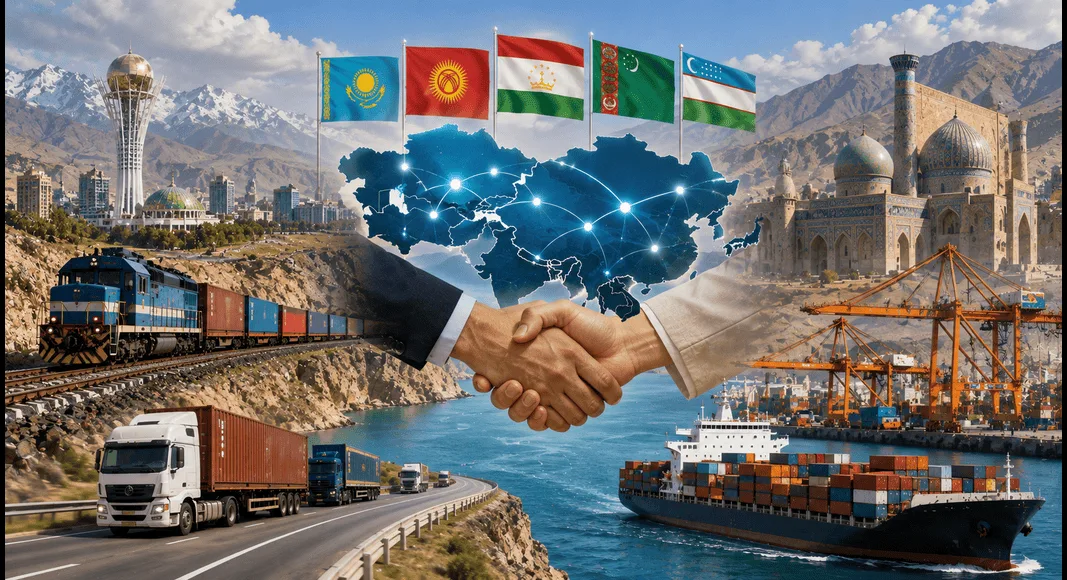
Connect Central Asia Policy is an important part of India’s foreign policy that aims to strengthen relations with the countries of Central Asia. Central Asia is located at the heart of the Asian continent and acts as a bridge between Europe and Asia. The region consists of five countries: Kazakhstan, Kyrgyzstan, Tajikistan, Turkmenistan, and Uzbekistan.
Thank you for reading this post, don't forget to subscribe!These countries became independent after the collapse of the Soviet Union in 1991. India shares centuries-old cultural, historical, religious, and trade ties with this region. Due to its strategic location, rich natural resources, and growing importance in global politics, Central Asia has become a key focus area for India.
The Connect Central Asia Policy was officially launched in 2012 to deepen cooperation in areas such as trade, connectivity, security, energy, education, culture, and regional stability.
Historical Relations Between India and Central Asia
India and Central Asia have been connected for thousands of years. Ancient trade routes linked the Indian subcontinent with Central Asia, facilitating the exchange of goods, ideas, culture, and religion.
The relationship dates back to the period of the Indus Valley Civilization, when merchants and travelers moved between these regions. Buddhism spread from India into Central Asia, while Central Asian influences also reached India through trade and migration.
For centuries, the famous Silk Route connected India with Central Asian markets. These interactions helped build strong cultural and economic relations.
However, after the Partition of India in 1947, India’s direct land access to Central Asia was lost because Pakistan occupied the route that connected India to Afghanistan and further north. As a result, India had to depend on longer and more expensive routes through Iran and the sea, which reduced economic exchanges with Central Asia.
Later, India’s close relationship with the Soviet Union helped maintain contacts with the Central Asian republics. The signing of the Indo-Soviet Treaty of Peace, Friendship and Cooperation in 1971 further strengthened these ties.
Why Central Asia Became Important for India
The strategic importance of Central Asia increased significantly after the end of the Cold War and the emergence of independent Central Asian states.
Several factors contributed to this growing importance:
1. Regional Stability
Central Asia lies close to Afghanistan and Pakistan, regions that have experienced political instability, terrorism, and conflict.
Peace and stability in Central Asia directly affect India’s security interests. A stable Central Asia can help prevent the spread of terrorism, extremism, and illegal trafficking.
2. Energy Security
India is one of the world’s largest energy consumers. Central Asia possesses huge reserves of:
- Natural gas
- Crude oil
- Uranium
- Coal
- Minerals
These resources can help India diversify its energy sources and reduce dependence on other regions.
3. Strategic Importance
Central Asia is located at the crossroads of Europe and Asia. Control and influence in this region provide access to important trade routes and markets.
4. Economic Opportunities
The growing economies of Central Asian countries create opportunities for Indian businesses in sectors such as:
- Information Technology
- Pharmaceuticals
- Education
- Healthcare
- Tourism
- Infrastructure
Northern Alliance and India’s Role
During the 1990s, Afghanistan was under severe conflict. The Taliban gradually gained control over large parts of the country.
The Northern Alliance, officially known as the United Islamic Front for the Salvation of Afghanistan, was formed in 1996 to oppose Taliban rule.
India supported the Northern Alliance because:
- It opposed terrorism.
- It wanted stability in Afghanistan.
- It aimed to prevent extremist groups from gaining influence in the region.
The Northern Alliance also received support from countries such as:
- Russia
- Iran
- Turkey
- United States
Following the American intervention in Afghanistan in 2001, the Taliban government was removed, and the Northern Alliance became part of the new Afghan administration.
This period further highlighted the strategic importance of Central Asia for India’s security interests.
Evolution of India’s Connect Central Asia Policy
Earlier, India’s engagement with Central Asia was guided by the Look North Policy. However, economic challenges and growing competition from major powers limited India’s influence in the region.
During the 2000s, Central Asia became an area of increasing geopolitical competition because of its energy resources and strategic location.
Recognizing these developments, India launched the Connect Central Asia Policy in 2012.
The policy aims to build stronger relations through cooperation in multiple fields rather than focusing only on trade or security.
Main Objectives of Connect Central Asia Policy
The policy follows a broad and comprehensive approach.
Its major objectives include:
Political Cooperation
India seeks to strengthen diplomatic relations through:
- High-level visits
- Political dialogues
- Strategic partnerships
- Cooperation in international organizations
Economic Cooperation
India aims to increase:
- Trade
- Investments
- Business partnerships
- Industrial cooperation
Strategic and Security Cooperation
Security cooperation focuses on:
- Counter-terrorism
- Combating extremism
- Intelligence sharing
- Defense cooperation
Connectivity Development
Improving connectivity is one of the most important goals because India lacks direct land access to Central Asia.
Cultural Cooperation
India seeks to revive historical and cultural links through:
- Cultural exchanges
- Academic cooperation
- Tourism promotion
- Educational partnerships
People-to-People Contacts
The policy encourages interaction between citizens through:
- Scholarships
- Student exchanges
- Tourism
- Cultural programs
The Four Pillars of Connect Central Asia Policy
The Connect Central Asia Policy is based on the concept of 4Cs:
Commerce
Promoting trade, investment, and economic cooperation.
Connectivity
Developing transportation and communication links.
Consular
Improving visa facilities and diplomatic services.
Community
Strengthening people-to-people relations and cultural ties.
These four pillars form the foundation of India’s engagement with Central Asia.
Significance of Central Asia for India
Strategic Location
Central Asia acts as a bridge connecting:
- South Asia
- West Asia
- Europe
- East Asia
This location makes it important for global trade and transportation.
Rich Natural Resources
The region possesses significant reserves of:
- Oil
- Natural gas
- Uranium
- Gold
- Copper
- Iron ore
- Cotton
These resources are essential for India’s economic growth.
Energy Security
India’s growing economy requires stable energy supplies.
To meet this demand, India has pursued projects such as the:
TAPI Pipeline
The pipeline aims to transport natural gas from Turkmenistan to India.
India has also signed civil nuclear cooperation agreements with Kazakhstan to secure uranium supplies.
Security Interests
Central Asia faces challenges such as:
- Terrorism
- Drug trafficking
- Arms smuggling
- Religious extremism
Cooperation with Central Asian countries helps India address these threats.
Military Presence
India’s only overseas military airbase is located in:
Farkhor Air Base
This base has strategic importance for India’s regional security interests.
Support in International Forums
Central Asian countries can support India’s positions in global institutions, including India’s aspiration for a permanent seat in the:
United Nations Security Council
India’s Engagement with Central Asia
India has increased its diplomatic engagement with Central Asia in recent years.
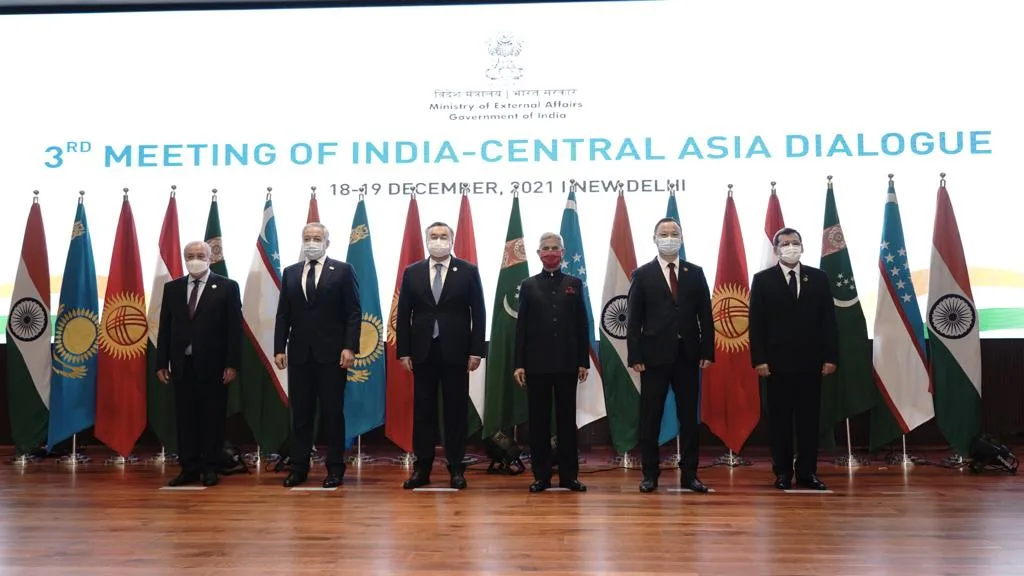
A major milestone was Prime Minister Narendra Modi visiting all five Central Asian countries in 2015.
India has also strengthened relations through participation in regional organizations such as:
- Shanghai Cooperation Organisation
- Eurasian Economic Union
- Heart of Asia Conference
Membership in these organizations provides platforms for cooperation and dialogue.
Challenges Facing India’s Connect Central Asia Policy
Despite its importance, the policy faces several obstacles.
Lack of Direct Connectivity
India does not share a border with any Central Asian country.
The absence of direct transportation routes increases costs and reduces trade efficiency.
Landlocked Nature of Central Asia
Central Asian countries are landlocked and depend heavily on neighboring countries for access to international markets.
This creates logistical difficulties for India.
Political Instability in Afghanistan
Afghanistan remains a crucial transit route between India and Central Asia.
Political instability and security concerns in Afghanistan limit connectivity options.
Difficult Relations with Pakistan
The most direct route to Central Asia passes through Pakistan.
Due to strained India-Pakistan relations, this route remains largely inaccessible.
China’s Growing Influence
China has significantly expanded its presence in Central Asia through:
Belt and Road Initiative
Massive Chinese investments have increased Beijing’s economic and political influence across the region.
Russia-China Cooperation
Growing cooperation between Russia and China in Central Asia has created a more competitive environment for India.
Regional Divisions
Central Asian countries often face:
- Border disputes
- Resource conflicts
- Ethnic tensions
As a result, they have not developed a strong regional organization similar to ASEAN, making regional engagement more complex.
Major Connectivity Projects
To overcome geographical barriers, India has invested in several connectivity initiatives.
Ashgabat Agreement
The agreement aims to establish an international transport corridor linking Central Asia with the Persian Gulf and South Asia.
International North-South Transport Corridor (INSTC)
International North-South Transport Corridor
This project seeks to connect India with Central Asia, Russia, and Europe through a multimodal transport network.
Chabahar Port
Chabahar Port
Developed with Indian assistance, Chabahar Port provides India access to Afghanistan and Central Asia without passing through Pakistan.
The port is considered one of India’s most important strategic projects.
Way Forward
The future of India’s Connect Central Asia Policy depends on sustained diplomatic, economic, and strategic engagement.
India should focus on:
- Improving regional connectivity.
- Expanding trade and investment.
- Strengthening energy partnerships.
- Enhancing defense and security cooperation.
- Promoting educational and cultural exchanges.
- Accelerating infrastructure projects.
- Increasing engagement through regional organizations.
India must also ensure the timely implementation of projects such as INSTC and Chabahar Port, which can significantly improve access to Central Asia.
A balanced foreign policy that combines strategic interests with mutual development can help India emerge as a major partner for Central Asian countries.
Conclusion
Connect Central Asia Policy represents India’s long-term vision for strengthening relations with one of the world’s most strategically important regions. Central Asia offers vast opportunities in energy, trade, security, and connectivity. At the same time, it plays a crucial role in maintaining regional stability and balancing major power influences.
Although challenges such as geographical barriers, political instability, and increasing competition from other powers remain significant, India has taken important steps to deepen its engagement with the region. Through initiatives like the Chabahar Port, INSTC, and active participation in regional organizations, India is gradually building stronger connections with Central Asia.
In the coming years, successful implementation of the Connect Central Asia Policy will help India secure its strategic interests, improve economic cooperation, and strengthen its position as a leading power in Asia.
FAQs on Connect Central Asia Policy
1. What is the Connect Central Asia Policy?
Connect Central Asia Policy is India’s strategy to strengthen political, economic, cultural, and security relations with the five Central Asian countries.
2. When was the Connect Central Asia Policy launched?
India launched the Connect Central Asia Policy in 2012.
3. Which countries are included in Central Asia?
Kazakhstan, Kyrgyzstan, Tajikistan, Turkmenistan, and Uzbekistan.
4. Why is Central Asia important for India?
The region is important for energy security, trade, connectivity, regional stability, and strategic cooperation.
5. What are the 4Cs of the Connect Central Asia Policy?
Commerce, Connectivity, Consular, and Community.
6. How does Central Asia help India’s energy security?
The region has large reserves of oil, natural gas, and uranium that can support India’s growing energy needs.
7. What role does the Shanghai Cooperation Organisation play in India’s Central Asia policy?
Shanghai Cooperation Organisation provides a platform for India to engage with Central Asian countries on security and economic issues.
8. What are the major challenges faced by India in Central Asia?
Lack of direct connectivity, regional instability, and increasing influence of other major powers.
9. How does the Chabahar Port help India connect with Central Asia?
Chabahar Port provides India access to Central Asia through Iran while bypassing Pakistan.
10. How can India improve its relations with Central Asia?
By enhancing connectivity, increasing investments, promoting trade, and strengthening cultural and people-to-people ties.