


e-Governance: Modernizing Government Services

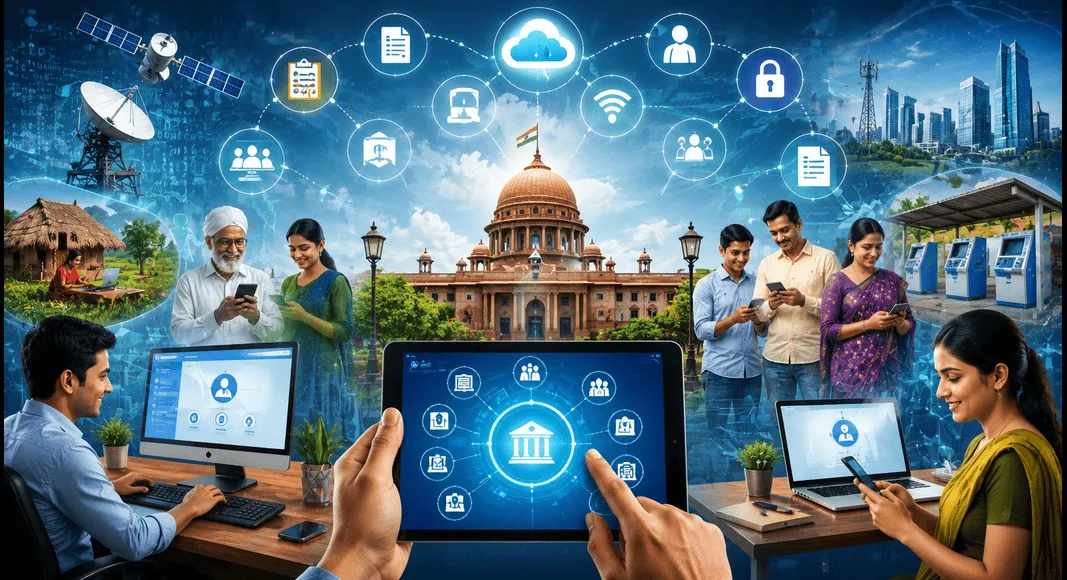
e-Governance is the use of Information and Communication Technology (ICT) by the government to provide services, share information, improve administration, and interact with citizens, businesses, and other government departments. The word “e” stands for “electronic.” Through e-Governance, governments can offer services online, reduce paperwork, improve transparency, and make governance more efficient and citizen-friendly.
Thank you for reading this post, don't forget to subscribe!In today’s digital age, e-Governance has become an important tool for improving public administration and ensuring that government services reach people quickly and effectively. India has made significant progress in this area through various initiatives under the Digital India programme and other technology-based reforms.
What is e-Governance?
e-Governance refers to the application of digital technologies, computers, the internet, and communication systems to improve government functioning and service delivery.
According to the Council of Europe, e-Governance involves the use of electronic technologies in three major areas:
- Relations between government authorities and citizens.
- Functioning of public authorities during the democratic process.
- Delivery of public services through electronic means.
The main goal of e-Governance is to make government services accessible, transparent, accountable, and efficient.
Why is e-Governance Needed?
Modern governance has become highly complex due to increasing population, rapid urbanization, and growing public expectations. Traditional methods often lead to delays, corruption, and inefficiency.
The need for e-Governance arises because:
Increasing Complexity of Governance
Governments handle huge amounts of information related to education, healthcare, taxation, welfare schemes, and public services. Technology helps manage these tasks efficiently.
Rising Expectations of Citizens
People today expect quick, transparent, and hassle-free services. e-Governance helps meet these expectations.
Need for Transparency
Digital systems reduce human intervention and make government processes more transparent.
Faster Service Delivery
Citizens can access services online without visiting government offices repeatedly.
Better Decision-Making
Technology helps governments collect, analyze, and use data for better planning and policy-making.
Different Forms of e-Governance
e-Governance has different dimensions depending on its purpose and users.
e-Administration
e-Administration focuses on modernizing government departments using technology.
Examples include:
- Computerization of records
- Digital databases
- Management Information Systems (MIS)
- Online file management
Land records, health records, and tax databases are examples of e-administration.
e-Services
e-Services aim to bring government services closer to citizens.
Examples include:
- Online bill payments
- Birth certificates
- Income certificates
- Passport services
e-Government
The combination of e-administration and e-services is often called e-government.
e-Governance
e-Governance goes beyond online services. It includes the use of technology for policy implementation, development planning, and citizen engagement.
e-Democracy
e-Democracy uses technology to increase public participation in governance.
Examples include:
- Online consultations
- Digital grievance systems
- Public feedback portals
- Online discussions and polls
History of e-Governance in India
The journey of e-Governance in India began during the 1970s.
Early Developments
The government initially focused on technology applications in:
- Defence
- Economic planning
- Census operations
- Tax administration
- Election management
Department of Electronics
The establishment of the Department of Electronics in 1970 marked an important step toward digital governance.
National Informatics Centre (NIC)
The National Informatics Centre (NIC) was established in 1977.
Its major contributions include:
- Computerization of government departments
- Development of digital networks
- Promotion of information technology in governance
NICNET
In 1987, NIC launched NICNET, a satellite-based computer network that connected government offices across the country.
This provided a strong foundation for future e-Governance initiatives.
Objectives of e-Governance
The major objectives of e-Governance are:
Better Service Delivery
Provide faster and more efficient services to citizens.
Transparency
Reduce corruption and increase openness in government processes.
Accountability
Make government departments answerable for their actions and decisions.
Citizen Empowerment
Provide information and services that help citizens make informed decisions.
Improved Coordination
Enhance communication between central, state, and local governments.
Business Facilitation
Create a business-friendly environment through digital services and simplified procedures.
Pillars of e-Governance
Successful implementation of e-Governance depends on four important pillars.
People
Citizens, government employees, and stakeholders must be willing to adopt digital systems.
Process
Government procedures should be simplified and redesigned for digital implementation.
Technology
Reliable technology infrastructure is essential.
Resources
Adequate funding, skilled manpower, and technical support are necessary.
Types of e-Governance Interactions
Government to Government (G2G)
Interaction between different government departments.
Examples:
- Information sharing between ministries
- Digital coordination between central and state governments
Government to Citizen (G2C)
Services provided directly to citizens.
Examples:
- Online certificates
- Passport applications
- Pension services
Government to Business (G2B)
Interaction between government and businesses.
Examples:
- Online tax filing
- Business registrations
- Licensing services
Government to Employee (G2E)
Services provided to government employees.
Examples:
- Salary management
- Leave applications
- Employee records
Major e-Governance Initiatives in India
India has launched several successful e-Governance projects.
Bhoomi Project
The Bhoomi Project in Karnataka digitized rural land records.
Benefits include:
- Easy access to land records
- Reduced corruption
- Faster service delivery
KHAJANE
KHAJANE is Karnataka’s treasury automation system.
It helps manage state finances efficiently.
e-Seva
e-Seva was launched in Andhra Pradesh.
It provides various government and utility services online, including bill payments.
e-Courts
The e-Courts project aims to improve judicial services through technology.
Features include:
- Online case information
- Digital records
- Faster case management
e-District
This project provides citizen-centric services at the district level.
Services include:
- Birth certificates
- Death certificates
- Income certificates
- Pension services
MCA21
The Ministry of Corporate Affairs launched MCA21 to provide online services to companies.
e-Office
The e-Office project promotes paperless administration and improves efficiency in government offices.
Digital India Programme
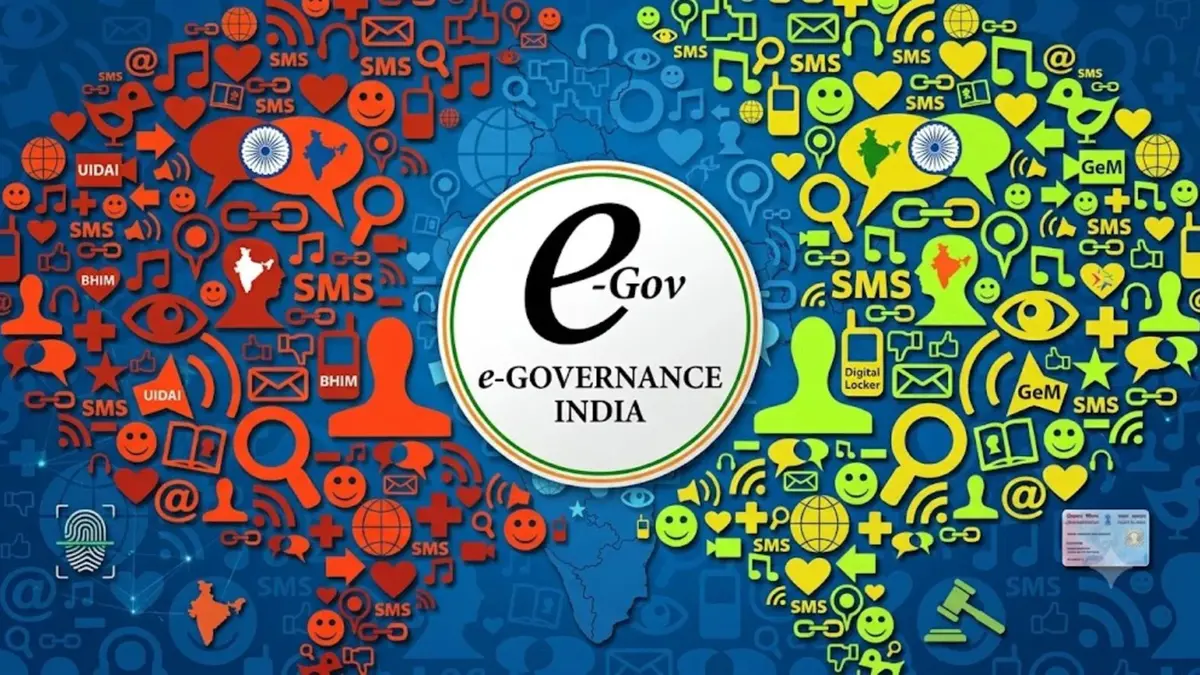
The Digital India Programme is one of the most important initiatives for promoting e-Governance.
It aims to transform India into a digitally empowered society and knowledge economy.
Vision Areas
The programme focuses on:
Digital Infrastructure
Providing digital facilities to every citizen.
Governance and Services on Demand
Ensuring government services are available online.
Digital Empowerment
Making citizens digitally literate and capable of using technology.
Important Digital India Initiatives
MyGov
MyGov allows citizens to participate in governance through discussions, polls, and suggestions.
DigiLocker
DigiLocker enables citizens to store important documents digitally and securely.
e-Hospital
This platform allows online hospital appointments and medical record management.
National Scholarship Portal (NSP)
NSP provides a single platform for scholarship applications and disbursement.
DARPAN
DARPAN helps state governments monitor projects using real-time data.
PRAGATI
PRAGATI promotes proactive governance and timely implementation of projects.
Common Services Centres (CSC 2.0)
CSCs provide digital services in rural areas.
Services include:
- Banking
- Education
- Government certificates
- Utility payments
Mobile Seva
Mobile Seva delivers government services through mobile phones.
Jeevan Pramaan
This Aadhaar-based service provides digital life certificates for pensioners.
National Centre of Geo-Informatics
It supports decision-making using Geographic Information Systems (GIS).
National e-Governance Plan (NeGP)
The National e-Governance Plan was launched to bring together various digital initiatives under one vision.
Its objectives include:
- Better service delivery
- Efficient governance
- Citizen-centric administration
Later, NeGP became an important component of the Digital India Programme.
e-Kranti: National e-Governance Plan 2.0
e-Kranti was launched in 2015 with the vision:
“Transforming e-Governance for Transforming Governance.”
It includes numerous Mission Mode Projects covering different sectors.
e-Education
- Broadband connectivity in schools
- Digital learning platforms
- Online educational content
PMGDISHA
Pradhan Mantri Gramin Digital Saksharta Abhiyaan aims to make rural citizens digitally literate.
SWAYAM
SWAYAM provides online courses from school level to postgraduate education.
e-Healthcare
Services include:
- Online consultations
- Digital medical records
- Online medicine supply
Farmers’ Services
Farmers receive:
- Market price information
- Online payments
- Agricultural support services
Financial Inclusion
Digital banking and Micro-ATMs improve access to financial services.
Justice Sector
Technology integration in:
- Courts
- Police
- Jails
- Prosecution systems
Cyber Security
National Cyber Security mechanisms help create a secure digital environment.
Benefits of e-Governance
Enhanced Transparency
Digital records reduce corruption and increase openness.
Greater Accountability
Government departments become more responsible and answerable.
Faster Service Delivery
Citizens receive services quickly without unnecessary delays.
Reduced Paperwork
Digital systems reduce the use of physical documents.
Improved Efficiency
Government departments can work more effectively.
Better Citizen Satisfaction
People can access services from their homes.
Economic Development
Digital governance supports business growth and investment.
Wider Reach
Government services can reach remote and rural areas.
Challenges of e-Governance
Despite significant progress, several challenges remain.
Infrastructure Problems
Many rural areas still face:
- Poor internet connectivity
- Unreliable electricity supply
High Costs
Developing and maintaining digital infrastructure requires substantial investment.
Privacy and Security Concerns
Data breaches and cyberattacks can threaten public trust.
Strong cybersecurity measures are essential.
Digital Divide
Not everyone has equal access to digital technologies.
The divide exists between:
- Urban and rural populations
- Rich and poor citizens
- Educated and less educated groups
Lack of Digital Literacy
Many people still lack the skills needed to use online services effectively.
Resistance to Change
Some government employees and citizens may be reluctant to adopt new technologies.
Suggestions for Improving e-Governance
Strengthen Digital Infrastructure
Expand broadband and internet connectivity across the country.
Improve Cyber Security
Implement strong security systems to protect citizen data.
Promote Digital Literacy
Train citizens and government employees to use digital services.
Encourage Regional Languages
Government portals should be available in local languages to increase accessibility.
Use Cloud Computing
Cloud technologies can improve efficiency and reduce costs.
Enhance Capacity Building
Regular training programs should be organized for officials and stakeholders.
Focus on Rural Areas
Special attention should be given to rural regions where digital adoption remains low.
Future of e-Governance in India
India is moving rapidly toward digital governance. Emerging technologies such as Artificial Intelligence (AI), Big Data, Blockchain, Cloud Computing, and 5G networks will further strengthen e-Governance systems.
With increasing internet penetration and digital literacy, government services are becoming more accessible than ever before. Future e-Governance initiatives are expected to focus on smart governance, real-time service delivery, and citizen-centric administration.
Conclusion
e-Governance has transformed the way government services are delivered in India. It has improved transparency, accountability, efficiency, and citizen participation. Initiatives such as Digital India, DigiLocker, e-Courts, CSCs, and e-Kranti have made governance more accessible and responsive.
However, challenges such as digital divide, cybersecurity risks, lack of infrastructure, and digital illiteracy still need attention. With continued investment in technology, better infrastructure, and increased public awareness, e-Governance can play a major role in achieving good governance and inclusive development in India. It is not just a technological reform but a powerful tool for building a transparent, efficient, and citizen-friendly government.
FAQs About e-Governance
1. What is e-Governance?
e-Governance is the use of Information and Communication Technology (ICT) by the government to provide services, share information, and improve administration.
2. Why is e-Governance important?
It improves transparency, accountability, efficiency, and accessibility of government services for citizens.
3. When did e-Governance start in India?
The foundation of e-Governance in India began in the 1970s with the establishment of the Department of Electronics and later the National Informatics Centre (NIC).
4. What are the main objectives of e-Governance?
The main objectives are better service delivery, transparency, accountability, citizen empowerment, and efficient administration.
5. What are the four pillars of e-Governance?
The four pillars are People, Process, Technology, and Resources.
6. What is the Digital India Programme?
Digital India is a government initiative launched to transform India into a digitally empowered society and knowledge-based economy.
7. What is DigiLocker?
DigiLocker is a digital platform that allows citizens to securely store and access important documents online.
8. What is the role of Common Services Centres (CSCs)?
CSCs provide digital government, financial, educational, and utility services to people, especially in rural areas.
9. What are the major challenges of e-Governance?
Key challenges include poor infrastructure, digital divide, cybersecurity risks, high implementation costs, and lack of digital literacy.
10. How does e-Governance benefit citizens?
It saves time, reduces paperwork, improves access to services, increases transparency, and minimizes corruption.