



Intellectual Property Rights (IPR): Importance, Types, National IPR Policy and Challenges in India

Intellectual Property Rights (IPR) are legal rights given to people for their original creations and inventions. These creations can include books, songs, paintings, scientific discoveries, software, logos, trademarks, and new technologies. IPR gives creators exclusive rights to use, sell, or benefit from their work for a specific period.
In today’s knowledge-based economy, Intellectual Property Rights play a very important role in encouraging creativity, innovation, and economic growth. They help inventors, writers, artists, and businesses protect their ideas from being copied without permission.

What are Intellectual Property Rights?
Intellectual Property Rights are rights provided to individuals or organizations over the creations of their minds. These rights allow creators to control how their creations are used and help them earn rewards for their efforts.
The concept of intellectual property is recognized internationally. Article 27 of the Universal Declaration of Human Rights states that every creator has the right to benefit from the protection of their scientific, literary, or artistic work.
The importance of intellectual property was first recognized globally through:
- Paris Convention for the Protection of Industrial Property (1883)
- Berne Convention for the Protection of Literary and Artistic Works (1886)
Today, these international agreements are managed by the World Intellectual Property Organization (WIPO).
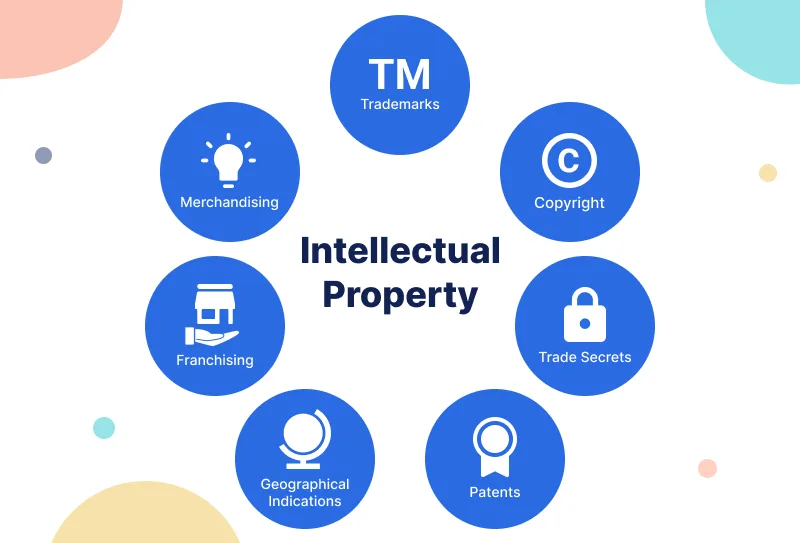
Main Types of Intellectual Property Rights
Intellectual Property Rights are generally divided into two major categories.
1. Copyright and Related Rights
Copyright protects literary, artistic, and creative works.
Examples include:
- Books and articles
- Music compositions
- Paintings and sculptures
- Computer software
- Films and videos
- Photographs
Copyright gives creators the legal right to control how their work is copied, distributed, or used. In many cases, copyright protection continues for at least 50 years after the creator’s death.
2. Industrial Property
Industrial property includes several forms of protection related to business and innovation.
Trademarks
A trademark is a symbol, logo, word, phrase, or design that distinguishes one company’s products from another.
Examples include company logos, brand names, and product labels.
Geographical Indications (GI)
Geographical Indications identify products that originate from a particular region and possess unique qualities because of that location.
Examples include:
- Darjeeling Tea
- Assam Tea
GI protection helps consumers identify authentic products and supports local producers.
Patents
Patents protect inventions and technological innovations. A patent gives inventors exclusive rights to manufacture, use, or sell their invention for a fixed period.
Industrial Designs
Industrial designs protect the visual appearance of products, including shape, pattern, and design.
Trade Secrets
Trade secrets protect confidential business information, formulas, manufacturing processes, and strategies that provide a competitive advantage.
Why are Intellectual Property Rights Important?
Encourages Innovation
People are more willing to invest time and money in research when they know their inventions will be protected by law.
Supports Economic Growth
Strong IPR systems encourage investment, create jobs, and promote industrial development. Many successful industries depend on intellectual property protection.
Protects Creators
Authors, artists, inventors, and researchers receive recognition and financial benefits from their work.
Promotes Creativity
When creators know their ideas are protected, they are encouraged to develop new products, services, and artistic works.
Facilitates Technology Transfer
IPR helps businesses share technologies through licensing agreements, foreign investments, and joint ventures.
Improves Ease of Doing Business
Clear intellectual property laws create confidence among investors and businesses, making the business environment more attractive.
India and Intellectual Property Rights
India is actively involved in the global intellectual property system.
The country is a member of:
- World Trade Organization (WTO)
- World Intellectual Property Organization (WIPO)
India follows the WTO’s Trade-Related Aspects of Intellectual Property Rights (TRIPS) Agreement, which sets minimum standards for intellectual property protection.
Important International Treaties Joined by India
India is a member of several important international agreements, including:
| Treaty/Convention | Purpose |
|---|---|
| Paris Convention | Protection of industrial property |
| Berne Convention | Protection of literary and artistic works |
| Patent Cooperation Treaty | International patent applications |
| Madrid Protocol | International trademark registration |
| Budapest Treaty | Patent procedures involving microorganisms |
| Marrakesh Treaty | Access to published works for visually impaired persons |
These agreements help India align its intellectual property system with global standards.
National IPR Policy 2016
The Government of India launched the National Intellectual Property Rights Policy in May 2016.

The vision of the policy is:
“Creative India; Innovative India”
The policy aims to create awareness, promote innovation, strengthen intellectual property laws, and improve the management of IPRs across the country.
The policy brings all forms of intellectual property under a single framework and encourages cooperation among different departments and agencies.
Nodal Department
The responsibility for implementing the policy was assigned to the Department for Promotion of Industry and Internal Trade (DPIIT), under the Ministry of Commerce and Industry.
CIPAM
The Cell for IPR Promotion and Management (CIPAM) was established to coordinate and monitor the implementation of the National IPR Policy.
Objectives of the National IPR Policy
1. IPR Awareness and Promotion
The policy aims to spread awareness about the social, cultural, and economic importance of intellectual property rights.
2. Generation of IPRs
It encourages researchers, entrepreneurs, and innovators to create new intellectual property.
3. Strong Legal Framework
The policy seeks to maintain effective laws that protect rights while balancing public interests.
4. Better Administration
Modernizing intellectual property offices and improving services for applicants is another key goal.
5. Commercialization of IPRs
The policy promotes converting intellectual property into commercial value and business opportunities.
6. Enforcement and Adjudication
Strengthening legal mechanisms to prevent infringement and piracy is an important objective.
7. Human Resource Development
The policy supports education, research, training, and skill development related to intellectual property.
Major Achievements Under the National IPR Policy
Improvement in Global Innovation Index
India’s ranking in the Global Innovation Index improved significantly, showing progress in innovation and intellectual property development.
Reduction in Application Backlogs
The government increased technical manpower and improved administrative systems, leading to faster processing of patent and trademark applications.
Digital Services
Electronic patent and trademark certificates are now issued automatically, making the process faster and more transparent.
Growth in Patent Filings
Patent applications have increased steadily, showing greater innovation activity across the country.
Increase in Trademark Registrations
More businesses are registering trademarks to protect their brands and products.
Reforms in Rules and Procedures
Patent and trademark rules have been simplified to make them easier for applicants.
Awareness Programs
Large-scale awareness campaigns have been conducted in schools, colleges, industries, and government institutions.
Technology and Innovation Support Centres (TISCs)
India has established Technology and Innovation Support Centres in collaboration with WIPO to assist inventors and researchers.
Challenges in India’s IPR System
Despite significant progress, several challenges remain.
Section 3(d) of the Patent Act
Section 3(d) of the Indian Patent Act prevents the granting of patents for minor modifications of existing medicines unless they show significant improvement in effectiveness.
This provision helps prevent “evergreening,” where companies extend patent protection through small changes.
However, some pharmaceutical companies argue that it discourages innovation.
Compulsory Licensing
Compulsory Licensing allows the government to permit another company to manufacture a patented product without the patent owner’s consent under specific conditions.
Such conditions include:
- National emergencies
- Extreme urgency
- Anti-competitive practices
While this provision protects public interests, some foreign investors believe it creates uncertainty for patent holders.
International Concerns
India has often faced criticism from some developed countries regarding intellectual property protection and enforcement standards.
Data Exclusivity Issues
Many multinational pharmaceutical and agrochemical companies seek stronger protection for data submitted during regulatory approval processes.
India currently does not have a separate data exclusivity law similar to some developed nations.
Copyright Piracy
Unauthorized copying and distribution of books, movies, software, and music remain challenges in many parts of the country.
Limited Awareness
Many small businesses, startups, students, and rural innovators are still unaware of the benefits of intellectual property protection.
Steps Needed for a Stronger IPR Ecosystem
Promote Innovation in Schools
Students should be encouraged to develop creative thinking and innovation from an early age.

Improve IPR Education
Educational institutions should include intellectual property awareness in their curriculum.
Faster Dispute Resolution
A strong and efficient mechanism for resolving IPR-related disputes is necessary.
Strengthen Enforcement
Authorities must take stronger action against piracy, counterfeiting, and intellectual property violations.
Support Startups and Entrepreneurs
Providing easier access to patents, trademarks, and legal support can encourage innovation.
Increase Public Awareness
More awareness campaigns should be conducted to help people understand the value of protecting intellectual property.
Encourage Research and Development
Higher investment in research and development can lead to more patents and innovative products.
India’s Future in Intellectual Property Rights
India is rapidly becoming a center for innovation, technology, and entrepreneurship. Government initiatives such as Startup India, Digital India, and Make in India depend heavily on a strong intellectual property framework.
With increasing patent filings, growing startup activity, improved digital services, and better awareness, India is moving toward becoming a knowledge-driven economy. Continued reforms, stronger enforcement, and greater public participation will help the country fully utilize the benefits of Intellectual Property Rights.
An efficient and balanced intellectual property system can support economic development, encourage innovation, protect creators, and improve the quality of life for millions of people. Intellectual Property Rights will remain a key pillar of India’s growth and competitiveness in the global economy.
FAQs on Intellectual Property Rights
What are Intellectual Property Rights (IPR)?
Intellectual Property Rights are legal rights that protect creations of the mind such as inventions, artistic works, trademarks, and designs.
What are the main types of IPR?
The main types include copyrights, patents, trademarks, geographical indications, industrial designs, and trade secrets.
Why are Intellectual Property Rights important?
They encourage innovation, protect creators, promote economic growth, and support technological development.
What is the National IPR Policy 2016?
It is India’s policy framework designed to promote creativity, innovation, awareness, and effective management of intellectual property rights.
What is a patent?
A patent is a legal right granted to an inventor that provides exclusive rights to use, manufacture, or sell an invention for a specified period.
What is a trademark?
A trademark is a symbol, logo, word, or design used to identify and distinguish a company’s products or services.
What is a Geographical Indication (GI)?
A GI identifies products that originate from a specific region and have unique qualities linked to that location.
How does IPR help startups?
IPR protects innovative ideas, attracts investors, increases business value, and provides a competitive advantage.