


Financial Literacy in India: Importance, Inclusion and Digital Banking

Financial Literacy in India is becoming very important in today’s fast-changing digital world. As banking services move online and more people use digital payments, understanding money management has become necessary for everyone. Financial literacy helps people make smart decisions about saving, spending, investing, and borrowing money. At the same time, financial inclusion ensures that every person, including poor and rural populations, can access banking and financial services.
Thank you for reading this post, don't forget to subscribe!India has made major progress in banking access through government schemes and digital banking initiatives. However, many challenges still remain, especially in rural and low-income communities.
What is Financial Literacy?
Financial literacy means having the knowledge and skills to understand how money works. It helps people make better financial decisions in daily life.
A financially literate person knows how to:
- Manage income and expenses
- Save money regularly
- Use bank accounts properly
- Avoid unnecessary debt
- Invest wisely
- Plan for future needs like education, retirement, or emergencies
Financial literacy can be learned through books, financial education programs, websites, mobile apps, and expert guidance.
According to the National Centre for Financial Education (NCFE), only about 27% of Indian adults are financially literate. This shows that a large number of people still need financial education.
Main Parts of Financial Literacy
1. Budgeting
Budgeting means planning how to spend money wisely. It helps avoid unnecessary expenses and supports savings.
2. Saving and Investing
Saving means keeping money aside for future needs. Investing means using money to earn more returns over time.
3. Credit Management
People should understand loans, interest rates, and credit cards. Good credit management prevents debt problems.
4. Financial Planning
Financial planning means setting money goals and creating a plan to achieve them.
What is Financial Inclusion?
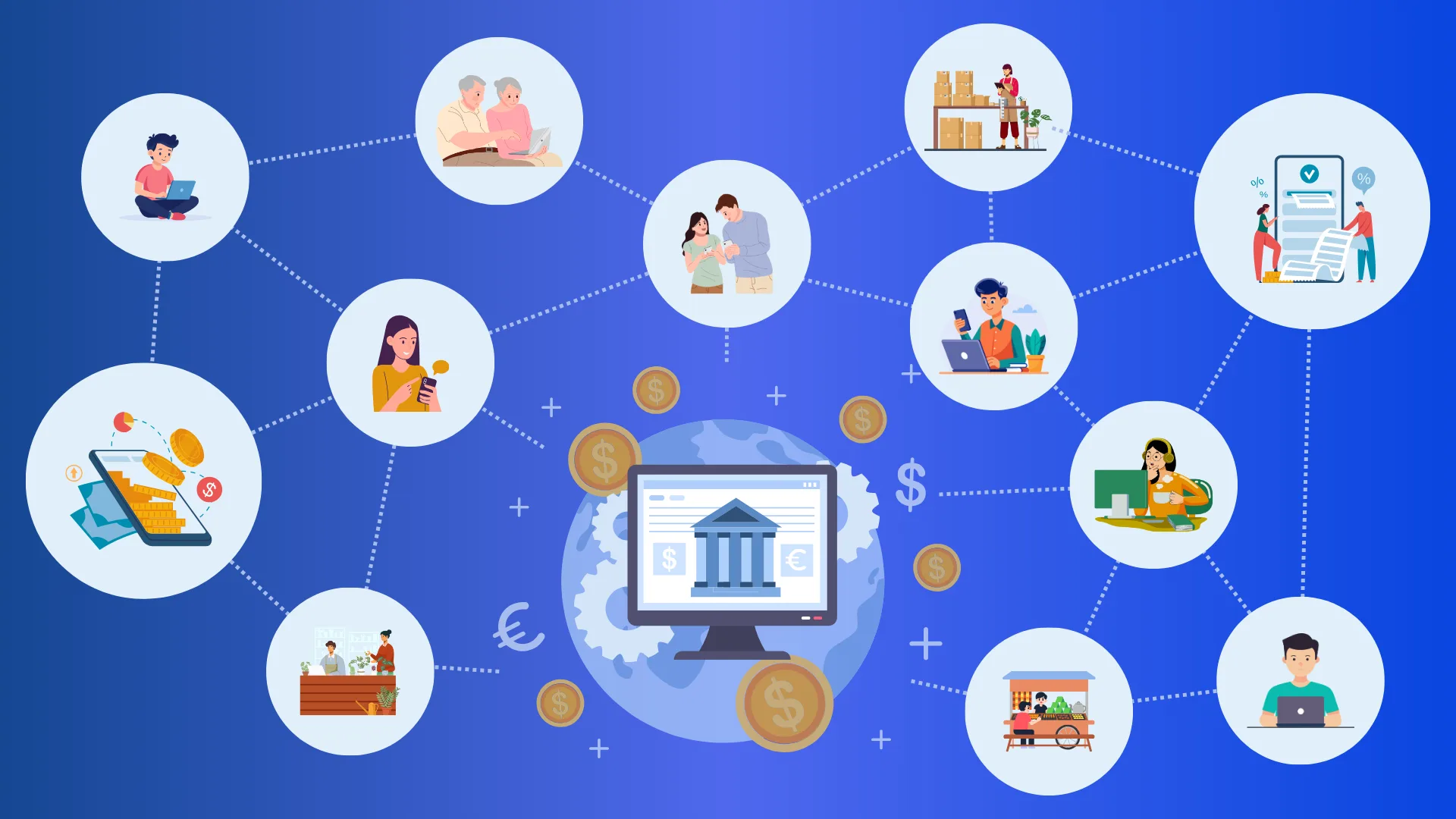
Financial inclusion means ensuring that every person has access to useful and affordable financial services such as:
- Bank accounts
- Loans
- Insurance
- Pension schemes
- Digital payments
- Savings products
This is especially important for poor families, women, farmers, daily wage workers, and small businesses.
Financial inclusion allows people to become part of the formal economy instead of depending only on cash or informal lenders.
Key Components of Financial Inclusion
| Component | Meaning |
|---|---|
| Access | Banking services should reach everyone |
| Affordability | Services should be low-cost |
| Financial Awareness | People must understand financial products |
| Usage | People should actively use services |
Importance of Financial Literacy in India
1. Promotes Financial Inclusion
Financial literacy helps people understand banking services and use them confidently. Without awareness, even having a bank account may not be useful.
2. Reduces Poverty
When people know how to save and manage money, they become less dependent on expensive loans and money lenders.
3. Reduces Inequality
Access to financial services helps poor and marginalized groups improve their economic condition.
4. Encourages Smart Decisions
Financially aware people can compare loan offers, choose better investments, and avoid fraud.
5. Improves Financial Security
Savings, insurance, and pension schemes help families during emergencies like illness, job loss, or natural disasters.
Financial Literacy Initiatives in India
India has launched many programs to improve financial awareness.
Reserve Bank of India (RBI) Initiatives
The Reserve Bank of India plays a major role in improving financial literacy.
National Centre for Financial Education (NCFE)
The National Centre for Financial Education was established in 2013.
It works with:
- Reserve Bank of India
- Securities and Exchange Board of India
- Insurance Regulatory and Development Authority of India
- Pension Fund Regulatory and Development Authority
NCFE conducts:
- Workshops
- Awareness campaigns
- Financial education programs for youth, women, and senior citizens
Its strategy for 2020–2025 follows the 5C model:
- Content
- Capacity
- Community
- Communication
- Collaboration
Financial Literacy Centres (FLCs)
RBI has set up more than 1,500 Financial Literacy Centres across India, mainly in rural areas.
These centres teach people about:
- Savings
- Loans
- Debt management
- Safe banking practices
Financial Literacy Week
Every year, RBI organizes Financial Literacy Week to spread awareness about personal finance and digital safety.
RBI Kehta Hai Campaign
This campaign educates people about:
- Safe digital banking
- Fraud prevention
- Complaint systems
Government Schemes for Financial Inclusion
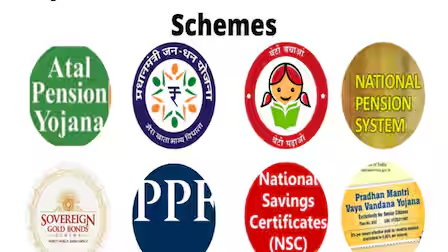
Pradhan Mantri Jan Dhan Yojana (PMJDY)
Pradhan Mantri Jan Dhan Yojana is one of India’s biggest financial inclusion schemes.
Benefits include:
- Zero-balance bank accounts
- Debit cards
- Insurance
- Pension access
This scheme has helped millions open bank accounts.
Atal Pension Yojana (APY)
Atal Pension Yojana provides guaranteed pension after retirement.
People aged 18–40 years can join. It mainly supports poor and unorganized workers.
National Pension System (NPS)
National Pension System encourages long-term retirement savings through regular contributions.
Pradhan Mantri Jeevan Jyoti Bima Yojana (PMJJBY)
Pradhan Mantri Jeevan Jyoti Bima Yojana provides affordable life insurance.
It offers financial support to families after the death of the insured person.
Pradhan Mantri Suraksha Bima Yojana (PMSBY)
Pradhan Mantri Suraksha Bima Yojana offers accident insurance at a very low premium.
It covers:
- Accidental death
- Full disability
- Partial disability
Digital Banking Initiatives in India
Digital banking has changed how people manage money.
Popular digital banking services include:
- UPI payments
- Mobile banking
- Internet banking
- QR code payments
- Digital wallets
Major digital payment platforms include:

- Google Pay
- PhonePe
- Paytm
Digital banking offers many benefits:
- Fast transactions
- Easy money transfer
- Less dependence on cash
- Better record keeping
This has become especially popular after Covid-19.
Importance of Financial Literacy for Small Businesses
Small businesses and MSMEs are important for India’s economy.
Micro, Small and Medium Enterprises contribute around 30% of India’s GDP and provide jobs to more than 11 crore people.
Financial literacy helps business owners:
- Manage cash flow
- Plan investments
- Take loans wisely
- Avoid debt problems
This improves business growth and survival.
Challenges in Financial Literacy and Inclusion
Despite progress, India still faces many challenges.
1. Low Financial Awareness
Many people still do not understand basic financial concepts.
2. Digital Divide
Rural areas often face:
- Poor internet
- Low smartphone usage
- Limited electricity
This reduces access to digital banking.
3. Unbanked Population
Even today, many adults do not have active bank accounts.
Some accounts remain unused.
4. Gender Gap
Women often face financial barriers due to:
- Lower digital access
- Limited education
- Less asset ownership
This affects financial independence.
5. Cash Dependency
India still has a strong cash-based economy.
Many workers in the informal sector prefer cash transactions.
6. Limited Credit Access
Poor families and small businesses often struggle to get affordable loans because they lack formal credit history.
7. Cyber Fraud
As digital banking grows, online fraud also increases.

Common frauds include:
- OTP scams
- Fake banking calls
- Phishing links
- UPI fraud
People need awareness to stay safe.
Way Forward
India can improve financial literacy and inclusion through stronger efforts.
Include Financial Education in Schools
Schools should teach students basic money management skills from an early age.
Conduct Awareness Programs
Special workshops should target:
- Rural communities
- Women
- Senior citizens
- Youth
Use Digital Platforms
Mobile apps and online courses can spread financial education faster.
Improve Banking Access
More banking facilities should reach remote villages and underserved areas.
Strengthen Cyber Awareness
People must learn safe digital banking practices to avoid fraud.
Financial literacy and financial inclusion together can build a stronger and more secure economy. When people understand money and can access banking services, they become financially independent. This helps families, businesses, and the entire nation grow toward a better future.
FAQs
Q1. What is financial literacy?
Financial literacy means understanding money management, savings, investments, loans, and financial planning.
Q2. Why is financial literacy important in India?
It helps people make better financial decisions, avoid fraud, and improve economic security.
Q3. What is financial inclusion?
Financial inclusion ensures that everyone has access to affordable banking and financial services.
Q4. What is PMJDY?
Pradhan Mantri Jan Dhan Yojana is a government scheme that provides bank accounts and financial services to unbanked people.
Q5. What is digital banking?
Digital banking allows people to perform banking activities online using mobile apps, UPI, or internet banking.