Western Ghats – Complete Study of India’s Biodiversity Hotspot

Western Ghats is one of the most important mountain ranges in India. It is famous for its rich biodiversity, beautiful landscapes, and strong influence on climate. The Western Ghats are also known as the Sahyadri Hills. In different regions, they have different names like Sahyadri in Maharashtra and Sahya Parvatham in Kerala.
Thank you for reading this post, don't forget to subscribe!This mountain range runs parallel to the western coast of India and is located close to the Arabian Sea. It is one of the eight major biodiversity hotspots in the world. Because of its natural importance, the Western Ghats has been declared a UNESCO World Heritage Site.
The Western Ghats is not only important for nature but also for people. It provides water, supports forests, helps agriculture, and controls climate. It is home to many plants and animals that are not found anywhere else in the world.
Geographical Features of Western Ghats
The Western Ghats extend from the Satpura Range in the north to Kanyakumari in the south. The total length of this mountain range is about 1600 km, and it covers an area of around 140,000 square kilometers.
Location and Extent
- Starts near the Satpura Range in Maharashtra
- Passes through Goa, Karnataka, Kerala, and Tamil Nadu
- Ends at Kanyakumari, the southern tip of India
- Runs parallel to the Arabian Sea at a distance of 30–50 km
Regional Divisions
- Konkan Coast – Northern part (Maharashtra)
- Kanara Coast – Central part (Karnataka)
- Malabar Coast – Southern part (Kerala)
The eastern side of the Western Ghats also has special regions:
- Desh region in Maharashtra
- Malanadu region in Karnataka
Topography and Mountain Ranges
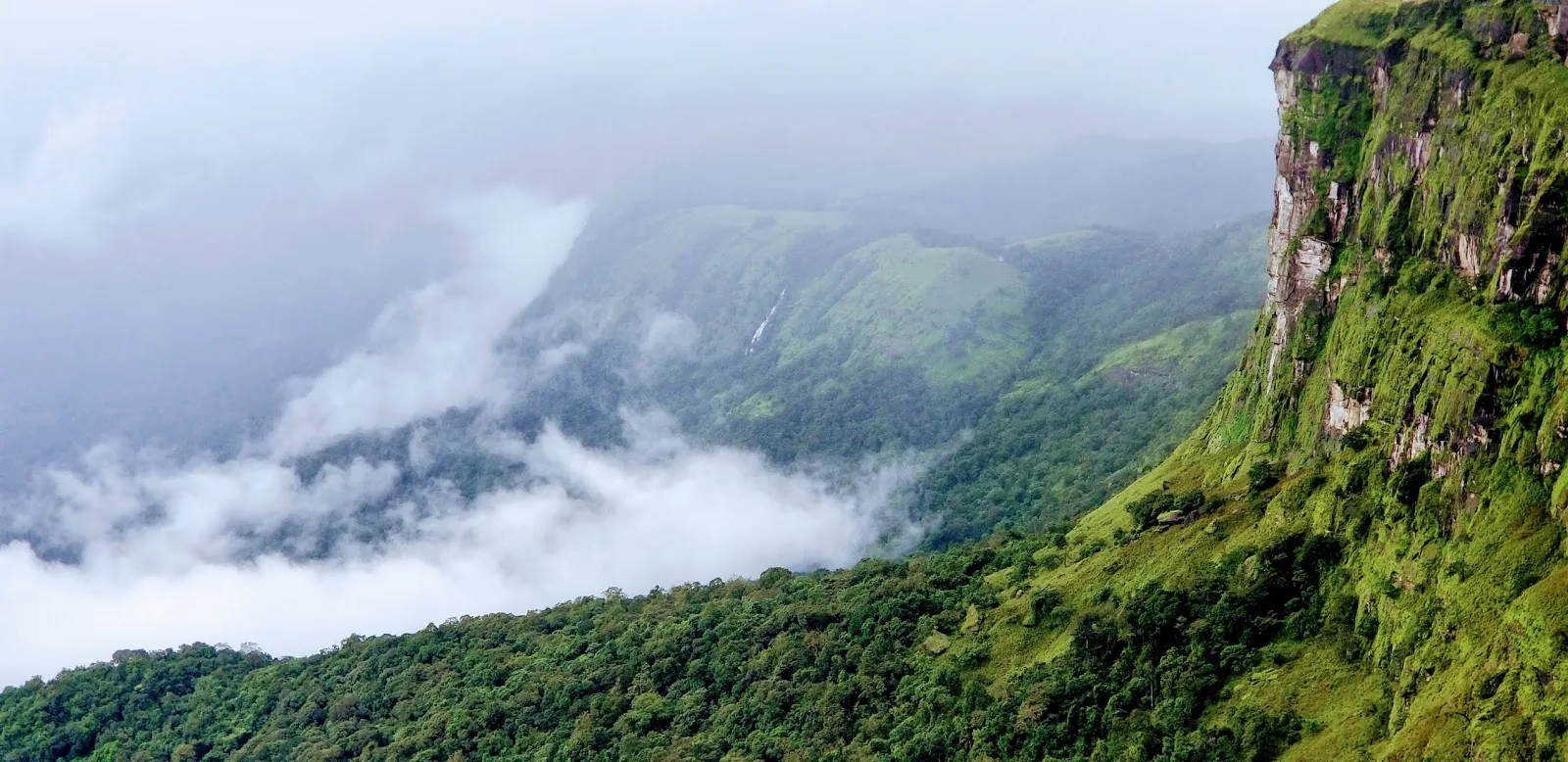
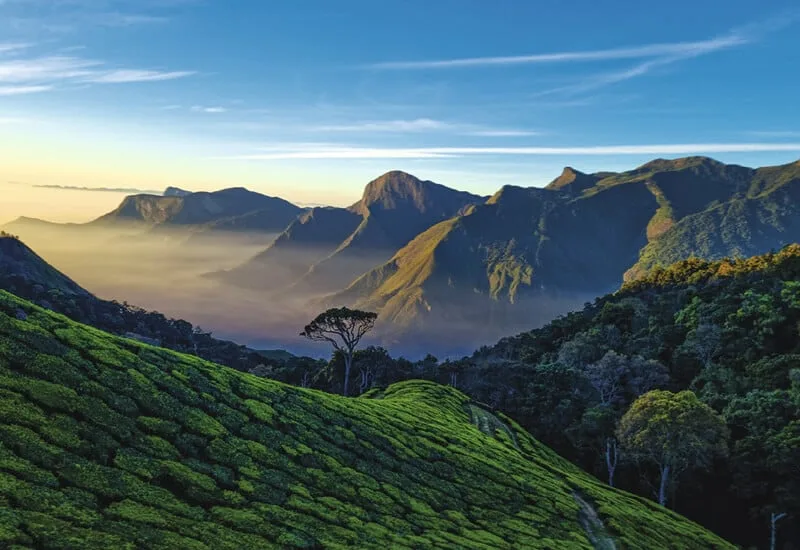
The Western Ghats consist of hills, valleys, plateaus, and forest-covered mountains.
Important Mountain Ranges
- Nilgiri Hills (connect Western and Eastern Ghats)
- Shevaroy Hills
- Tirumala Hills
Highest Peak
- Anamudi Peak (2695 meters) in Kerala is the highest peak in the Western Ghats and also the highest in South India outside the Himalayas.
Famous Hill Stations
- Ooty
- Matheran
- Lonavala and Khandala
- Mahabaleshwar
- Kodagu (Coorg)
- Kudremukh
These hill stations are popular tourist destinations because of their cool climate and scenic beauty.
Geology of Western Ghats
There are two main views about how the Western Ghats were formed:
- Block Mountain Theory
According to this, the Western Ghats were formed due to the sinking (downwarping) of land into the Arabian Sea. - Faulted Plateau Edge Theory
According to this, the Western Ghats are actually the edge of the Deccan Plateau that got uplifted due to faulting.
Types of Rocks Found
- Basalt
- Granite
- Gneiss
- Charnockite
- Limestone
- Iron ore rocks
These rocks show that the region is very old and geologically important.
Rivers of Western Ghats
The Western Ghats is the origin of many important rivers in India.
West-Flowing Rivers
- Periyar
- Netravati
- Mandovi
- Sharavathi
These rivers are:
- Short in length
- Fast flowing
- Useful for hydroelectric power
East-Flowing Rivers
- Godavari
- Krishna
- Kaveri
These rivers:
- Flow longer distances
- Move slowly
- Support agriculture and human life
Climate and Vegetation
The Western Ghats plays a very important role in India’s climate.
Role in Monsoon
- Acts as a barrier to southwest monsoon winds
- Causes heavy rainfall on the western side
- Creates rain shadow region on the eastern side
Types of Forests
Western Slopes
- Tropical evergreen forests
- Trees: Rosewood, Mahogany, Cedar
- Always green throughout the year
Eastern Slopes
- Deciduous forests
- Trees: Teak, Sandalwood, Sal, Shisham
Biodiversity of Western Ghats
The Western Ghats is one of the richest biodiversity regions in the world.
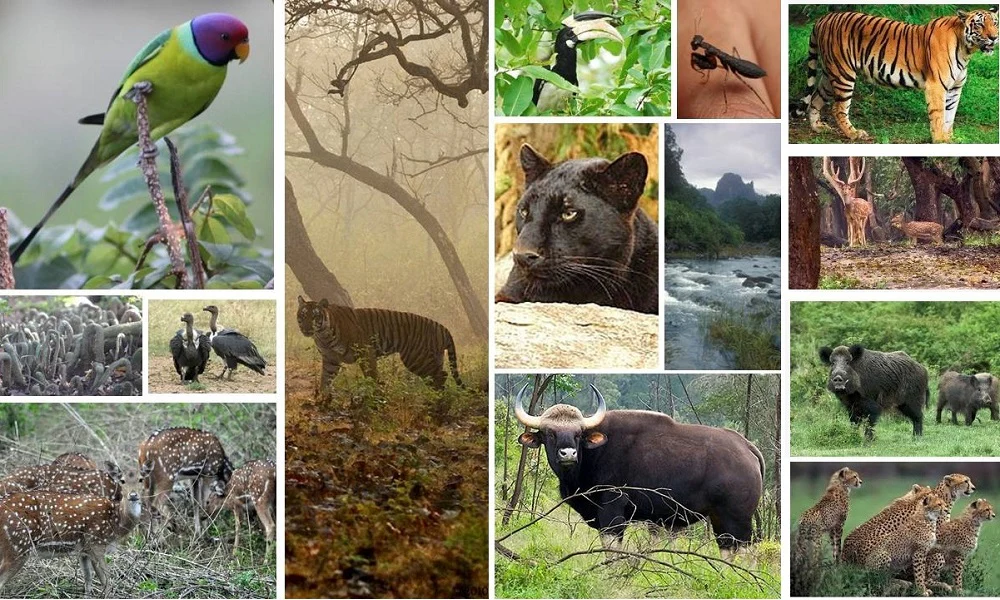
Key Facts
- More than 325 threatened species
- High level of endemism (species found nowhere else)
Important Animals
- Nilgiri tahr
- Lion-tailed macaque
- Leopard cat
- Brown palm civet
Birds, Reptiles, Amphibians
- Many rare species found only in this region
Protected Areas in Western Ghats
The Western Ghats has many protected areas to conserve biodiversity.
Major Protected Areas
- Nilgiri Biosphere Reserve
- Bandipur National Park
- Nagarahole National Park
- Silent Valley National Park
These areas protect forests, wildlife, and ecosystems.
Importance of Western Ghats
The Western Ghats is one of the most valuable natural regions in India. It plays a very important role in water supply, climate, biodiversity, economy, and human life.
1. Water Source (Hydrological Importance)
The Western Ghats is the origin of many important rivers in India. These rivers provide water to millions of people.
- It feeds many perennial (year-round) rivers of Peninsular India
- Major rivers include Godavari, Krishna, and Kaveri
- These rivers support agriculture, drinking water, and industries
- Many states depend heavily on water coming from the Western Ghats
Because of this, the Western Ghats is often called the “Water Tower of South India.”
2. Climate Control
The Western Ghats has a strong influence on India’s climate, especially the monsoon.
- It acts as a barrier to southwest monsoon winds
- Forces clouds to rise and causes heavy rainfall on the western side
- Helps maintain the tropical climate of the region
It also plays an important role in controlling climate change:
- Forests absorb carbon dioxide (CO₂) from the atmosphere
- Helps reduce global warming
- It is estimated that the Western Ghats absorbs around 4 million tonnes of carbon every year
- This is about 10% of the carbon absorbed by all forests in India
3. Biodiversity
The Western Ghats is one of the richest biodiversity regions in the world.
- It is among the eight hottest biodiversity hotspots
- Has a very high number of endemic species (found nowhere else)
- Supports a wide variety of plants, animals, birds, reptiles, and fish
The Western Ghats, along with the wet forests of Sri Lanka, forms a globally important biodiversity region.
4. Economic Importance
The Western Ghats contributes greatly to India’s economy.
- Rich in minerals like iron, manganese, and bauxite
- Forests provide raw materials for industries like:
- Paper
- Plywood
- Matchwood
- Poly-fibres
Plantation Crops
The region is also famous for plantation farming:
- Pepper and cardamom (native crops)
- Large-scale plantations of:
- Tea
- Coffee
- Rubber
- Oil palm
These crops support livelihoods and export earnings.
5. Agriculture
The Western Ghats supports agriculture by:
- Providing water through rivers
- Creating suitable climate conditions
Major crops grown include:
- Tea
- Coffee
- Rubber
- Pepper
- Cardamom
6. Tribal Life and Indigenous Communities
The Western Ghats is home to many tribal and indigenous communities.
- Includes Particularly Vulnerable Tribal Groups (PVTGs)
- In Karnataka, they form about 44.2% of the tribal population
Important Communities
- Gowlis
- Kunbis
- Halakki Vakkala
- Kare Vakkala
- Kulvadi Marathi
These communities depend on forests for their survival.
- They collect Non-Timber Forest Produce (NTFP) like honey, fruits, and medicinal plants
- Their lifestyle is closely connected with nature
7. Tourism and Pilgrimage
The Western Ghats is a major center for tourism and religious activities.
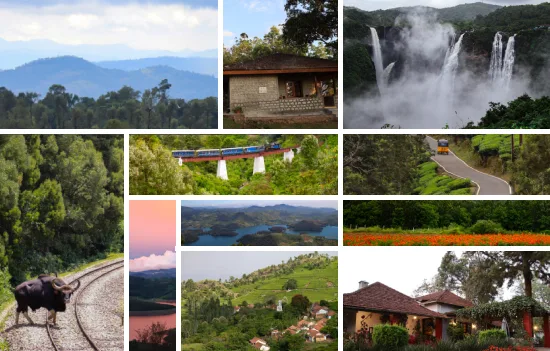
Tourist Places
- Ooty
- Thekkady Wildlife Sanctuary
- Matheran
- Mahabaleshwar
Pilgrimage Centers
- Sabarimala (Kerala)
- Madeveshwaramalai (Karnataka)
- Mahabaleshwar (Maharashtra)
Tourism helps in:
- Generating employment
- Supporting local economy
- Promoting cultural exchange
Threats to Western Ghats
Despite its great importance, the Western Ghats is facing many serious environmental and human-related threats. These problems are increasing day by day and are damaging forests, wildlife, water resources, and the lives of people living in this region.
1. Mining
Mining activities have increased very rapidly, especially in Goa. Many of these activities are done illegally without following proper environmental laws. This has caused serious damage to forests and local communities.
Sand mining has also become a major problem, particularly in Kerala. Due to uncontrolled mining:
- Landslides are increasing
- Water sources are getting damaged
- Agricultural land is being affected
All these problems directly affect the livelihoods of local people.
2. Deforestation
Deforestation means cutting down forests for farming, construction, tourism, and other commercial activities. Illegal logging for timber is also a major issue.
This leads to:
- Loss of biodiversity
- Destruction of wildlife habitats
- Disturbance in ecological balance
3. Extraction of Forest Produce (NTFPs)
People living in and around forest areas depend on Non-Timber Forest Products (NTFPs) like fruits, honey, medicinal plants, and firewood for their daily needs and income.
However:
- Increasing population is putting more pressure on forests
- Overuse of these resources is making them unsustainable
This creates a serious challenge for long-term forest conservation.
4. Livestock Grazing
Large numbers of cattle and goats are allowed to graze inside and near forest areas.
This leads to:
- Damage to natural vegetation
- Soil erosion
- Habitat degradation
Overgrazing reduces the ability of forests to regenerate naturally.
5. Human-Wildlife Conflict
The Western Ghats is a highly populated region. As humans expand into forest areas:
- Animals lose their natural habitat
- Wildlife enters human settlements
This results in conflicts between humans and animals, which can be dangerous for both.
6. Hunting
Illegal hunting is still common in many parts of the Western Ghats. It is often done due to tradition or demand for wild meat.
Hunters use:
- Guns
- Poison
- Traps and snares
Even though wild meat is not necessary for survival, hunting continues and threatens many species.
7. Plantation Farming
Plantation farming has replaced large areas of natural forests.
Major plantation crops include:
- Tea
- Coffee
- Rubber
- Oil palm
Large-scale coffee plantations started during British rule in 1854 in Kodagu. Over time:
- Natural forests have been cleared
- Monoculture farming has increased
- Forest land has been encroached
This reduces biodiversity and harms the ecosystem.
8. Encroachment by Human Settlements
Human settlements are increasing both inside and outside protected forest areas.
This causes:
- Loss of forest land
- Fragmentation of wildlife habitats
- Increased pressure on natural resources
Encroachment is a major long-term threat to the Western Ghats.
9. Hydropower Projects
Large dams and hydropower projects have been built in many parts of the Western Ghats.
Although they provide electricity, they also:
- Destroy natural ecosystems
- Displace local communities
- Change river flow patterns
Even after environmental assessments, these projects often cause serious damage.
10. Climate Change
Climate change is becoming a major threat to the Western Ghats.
Due to deforestation and land-use changes:
- Rainfall patterns are changing
- Floods are increasing
- Drought conditions are also seen
In recent years, many regions in the Western Ghats have experienced severe floods linked to climate change.
Conservation Efforts for Western Ghats
1. Gadgil Committee (2011)
- Suggested declaring entire Western Ghats as Ecologically Sensitive Area (ESA)
- Recommended strict environmental protection
2. Kasturirangan Committee (2013)
- Suggested only 37% area as ESA
- Balanced development and conservation
Important Passes in Western Ghats
- Thal Ghat – Mumbai to Nashik
- Bhor Ghat – Mumbai to Pune
- Palakkad Gap – Tamil Nadu to Kerala
- Amba Ghat – Ratnagiri to Kolhapur
- Naneghat – Pune to Junnar
- Amboli Ghat – Maharashtra to Karnataka
Conclusion
Western Ghats is one of the most valuable natural regions of India. It supports life, controls climate, and protects biodiversity. It is not just a mountain range but a lifeline for millions of people and species.
However, human activities are damaging this region. If proper steps are not taken, we may lose this natural treasure. Conservation, sustainable development, and awareness are very important to protect the Western Ghats for future generations.
FAQs on Western Ghats
Q1. Where are the Western Ghats located?
The Western Ghats are located along the western coast of India from Maharashtra to Tamil Nadu.
Q2. Why are the Western Ghats important?
They are important for biodiversity, water supply, climate control, and agriculture.
Q3. Which is the highest peak in the Western Ghats?
Anamudi Peak in Kerala.
Q4. Why are Western Ghats called a biodiversity hotspot?
Because they have many rare and endemic species.
Q5. What are the major threats to Western Ghats?
Mining, deforestation, climate change, and human activities.