



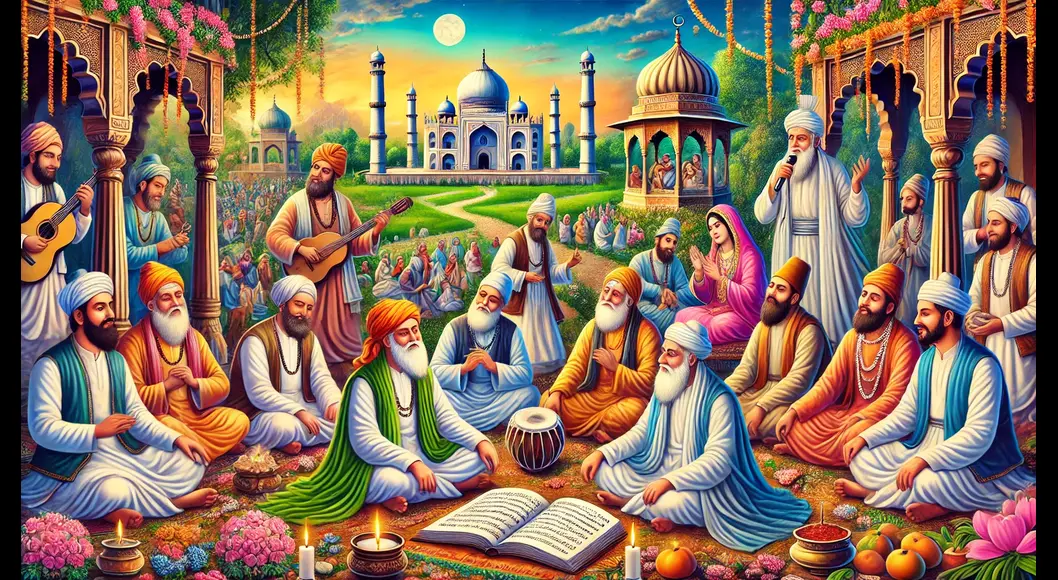
Bhakti and Sufi Movements in India

The Bhakti and Sufi Movements were two very important religious and social movements in medieval India. They helped change society by teaching love, devotion, equality, and unity. These movements made religion simple and close to the common people. They also reduced differences between people of different castes and religions.
Thank you for reading this post, don't forget to subscribe!Both movements focused on a personal connection with God instead of complex rituals. They encouraged people to live a simple and moral life. Their teachings still influence Indian culture, music, and society today.
What is the Bhakti Movement?
The Bhakti Movement was a religious reform movement that focused on devotion (bhakti) towards God. The word “bhakti” means deep love and surrender to God.
It began in South India around the 8th century, especially in Tamil Nadu and Kerala. Later, it spread to North and East India. The movement became very popular between the 15th and 17th centuries.
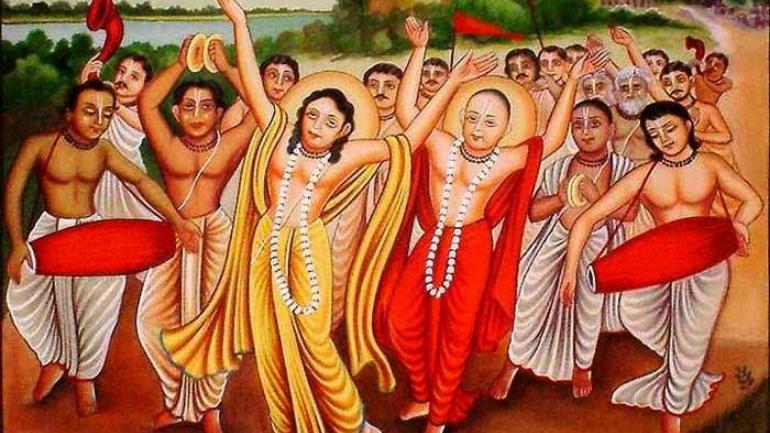
Bhakti saints believed that anyone could reach God through love and devotion. They rejected complicated rituals and priestly control.
Features of the Bhakti Movement
The Bhakti Movement had some simple but powerful ideas:
- God can be worshipped through love and devotion
- All people are equal in the eyes of God
- No need for expensive rituals or sacrifices
- Use of local languages instead of Sanskrit
- Focus on moral living and truth
These ideas made religion easier for common people to understand and follow.
Reasons for the Rise of the Bhakti Movement
There were several reasons why the Bhakti Movement became popular:
1. Social Inequality
The caste system was very strict. Lower castes were treated badly. Bhakti saints opposed this and promoted equality.
2. Decline of Brahmin Power
After the Turkish invasions, temple wealth and power of Brahmins reduced. This created space for new ideas.
3. Need for Simpler Religion
People wanted a simple way to worship God without complex rituals.
4. Voice of Common People
Bhakti saints spoke about the problems of common people like poverty and injustice.
Types of Bhakti Traditions
There were two main types of Bhakti traditions:
1. Saguna Bhakti
- Worship of God with form and qualities
- Example: Vishnu, Shiva, Krishna
2. Nirguna Bhakti
- Worship of formless God
- No idols or images
Both types were important and attracted different followers.
Early Bhakti Saints in South India
The Bhakti Movement started with saints in Tamil Nadu:
Alvars
- Devotees of Vishnu
- Wrote songs in Tamil
- Famous saint: Andal
Nayanars
- Devotees of Shiva
- Also used Tamil language
- Famous saint: Karaikal Ammaiyar
Their songs were later collected into religious texts and are still popular today.
Bhakti Movement in Karnataka
In Karnataka, the Bhakti Movement was led by Basavanna in the 12th century.
He started Lingayatism, which:
- Rejected caste system
- Opposed rituals and priest dominance
- Focused on devotion to Shiva
Saints like Allama Prabhu and Akka Mahadevi wrote devotional poems called Vachanas.
Role of South Indian Acharyas
Several scholars helped spread Bhakti ideas:
Ramanuja
- Supported devotion to Vishnu
- Believed in equality but kept some traditions
Madhava
- Promoted devotion as an alternative path
Nimbarka
- Focused on Krishna devotion
Later teachers like Ramananda and Vallabha spread Bhakti in North India.
Bhakti Movement in North India
From the 13th century, Bhakti spread to North India.
Important saints include:
- Kabir – believed in one God and rejected both Hindu and Muslim rituals
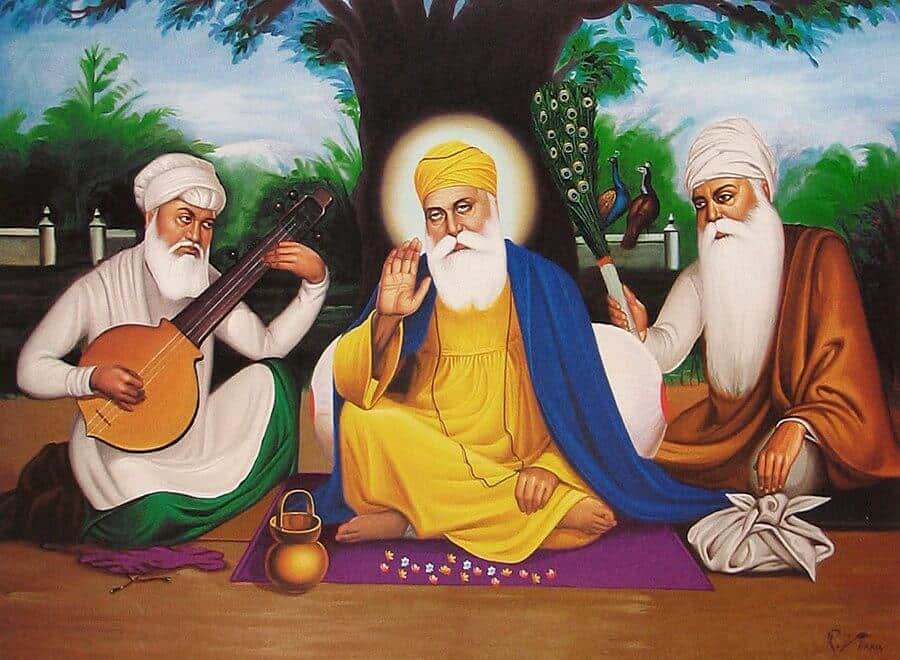
- Guru Nanak – promoted equality and unity
- Mirabai – known for her devotion to Krishna
- Surdas – wrote about Krishna
- Chaitanya Mahaprabhu – spread Krishna bhakti through singing
These saints used simple language and songs to reach people.
Impact of the Bhakti Movement
The Bhakti Movement had a deep impact on Indian society:
1. Social Equality
It reduced caste differences and gave respect to lower castes.
2. Role of Women
Women were also allowed to participate in devotion.
3. Use of Local Languages
Teachings were spread in Hindi, Tamil, Bengali, etc.
4. Cultural Growth
Music and dance like kirtan and bhajans became popular.
5. Moral Values
Encouraged honesty, kindness, and simple living.
What is the Sufi Movement?
The Sufi Movement was a spiritual movement in Islam. It focused on love, devotion, and direct connection with God.
Sufism began in the Middle East and came to India in the 13th century during the Delhi Sultanate.
Sufis believed that God can be reached through love, meditation, and self-purification.
Features of the Sufi Movement
- Focus on inner spiritual experience
- Love for God and humanity
- Equality of all people
- Rejection of strict religious rules
- Importance of a spiritual teacher (Pir)
Sufi Practices
Sufis followed different practices:
- Zikr – remembering God
- Sama – listening to music (qawwali)
- Khanqah – spiritual centers
- Dargah – tombs of saints
People visited dargahs to seek blessings.
Growth of Sufism in India
Sufism spread widely in India due to its simple and loving message. It attracted people from all communities.
One of the earliest Sufis in India was Al-Hujwiri, who lived in Lahore.
By the 14th century, Sufism had spread from Multan to Bengal.
Major Sufi Orders in India
1. Chishti Order
Founded by Khwaja Moinuddin Chishti
- Most popular order
- Focused on love and tolerance
- Avoided rulers
Famous saints:
- Nizamuddin Auliya
- Baba Farid
2. Suhrawardi Order
- Founded by Bahauddin Zakaria
- Accepted support from rulers
- Lived more comfortably
3. Naqshbandi Order
- Followed strict Islamic law
- Opposed music and rituals
4. Rishi Order (Kashmir)
Founded by Shaikh Nuruddin Wali
- Influenced by local traditions
- Promoted simple living
Impact of the Sufi Movement
1. Religious Harmony
Sufis promoted unity between Hindus and Muslims.
2. Social Equality
They welcomed people from all backgrounds.
3. Cultural Influence
Qawwali music became popular.
4. Literature
Sufi poets wrote in local languages.
Famous poets include Bulleh Shah and Shah Husain.
Differences Between Bhakti and Sufi Movements
| Aspect | Bhakti Movement | Sufi Movement |
|---|---|---|
| Religion | Mainly Hindu | Mainly Islamic |
| Origin | South India | Middle East |
| Focus | Devotion to God | Spiritual union with God |
| Language | Local languages | Persian, Urdu, local languages |
| Approach | Simple devotion | Mystical practices |
Similarities Between Bhakti and Sufi Movements
Despite differences, both movements shared many ideas:
- Belief in one God
- Rejection of rituals
- Promotion of equality
- Use of music and poetry
- Focus on love and devotion
Interaction Between Bhakti and Sufi Movements
The two movements influenced each other in many ways:
1. Music
Bhakti kirtans and Sufi qawwalis both used music for devotion.
2. Language
Both used simple local languages to reach people.
3. Spiritual Ideas
Concept of love for God was common in both.
4. Social Reform
Both worked against caste and social divisions.
Role of Guru Nanak
Guru Nanak was influenced by both Bhakti and Sufi ideas. He:
- Believed in one God
- Rejected caste system
- Promoted equality
He started Sikhism, which combined elements of both traditions.
Cultural Contribution
Both movements contributed greatly to Indian culture:
Music
- Bhajans and kirtans
- Qawwali
Literature
- Poems and songs in local languages
Festivals and Traditions
- Pilgrimages to temples and dargahs
Political Influence
Sufi ideas influenced rulers like Akbar
- He promoted religious tolerance
- Introduced the idea of Sulh-i-Kul (peace for all)
Lasting Impact on Indian Society
The Bhakti and Sufi Movements left a strong legacy:
- Promoted unity in diversity
- Reduced social inequalities
- Strengthened cultural traditions
- Encouraged religious tolerance
Even today, their teachings are followed by millions.
Conclusion
The Bhakti and Sufi Movements played a major role in shaping Indian society. They made religion simple, meaningful, and accessible to everyone. By teaching love, equality, and devotion, they broke many social barriers.
Their ideas helped create a more inclusive and peaceful society. The blend of their teachings can still be seen in India’s culture, music, and traditions today.
FAQs on Bhakti and Sufi Movements
1. What are the Bhakti and Sufi Movements?
The Bhakti and Sufi Movements were religious reform movements in India that focused on love, devotion, and equality. They made religion simple and accessible to common people.
2. When did the Bhakti Movement start?
The Bhakti Movement started in South India around the 8th century and became very popular between the 15th and 17th centuries.
3. Who were the main Bhakti saints?
Important Bhakti saints include Kabir, Guru Nanak, Mirabai, Surdas, and Chaitanya Mahaprabhu.
4. What is Sufism?
Sufism is a spiritual path in Islam that focuses on love, devotion, and a direct connection with God through inner experience.
5. Who was the founder of the Chishti Order?
The Chishti Order in India was founded by Khwaja Moinuddin Chishti.
6. What are the main teachings of the Bhakti Movement?
The Bhakti Movement taught devotion to one God, equality among people, rejection of caste system, and simple living.
7. What are the main teachings of the Sufi Movement?
The Sufi Movement focused on love for God, equality, inner peace, and unity of all humans.
8. What is the difference between Saguna and Nirguna Bhakti?
Saguna Bhakti means worship of God with form (like Krishna or Shiva), while Nirguna Bhakti means worship of a formless God.
9. How did Bhakti and Sufi Movements influence society?
They reduced caste discrimination, promoted equality, encouraged use of local languages, and spread messages of peace and unity.
10. Did Bhakti and Sufi Movements interact with each other?
Yes, both movements influenced each other through music, poetry, and shared ideas of love, devotion, and equality.