


Green Economy and Circular Economy: Building a Sustainable Future

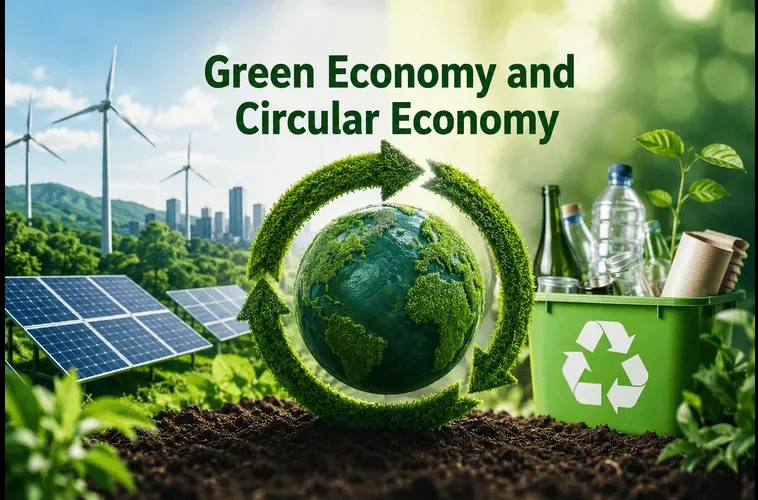
Green Economy and Circular Economy are two important ideas that can help the world grow without harming nature. Today, climate change, pollution, and waste have become major problems. Because of this, countries like India are trying to build an economy that supports development while protecting the environment.
Thank you for reading this post, don't forget to subscribe!A green economy focuses on reducing pollution and using clean energy. A circular economy focuses on reducing waste by reusing and recycling materials. Together, these models can create a better future for people and the planet.
What is Green Economy?
A Green Economy is an economic system that improves people’s lives while reducing environmental damage. It promotes the use of clean and renewable energy instead of fossil fuels like coal, oil, and gas.
The main goal of a green economy is to reduce carbon emissions and move toward a low-carbon future. It supports economic growth, job creation, and environmental protection at the same time.
In simple words, a green economy means growing the economy without destroying forests, rivers, air, and natural resources.
Main Features of Green Economy
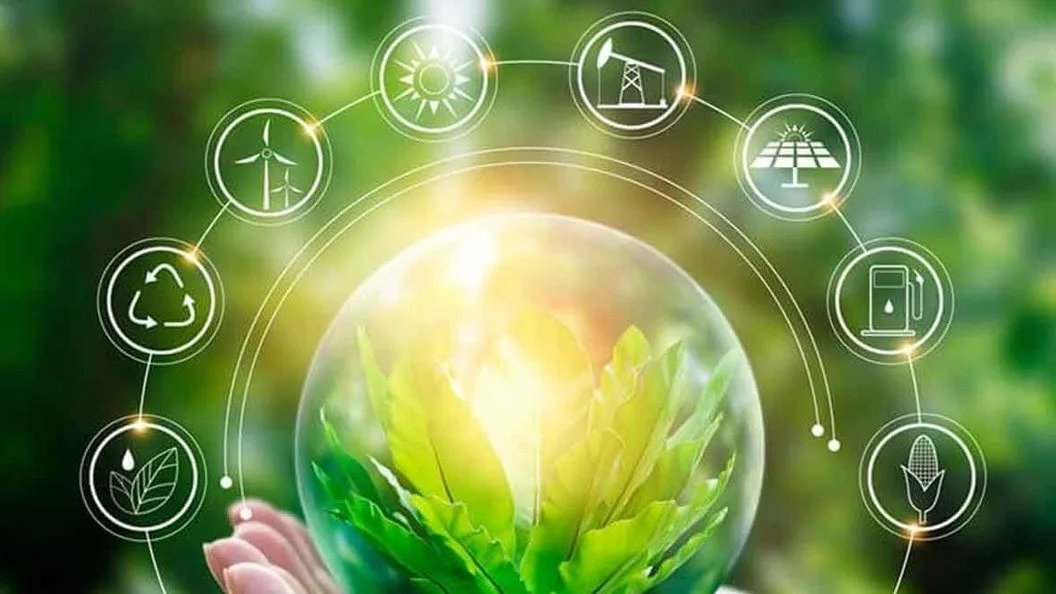
- Use of renewable energy like solar and wind power
- Lower dependence on fossil fuels
- Reduction in pollution
- Better waste management
- Sustainable farming and industries
- More green jobs
India is working toward green growth by increasing solar energy, wind energy, electric vehicles, and eco-friendly industries.
Importance of Green Economy in India
India is one of the fastest-growing economies in the world. At the same time, it faces serious environmental challenges such as:
- Air pollution
- Water scarcity
- Rising temperatures
- Floods and droughts
- Loss of forests
A green economy can help India solve these problems while continuing development.
For example, solar energy projects can provide electricity to rural areas while reducing pollution. Electric vehicles can reduce fuel use and improve air quality.
Challenges in India’s Green Economy Transition
Although the green economy has many benefits, shifting to it is not easy.
1. Pollution Control Problems
Many Indian cities still suffer from severe air pollution. Even after government efforts, pollution remains high.
Major reasons include:
- Weak enforcement of rules
- Industrial emissions
- Vehicle pollution
- Lack of funding
Cleaner technologies need more investment.
2. Dependence on Fossil Fuels
India still depends heavily on coal and other fossil fuels for electricity generation.
This creates two problems:
- High carbon emissions
- Difficulty in shifting to clean energy
Renewable energy requires strong infrastructure and advanced technology.
3. Biofuel Challenges
India aims to increase ethanol blending in fuel. However, ethanol supply is uneven across regions.
Problems include:
- Poor supply chains
- Limited storage
- Weak transport systems
These slow down progress.
4. Economic Challenges
Global trade tensions and supply chain disruptions affect green technology imports.
India still depends on imports for:
- Solar modules
- Batteries
- Advanced machinery
This increases costs.
5. Workforce Transition
Many people work in coal and carbon-heavy industries. Moving to green sectors may affect jobs.
States such as Jharkhand Jharkhand and Chhattisgarh Chhattisgarh depend heavily on coal-related employment.
Workers need:
- New skills
- Training programs
- Support for career transition
Without skill development, job losses may rise.
Steps to Accelerate Green Economy
India can take several steps to speed up green growth.
Expand Renewable Energy
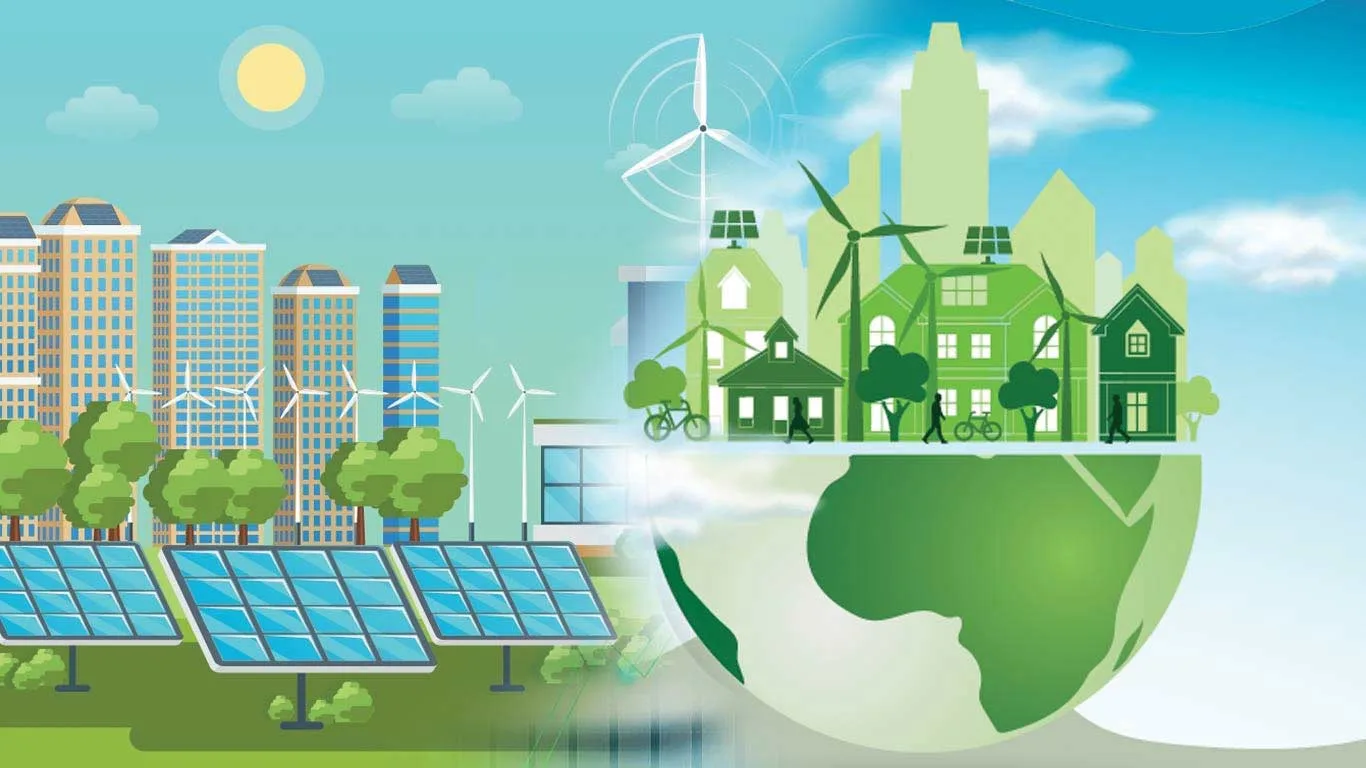
India should increase solar and wind power production.
This can be done by:
- Building solar parks
- Expanding wind farms
- Improving electricity grids
Clean energy reduces pollution and dependence on imported fuel.
Improve Domestic Manufacturing
India should manufacture more green technologies locally.
Examples include:
- Solar panels
- Wind turbines
- Batteries
- Energy storage systems
This supports the Make in India initiative and creates jobs.
Promote Electric Vehicles
Electric vehicles (EVs) can reduce transport emissions.
Benefits include:
- Less air pollution
- Lower fuel costs
- Reduced oil imports
Battery swapping systems can make EV usage easier.
Support Sustainable Agriculture
Farming can also become greener through:
- Organic farming
- Precision farming
- Agroforestry
- Water-efficient irrigation
These methods protect soil and improve long-term productivity.
Restore Mangroves and Wetlands
Mangroves and wetlands absorb carbon and protect coastal areas.
They help by:
- Reducing floods
- Preventing soil erosion
- Protecting biodiversity
Programs like MISHTI support mangrove restoration.
Government Initiatives for Green Economy
India has launched many programs to support green growth.
Fiscal Measures
The government has invested heavily in renewable energy and battery production.
These investments support clean technology development.
Green Energy Policies
Policies encourage production of:
- Solar modules
- High-efficiency batteries
- Biomass energy
These strengthen clean energy infrastructure.
Biodiversity Conservation
India runs major conservation programs such as:
- Project Tiger Project Tiger
- Project Elephant Project Elephant
- Green India Mission Green India Mission
These programs protect forests and wildlife.
What is Circular Economy?
A Circular Economy is an economic model where products and materials are reused again and again instead of being thrown away.
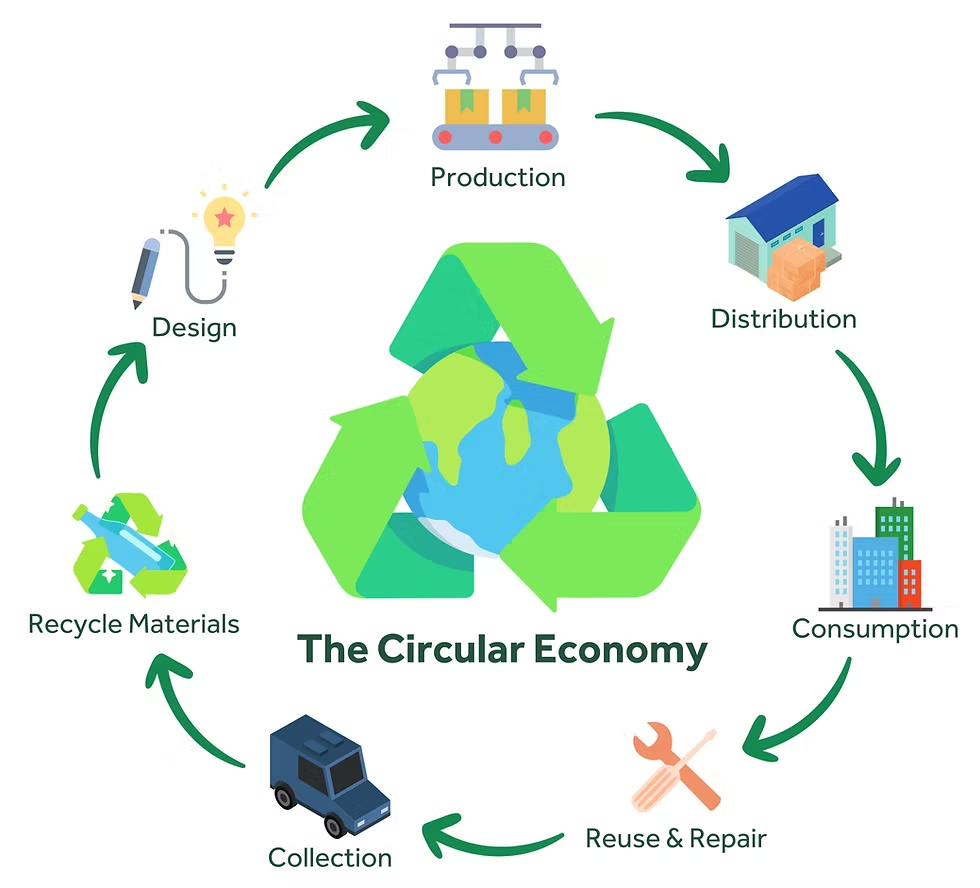
In the traditional economy, we follow this pattern:
Take → Make → Use → Throw Away
In a circular economy, the pattern becomes:
Reduce → Reuse → Repair → Recycle
This reduces waste and saves resources.
The circular economy focuses on keeping materials useful for as long as possible.
The 6 R’s of Circular Economy
The circular economy is based on six important principles:
- Reduce
- Reuse
- Recycle
- Refurbish
- Recover
- Repair
These help reduce environmental damage.
Why Circular Economy Matters
The world is consuming resources at a very fast rate.
Global material use has increased sharply over the last few decades. This has caused:
- More waste
- More pollution
- Resource depletion
- Climate change
A circular economy helps solve these issues by reducing unnecessary consumption.
Challenges in Achieving Circular Economy
1. Rising Material Demand
The global population is growing, and so is demand for resources.
This increases pressure on Earth’s limited resources.
As consumption rises, waste also rises.
2. Fashion Industry Waste
Fast fashion creates huge waste.
Problems include:
- Cheap clothing with short lifespan
- High water use
- Textile waste
- Chemical pollution
People buy more clothes but use them for less time.
3. High-Impact Industries
Some industries produce large amounts of waste.
These include:
- Construction
- Plastic manufacturing
- Textiles
- Mobility sector
Changing these industries requires major reforms.
4. Lack of Clear Vision
Although India has policies for circular growth, implementation remains slow.
Challenges include:
- Poor coordination
- Weak policy execution
- Limited awareness
This reduces effectiveness.
5. Industry Reluctance
Many companies hesitate to adopt circular practices.
Reasons include:
- High setup costs
- Complex recycling processes
- Lack of incentives
- Supply chain issues
This slows adoption.
Initiatives for Circular Economy
India has launched several initiatives to promote circular practices.
Resource Efficiency Policies
India introduced policies to improve resource use and reduce waste.
Examples include:
- Draft National Resource Efficiency Policy
- Steel Scrap Recycling Policy
- Vehicle Scrapping Policy
These support recycling and reuse.
Mission LiFE
Mission LiFE Mission LiFE promotes sustainable lifestyles.
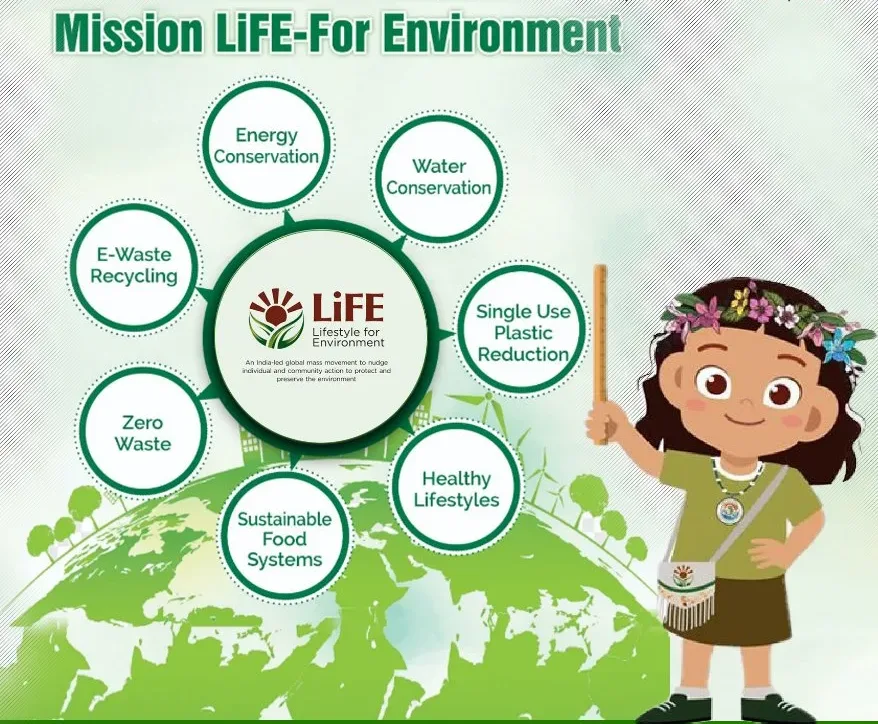
It encourages people to:
- Consume responsibly
- Reduce waste
- Support eco-friendly products
Behavior change is a key part of circular growth.
Plastic Waste Management
India is improving plastic waste management through stricter rules and recycling efforts.
This reduces pollution in land and water.
Global Cooperation
India is part of global efforts promoting resource efficiency and circular development.
This helps in sharing ideas, technology, and best practices.
Steps Needed to Promote Circular Economy
Increase Investment
Governments and private companies must invest in:
- Recycling systems
- Waste collection
- Circular technologies
- Green infrastructure
Without investment, growth remains slow.
Promote Sustainable Lifestyles
People can help by making simple choices:
- Use reusable bags
- Avoid single-use plastic
- Repair old products
- Reduce food waste
Small actions create big change.
Create Green Jobs
The circular economy can generate millions of jobs.
New opportunities can come in:
- Recycling
- Waste management
- Repair services
- Green manufacturing
This boosts the economy.
Improve Policy Implementation
Policies alone are not enough.
Strong implementation needs:
- Industry support
- Clear targets
- Better monitoring
- Public participation
This ensures real results.
Encourage Recycling Technology
Research and innovation are important.
Schools, colleges, and universities should support waste management research.
Better recycling technology improves efficiency and reduces costs.
Cities can also build composting centers to convert organic waste into useful compost. This improves soil quality and reduces chemical fertilizer use.
Green Economy and Circular Economy Together
Green economy and circular economy are closely connected.
A green economy focuses on clean growth and low pollution.
A circular economy focuses on reducing waste and reusing resources.
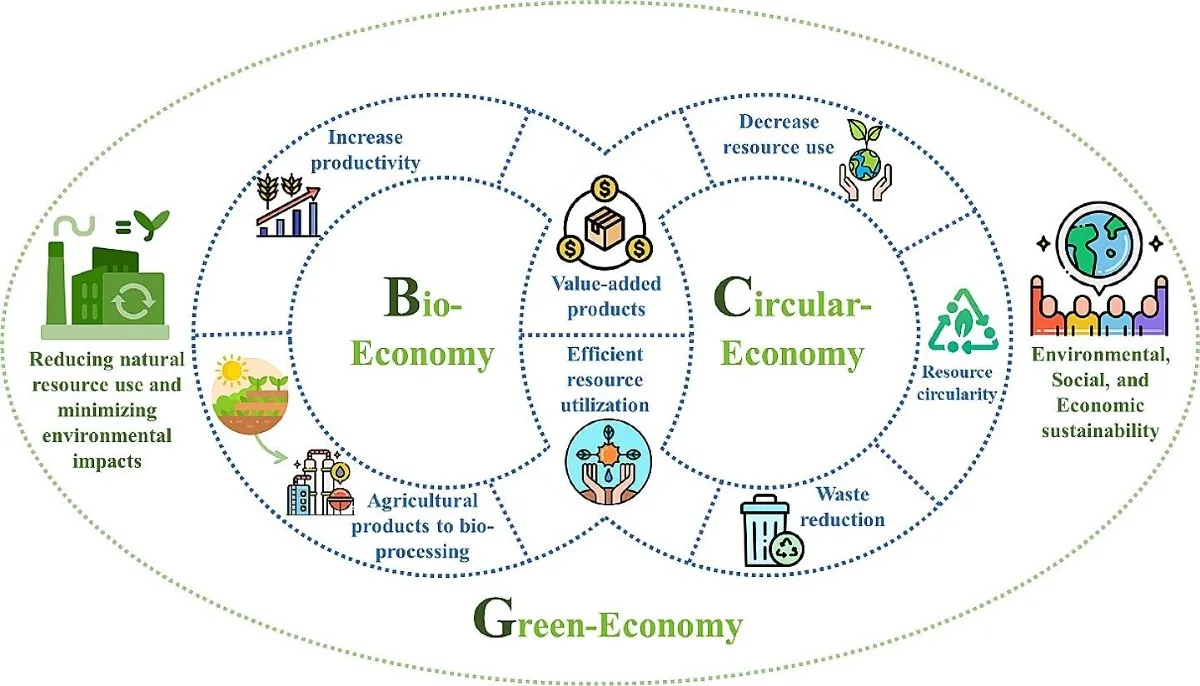
When combined, they create a strong model for sustainable development.
They help in:
- Fighting climate change
- Protecting natural resources
- Reducing waste
- Creating jobs
- Improving quality of life
For countries like India, adopting both models is necessary for long-term growth. A cleaner and smarter economy will help build a healthier future for coming generations.
FAQs
Q1. What is Green Economy?
Green Economy is an economic system that supports growth while protecting the environment through clean energy and sustainable practices.
Q2. What is Circular Economy?
Circular Economy is a model where products are reused, repaired, and recycled to reduce waste.
Q3. What are the 6 R’s of Circular Economy?
Reduce, Reuse, Recycle, Refurbish, Recover, and Repair.
Q4. Why is Green Economy important for India?
It helps reduce pollution, improve energy security, create jobs, and fight climate change.
Q5. How does Circular Economy help the environment?
It reduces waste, saves resources, lowers pollution, and supports sustainability.