



Quantum Technology: The Future of Advanced Computing

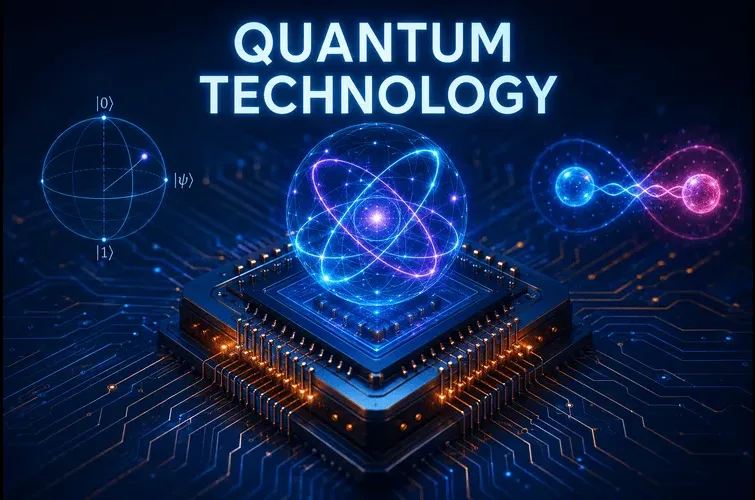
Quantum Technology is one of the most advanced fields of modern science. It is changing the way humans think about computing, communication, healthcare, and security. This technology uses the rules of quantum mechanics to perform tasks that normal computers cannot do efficiently.
Thank you for reading this post, don't forget to subscribe!Today, countries around the world are investing heavily in quantum research because it can bring major changes in science, industry, defense, and everyday life. India is also moving forward through the National Quantum Mission to become a global leader in this field.
What is Quantum Technology?
Quantum Technology refers to technologies that use the principles of quantum mechanics. Quantum mechanics is a branch of physics that explains how tiny particles such as atoms, electrons, and photons behave.
These particles do not always follow the rules of classical physics. Their unusual behavior allows scientists to build powerful technologies such as:
- Quantum computers
- Quantum communication systems
- Quantum sensors
- Quantum cryptography
These technologies can solve difficult problems much faster than traditional systems.
Conventional Computing vs Quantum Computing
To understand quantum technology, first compare normal computers with quantum computers.
| Feature | Conventional Computer | Quantum Computer |
|---|---|---|
| Basic Unit | Bit | Qubit |
| Value | 0 or 1 | 0, 1, or both |
| Speed | Fast for normal tasks | Extremely fast for complex tasks |
| Physics Used | Classical Physics | Quantum Mechanics |
Conventional Computing
A normal computer stores information in bits. A bit can only be either 0 or 1.
Every app, website, and software on your phone or laptop works using these bits.
Quantum Computing
Quantum computers use qubits instead of bits.
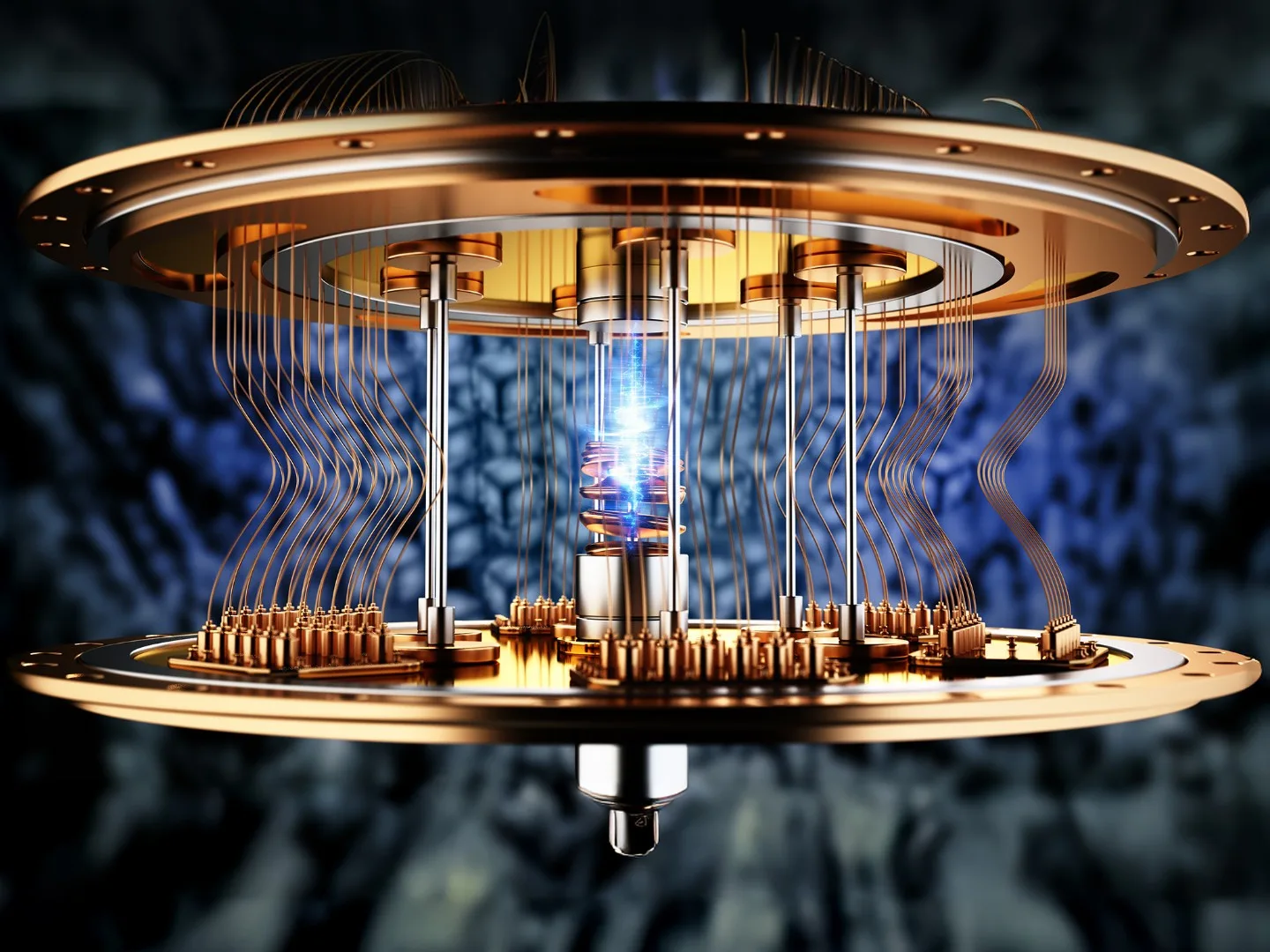
A qubit is special because it can represent 0 and 1 at the same time. This allows quantum computers to process huge amounts of information much faster.
This makes quantum computers useful for solving highly complex problems.
Key Features of Quantum Technology
1. Superposition
Superposition means a qubit can stay in multiple states at once.
Think of a coin spinning in the air. Before landing, it is neither fully heads nor tails it can be considered both.
In the same way, a qubit can be both 0 and 1 until measured.
This allows quantum computers to perform many calculations at the same time.
2. Entanglement
Entanglement happens when two qubits become connected.
If one qubit changes, the other changes instantly even if they are far away.
This strange behavior was called “spooky action at a distance” by Albert Einstein.
Entanglement helps in secure communication and powerful computations.
3. Decoherence
Quantum states are very delicate.
When qubits interact with outside surroundings such as heat, vibration, or noise, they can lose their quantum properties. This process is called decoherence.
Decoherence is one of the biggest problems in quantum computing.
4. Interference
Quantum particles can interfere with each other.
This helps quantum systems increase the chances of correct answers and reduce wrong answers in calculations.
Interference improves the efficiency of quantum algorithms.
Applications of Quantum Technology
Quantum Technology can transform many sectors.
1. Healthcare and Pharmaceuticals
Quantum computers can study molecules and chemical reactions in detail.
This helps scientists:
- Develop new medicines faster
- Understand protein folding
- Find treatments for diseases
Diseases such as Alzheimer’s disease and Parkinson’s disease may be better understood using quantum simulations.
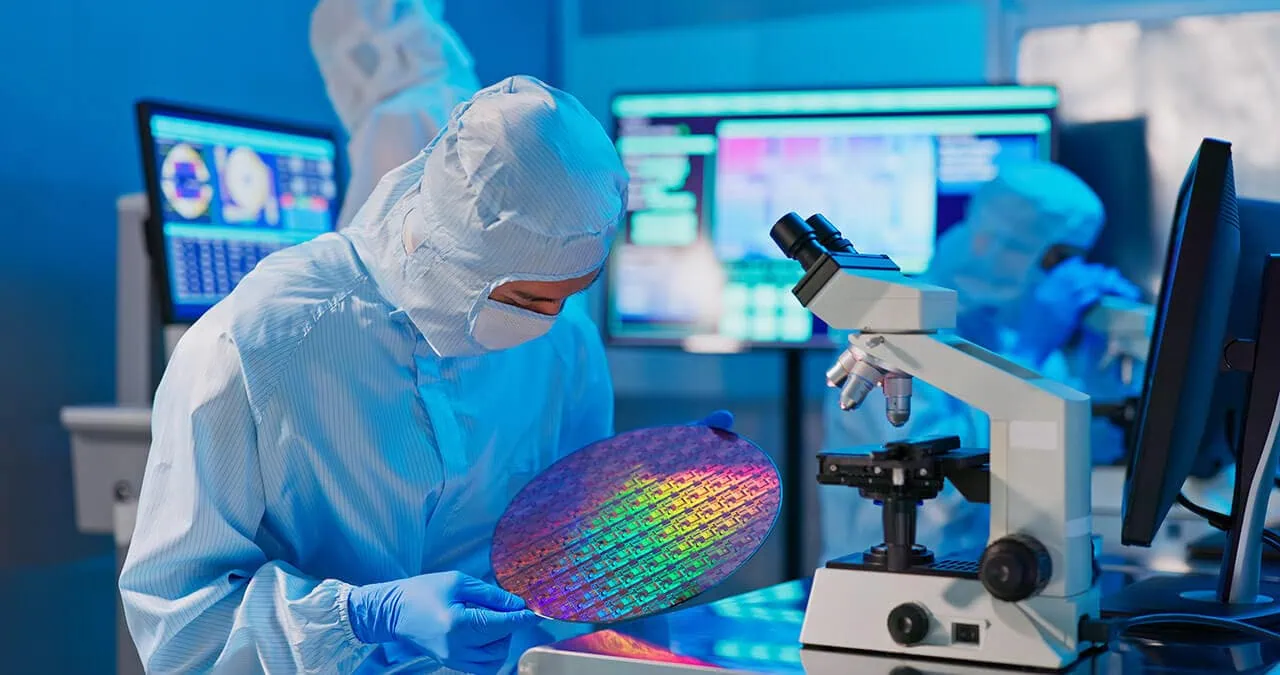
This could save millions of lives.
2. Chemistry
Quantum systems can improve chemical research.
Benefits include:
- Better catalysts
- Cleaner industrial processes
- Lower pollution
- Better fuel alternatives
This can reduce harmful emissions and improve energy efficiency.
3. Advanced Electronics
Quantum materials help in making advanced devices such as:
- Better batteries
- Energy-efficient chips
- Solar panels
- Medical devices
One example is QLED screens, which use quantum dots for better display quality.
4. Artificial Intelligence and Machine Learning
Quantum computing can improve AI by processing large data much faster.
It can:
- Train AI models faster
- Find patterns in huge datasets
- Reduce energy usage
This can improve technologies like:
- Voice assistants
- Self-driving vehicles
- Medical diagnosis
5. Disaster Management
Quantum technology may help predict natural disasters such as:
- Earthquakes
- Floods
- Tsunamis
- Droughts
It can improve climate data analysis and early warning systems.
This can save lives and reduce damage.
6. Secure Communication
One of the biggest uses of quantum technology is secure communication.
In 2016, China launched Micius, the world’s first quantum communication satellite.
It showed that secure communication between satellites and Earth is possible.
This is useful for:
- Military communication
- Banking
- Cybersecurity
- Government data protection
7. Quantum Cryptography
Quantum cryptography protects information using quantum principles.
Its main advantage is security.
If someone tries to hack or intercept the data, the system detects it immediately.
This could create almost unbreakable encryption.
What is Quantum Mechanics?
Quantum mechanics is a branch of physics that studies matter and energy at extremely small scales.
It explains how:
- Atoms behave
- Electrons move
- Light particles interact
It is very different from classical physics, which explains large objects like cars, planets, and buildings.
Quantum mechanics forms the foundation of quantum technology.
Uses of Quantum Mechanics
Quantum Computing
Helps solve difficult calculations quickly.
Quantum Cryptography
Provides highly secure encryption.
Quantum Sensors
Improves measurement accuracy.
Used in:
- Medical imaging
- Navigation
- Environmental monitoring
Quantum Simulation
Helps scientists study complex chemical and biological systems.
National Quantum Mission of India
India launched the National Quantum Mission (NQM) to strengthen research and innovation in quantum technology.
India aims to become a global leader in quantum technology through this mission.

About the Mission
- Launched by Government of India
- Managed by Ministry of Science & Technology
- Active from 2023 to 2031
India became the 7th country to launch a dedicated quantum mission after countries like:
- United States
- Austria
- Finland
- France
- Canada
- China
Main Goals of National Quantum Mission
Quantum Computers
India plans to build quantum computers with 50 to 1000 physical qubits over 8 years.
Secure Communication
The mission aims to create:
- Satellite-based secure communication
- Long-distance quantum communication
- Quantum networks across cities
This will improve national security.
Quantum Sensing and Metrology
The mission supports development of:
- Atomic clocks
- High-precision magnetometers
- Advanced navigation systems
These tools improve measurement accuracy.
Quantum Materials and Devices
Scientists are developing:
- Superconductors
- Single-photon detectors
- Entangled photon sources
These are necessary for future quantum devices.
Thematic Hubs in India
India plans to set up 4 major research hubs in:
- Quantum Computing
- Quantum Communication
- Quantum Sensing & Metrology
- Quantum Materials & Devices
These hubs will boost research and innovation.
Quantum Initiatives in India
India has started many important projects.
Quantum Lab
The Indian Army established a Quantum Lab in Madhya Pradesh for research and training.
QuEST Initiative
The Department of Science and Technology launched QuEST to improve quantum research facilities.
QSimToolkit
QSimToolkit is an Indian toolkit that helps students and researchers learn quantum computing.
It supports skill development in:
- Quantum coding
- Hardware design
- Simulation
C-DOT
Centre for Development of Telematics (C-DOT) has developed Quantum Key Distribution (QKD) systems for secure communication.
Private Sector Participation
Big companies such as Google and IBM are working on quantum computing.
Indian startups like:
- BosonQ Psi
- QpiAI
are also contributing.
International Year of Quantum Science
The United Nations declared 2025 as the International Year of Quantum Science and Technology.
This highlights the growing importance of quantum research worldwide.
Challenges in Quantum Technology Adoption in India
Even though quantum technology is promising, there are major challenges.
1. Lack of Standards
There are no clear standards for:
- Quantum hardware
- Software
- Communication systems
This creates compatibility problems.
2. Infrastructure Problems
Quantum labs need expensive equipment.
They require:
- Advanced cooling systems
- Special laboratories
- High-performance computing
Building such infrastructure is costly.
3. Technical Challenges
Quantum computers need extremely low temperatures.
Even small disturbances can damage qubits.
Scaling from a few qubits to thousands remains difficult.
4. Low Research Investment
India spends around 0.64% of GDP on research and development.
This is lower than many developed countries.
Private sector investment is also relatively low.
More funding is needed for faster progress.
Future of Quantum Technology
Quantum technology has the power to change the future.
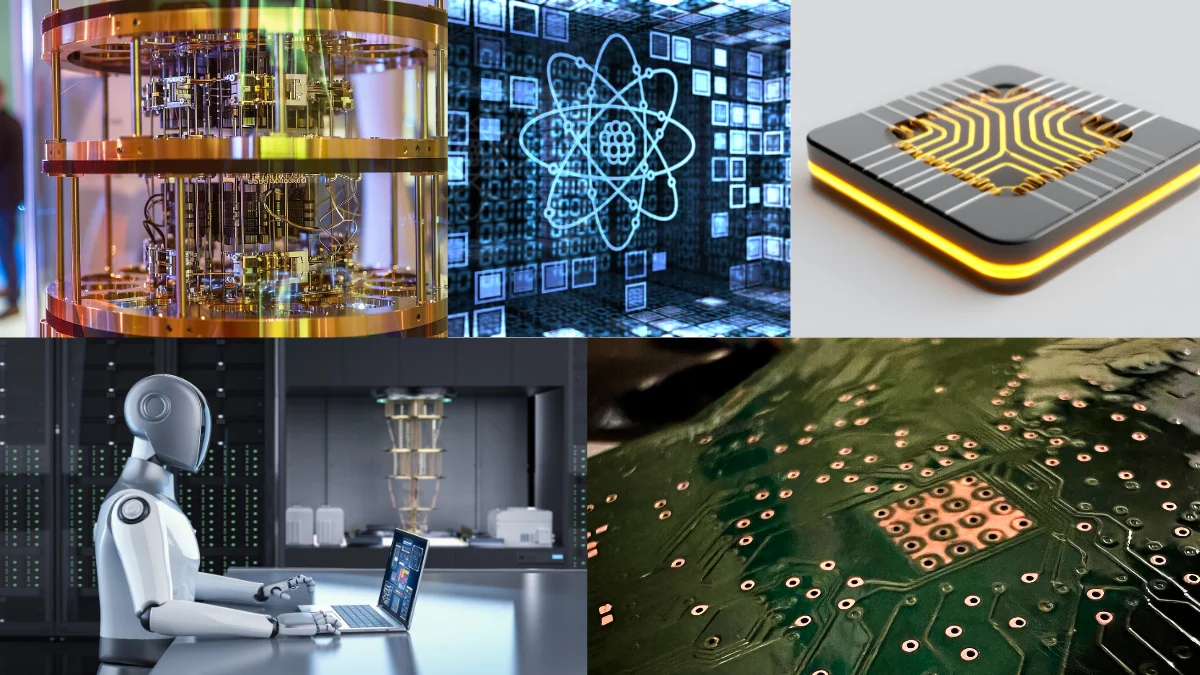
To grow faster, India should:
- Increase private investment
- Build more research centers
- Improve regulations
- Strengthen patent systems
- Connect academic research with industries
With proper support, India can become a major player in the global quantum revolution.
Quantum Technology is not just about faster computers. It is about creating a smarter, safer, and more advanced future for humanity.
FAQs
1. What is Quantum Technology?
Quantum Technology uses quantum mechanics to create advanced technologies like quantum computers and secure communication systems.
2. What is a qubit?
A qubit is the basic unit of quantum computing that can exist as 0 and 1 at the same time.
3. Why is quantum computing important?
It can solve complex problems much faster than normal computers.
4. What is India’s National Quantum Mission?
It is a government initiative to promote quantum research and make India a leader in quantum technology.
5. What are the challenges of quantum technology?
Major challenges include high cost, technical complexity, lack of infrastructure, and low investment.