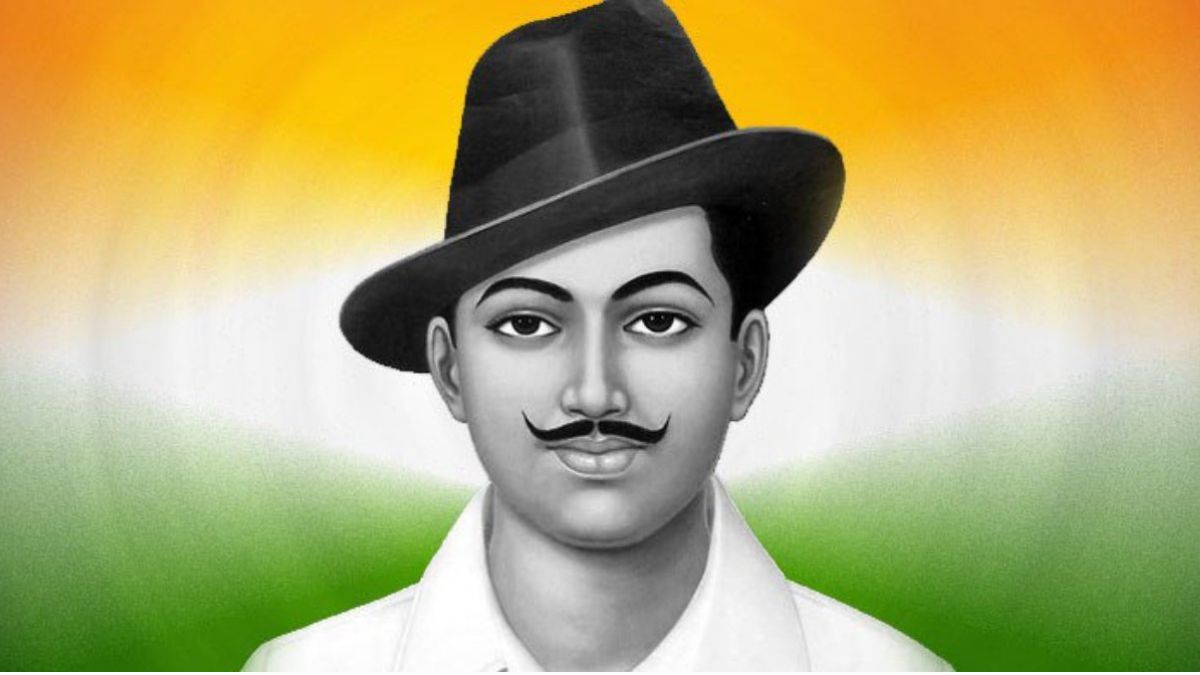
Bhagat Singh: Life of a Fearless Revolutionary

Bhagat Singh is one of the most respected and remembered freedom fighters of India. His name stands for courage, sacrifice, and deep love for the nation. Even today, Bhagat Singh continues to inspire millions, especially young people, to stand against injustice and fight for truth and equality.
Introduction to Bhagat Singh
Bhagat Singh was a revolutionary freedom fighter who played a very important role in India’s struggle against British rule. He believed that freedom could not be achieved by silence and fear. Instead, he felt that strong action, awareness, and sacrifice were necessary to wake the nation from slavery.

Known as Shaheed-e-Azam Bhagat Singh, he was not just a man with a gun or bomb, but a deep thinker, writer, and reader. His ideas were far ahead of his time. Though he lived only 23 years, his short life left a long-lasting impact on Indian history.
Bhagat Singh is remembered not only for his revolutionary actions but also for his powerful thoughts on freedom, socialism, equality, and justice.
Early Life of Bhagat Singh
Bhagat Singh was born on 28 September 1907 in Banga village, Lyallpur District of Punjab Province in British India (now in Pakistan). He was born into a Sandhu Jat Sikh family that was deeply involved in the freedom movement.
Family Background
Bhagat Singh’s family played a major role in shaping his patriotic thinking.
- Father: Kishan Singh Sandhu
- Mother: Vidyavati Kaur
His father and uncles, Ajit Singh and Swaran Singh, were active freedom fighters. At the time of Bhagat Singh’s birth, his father and uncles were in jail for protesting against British laws. This shows how strong the spirit of freedom was in his family.
From childhood, Bhagat Singh grew up listening to stories of bravery, sacrifice, and resistance against British rule.
Childhood Experiences That Shaped Him
Several events during Bhagat Singh’s childhood deeply affected his mind:
Jallianwala Bagh Massacre
When Bhagat Singh was very young, the Jallianwala Bagh Massacre took place. Hundreds of innocent Indians were killed by British forces. This cruel incident filled Bhagat Singh’s heart with anger against injustice.
It is said that he visited Jallianwala Bagh later and collected soil soaked in the blood of martyrs. This incident made him more determined to fight against British rule.
Nankana Sahib Tragedy
The killing of peaceful Akali protesters at Nankana Sahib also shocked young Bhagat Singh. Such events convinced him that the British government was cruel and could not be trusted.
Education of Bhagat Singh
Bhagat Singh was a bright student and loved reading.
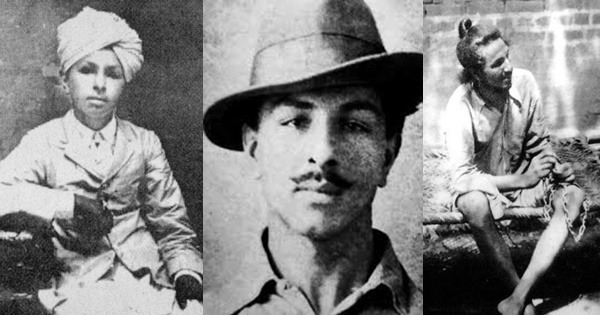
- He first studied at a village school in Banga.
- Later, he joined Dayanand Anglo-Vedic (DAV) School in Lahore.
- After leaving DAV School, he joined National College, Lahore, which was founded by Lala Lajpat Rai.
Love for Reading and Writing
Bhagat Singh was deeply interested in books. He read:
- Indian history
- European revolutionary literature
- Works of Karl Marx, Vladimir Lenin, Leon Trotsky
- Ideas of Mikhail Bakunin
Reading these books developed his socialist and revolutionary thinking.
Bhagat Singh’s Turning Point
At first, Bhagat Singh supported Mahatma Gandhi’s Non-Cooperation Movement. He believed in peaceful protest and followed Gandhian principles.
However, after the Chauri Chaura incident, when Gandhi withdrew the movement, Bhagat Singh felt disappointed. He believed that stopping the movement weakened the struggle.
This decision made him rethink the path of non-violence. Slowly, he moved towards revolutionary activities, believing that strong action was needed to remove British rule.
Entry into Revolutionary Path
Bhagat Singh believed that political freedom must be accompanied by social and economic equality. He wanted a society without exploitation.
Naujawan Bharat Sabha
In March 1925, Bhagat Singh helped establish the Naujawan Bharat Sabha.
- It aimed to spread revolutionary ideas among youth.
- It promoted patriotism, equality, and unity beyond religion.
Bhagat Singh became its secretary and worked actively to inspire young Indians.
Hindustan Socialist Republican Association (HSRA)
Bhagat Singh later joined the Hindustan Republican Association (HRA), which was later renamed as the Hindustan Socialist Republican Association (HSRA).
Important Members
- Chandra Shekhar Azad
- Sukhdev Thapar
- Shivaram Rajguru
The HSRA believed in armed struggle to end British rule. Bhagat Singh strongly supported its goals but also stressed the importance of ideas and awareness.
Revolutionary Activities of Bhagat Singh
Protest Against Simon Commission
When the Simon Commission arrived in India, it faced massive protests because it had no Indian members.
Lala Lajpat Rai led a peaceful protest in Lahore. British police used lathi charge, which badly injured him. Later, he died due to these injuries.
Bhagat Singh and his fellow revolutionaries decided to take revenge.
Assassination of J.P. Saunders
To avenge the death of Lala Lajpat Rai, Bhagat Singh and Rajguru planned to kill the responsible officer.
- They mistakenly shot J.P. Saunders, Assistant Superintendent of Police, instead of James Scott.
- After the incident, Bhagat Singh escaped by cutting his hair and shaving his beard to avoid recognition.
This event made Bhagat Singh a well-known revolutionary across India.
Central Legislative Assembly Bombing
One of the most famous acts of Bhagat Singh was the Central Assembly bombing.
Why the Bomb Was Thrown
- To protest against unfair British laws.
- To make the British government listen to Indian voices.
The Incident
- Bhagat Singh and Batukeshwar Dutt threw non-lethal bombs in the Central Assembly.
- They threw leaflets and shouted “Inquilab Zindabad”.
- They did not try to escape and willingly courted arrest.
Their goal was not to harm anyone but to spread awareness. Bhagat Singh said their aim was “to make the deaf hear.”
Arrest and Trials
Bhagat Singh was arrested and faced multiple trials:
Assembly Bomb Case
- He and Batukeshwar Dutt were sentenced to life imprisonment.
Lahore Conspiracy Case
Later, Bhagat Singh was charged again for the murder of Saunders.
- A special tribunal was formed.
- The trial was unfair and biased.
- Bhagat Singh was not given proper legal rights.
Hunger Strike in Jail
While in jail, Bhagat Singh noticed discrimination between Indian and European prisoners.
Demands of the Hunger Strike
- Equal treatment for Indian prisoners
- Access to books and newspapers
- Better food and clothing
- No forced manual labour
Bhagat Singh led a hunger strike that lasted 116 days.
Martyrdom of Jatindra Nath Das
During the hunger strike, Jatindra Nath Das died after 63 days without food. His death shocked the entire nation and increased support for Bhagat Singh.
Thoughts and Ideals of Bhagat Singh
Bhagat Singh was not just a revolutionary but also a thinker.
Atheism
He wrote a famous essay titled “Why I Am an Atheist”, explaining his beliefs clearly and logically.
Socialism
Bhagat Singh believed in:
- Equality
- End of exploitation
- Workers’ rights
He wanted a society based on justice and fairness.
Inquilab Zindabad
Bhagat Singh popularized the slogan “Inquilab Zindabad”, meaning Long Live the Revolution. It became the war cry of Indian freedom struggle.
Death of Bhagat Singh
Bhagat Singh was executed by hanging on 23 March 1931 at Lahore Central Jail.
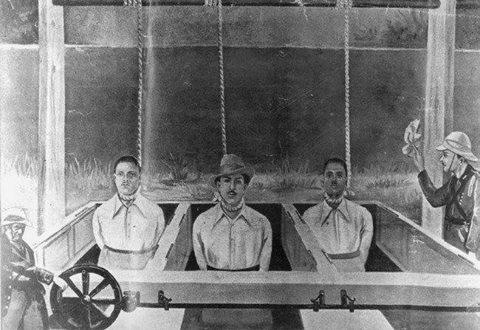
- He was only 23 years old.
- He was executed along with Rajguru and Sukhdev.
- He went to the gallows smiling and shouting revolutionary slogans.
His death turned him into a martyr forever remembered by the nation.
Legacy of Bhagat Singh
Bhagat Singh remains a symbol of:
- Youth power
- Courage
- Sacrifice
- Revolutionary thinking
He inspired countless young Indians to participate in the freedom struggle.
Even today, his writings and ideas continue to guide people fighting against injustice and inequality.
Conclusion
Bhagat Singh was more than a freedom fighter. He was a dreamer, thinker, and fearless revolutionary who gave everything for India’s freedom. His life teaches us to stand up for truth, question injustice, and work for a better society.
Though his life was short, his legacy is eternal. Bhagat Singh will always live in the hearts of Indians as a symbol of bravery and selfless sacrifice.
FAQs on Bhagat Singh
Q1. Who was Bhagat Singh?
Bhagat Singh was a revolutionary Indian freedom fighter who fought bravely against British rule and became a national hero.
Q2. Why is Bhagat Singh called Shaheed-e-Azam?
He is called Shaheed-e-Azam because of his supreme sacrifice for India’s freedom at a very young age.
Q3. What was Bhagat Singh’s famous slogan?
His most famous slogan was “Inquilab Zindabad”, which means Long Live the Revolution.
Q4. What was the aim of the Central Assembly bombing?
The aim was to protest against unjust British laws and make the government listen, not to harm anyone.
Q5. Why did Bhagat Singh go on a hunger strike?
He went on a hunger strike to demand equal and humane treatment for Indian political prisoners.
Q6. What were Bhagat Singh’s main ideals?
He believed in freedom, equality, socialism, justice, and ending exploitation.
Q7. Which organizations was Bhagat Singh associated with?
He was associated with Naujawan Bharat Sabha and the Hindustan Socialist Republican Association (HSRA).