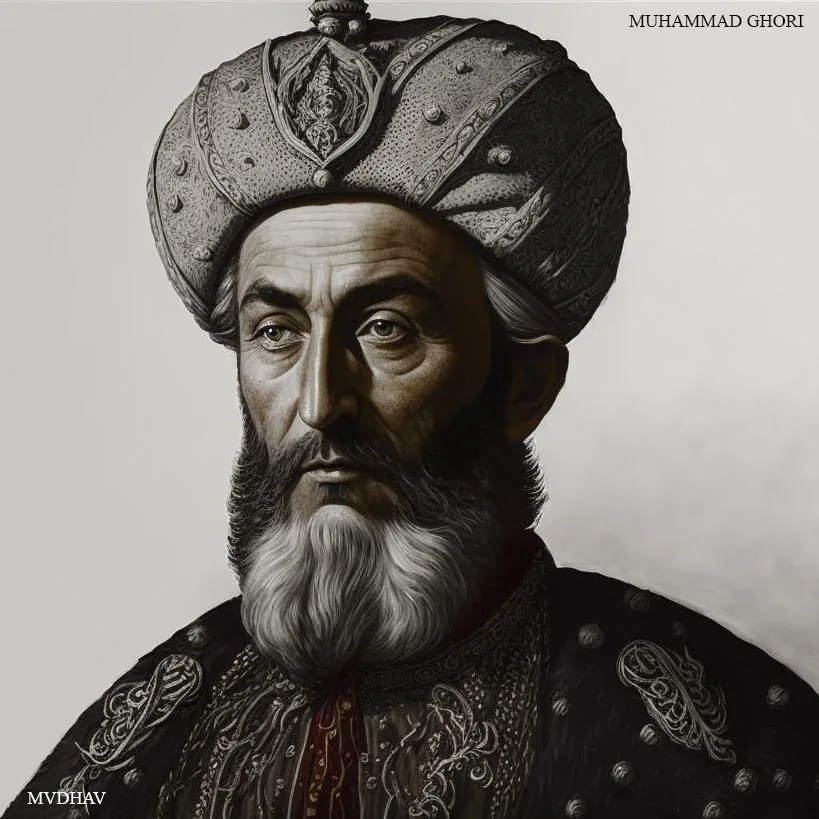
Muhammad Ghori: Rise, Battles, Conquests, and Impact on Indian History

Muhammad Ghori was one of the most important rulers in medieval Indian history. He played a major role in establishing Muslim rule in northern India, which later led to the formation of the Delhi Sultanate. His victories changed the political condition of India for many centuries.
Thank you for reading this post, don't forget to subscribe!Muhammad Ghori is remembered mainly for the famous Battles of Tarain and the expansion of Turkish power into Bihar and Bengal. Unlike earlier invaders who mainly looted wealth and returned home, Muhammad Ghori aimed to build a permanent empire in India. His military campaigns laid the foundation for future Muslim kingdoms in the Indian subcontinent.
Who Was Muhammad Ghori?
Muhammad Ghori, also known as Mu’izz ad-Din Muhammad, was the ruler of the Ghurid Empire. He ruled from 1173 to 1206 AD. He belonged to the Ghurid dynasty, which was based in the region of Ghur in present-day Afghanistan.
He was of Persian origin and ruled over areas that are now part of Afghanistan, Pakistan, northern India, Bangladesh, Iran, Turkmenistan, and Tajikistan.
Muhammad Ghori is famous because he established Turkish and Muslim political control in India. His victories helped create a new political system in northern India that continued for centuries.
Rise of the Ghurid Empire
The Ghurids were first under the control of the Ghaznavids. However, they soon became powerful and independent.
During the middle of the 12th century, Central Asia experienced political instability. The Seljuk Turks became weak, and new powers emerged. Two important powers were:
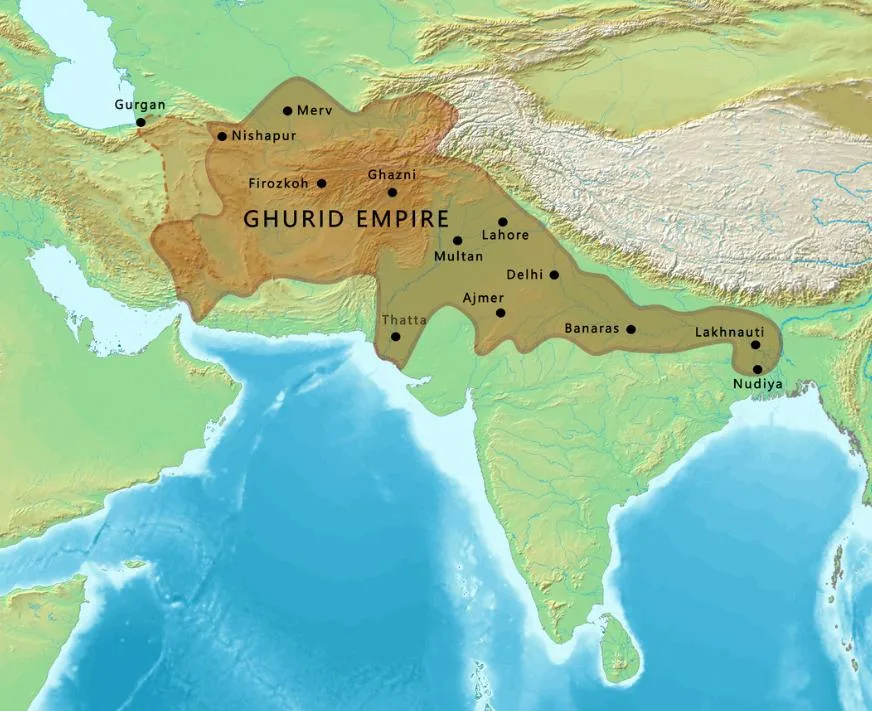
- The Khwarizmi Empire in Iran
- The Ghurid Empire in Afghanistan
The Ghurids wanted to expand their empire, but the Khwarizmi rulers blocked their expansion toward Central Asia. As a result, Muhammad Ghori turned his attention toward India.
The Ghurid ruler Alauddin Hussain Shah became famous for attacking and burning the city of Ghazni. Because of this, he earned the title “Jahan-Soz,” meaning “World Burner.”
After the death of Mahmud Ghazni and the decline of the Ghaznavids, Muhammad Ghori became stronger and began planning his Indian campaigns.
Early Indian Campaigns of Muhammad Ghori
Muhammad Ghori first entered India through the Gomal Pass. He conquered important places like:
- Multan
- Uchch
- Peshawar
- Lahore
- Sialkot
These victories helped him establish a strong base in Punjab.
In 1178, he tried to invade Gujarat by crossing the Rajputana desert. However, the ruler of Gujarat defeated him badly near Mount Abu. Muhammad Ghori escaped with great difficulty.
This defeat taught him an important lesson. He realized that before conquering India, he needed a strong military base in Punjab.
Conflict with Rajput Rulers
At that time, many Rajput kingdoms ruled northern India. Among them, the Chauhan dynasty was becoming very powerful.
The Chauhan ruler Prithviraj Chauhan had already defeated several Turkish invaders. He also captured Delhi from the Tomars.
As Muhammad Ghori expanded toward India, conflict between him and Prithviraj Chauhan became unavoidable.
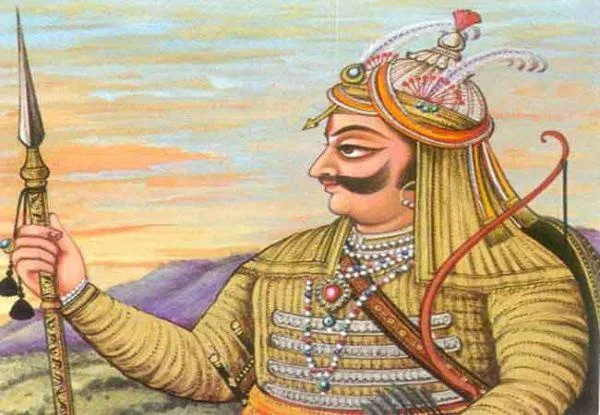
First Battle of Tarain (1191)
The First Battle of Tarain took place in 1191 near Thanesar in present-day Haryana.
The conflict started over the control of Tabarhinda (Bhatinda). Muhammad Ghori attacked the region, which led to war with Prithviraj Chauhan.
Result of the Battle
In this battle, the Rajput forces defeated Muhammad Ghori badly. The Ghurid army suffered heavy losses, and Muhammad Ghori was seriously injured.
According to historical accounts, a young Khalji horseman saved his life and helped him escape from the battlefield.
After the victory, Prithviraj captured Tabarhinda after a long siege.
Mistake of Prithviraj Chauhan
Even after winning the battle, Prithviraj did not chase the Ghurid forces out of Punjab completely. This gave Muhammad Ghori enough time to reorganize his army and prepare for another invasion.
This decision later proved costly for the Rajputs.
Second Battle of Tarain (1192)
The Second Battle of Tarain in 1192 was one of the most important turning points in Indian history.
Muhammad Ghori returned with a much stronger and better-organized army. His forces included:
- Heavy cavalry
- Mounted archers
- Armored soldiers
Prithviraj Chauhan also gathered a huge army with support from several Rajput rulers.
The Battle
The Rajput army was larger in number, but the Turkish army was better trained and disciplined.
The battle mainly depended on cavalry warfare. The Turkish mounted archers attacked quickly and repeatedly, tiring the Rajput soldiers.
Finally, the Rajput forces were defeated.
Prithviraj Chauhan tried to escape but was captured near Sirsa.
Aftermath of the Battle
After victory, Muhammad Ghori captured:
- Hansi
- Saraswati
- Samana
- Ajmer
Initially, Prithviraj was allowed to rule Ajmer under Turkish control, but later he was executed for conspiracy.
Delhi was also captured and became the main center for future Turkish expansion in India.
Prithviraj’s son later established a new Chauhan kingdom at Ranthambore.
Importance of the Second Battle of Tarain
The Second Battle of Tarain is considered one of the most significant battles in Indian history because:
- It ended major Rajput resistance in northern India.
- It opened the way for Turkish expansion into the Gangetic plains.
- It laid the foundation for Muslim rule in India.
- It eventually led to the establishment of the Delhi Sultanate.
The victory of Muhammad Ghori changed the political history of India for centuries.
Expansion into the Ganga Valley
After the victory at Tarain, Muhammad Ghori returned to Ghazni and left his trusted slave-general, Qutbuddin Aibak, in charge of Indian territories.
The Turks soon expanded into the fertile Ganga-Yamuna Doab region.
At that time, the powerful Gahadavala kingdom ruled Kannauj under King Jaichandra.
Battle of Chandawar (1194)
In 1194, Muhammad Ghori returned to India with a large cavalry force and marched toward Kannauj.
A fierce battle took place at Chandawar near Kannauj between Muhammad Ghori and Jaichandra.
Result of the Battle
At first, Jaichandra’s army fought bravely and almost won the battle. However, Jaichandra was killed by an arrow during the fighting.
After his death, the Gahadavala army became weak and was defeated completely.
This victory helped Muhammad Ghori establish Turkish control over much of northern India.
Expedition to Banaras
After defeating Jaichandra, Muhammad Ghori advanced toward Banaras.
Many temples were destroyed during the attack, and the Turks gained control over large territories extending toward Bihar.
The victories at Tarain and Chandawar together established Turkish power in north India.
Qutbuddin Aibak and Further Expansion
Qutbuddin Aibak played a major role in expanding Turkish rule in India.
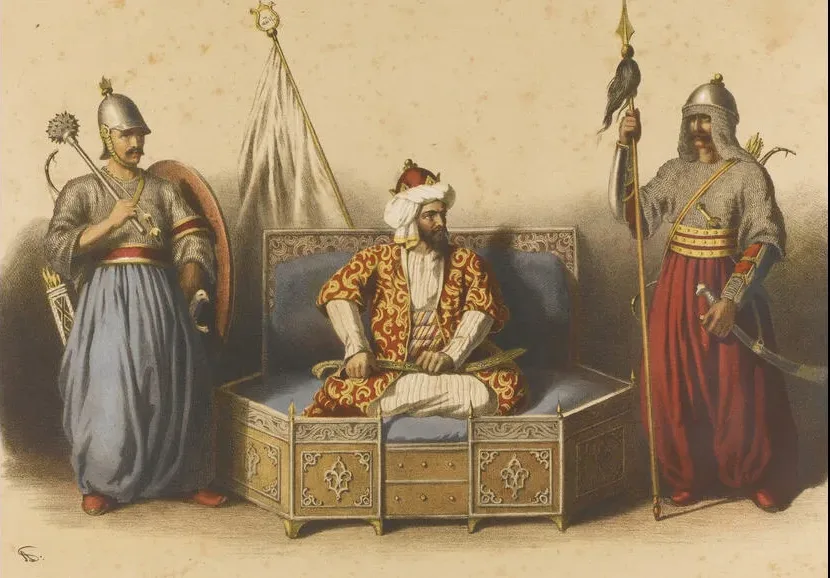
He conquered important places such as:
- Kalinjar
- Mahoba
- Khajuraho
He also attacked Gujarat and defeated its ruler Bhima II. However, Turkish control over Gujarat did not last long because local resistance remained strong.
Even though the Turks faced difficulties in western India, they achieved great success in eastern India.
Conquest of Bihar and Bengal
One of the most important events during Muhammad Ghori’s period was the conquest of Bihar and Bengal.
This work was mainly carried out by Bakhtiyar Khalji, a Turkish military commander.
Bakhtiyar Khalji’s Campaigns
Bakhtiyar Khalji was appointed over territories near Banaras. From there, he began raiding Bihar.
During these raids, he attacked famous Buddhist centers such as:
- Nalanda University
- Vikramashila University
These ancient educational institutions were destroyed during his campaigns.
Bakhtiyar Khalji gathered wealth, soldiers, and important information about routes into Bengal.
Conquest of Bengal
Bengal was very rich because of agriculture and foreign trade. It became an attractive target for Turkish invaders.
At that time, Bengal was ruled by Lakshmana Sena of the Sena dynasty.
Bakhtiyar Khalji used a clever strategy. Disguised as a horse trader, he entered Nadia, where Lakshmana Sena had gone on pilgrimage.
He suddenly attacked the palace and created panic.
Bakhtiyar Khalji quickly captured the Sena capital, Lakhnauti, without facing strong resistance.
Lakshmana Sena escaped to Sonargaon in southern Bengal, where his family continued to rule for some time.
Bakhtiyar Khalji was later appointed governor of Bengal by Muhammad Ghori.
Muhammad Ghori’s Death
Muhammad Ghori ruled until 1206 AD.
He had no children, so after his death, his empire was divided among his generals and slaves.
According to historical records, Muhammad Ghori was assassinated in 1206 while returning from India to Ghazni.
Some accounts say he was killed by enemies near the Indus River.
Bakhtiyar Khalji’s Assam Expedition
Bakhtiyar Khalji later launched an expedition into Assam through the Brahmaputra valley.
However, the campaign failed badly.
The Assamese rulers used smart military tactics. They allowed the Turkish army to move deep into the region and then attacked them.
The Turkish soldiers suffered from:
- Hunger
- Illness
- Lack of supplies
- Continuous attacks
Finally, the exhausted Turkish army faced total defeat.
Bakhtiyar Khalji managed to escape with only a few followers, but his health and spirit were broken. Soon after, he died.
Contributions and Importance of Muhammad Ghori
Muhammad Ghori holds an important place in Indian history because of the following reasons:
1. Foundation of Muslim Rule in India
He established permanent Turkish rule in northern India.
2. Beginning of the Delhi Sultanate
His slave-general Qutbuddin Aibak later founded the Delhi Sultanate.
3. Military Organization
Muhammad Ghori used fast cavalry and mounted archers effectively. His army was disciplined and strategically strong.
4. Political Change in India
His victories weakened many Rajput kingdoms and changed the political structure of north India.
5. Expansion into Eastern India
The conquest of Bihar and Bengal increased Turkish influence across large parts of India.
Conclusion
Muhammad Ghori was one of the most influential rulers of medieval India. Though he faced defeats in the beginning, he learned from his mistakes and returned with better planning and military strength.
His victory in the Second Battle of Tarain changed Indian history forever. After defeating the Rajputs, he expanded Turkish power across northern India and laid the foundation for the Delhi Sultanate.
The conquests of Bihar and Bengal further strengthened Muslim political control in India. Even after his death, the system he created continued under his generals and successors.
Muhammad Ghori’s campaigns marked the beginning of a new era in Indian history that influenced politics, culture, administration, and society for many centuries.
FAQs on Muhammad Ghori
1. Who was Muhammad Ghori?
Muhammad Ghori was the ruler of the Ghurid Empire who played an important role in establishing Muslim rule in northern India during the 12th century.
2. Why is Muhammad Ghori important in Indian history?
Muhammad Ghori is important because his victories laid the foundation for the Delhi Sultanate and long-term Turkish rule in India.
3. When did the First Battle of Tarain take place?
The First Battle of Tarain took place in 1191 between Muhammad Ghori and Prithviraj Chauhan.
4. Who won the First Battle of Tarain?
Prithviraj Chauhan defeated Muhammad Ghori in the First Battle of Tarain.
5. What happened in the Second Battle of Tarain?
In the Second Battle of Tarain in 1192, Muhammad Ghori defeated Prithviraj Chauhan and gained control over northern India.
6. Why was the Second Battle of Tarain important?
The battle was important because it opened the way for Turkish expansion in India and changed the political history of northern India.
7. Who was Qutbuddin Aibak?
Qutbuddin Aibak was the trusted general and slave of Muhammad Ghori who later founded the Delhi Sultanate.
8. Who conquered Bihar and Bengal for Muhammad Ghori?
Bakhtiyar Khalji conquered Bihar and Bengal during Muhammad Ghori’s rule.
9. Which famous universities were destroyed during Bakhtiyar Khalji’s raids?
The famous Buddhist universities of Nalanda and Vikramashila were destroyed during his campaigns.
10. How did Muhammad Ghori die?
Muhammad Ghori was assassinated in 1206 while returning from India to Ghazni.