Socialism: Meaning, Types, Evolution and Role in India

Socialism is an important idea in Indian Polity and world politics. Today, it is widely discussed because many people are worried about economic inequality, unemployment, and the growing gap between rich and poor. In many countries, including India, socialism influences government policies and welfare schemes.
Thank you for reading this post, don't forget to subscribe!Socialism is often compared with capitalism. While capitalism focuses on profit and private ownership, socialism focuses on public welfare and equality. Many thinkers like Karl Marx, M.K. Gandhi, and others have shared different views on socialism.
In simple words, socialism tries to create a society where everyone gets equal opportunities and basic needs are fulfilled.
What is Socialism?
Simple Definition
Socialism is a system where the production of goods and services is done for the needs of people, not for profit.
Different Thinkers’ Views
- Narayan said socialism means rebuilding society in a better way.
- Bertrand Russell said socialism supports common ownership of land and wealth.
- M.K. Gandhi believed socialism means a society where no one is higher or lower, and everyone is equal.
Key Idea
In socialism:
- Resources are shared.
- Wealth is distributed fairly.
- Society’s welfare is more important than individual profit.
Background of Socialism
Socialism started in the early 19th century in Europe. The term was first used by Saint-Simon.
It developed as a reaction to capitalism, which created:
- Rich industrialists
- Poor workers
- Exploitation and inequality
Early socialists wanted a system where:
- Workers are treated fairly
- Wealth is equally shared
- Society works together instead of competing
Basic Ideas of Socialism
Socialism has two main meanings:
1. As Values and Ideals
It includes ideas like:
- Equality
- Freedom
- Brotherhood
- Social justice
- Cooperation
- Peace
2. As a System
It refers to:
- Government policies
- Economic planning
- Public ownership
- Welfare programs
Main Features of Socialism
1. Importance of Society
Socialism gives more importance to society than individuals. It promotes cooperation and shared benefits.
2. Opposition to Capitalism
Socialists believe capitalism creates:
- Inequality
- Class conflict
- Exploitation
3. Equality
Socialism aims to reduce:
- Income gap
- Wealth difference
- Social inequality
4. No Private Ownership
In socialism:
- Factories, land, and resources are owned by society or the government
- Everyone shares benefits
Types of Socialism
There are different types of socialism based on how they work:
1. Revolutionary Socialism
- Wants sudden change through revolution
- Focuses on class struggle
- Supports state control
2. Reformist Socialism
- Believes in gradual change
- Uses democratic methods
- Supports welfare programs
3. Anarchist Socialism
- Opposes government control
- Supports self-rule and cooperation
4. Market Socialism
- Mix of socialism and capitalism
- Allows markets but with government control
5. Planned Socialism
- Government controls economy
- Decides production and distribution
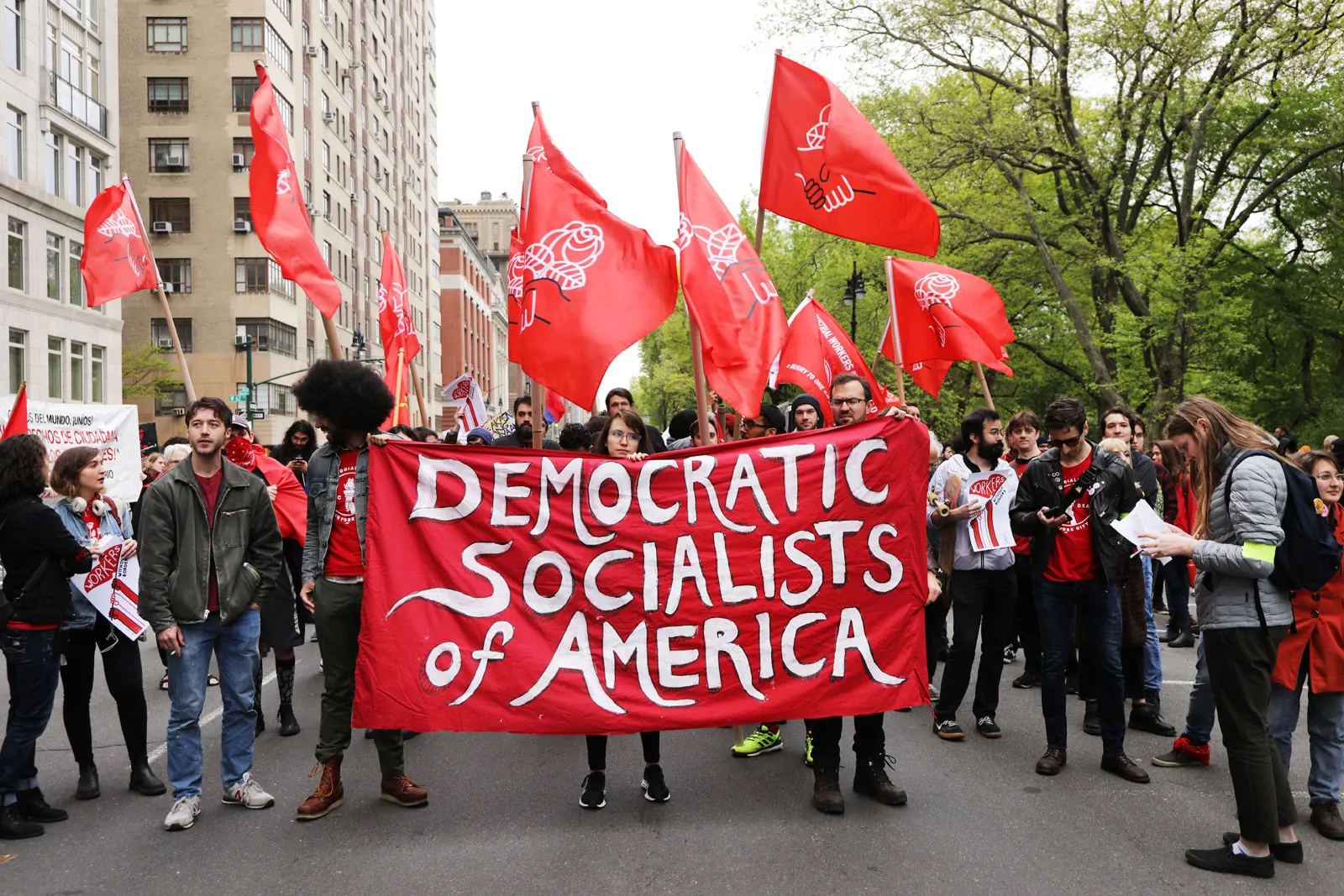
6. Democratic Socialism
- Uses democracy
- Promotes equality and welfare
7. Utopian Socialism
- Imagines ideal society
- Based on cooperation and harmony
8. Scientific Socialism
- Developed by Karl Marx
- Based on real economic conditions
Early Socialist Thinkers vs Marxian Socialism
Early Thinkers
Robert Owen
- Supported cooperative factories
- Wanted better working conditions
Charles Fourier
- Wanted small communities
- Believed work should be enjoyable
Saint-Simon
- Supported science and technology
- Wanted government-led development
Proudhon
- Said “property is theft”
- Supported equality and freedom
Marxian Socialism
Karl Marx changed socialism completely.
1. Historical Materialism
- Society changes because of economic conditions
2. Class Struggle
- Society has two classes:
- Rich (capitalists)
- Poor (workers)
- Conflict between them leads to change
3. Exploitation
- Workers produce goods
- Capitalists take profit
4. Revolution
- Workers will revolt
- Capitalism will end
- Socialism will begin
Evolution of Socialism
1. Early Period
- Utopian socialism
- Focus on ideal societies
2. Marxist Period
- Scientific socialism
- Focus on revolution
3. 20th Century
Soviet Union
- First socialist country (1917)
- Achieved industrial growth
- But had political problems
Social Democracy
- Found in Europe
- Supports welfare with democracy
- Example: Sweden, Norway
4. 21st Century
Globalisation Impact
- Free market increased
- Socialist ideas weakened
Return of Socialism
- Young people support equality
- Demand fair wealth distribution
Political Debate on Socialism
Liberal View (Supporters)
They believe socialism:
- Reduces inequality
- Helps poor people
They support:
- High taxes on rich
- Welfare programs
- Government control of industries
Conservative View (Opponents)
They believe socialism:
- Reduces freedom
- Slows economic growth
They argue:
- Government control reduces efficiency
- High taxes reduce motivation
- People may not work hard
Criticism of Socialism
Economic Challenges
- Inefficiency
Socialist economies are often considered less efficient than capitalist economies because there is less competition. Without competition, businesses may not try hard to improve quality or reduce costs. - Lack of Incentives
Since profit is not the main goal, workers and companies may have less motivation to work harder or innovate. - Low Innovation
Innovation can slow down because there is less reward for new ideas and inventions. - Economic Calculation Problem
In socialism, the government controls resources. Without market prices, it becomes difficult to decide what to produce, how much to produce, and where to distribute goods. - Poor Resource Planning
Central planning may fail because it is hard for the government to collect and process all economic information efficiently. - Corruption
When the government controls most resources, it can lead to misuse of power. This increases the chances of corruption and unfair practices.
Political Challenges
- Authoritarianism
Many socialist countries in history have developed authoritarian governments, where power is concentrated in a few hands. - Risk of Dictatorship
Strong state control can sometimes lead to dictatorship and suppression of opposition. - Democratic Deficit
Some critics argue that socialism may not work well with democracy because it requires high central control. - Less Freedom
People may have fewer political and economic freedoms under strict socialist systems.
Social Challenges
- Social Engineering
Socialist policies often try to reshape society, which may lead to unexpected problems and resistance from people. - Too Much Control on People
Government involvement in daily life can become excessive. - Loss of Individual Freedom
People may lose the freedom to choose their jobs, own property, or make personal decisions. - Limits Personal Choices
Individual preferences may be ignored in favor of collective decisions.
Global Challenges
- Globalisation
Globalisation makes it difficult for socialist countries to control their economies because they must compete in the global market. - Support for Capitalism
Global trade systems often support free-market capitalism rather than socialism. - Neoliberalism
The spread of neoliberal policies, which promote free markets and less government control, has reduced the influence of socialism worldwide. - Free Markets Dominate
Most countries today follow market-based economies, making it harder for pure socialist systems to survive.
Socialism in India
Pre-Independence Period
- The roots of socialism in India started during the freedom struggle against British rule.
- Socialist ideas like equality, social justice, and anti-colonialism became very popular among people.
- These ideas inspired people to fight against exploitation and foreign rule.
- Important leaders influenced by socialism:
- Jawaharlal Nehru
- Subhas Chandra Bose
- They supported:
- Equality in society
- Economic justice
- Freedom from exploitation
- Socialist leaders and organisations helped in:
- Mobilising workers and peasants
- Creating awareness about rights
- Fighting against colonial authority
- Development of mass movements:
- Trade unions for workers
- Peasant associations for farmers
- Social reform movements
- These grassroots efforts built a strong base for socialism in India and influenced future policies.
Post-Independence Period
- After independence, India adopted democratic socialism as its guiding principle.
- The Indian Constitution reflects socialist values like:
- Equality
- Social justice
- Economic rights
- Important constitutional development:
- The word “Socialist” was added to the Preamble by the 42nd Amendment Act, 1976
- Key features of Indian socialism:
- Mixed economy (public + private sector)
- Welfare-oriented policies
- Government intervention in key sectors
- Government actions in early years:
- Nationalisation of banks
- Expansion of public sector industries
- Strict control over private businesses (License Raj)
- Goal:
- Reduce economic inequality
- Promote social justice
- Ensure equal opportunities
Economic Reforms (1991) – LPG Era
- In the 1980s and 1990s, India faced economic challenges, leading to major reforms.
- Introduction of:
- Liberalisation
- Privatisation
- Globalisation (LPG reforms)
- Key changes:
- Reduced government control over economy
- Encouraged private sector growth
- Opened economy to foreign investment
- Impact:
- Shift away from strict socialism
- Move towards market-oriented economy
Contemporary India (Present Situation)

- Today, India follows a mixed economy:
- Combination of capitalism + socialism
- Even with economic reforms, socialist ideas still influence policies.
- Examples of socialist features:
- Public Distribution System (PDS) for food security
- Reservation system for social justice
- Welfare schemes for poor and vulnerable
- Government focus areas:
- Poverty reduction
- Inclusive development
- Social equality
- Role of socialist political parties:
- Advocate for reducing inequality
- Promote welfare policies
- Demand better public services
- Importance today:
- Ensures balance between growth and welfare
- Protects weaker sections of society
- Keeps social justice at the center of governance
Constitutional Provisions
Fundamental Rights
- Article 21: Right to life with dignity
- Article 23: Protection from exploitation
Directive Principles
- Article 38: Social welfare
- Article 39: Equal distribution of wealth
- Article 41: Right to work and support
- Article 43: Workers’ welfare
Important Judgements
Keshavananda Bharati Case (1973)
- Basic structure doctrine
- Socialism is part of Constitution
Minerva Mills Case (1980)
- Balance between rights and welfare
D.S. Nakara Case (1983)
- Pension is a right
NALSA Case (2014)
- Rights of transgender people
- Promotes equality
Role of Socialism in India Today
1. Reducing Inequality and Economic Disparities
- India has seen strong economic growth after liberalisation, but income inequality is still high
- The Gini coefficient, which measures inequality, has increased in recent years
- This shows that the gap between rich and poor is growing
- Socialism helps by promoting wealth redistribution and social welfare policies
- Government schemes like:
- Mahatma Gandhi National Rural Employment Guarantee Act (MGNREGA)
- Public Distribution System (PDS)
- These schemes provide basic support like jobs and food to poor and vulnerable people
- They act as a safety net for marginalized sections of society
2. Welfare State and Social Justice
- India follows the idea of a welfare state, which is inspired by socialism
- The government focuses on providing basic needs to all citizens
- Important areas include:
- Education
- Healthcare
- Poverty reduction
- Key schemes and programs:
- Right to Education (RTE) ensures free and compulsory education
- National Health Mission (NHM) improves healthcare services
- Social security schemes for elderly, disabled, and poor
- These efforts aim to create social justice and equal opportunities for all
3. Inclusive Development and Growth
- Socialism supports inclusive growth, where development benefits everyone
- Focus is on poor, rural, and marginalized communities
- India continues to work towards equal development across all regions
- Important government initiatives:
- Skill India – provides training and employment skills
- Start-up India – encourages entrepreneurship
- Make in India – promotes manufacturing and job creation
- These programs help people participate in economic growth
4. State Ownership and Regulation
- Even after economic reforms, the government still plays a major role
- Key sectors under government influence:
- Banking
- Insurance
- Energy
- This helps prevent monopolies and ensures public welfare
- It reflects socialist ideas of state control over important resources
- The Atmanirbhar Bharat (Self-Reliant India) initiative promotes:
- Domestic production
- Strong national economy
- It shows the importance of state intervention in strategic sectors
5. Environmental Protection and Sustainability
- Socialism also focuses on collective welfare, including the environment
- It promotes responsible use of natural resources
- India is working towards sustainable development
- Major policies include:
- National Action Plan on Climate Change (NAPCC)
- Promotion of renewable energy like solar and wind
- These efforts aim to balance economic growth with environmental protection
- It ensures resources are available for future generations
Conclusion
Socialism in India aims to build a society where:
- Everyone is equal
- No one is poor or exploited
- Resources are shared fairly
India follows a balanced approach by combining socialism and capitalism. While markets help in growth, socialist policies ensure that no one is left behind.
The main goal of socialism is simple:
A fair, equal, and just society for all people.
FAQs
1. What is socialism in simple words?
Socialism is a system where resources are shared and used for public welfare, not just profit.
2. Who is the father of socialism?
Karl Marx is considered the father of modern socialism.
3. Is India a socialist country?
India follows democratic socialism, combining both socialism and capitalism.
4. What is the main aim of socialism?
To reduce inequality and ensure equal opportunities for all.
5. What is the difference between socialism and capitalism?
Socialism focuses on equality and welfare, while capitalism focuses on profit and private ownership.