
India Central Asia Relations

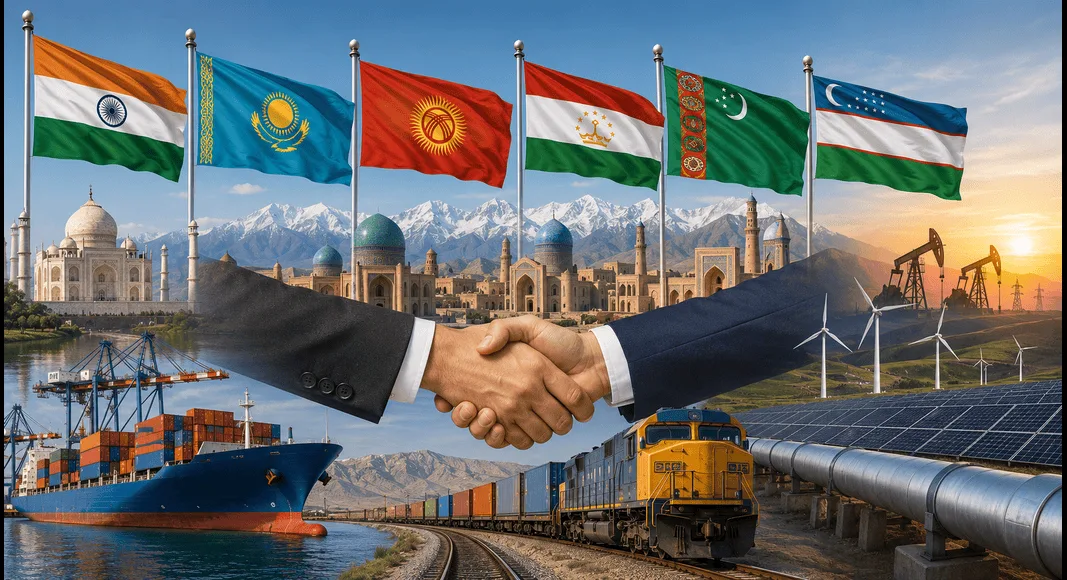
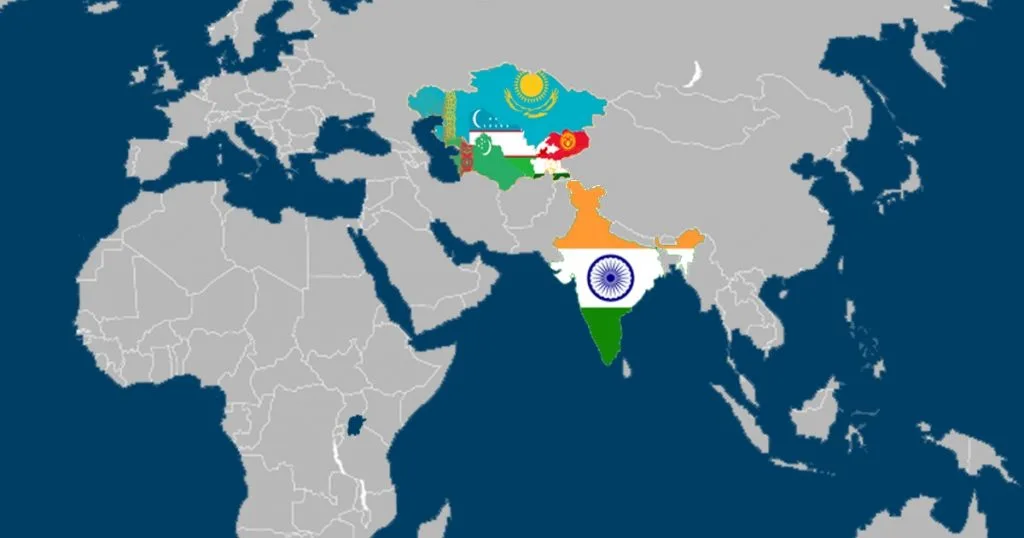
India Central Asia Relations have become very important in modern international politics. Central Asia is a region located between Asia and Europe and includes countries like Kazakhstan, Kyrgyzstan, Tajikistan, Turkmenistan, and Uzbekistan. These countries are rich in natural resources and hold great strategic importance for India.
Thank you for reading this post, don't forget to subscribe!India and Central Asia share historical, cultural, economic, and political ties that go back thousands of years. In recent years, India has increased its efforts to strengthen relations with Central Asian countries because of growing global competition, energy needs, regional security concerns, and trade opportunities.
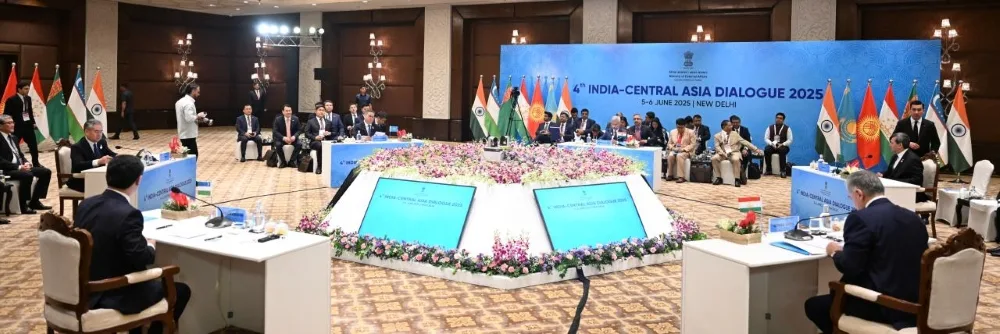
The importance of India Central Asia Relations has increased after the first India-Central Asia Summit hosted by India. The summit highlighted India’s commitment to building stronger cooperation with the region in areas such as trade, energy, transport, security, education, and culture.
Historical Background of India Central Asia Relations
India and Central Asia have shared close ties since ancient times. These relations started through trade, religion, and cultural exchanges.
Silk Route Connection
The famous Silk Route connected India with Central Asia and Europe. Traders used this route to exchange goods like:
- Silk
- Spices
- Textiles
- Precious stones
- Horses
The Silk Route was not only a trade route but also a path for the exchange of ideas, religion, and culture.
Spread of Buddhism
Buddhism spread from India to Central Asia through monks and traders. Many Buddhist monasteries and stupas were built in Central Asian cities such as:
- Merv
- Bokhara
- Tirmiz
- Khalachayan
Indian culture deeply influenced the region during this period.
Mughal Connection
The founder of the Mughal Empire, Babur, came from the Fergana Valley in Central Asia. He established Mughal rule in India in 1526 after the First Battle of Panipat.
Several scholars and poets with Central Asian roots became famous in India, including:
- Amir Khusrau
- Al-Biruni
- Abdur Rahim Khan-i-Khana
Soviet Era Relations
During the Soviet period, India maintained friendly relations with the Soviet republics of Central Asia. Indian films, music, and literature became popular in the region.
Actors like:
- Raj Kapoor
- Nargis
became household names in Central Asia.
Central Asian Countries
Central Asia consists mainly of five republics:
- Kazakhstan
- Kyrgyzstan
- Tajikistan
- Turkmenistan
- Uzbekistan
These countries became independent after the breakup of the Soviet Union in 1991.
Importance of India Central Asia Relations
India Central Asia Relations are important for political, economic, strategic, and cultural reasons.
1. Strategic Importance
Central Asia lies between Asia and Europe. It acts as a bridge connecting many important regions.
The region is close to:
- Russia
- China
- Afghanistan
- Iran
- Europe
Because of this location, Central Asia plays an important role in international politics and trade.
For India, maintaining strong relations with Central Asia helps improve regional influence and connectivity.
2. Energy Security
Central Asia is rich in:
- Oil
- Natural gas
- Uranium
- Coal
India is one of the world’s fastest-growing economies and needs huge amounts of energy.
Strong India Central Asia Relations can help India secure long-term energy supplies.
For example:
- Kazakhstan has large uranium reserves.
- Turkmenistan has huge natural gas reserves.
India can benefit greatly by importing these resources.
3. Trade Opportunities
Central Asian countries offer new markets for Indian businesses.
India exports:
- Medicines
- Machinery
- Tea
- Textiles
- IT services
India imports:
- Minerals
- Energy resources
- Fertilizers
Improved trade can benefit both sides.
4. Security Cooperation
India and Central Asian countries face common security threats such as:
- Terrorism
- Extremism
- Drug trafficking
- Organized crime
The instability in Afghanistan also affects the region.
Therefore, cooperation in defense and intelligence sharing is important.
5. Cultural Relations
India’s culture is very popular in Central Asia.
People in the region enjoy:
- Bollywood films
- Indian music
- Yoga
- Indian dance
- Indian food
This soft power helps India strengthen people-to-people relations.
India’s Connect Central Asia Policy
India launched the “Connect Central Asia Policy” in 2012.
The policy focuses on:
- Political cooperation
- Economic partnerships
- Security collaboration
- Cultural exchanges
- Connectivity projects
India aims to become a strong partner of Central Asian countries through this policy.
India-Central Asia Summit
The first India-Central Asia Summit was hosted virtually by India.
It was attended by the Presidents of:
- Kazakhstan
- Kyrgyzstan
- Tajikistan
- Turkmenistan
- Uzbekistan
The summit aimed to improve cooperation in:
- Trade
- Energy
- Security
- Healthcare
- Technology
- Education
It also marked 30 years of diplomatic relations between India and Central Asian countries.
International North-South Transport Corridor (INSTC)
The International North-South Transport Corridor (INSTC) is an important trade route project.
It was established by:
- India
- Iran
- Russia
The corridor connects:
- Indian Ocean
- Persian Gulf
- Caspian Sea
- Russia
- Europe
It helps reduce transportation time and cost.
Several Central Asian countries are part of this project.
Chabahar Port and Central Asia
Chabahar Port is very important for India Central Asia Relations.
The port allows India to:
- Reach Central Asia without passing through Pakistan
- Increase trade with Eurasian countries
- Improve connectivity
India has invested in the development of Chabahar Port to strengthen regional trade links.
India’s Soft Power in Central Asia
India uses soft power effectively in Central Asia.
Popular Areas of Indian Soft Power
Bollywood
Indian movies are highly popular in Central Asia.
Yoga
Yoga programs and International Yoga Day celebrations attract many people.
Education
Students from Central Asia study in Indian universities.
Medical Tourism
Many patients travel to India for affordable medical treatment.
Cultural Exchanges
India organizes:
- Dance festivals
- Music programs
- Cultural exhibitions
These activities strengthen friendship between people.
Indian Technical and Economic Cooperation (ITEC)
India provides training and technical assistance through the ITEC programme.
The programme offers training in:
- Information technology
- Banking
- Remote sensing
- English language
- Management
This helps build goodwill and improve cooperation.
Economic Importance of Central Asia
Central Asia has great economic potential.
Natural Resources
The region has:
- Oil
- Natural gas
- Gold
- Silver
- Uranium
- Coal
India can benefit from these resources for industrial development.
Agriculture
Central Asia has large cultivable land areas.
India can cooperate in:
- Farming
- Irrigation
- Dairy development
- Agricultural technology
India’s experience in the Green Revolution and White Revolution can help the region.
Infrastructure Opportunities
Indian companies can invest in:
- Roads
- Railways
- Construction
- Hotels
- Banking
- IT services
This can increase economic cooperation.
Security Concerns in Central Asia
Security is one of the biggest reasons for India’s involvement in Central Asia.
Terrorism
The region faces threats from extremist groups.
India and Central Asian countries cooperate in counter-terrorism efforts.
Drug Trafficking
Central Asia lies near the “Golden Crescent,” an area known for illegal drug production.
Drug smuggling affects regional security.
Afghan Instability
The political situation in Afghanistan affects Central Asia.
India and Central Asian nations want peace and stability in the region.
Role of SCO in India Central Asia Relations
India is a member of the Shanghai Cooperation Organisation (SCO).
The SCO helps India engage with Central Asian countries on:
- Security
- Trade
- Regional cooperation
- Counter-terrorism
Membership has improved India’s regional presence.
Challenges in India Central Asia Relations
Despite good relations, several challenges remain.
1. Connectivity Problems
India does not share a direct border with Central Asia.
Pakistan blocks land access between India and Central Asia.
This creates transportation difficulties.
2. Afghanistan Crisis
Political instability in Afghanistan affects trade routes and regional security.
3. China’s Growing Influence
China has increased its influence in Central Asia through the Belt and Road Initiative (BRI).
China invests heavily in infrastructure and trade projects.
This creates competition for India.
4. Low Trade Volume
Trade between India and Central Asia remains low compared to potential opportunities.
Poor connectivity and banking issues are major reasons.
5. Political Instability
Some Central Asian countries face:
- Corruption
- Weak institutions
- Terrorism threats
These issues affect business and investment.
Belt and Road Initiative (BRI)
China’s Belt and Road Initiative is a large infrastructure project connecting Asia, Europe, and Africa.
It includes roads, railways, ports, and pipelines.
The project has increased China’s presence in Central Asia.
India remains cautious about some parts of the initiative.
Eurasian Economic Union (EAEU)
The Eurasian Economic Union is an economic bloc formed in 2015.
Members include:
- Russia
- Kazakhstan
- Belarus
- Armenia
- Kyrgyzstan
India is considering a Free Trade Agreement (FTA) with the EAEU.
This can improve trade significantly.
Opportunities for India in Central Asia
India has many opportunities in Central Asia.
Energy Cooperation
India can secure long-term energy supplies.
Information Technology
Indian IT companies can expand services in the region.
Pharmaceuticals
Indian medicines are affordable and trusted.
Education
More educational partnerships can be developed.
Tourism
Buddhist heritage tourism can be promoted.
India’s Future Strategy in Central Asia
India should take several steps to improve relations.
Improve Connectivity
India should expand projects like:
- INSTC
- Chabahar Port
Increase Trade
Simplifying trade systems and banking channels will help businesses.
Enhance Security Cooperation
Joint military exercises and intelligence sharing should increase.
Promote Cultural Exchanges
India should continue promoting yoga, films, and educational exchanges.
Encourage Investments
Indian companies should invest in infrastructure and technology projects.
India and Central Asia in the 21st Century
The 21st century has increased the importance of Central Asia due to:
- Energy demand
- Global trade
- Geopolitical competition
- Transport corridors
India wants to become an important player in Eurasia.
Central Asia offers India a strong platform to improve its global influence.
Conclusion
India Central Asia Relations are based on strong historical, cultural, and economic ties. The region is important for India because of its strategic location, energy resources, and trade opportunities.
India has strengthened relations through initiatives like the India-Central Asia Summit, Connect Central Asia Policy, Chabahar Port, and INSTC. Cooperation in security, trade, education, and culture has also increased.
However, challenges such as connectivity problems, instability in Afghanistan, and competition from China continue to affect India’s role in the region.
Despite these challenges, the future of India Central Asia Relations looks promising. With better connectivity, stronger trade partnerships, and deeper cultural cooperation, India can become an important and trusted partner of Central Asian countries.
The relationship between India and Central Asia will continue to play a major role in regional peace, economic growth, and international diplomacy in the coming years.
FAQs on India Central Asia Relations
1. What are India Central Asia Relations?
India Central Asia Relations refer to political, economic, cultural, and strategic ties between India and the five Central Asian countries.
2. Which countries are included in Central Asia?
Central Asia includes Kazakhstan, Kyrgyzstan, Tajikistan, Turkmenistan, and Uzbekistan.
3. Why is Central Asia important for India?
Central Asia is important because of its energy resources, strategic location, and trade opportunities.
4. What is the Silk Route connection between India and Central Asia?
The Silk Route connected India with Central Asia for trade, cultural exchange, and the spread of Buddhism.
5. What is the India-Central Asia Summit?
It is a meeting between India and Central Asian countries to improve cooperation in trade, security, and connectivity.
6. What is the International North-South Transport Corridor (INSTC)?
INSTC is a transport corridor connecting India with Central Asia, Russia, and Europe through Iran.
7. Why is Chabahar Port important for India?
Chabahar Port helps India access Central Asia without passing through Pakistan.
8. What challenges does India face in Central Asia?
India faces challenges such as poor connectivity, Afghan instability, and China’s growing influence.
9. How does India use soft power in Central Asia?
India uses Bollywood, yoga, education, culture, and medical tourism to strengthen relations.
10. What is the future of India Central Asia Relations?
The future is promising with growing cooperation in trade, energy, transport, and regional security.